Artwork
Pillaging after the battle
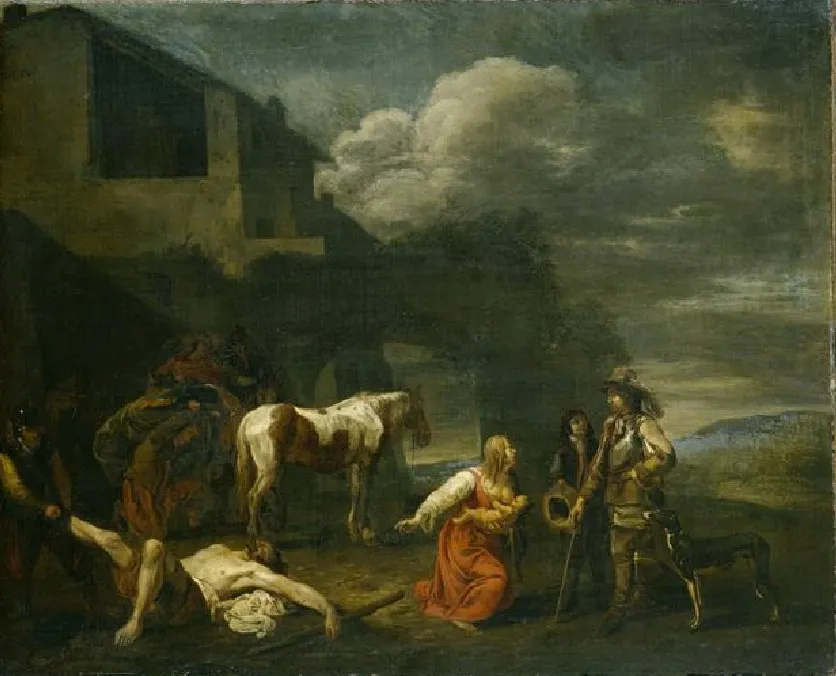
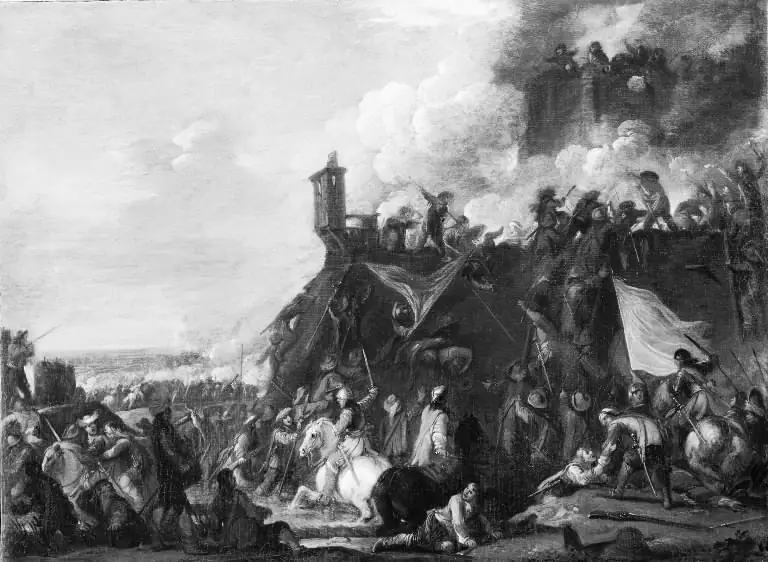
Pillaging after the battle is an oil painting by the Early Baroque Italian artist Michelangelo Cerquozzi. It dates from 1650 and is held in the collection of the Gemäldegalerie Alte Meister.
About this work
Overview
Executed in oil on canvas, it belongs to the early Baroque Italian school and is classified as a history painting despite its non-epic subject.
Michelangelo Cerquozzi painted Pillaging after the battle circa 1650, during his active years in Rome. The work reflects his focus on violent, post-conflict scenes and everyday disorder, aligning with the Bamboccianti tradition of depicting gritty, low-life moments. Executed in oil on canvas, it belongs to the early Baroque Italian school and is classified as a history painting despite its non-epic subject. The piece is now part of the Gemäldegalerie Alte Meister collection in Dresden.
Subject & Meaning
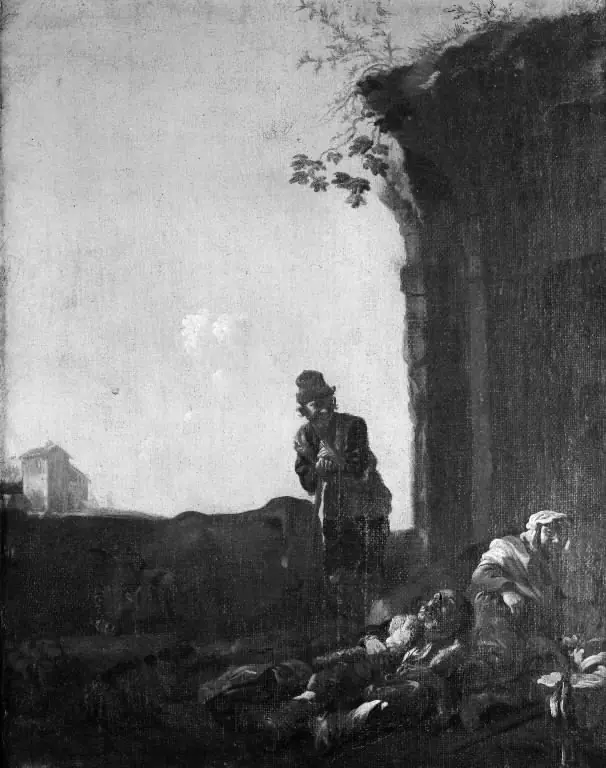
The painting captures the aftermath of combat, showing looting and collapse rather than heroic action. Figures scramble among ruins: one woman in red kneels beside a fallen companion, while others drag goods or collapse in exhaustion. The absence of clear combatants shifts focus to the human cost of war, the vulnerability of civilians, the futility of plunder. It rejects glorification, instead emphasizing chaos and moral decay in the wake of violence.
Technique & Style
Cerquozzi employed a muted, earth-toned palette with thick, visible brushwork to convey texture and movement. The composition is crowded and diagonally dynamic, guiding the eye through tangled limbs and scattered objects. Lighting is subdued, enhancing the somber mood.
His style blends Italian compositional structure with the naturalistic detail and low-life subjects favored by Flemish and Dutch painters active in Rome, particularly the Bamboccianti.
History & Provenance
The painting was likely created in Rome during the mid-17th century, a period when Cerquozzi gained recognition for his battle and genre scenes. It entered the Gemäldegalerie Alte Meister collection in Dresden, possibly through 18th-century acquisitions by Saxon collectors drawn to Italian Baroque works. Its documented presence in the museum since at least the 19th century confirms its established place in European collections of the period.
Context
Cerquozzi worked amid a Rome where Flemish and Dutch artists influenced local tastes, promoting scenes of common life over classical ideals. His work responded to a growing appetite for realism in history painting, not grand narratives, but the messy aftermath of war. This shift reflected broader Baroque trends that embraced emotional immediacy and social observation, even in traditionally elevated genres.
Legacy
Though less celebrated than contemporaries like Caravaggio, Cerquozzi’s focus on the brutal realities of war contributed to the evolution of genre painting in Italy. His work helped bridge the gap between high history painting and low-life realism, influencing later artists who sought to depict war’s human toll without heroism. Pillaging after the battle remains a quiet testament to this transitional moment in Baroque art.
Artist & collection
Artist
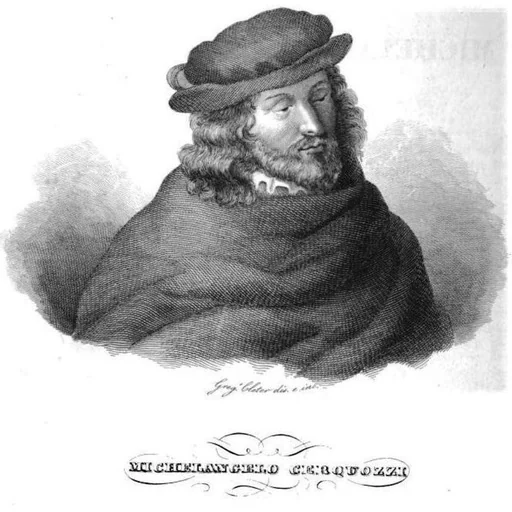
Michelangelo Cerquozzi, known as Michelangelo delle Battaglie (18 February 1602 – 6 April 1660) was an Italian Baroque painter known for his genre scenes, battle pictures, small religious and mythological works and still lifes.