Artwork
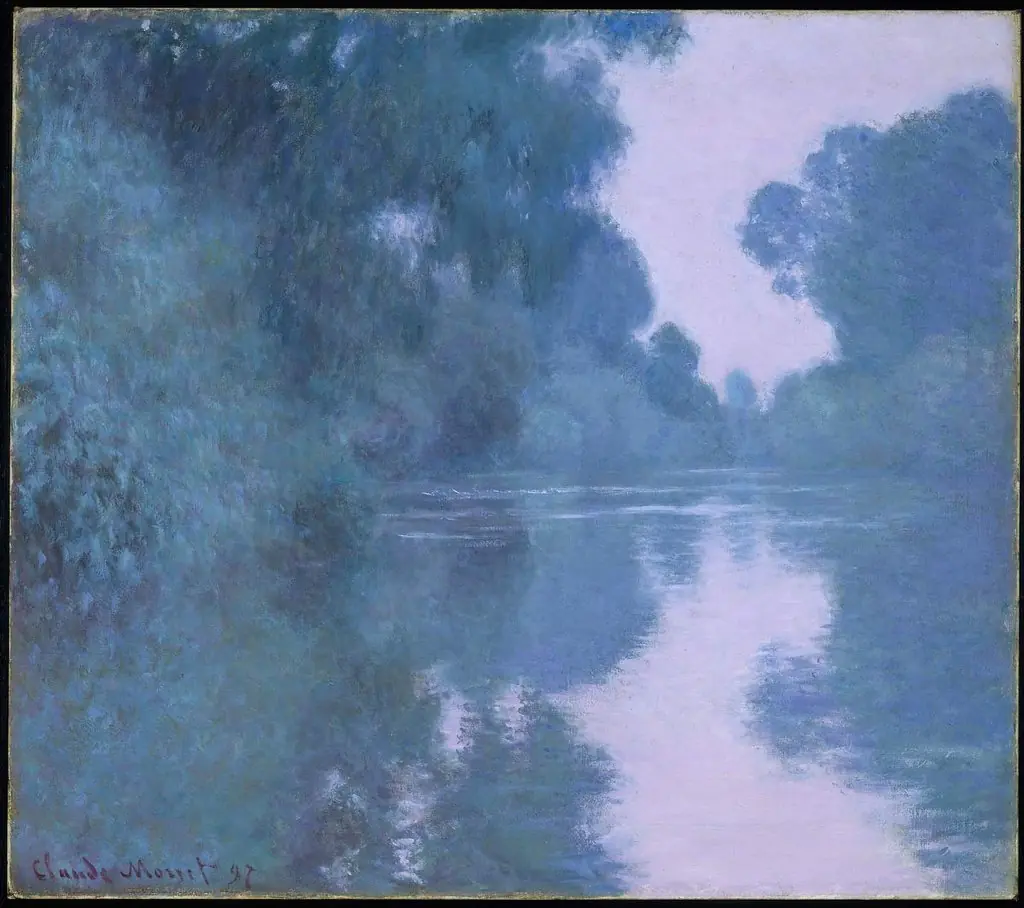
The Seine at Giverny
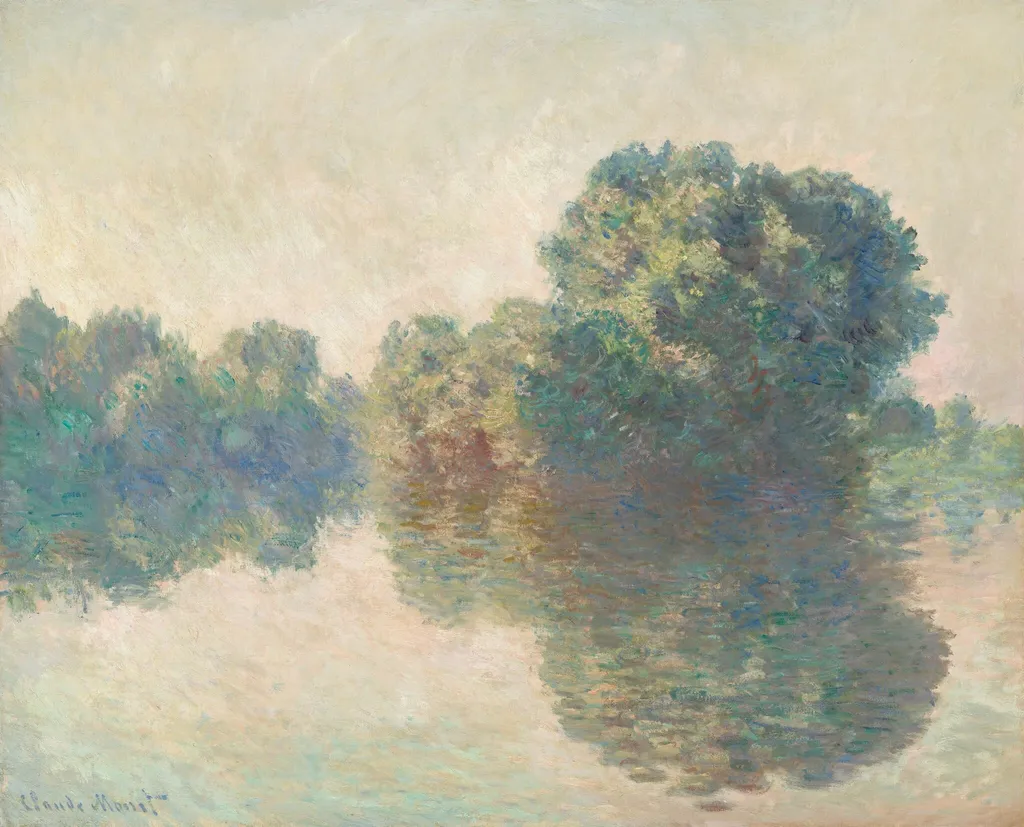
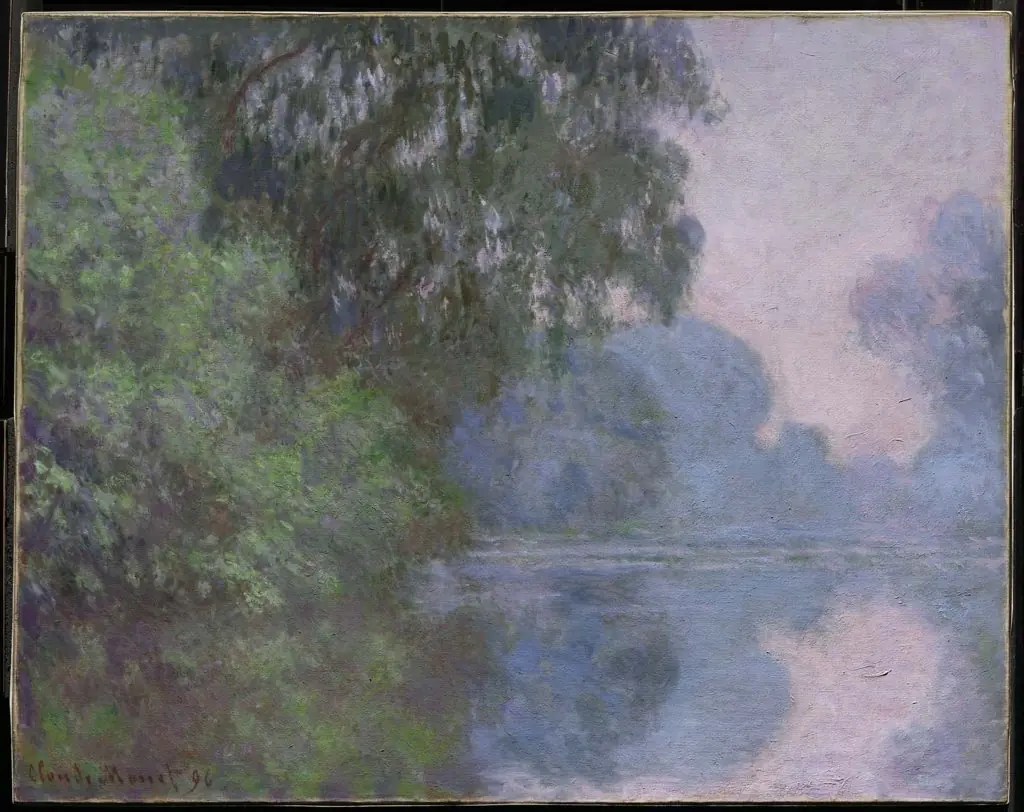
The Seine at Giverny is an oil painting by the Impressionist artist Claude Monet. It dates from 1897 and is held in the collection of the National Gallery of Art.
- Inscription
- Inscribed:lower left: Claude Monet
About this work
Subject & Meaning
Claude Monet's The Seine at Giverny, painted in 1897, is a landscape work that primarily depicts the natural environment surrounding his home in Giverny.
Claude Monet's The Seine at Giverny, painted in 1897, is a landscape work that primarily depicts the natural environment surrounding his home in Giverny. The composition focuses on the Seine river and the adjacent trees, capturing a specific moment in the artist's rural setting. As a landscape painting, the work represents Monet's sustained engagement with the French countryside and his interest in rendering the immediate visual experience of nature.
The inclusion of trees as a central element underscores the integration of flora and water that characterizes the artist's Giverny series. The piece serves as a document of the specific locale, reflecting the artist's method of observing and recording the interplay of light and atmosphere in a familiar outdoor scene.
Technique & Style
Claude Monet executed The Seine at Giverny in 1897 using oil paint applied to a canvas support. The work measures 81.5 cm in height and 100.5 cm in width, adhering to the standard landscape format favored by the artist during this period. As a landscape painting, the piece depicts trees along the riverbank, capturing the natural environment through Monet's characteristic handling of the medium.
The oil-on-canvas technique allows for the layering and blending necessary to render the atmospheric effects typical of his late 19th-century output. The painting is held in the National Gallery of Art's collection in Washington, D.C., having been acquired through the bequest of Chester Dale in 1963. Its formal qualities reflect Monet's continued exploration of light and nature, utilizing the fluidity of oil paint to suggest movement and texture within the depicted scene.
History & Provenance
Claude Monet painted The Seine at Giverny in 1897, working in oil on canvas. According to the provenance recorded by the National Gallery of Art, the artist sold the painting directly to the New York collector James F. Sutton, who died in 1915. The work then passed by inheritance to Sutton's wife, who retained it until it was offered at the Sutton sale conducted by the American Art Association in New York on 26 October 1933, where it appeared as lot 72.
At that auction George Roberts purchased the canvas on behalf of the collector Chester Dale (1882-1962). Dale subsequently bequeathed the painting to the National Gallery of Art in 1963, a transfer documented through copies of Dale's papers held in the museum's curatorial files. The work has remained in the NGA collection since that bequest, though no specific accession number is detailed in the available records.
Overview
Claude Monet's 1897 oil on canvas, The Seine at Giverny, captures a tranquil landscape near his home. This painting is part of a larger exploration of the river, where the artist repeatedly depicted the same scene to observe the subtle shifts in natural light and atmosphere. It showcases a solitary tree on the riverbank, its form reflected in the water.
Context
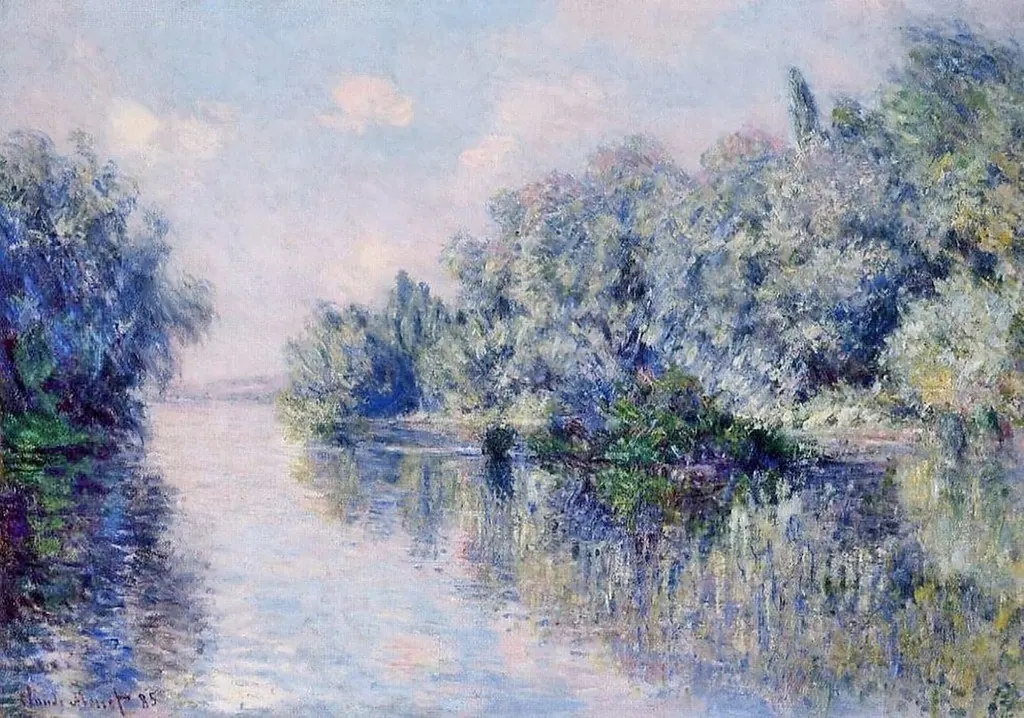
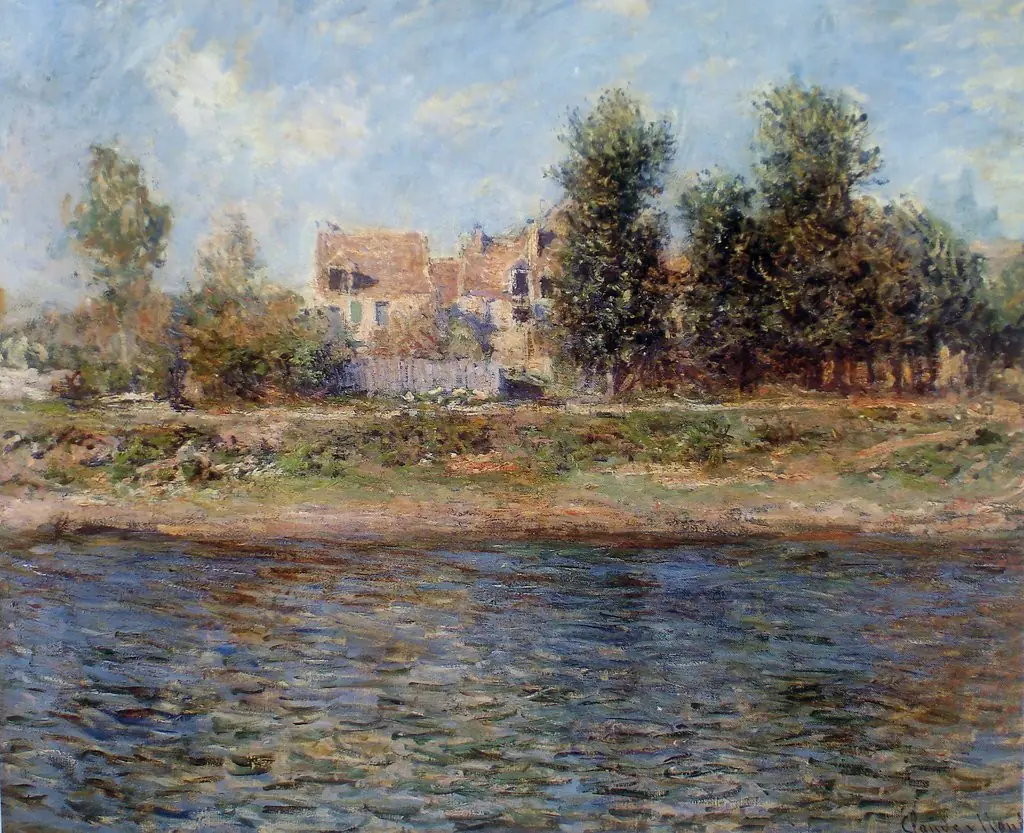
This painting belongs to a series of works Monet created depicting the Seine River close to his property in Giverny. From the 1890s onward, Monet frequently returned to specific motifs, such as the river, haystacks, and Rouen Cathedral, to study how light and atmospheric conditions transformed their appearance over time. This approach allowed him to explore the nuances of perception.
Own this work as a print
Artist & collection
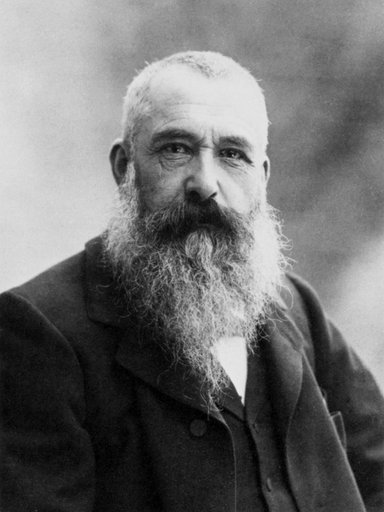
Artist
Oscar-Claude Monet was a French painter and founder of Impressionism who is seen as a key precursor to modernism, especially in his attempts to paint nature as he perceived it.