Artwork
Snails
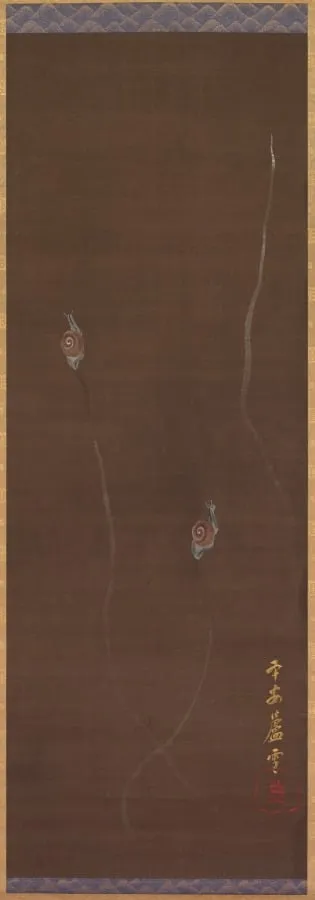
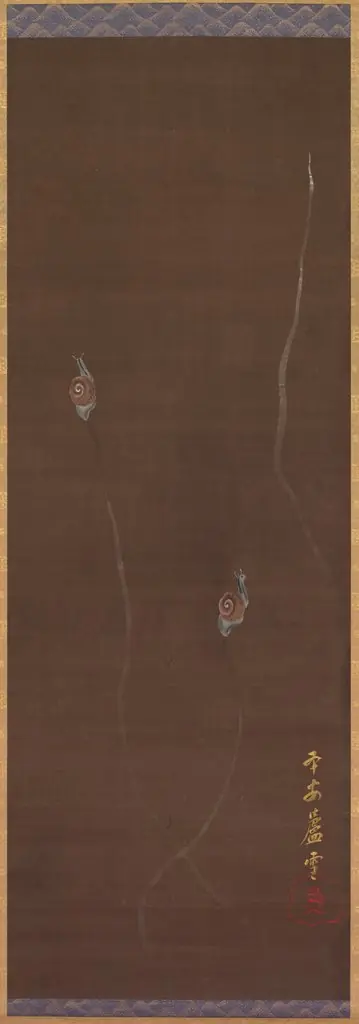
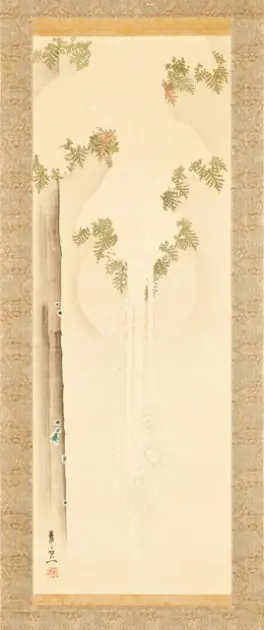
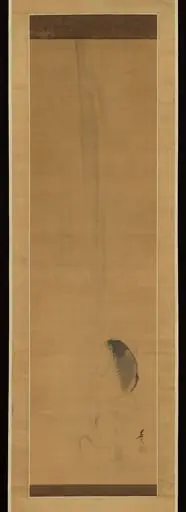
Snails is an unspecified painting by the Nihonga artist Nagasawa Rosetsu. It dates from 1788 and is held in the collection of the Cleveland Museum of Art.
- Accession no.
- 1998.5
- Credit line
- John L. Severance Fund
About this work
Rosetsu painted this in the 1700s, mixing crushed shells into his pigments to mimic the thick, textured strokes of European oil paintings.
Two snails crawl up a cracked, mud-colored wall, their silver trails glinting in the light. One snail is missing, only its path remains, a quiet mystery.
Rosetsu painted this in the 1700s, mixing crushed shells into his pigments to mimic the thick, textured strokes of European oil paintings. The technique, called doro-e ("earth painting"), gives the wall a rough, almost living feel. The missing snail adds a touch of humor or loss, no one knows which.
To see more of this playful, detailed style, look up Nagasawa Rosetsu (Japanese, 1754–1799).
Overview
Nagasawa Rosetsu's 'Snails' is a painting from the 1700s depicting two snails ascending a cracked, earth-toned wall, accompanied by silvery trails, with one trail mysteriously lacking a snail.
Subject & Meaning
The artwork's subject is straightforward, yet the absence of one snail alongside its trail introduces ambiguity, leaving interpretation open to either humor or melancholy.
Technique & Style
Employing 'doro-e' (earth painting), Rosetsu incorporated crushed white shells into his pigments to achieve textured, thick brushstrokes reminiscent of European oil painting techniques.
History & Provenance
Created in the 18th century by Japanese artist Nagasawa Rosetsu (1754–1799), specific provenance details are not provided in the available information.
Context
'Snails' reflects Rosetsu's engagement with blending traditional Japanese mediums with observed European painting styles, evident in the textured, shell-infused pigments.
Legacy
The piece exemplifies Rosetsu's playful and detailed artistic approach, encouraging viewers to explore more of his works for similar characteristics.
Artist & collection

Artist
Nagasawa Rosetsu (長沢芦雪; 1754–1799) was a Japanese painter during the Edo period. A disciple of the Maruyama School, he was known for his versatile artistic style. He was born to the family of a low-ranking samurai. He…