Artwork
Untitled
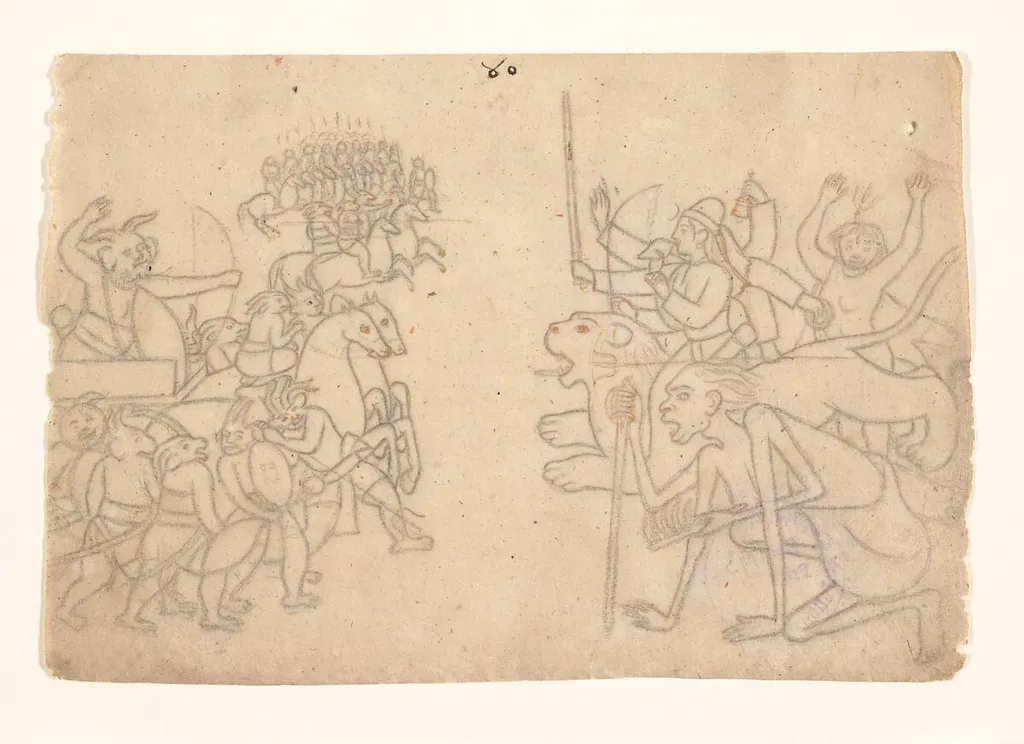
Untitled is a graphite drawing. It dates from 1780 and is held in the collection of the Metropolitan Museum of Art.
- Accession no.
- 1995.132.1
- Credit line
- Purchase, The Research Institute of the Scripps Clinic Gift, in honor of Lita Annenberg Hazen and Arthur Ochs Sulzberger Gift, 1995
About this work
Subject & Meaning
The inclusion of a horse, though less common in standard iconography, may reflect regional or narrative variations in the episode’s representation.
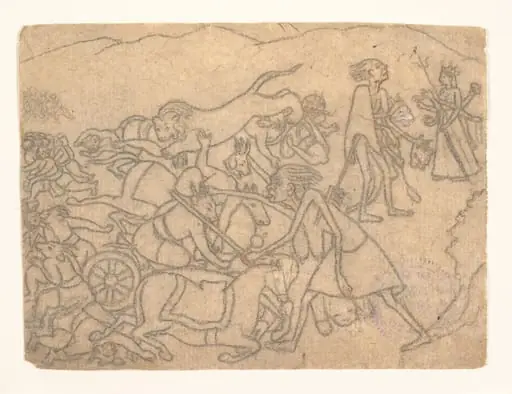
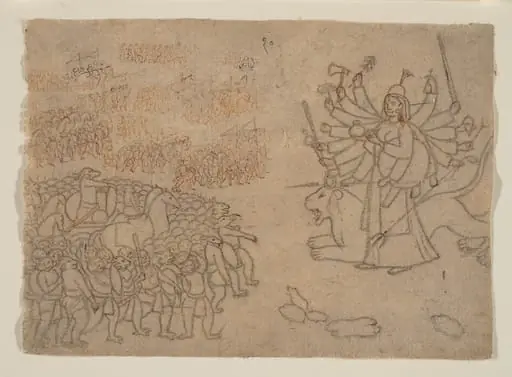
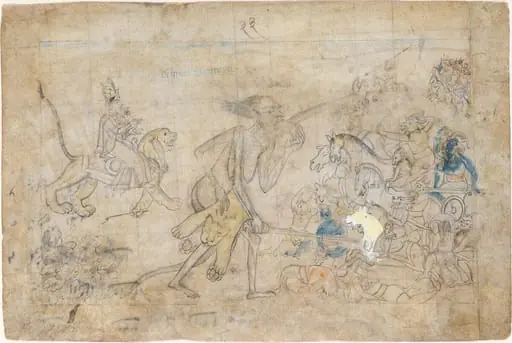
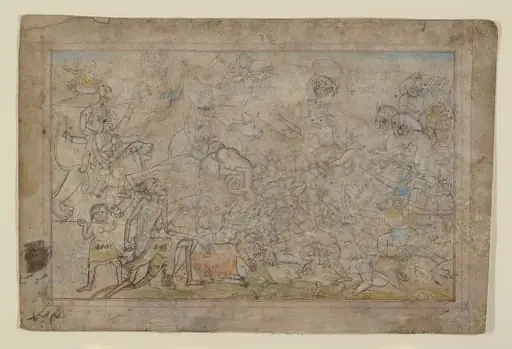
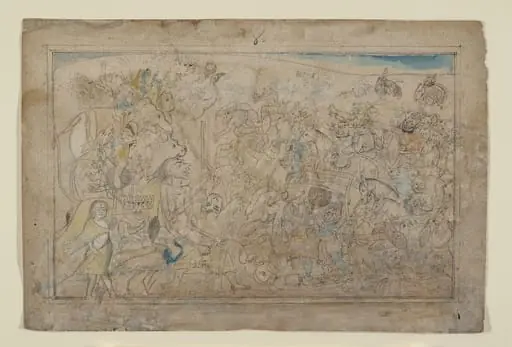
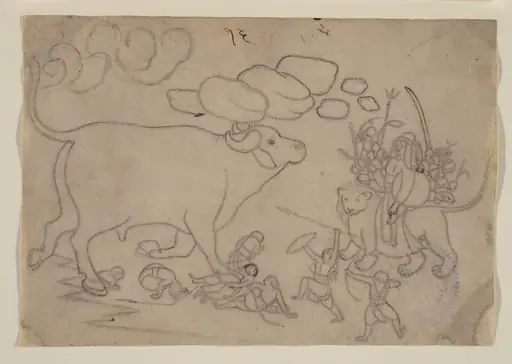
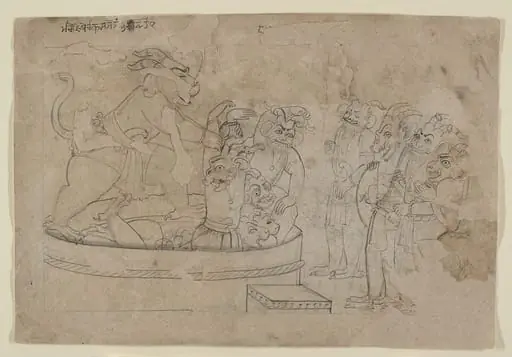
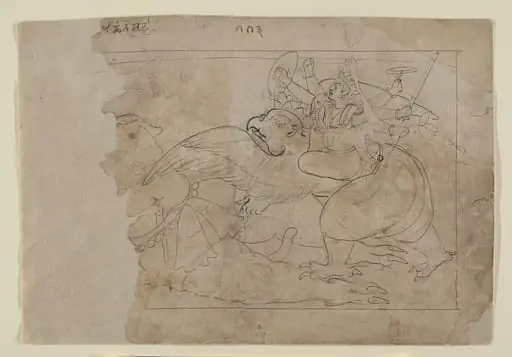
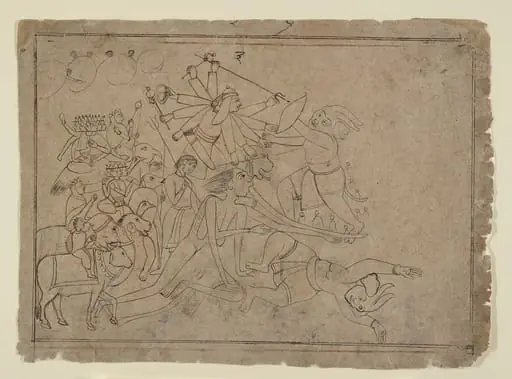
The drawing depicts the goddess Durga, a lion, a horse, and a demon, aligning with the iconography of Durga’s mythic battle against the buffalo demon Mahishasura. The presence of the lion as her mount and the demon as adversary situates the scene within the Durga Puja narrative, where the goddess is invoked to vanquish evil. The inclusion of a horse, though less common in standard iconography, may reflect regional or narrative variations in the episode’s representation.
Technique & Style
Untitled is a graphite and ink drawing on paper executed in 1780 and pricked for transfer. The work measures 13.3 by 19.4 cm and was produced in India. It depicts a demon alongside Durga, a lion and a horse.
These formal and stylistic attributes align with the drawing’s classification as a study for transfer, reflecting the handling and medium typical of late 18th‑century Indian draftsmanship.
History & Provenance
Untitled is a graphite and ink drawing on paper that was pricked for transfer, created in 1780 in India. The work depicts Durga, a demon, horse, and lion. It was later acquired by the Metropolitan Museum of Art and is part of its collection there.
The work is held in the collection of the Metropolitan Museum of Art, where it is identified by the accession number 1995.132.1. According to the Wikidata record, the drawing is located at the museum and forms part of its holdings.
No exhibition history is documented in the available sources for this work.
Overview
The work is a small-scale drawing executed in graphite and ink on paper, featuring a dynamic composition in which a rearing horse carries a lion and a demon that appear to be falling from its back. The image serves as a preparatory study, designed for replication through a pinprick transfer technique.
Context
In the cultural milieu of northern India, depictions of horses, lions, and demonic beings are linked to religious and heroic narratives, often associated with deities such as Durga, who is portrayed riding a lion or tiger in combat.
Legacy
The piece exemplifies a practical approach to visual transmission in pre‑modern Indian art, illustrating how artists coordinated large‑scale projects through reproducible designs and highlighting the interconnectedness of regional visual vocabularies.
Artist & collection