Artwork
清 那爾敦布 順治皇帝進京之隊伍賽馬全圖 卷|Horsemanship Competition for the Shunzhi Emperor
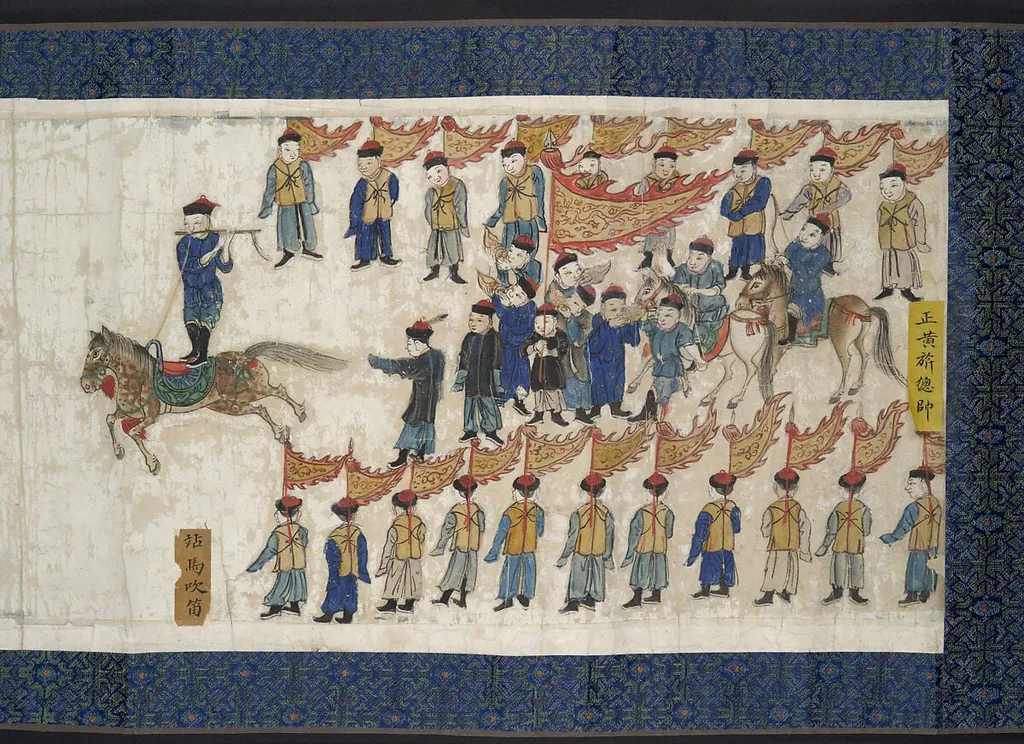
清 那爾敦布 順治皇帝進京之隊伍賽馬全圖 卷|Horsemanship Competition for the Shunzhi Emperor is an ink painting by the Baroque artist Nardunbu. It dates from 1662 and is held in the collection of the Metropolitan Museum of Art.
About this work
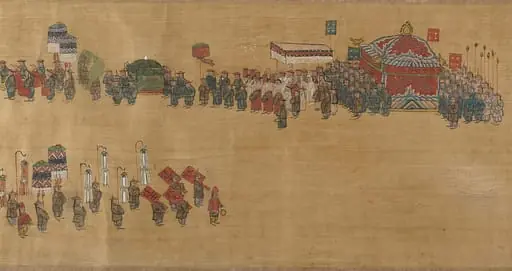
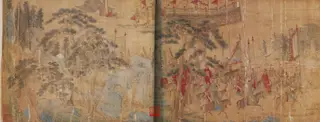
You see a long paper scroll filled with tiny men on horseback racing across a flat plain.
You see a long paper scroll filled with tiny men on horseback racing across a flat plain. The horses kick up dust, and every rider wears bright robes and tall hats.
This painting was made to celebrate the first Manchu emperor entering Beijing in 1644. It’s not just a race, it’s a show of power and skill for the new ruler. The artist, Nardunbu, was part of the court, so he knew the scene firsthand.
If you like this, look up more works about horses.
Subject & Meaning
The handscroll depicts an equestrian competition held in honor of the Shunzhi Emperor, featuring men and horses engaged in riding activities. Created in 1662 by the artist Nardunbu, the work falls within the genre of history painting, serving as a visual record of a specific imperial event. The iconography centers on the dynamic interaction between riders and their mounts, emphasizing the skill and vitality associated with horsemanship.
As a historical document, the painting symbolizes the martial traditions and courtly culture of the early Qing dynasty, reflecting the importance placed on equestrian prowess by the imperial administration. The composition captures the spectacle of the event, presenting the Emperor's procession and the associated athletic displays as a celebration of power and order.
History & Provenance
The handscroll titled Horsemanship Competition for the Shunzhi Emperor was created in 1662 by the artist Nardunbu. Executed in ink and color on paper, this work is classified as a history painting depicting equestrianism and horsemen. The piece was produced in China during the Qing dynasty.
Currently, the artwork is held in the collection of the Metropolitan Museum of Art. The creation date of 1662 places the work shortly after the death of the Shunzhi Emperor, suggesting it may commemorate events from his reign or serve as a historical record of courtly horse racing traditions. No further details regarding the specific patron who commissioned the work or the intermediate ownership chain prior to its arrival at the museum are provided in the available records.
The handscroll titled Horsemanship Competition for the Shunzhi Emperor, created by Nardunbu in 1662, is held in the collection of the Metropolitan Museum of Art. The work, classified as a painting depicting equestrianism, resides at the museum's location. While the sources confirm its presence in the museum's holdings, they do not provide a specific inventory or accession number for the piece.
Furthermore, the available documentation does not record any exhibition history for this artwork, leaving its public display record unlisted in the provided records.
Context
The handscroll painted in 1662 by Nardunbu portrays the Shunzhi Emperor’s horse‑competition procession and is classified as a history painting, a genre identified in the work’s cataloguing. Its depiction of equestrian subjects aligns with Qing court interests in martial spectacle and is documented in the Metropolitan Museum of Art’s collection. The painting’s inclusion in a major museum reflects scholarly recognition of its role in illustrating early Qing imperial patronage and the integration of courtly martial themes into Chinese visual culture.
As a product of Chinese artistic production in the mid‑seventeenth century, it exemplifies the stylistic conventions of court painters and contributes to the historical narrative of Qing dynasty art.
Legacy
The handscroll by Nardunbu, dated 1662 and depicting the Shunzhi Emperor’s imperial horse competition, is part of the Metropolitan Museum of Art’s collection, underscoring its scholarly recognition and role in the study of Qing court painting. As a history painting that illustrates equestrian skill, it contributes to the understanding of how imperial narratives of martial prowess were visualized in early Qing art. Its inclusion in a major museum has positioned it as a reference work for research on Qing dynasty court rituals and the artistic representation of imperial power, influencing subsequent scholarship on the intersection of politics and visual culture in 17th‑century China.
Overview
This handscroll, titled Horsemanship Competition for the Shunzhi Emperor, was created by Nardunbu in 1662. Executed with ink and color on paper, it functions as a historical painting. The work captures a dynamic scene of equestrianism, specifically depicting a race or competition.
It offers a detailed visual record of a significant event in early Qing dynasty history, emphasizing the skill and spectacle associated with imperial power.
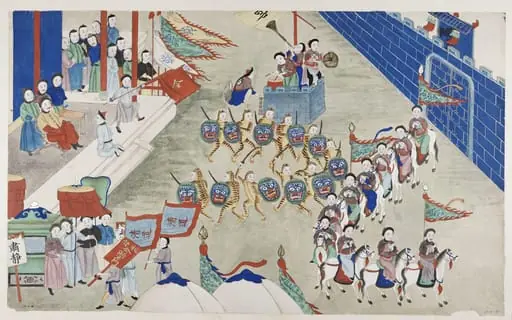
Artist & collection
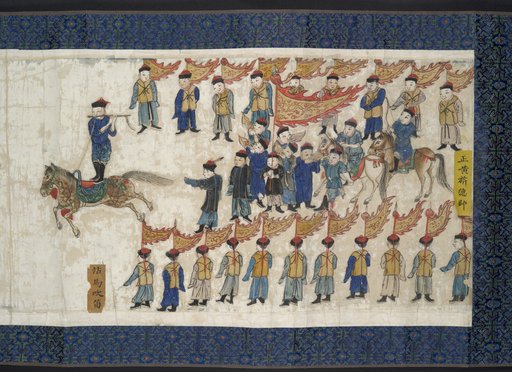

- A military review
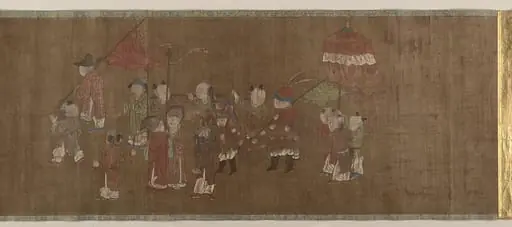 Untitled
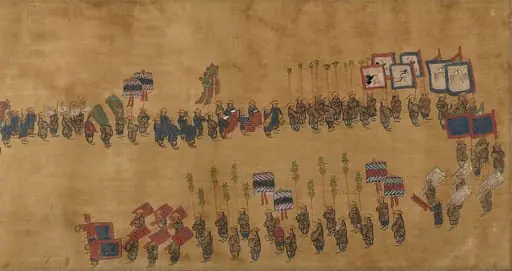 Untitled
 Untitled
 Khubilai Khan Hunting
 The Banquet of Seowangmo (Xiwangmu), Queen Mother of the West
 Hunting on Horses
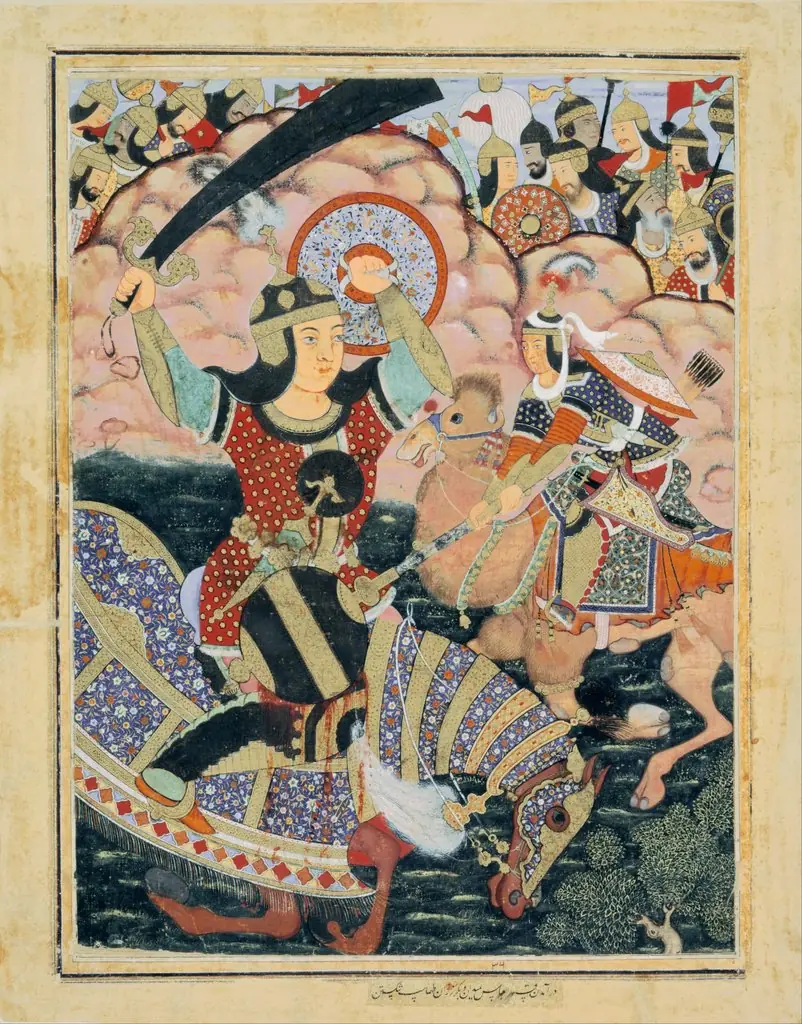 Qasam al-Abbas Arrives from Mecca and Crushes Tahmasp with a Mace
 A procession
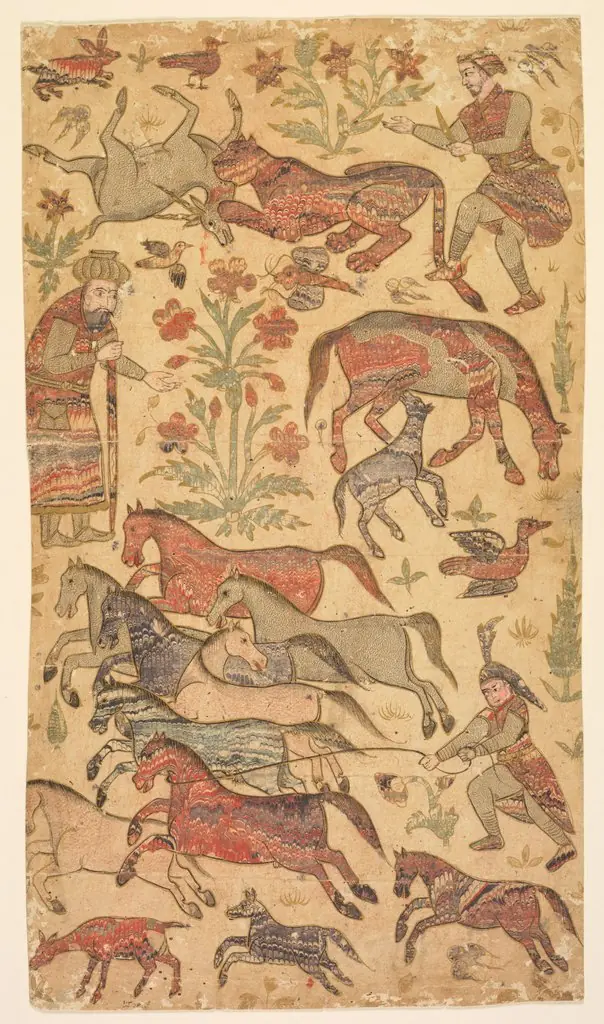 A marbled picture of Rustam catching Rakhsh
 One scene of a wedding: the bride and her dowry on her way to her new home
 Resisting Japanese Pirates