Artwork
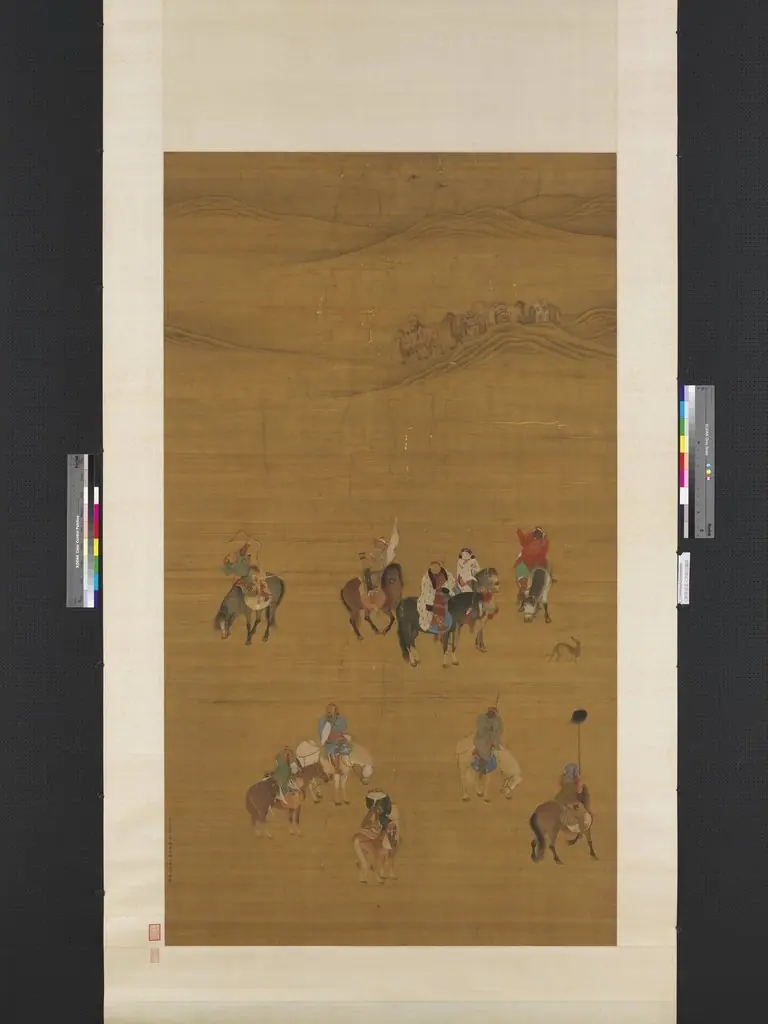
Khubilai Khan Hunting
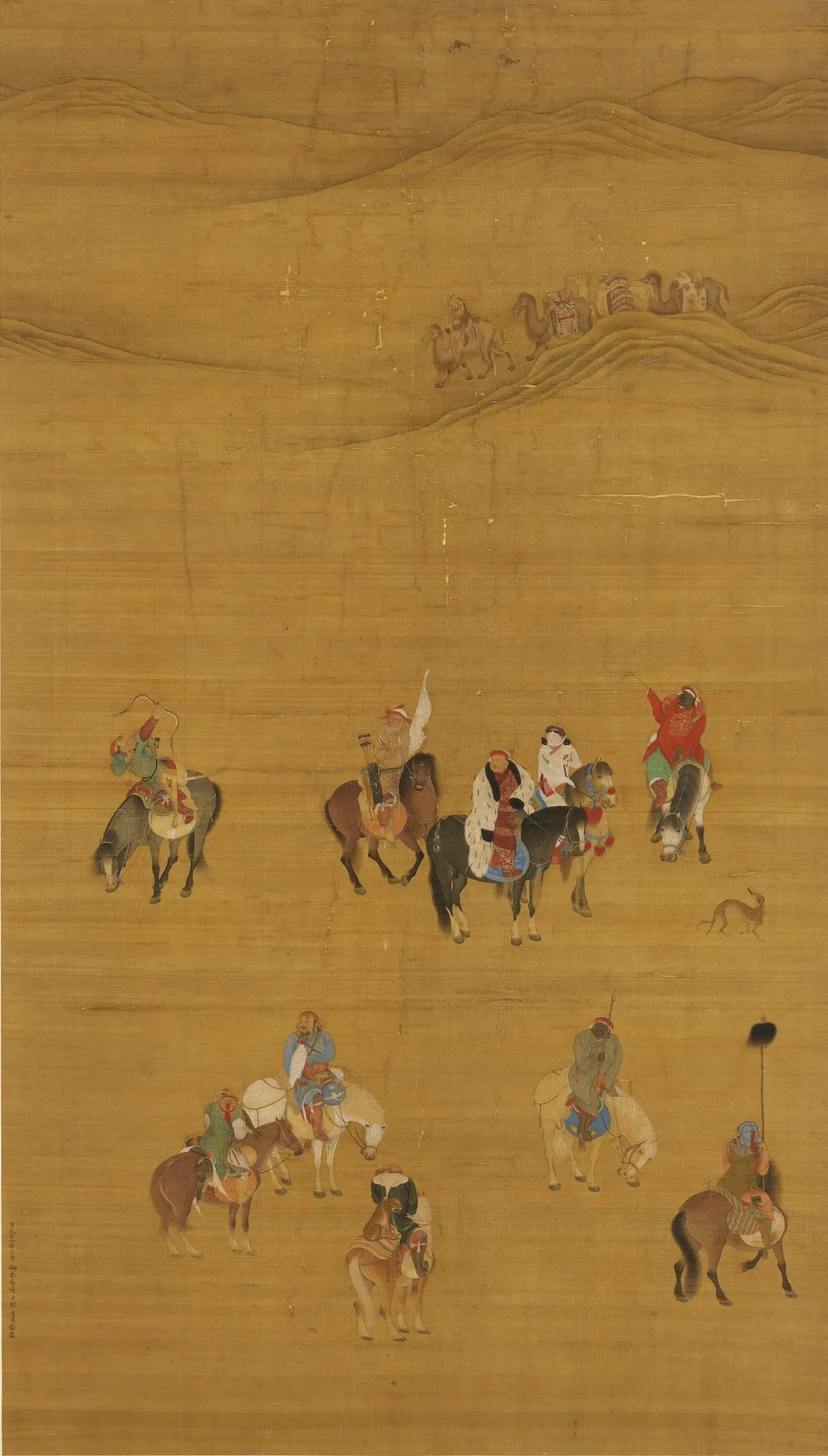
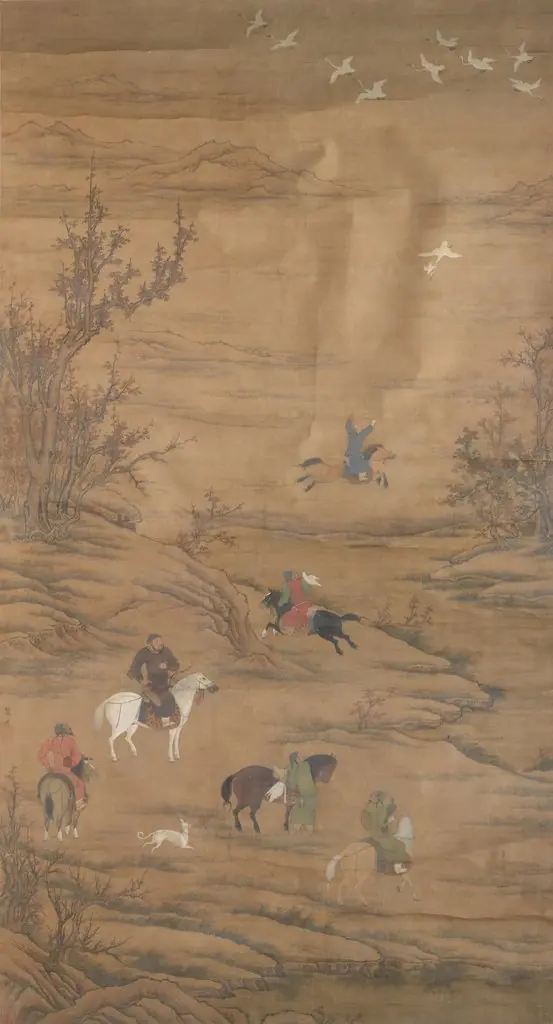
Khubilai Khan Hunting is an unspecified painting by the Yuan dynasty literati painting artist Liu Guandao. It dates from 1290 and is held in the collection of the National Palace Museum.
About this work
Overview
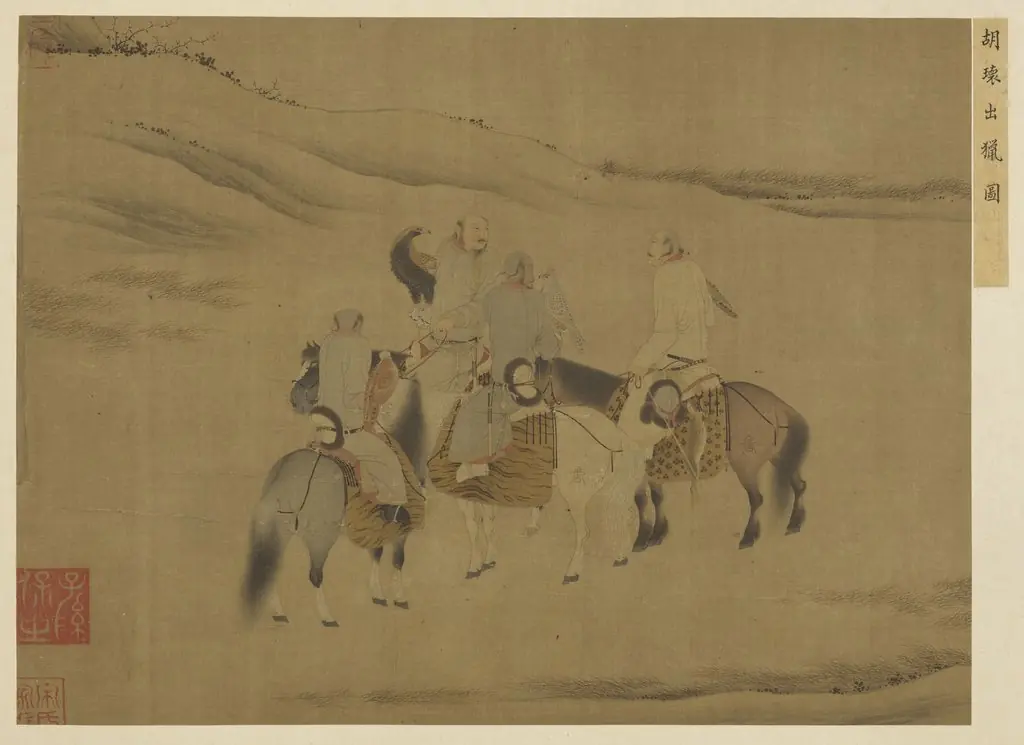
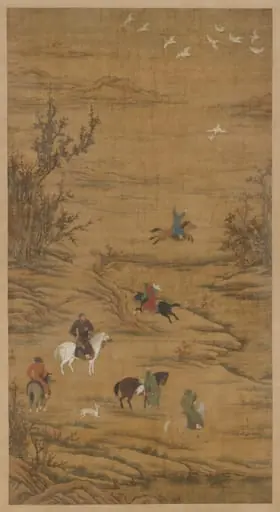
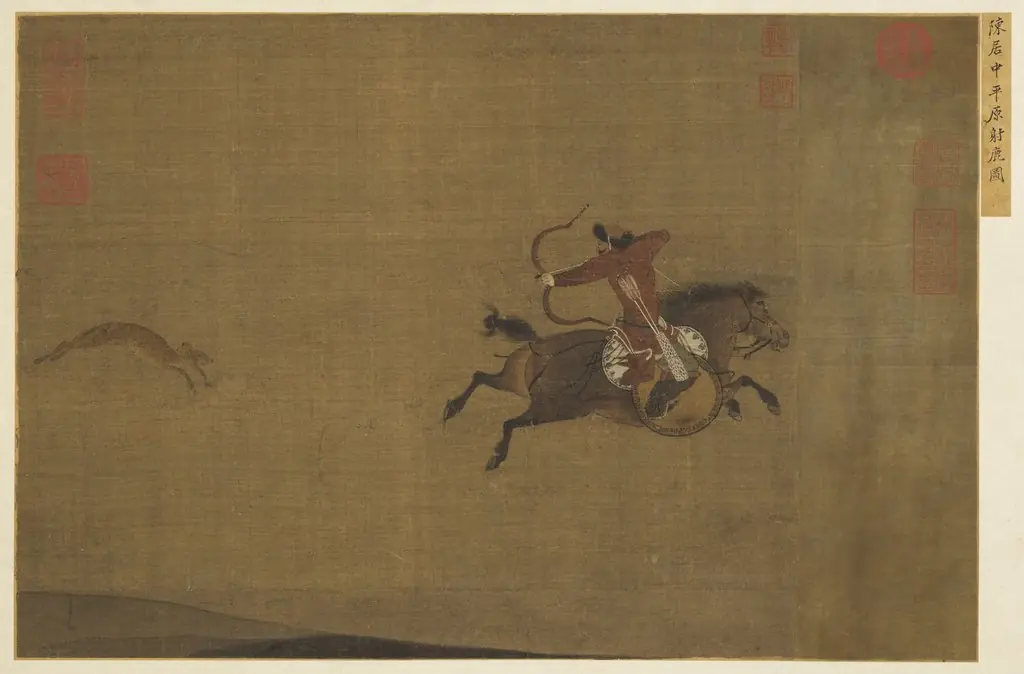
Created in 1290 by Liu Guandao, a court painter of the Yuan dynasty, Khubilai Khan Hunting depicts a lively hunting scene set in a desert landscape. The composition features several mounted figures in vivid attire, each equipped with bows or arrows, against a backdrop of distant hills and sparse trees, conveying a sense of motion and vigor.
Subject & Meaning
The work illustrates an imperial hunting expedition, likely intended to celebrate the martial prowess and authority of Kublai Khan. By portraying the ruler and his entourage in active pursuit, the painting underscores themes of power, control over nature, and the ceremonial aspects of courtly life during the Yuan period.
Technique & Style
Liu Guandao employs a realist approach characteristic of his oeuvre, using a varied palette that ranges from bright reds and blues to subdued earth tones. This chromatic diversity enhances the perception of depth and texture, while the precise rendering of horses and figures reflects the artist’s meticulous observation.
History & Provenance
Liu Guandao first gained prominence in 1279 with a portrait of Kublai Khan’s son, Zhenjin, establishing his reputation as a leading court artist. Khubilai Khan Hunting remains part of the Yuan literati tradition and is presently housed in the National Palace Museum, where it is displayed as a representative example of Yuan court painting.
Context
The painting belongs to the broader Yuan literati movement, which emphasized scholarly expression within court commissions. During this era, imperial patronage encouraged works that combined realistic detail with symbolic representation of the emperor’s dominion, aligning with the political and cultural priorities of the Mongol-ruled China.
Artist & collection
Artist
Liu Guandao or Liu Kuan-tao (simplified Chinese: 刘贯道; traditional Chinese: 劉貫道; pinyin: Liú Guàndào; c.