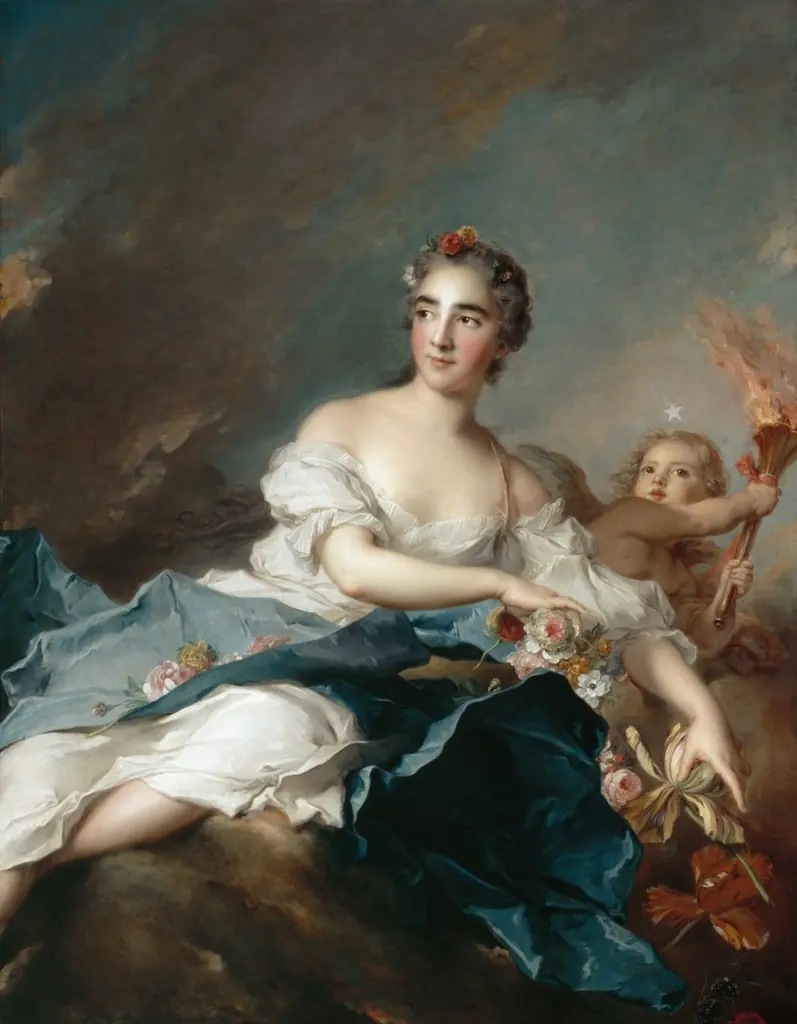
Artwork
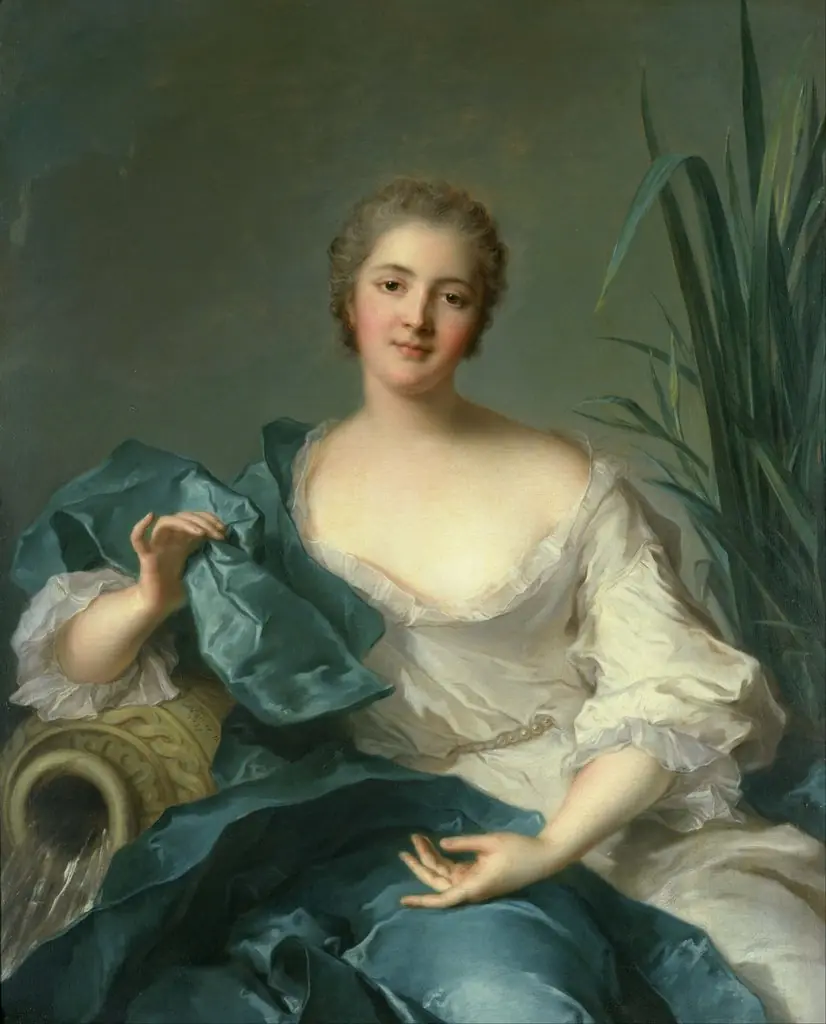
Madame Le Fèvre de Caumartin as Hebe
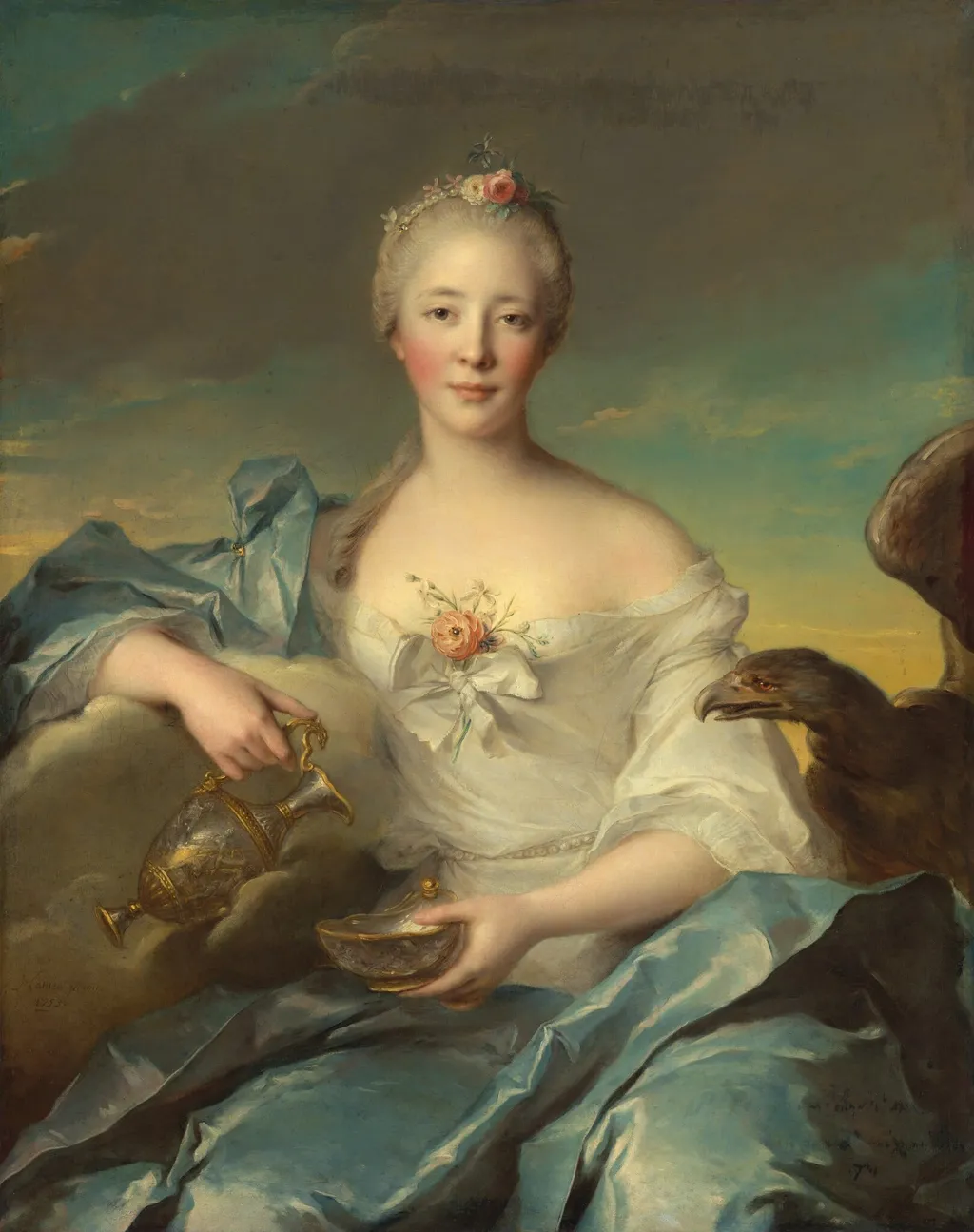
Madame Le Fèvre de Caumartin as Hebe is an oil painting by the Rococo painting artist Jean-Marc Nattier. It dates from 1753 and is held in the collection of the National Gallery of Art.
- Inscription
- Inscribed:lower left: Nattier pinxit. / 1753.
About this work
Subject & Meaning
Painted by Jean-Marc Nattier in 1753, this work depicts Geneviève Anne Marie Moufle de la Thuilerie, historically identified as Madame Le Fèvre de Caumartin.
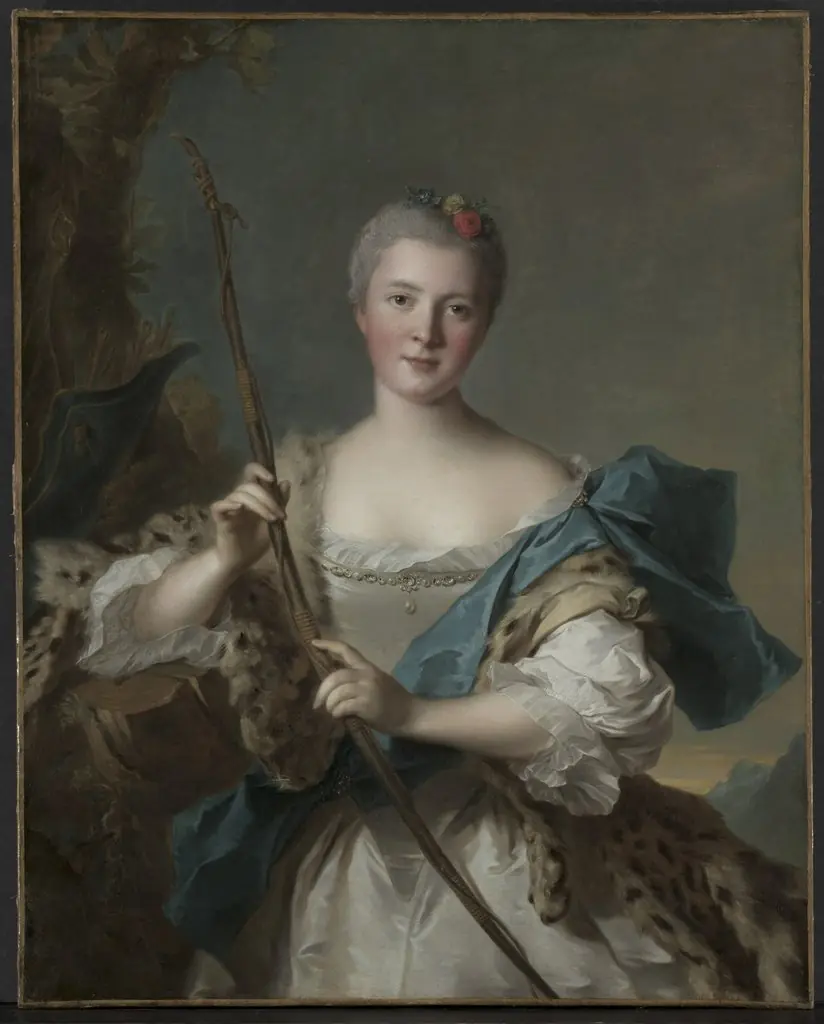
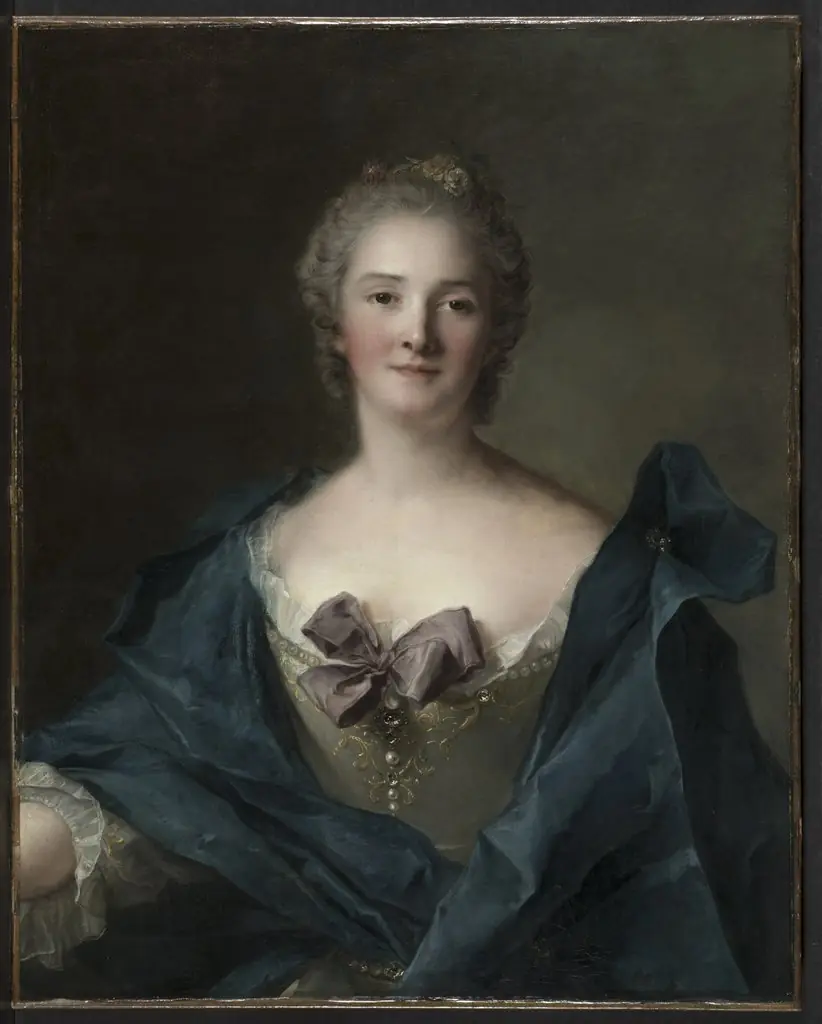
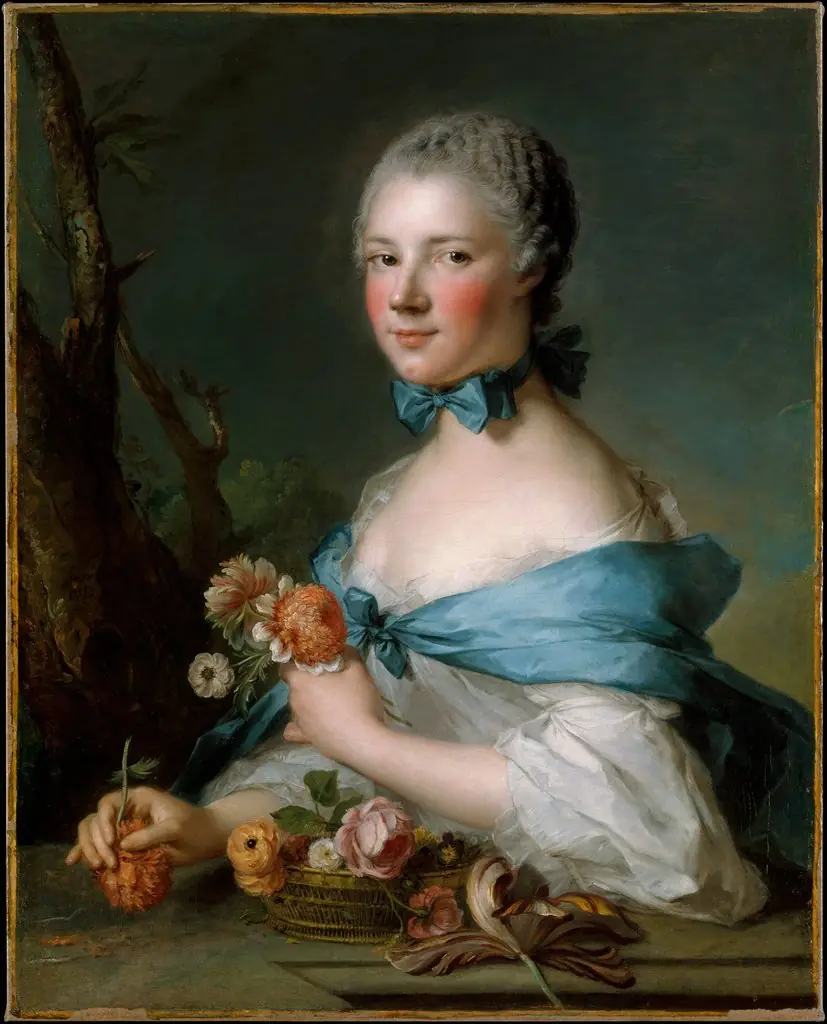
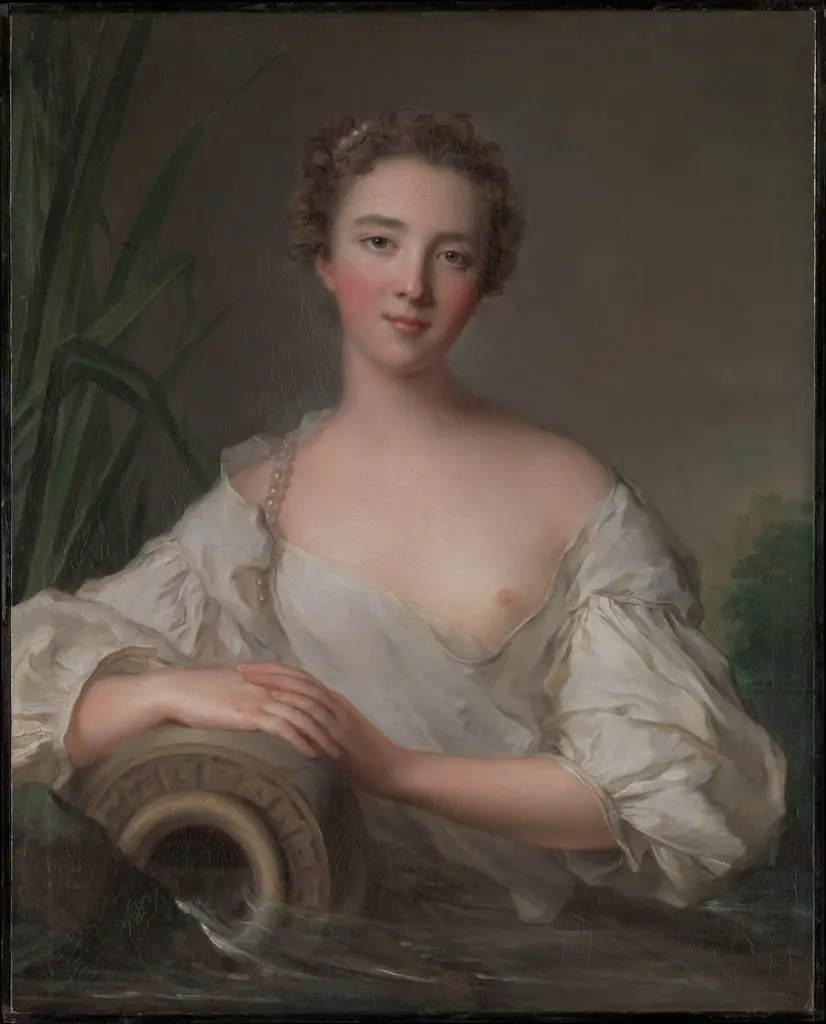
Painted by Jean-Marc Nattier in 1753, this work depicts Geneviève Anne Marie Moufle de la Thuilerie, historically identified as Madame Le Fèvre de Caumartin. The subject is portrayed in the guise of Hebe, the Greek goddess of youth and cupbearer to the gods, a popular allegorical convention in Nattier's portraiture of aristocratic women. As the cupbearer, Hebe typically appears with an eagle and a golden cup, attributes that underscore the divine service she renders.
Technique & Style
Madame Le Fèvre de Caumartin as Hebe is an oil painting executed on canvas by Jean-Marc Nattier in 1753. The work measures 102.5 cm in height and 81.5 cm in width. The painting belongs to the genre of portraiture and represents a formal portrait style characteristic of the mid-18th-century French school.
It is currently part of the Samuel H. Kress Collection at the National Gallery of Art in Washington, D.C., having entered the museum as a gift in 1946.
History & Provenance
The painting was created in 1753 by Jean-Marc Nattier as an oil on canvas portrait of Geneviève Anne Marie Moufle de la Thuilerie. Its early ownership is traced to Odette-Marie de Montesquiou-Fezensac, wife of comte Antoine de Gramont d'Aster, and subsequently to her brother Louis-Paul-Anatole, marquis de Montesquiou-Fezensac, and then to his widow, Claude-Étienne-Marie-Octavie de Sauvan d'Aramon. The work was sold in December 1944 by Wildenstein & Co. to the Samuel H. Kress Foundation, and in 1946 it was gifted to the National Gallery of Art.
Context
The portrait exemplifies Nattier's Rococo-transition style, blending aristocratic elegance with emerging Enlightenment ideals of sensibility. His practice of representing noblewomen as classical divinities was widely popular at the French court; Hebe was among his favored mythological personas. The work's inclusion in the Kress Collection reflects its early 20th-century appreciation as a representative example of French Rococo portraiture, and the provenance through the Montesquiou-Fezensac family to Wildenstein and the Kress Foundation underscores its documented ownership history.
Legacy
Acquired by the Samuel H. Kress Foundation in December 1944, the portrait entered the National Gallery of Art and became part of the Kress collection. Its provenance, traced through the Montesquiou-Fezensac family and Wildenstein & Co., illustrates a documented chain of inheritance that scholars have examined in studies of French aristocratic portraiture. As part of the National Gallery's permanent display, the painting contributes to ongoing assessments of 18th-century French portraiture.
Overview
Jean-Marc Nattier painted Madame Le Fèvre de Caumartin as Hebe in 1753, an oil-on-canvas work characteristic of the Rococo period. This portrait depicts Geneviève Anne Marie Moufle de la Thuilerie, known as Madame Le Fèvre de Caumartin, in the guise of Hebe, the Greek goddess of youth. The painting exemplifies Nattier's distinctive approach to aristocratic portraiture, blending individual likeness with classical allegory.
Own this work as a print
Artist & collection
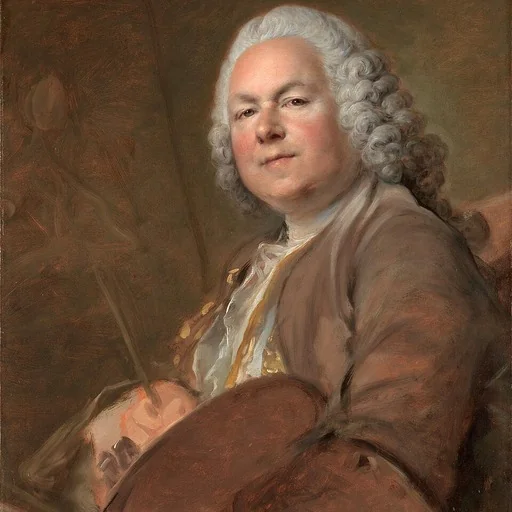
Artist
Jean-Marc Nattier (French pronunciation:; 17 March 1685 – 7 November 1766) was a French painter.