Artwork
Madonna and Child with Saint Anthony Abbot and Saint Sigismund
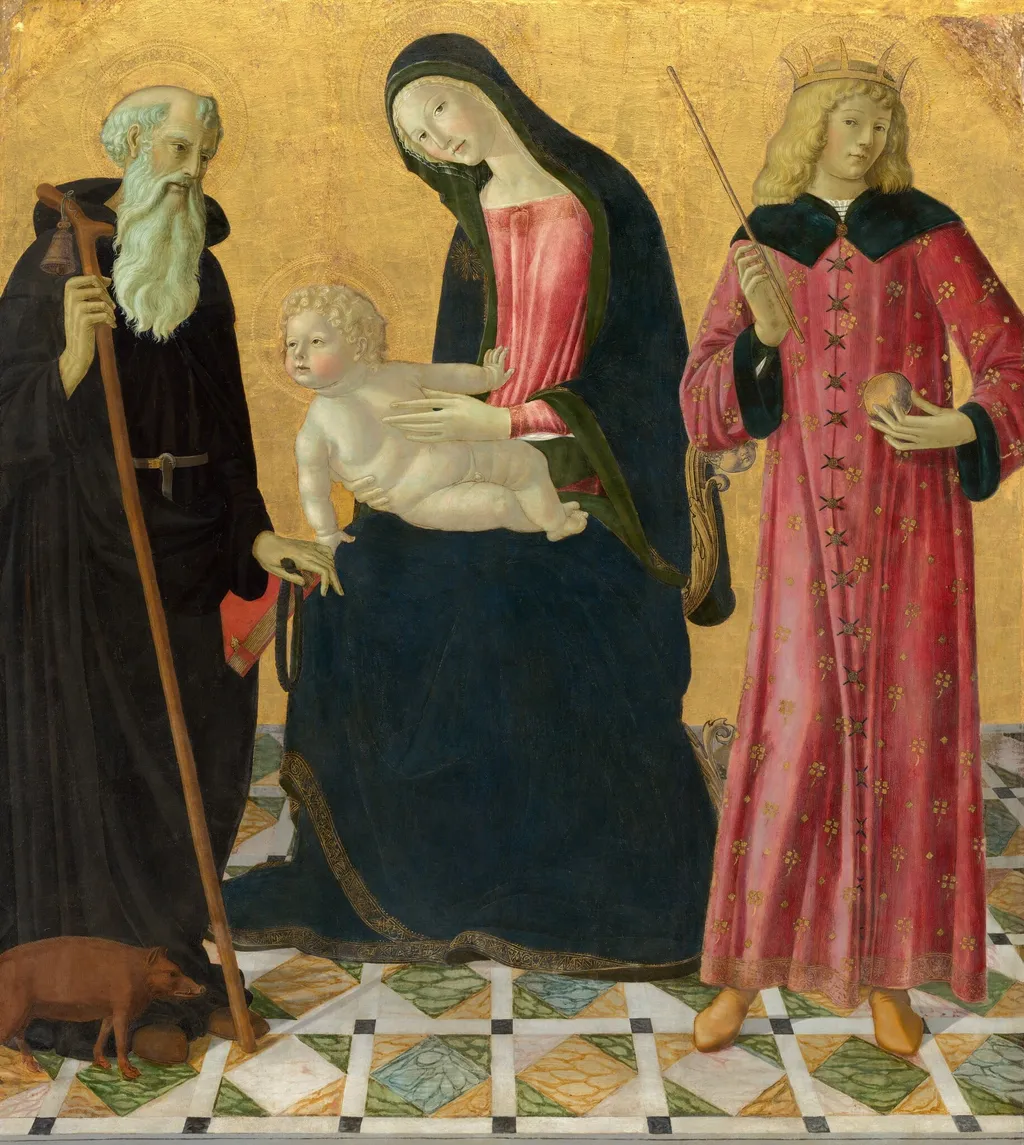
Madonna and Child with Saint Anthony Abbot and Saint Sigismund is a tempera painting by the Early Renaissance artist Neroccio de' Landi. It dates from 1492 and is held in the collection of the National Gallery of Art. This 15th-century Italian tempera painting on panel depicts the Madonna and Child flanked by two venerated figures.
About this work
Subject & Meaning
The pairing of Anthony and Sigismund, a hermit-saint and a royal martyr, reflects late-fifteenth-century Sienese devotion to healing and royal sanctity.
The panel depicts the Virgin Mary holding the Christ Child, flanked by Saint Anthony Abbot and Saint Sigismund. Saint Anthony, identifiable by his monastic habit and tau staff, represents monastic life and protection against ergotism, known as ‘St. Anthony’s fire.’ Saint Sigismund, shown in royal garb, holds a globus cruciger, symbolizing his status as a Christian king and martyr.
The Christ Child’s blessing gesture and the Virgin’s maternal pose underscore themes of intercession and divine grace. The pairing of Anthony and Sigismund, a hermit-saint and a royal martyr, reflects late-fifteenth-century Sienese devotion to healing and royal sanctity.
Technique & Style
Neroccio de' Landi executed this religious painting in 1490 using tempera on a wooden panel. The artwork, which depicts the Madonna and Child alongside Saint Anthony Abbot, measures 158.5 by 142 centimeters. Its substantial size suggests it was likely originally intended for a main church altar rather than a side altar.
The panel's physical condition indicates past intervention; it has been cut and subsequently reframed, which strongly implies it was adapted from a different original setting. These alterations to the support distinguish its current state from its initial format.
History & Provenance
Commissioned around 1490 by an unidentified Sienese church, likely not the Hospital of San Bartolommeo in Rapolano, given the absence of Saint Bartholomew, the panel originally adorned a different altar before being relocated, cut, and reframed. By 1865, it was documented in the church’s left altar, though its dimensions suggest an earlier placement on a main altar. Ownership shifted to Ireneo Magi, Rapolano’s mayor, by 1910, followed by Florentine dealer Elia Volpi (by 1925), London-based Robert Langton Douglas, and New York collector Arthur Sachs (by 1931).
Sold in 1943 via Jacques Seligmann & Co. to the Samuel H. Kress Foundation, it entered the National Gallery of Art in 1952 as a gift.
The painting is currently held in the National Gallery of Art in Washington, D.C., as part of the Samuel H. Kress Collection, with accession number 1952.5.17. It entered the gallery's holdings in 1952 as a gift from the Samuel H. Kress Foundation, which had acquired the work through dealers Jacques Seligmann & Co. and Moses & Singer in March 1943. Prior to its arrival in the United States, the panel was in the collection of Robert Langton Douglas in London and Arthur Sachs in New York by February 1931.
Earlier provenance includes ownership by Elia Volpi in Florence by March 1925 and Ireneo Magi, the mayor of Rapolano, by 1910. The work originally resided on the left altar of the church of the former Hospital of San Bartolommeo in Rapolano, where it was documented by 1865. No specific exhibition history is detailed in the provided sources.
Overview
This 15th-century Italian tempera painting on panel depicts the Madonna and Child flanked by two venerated figures. The composition presents a serene gathering, characteristic of devotional art from the period. While adhering to established artistic conventions, the unknown artist incorporated distinctive elements, particularly in the portrayal of the accompanying saints, to create a unique interpretation of this sacred subject.
Context
The stylistic characteristics observed in this work align with broader artistic trends in 15th-century Italy. For a deeper understanding of the visual language employed, one might examine the paintings of artists such as Neroccio de' Landi. Comparing this piece to works by contemporaries can illuminate shared aesthetic principles and regional variations in devotional art production.
Own this work as a print
Artist & collection


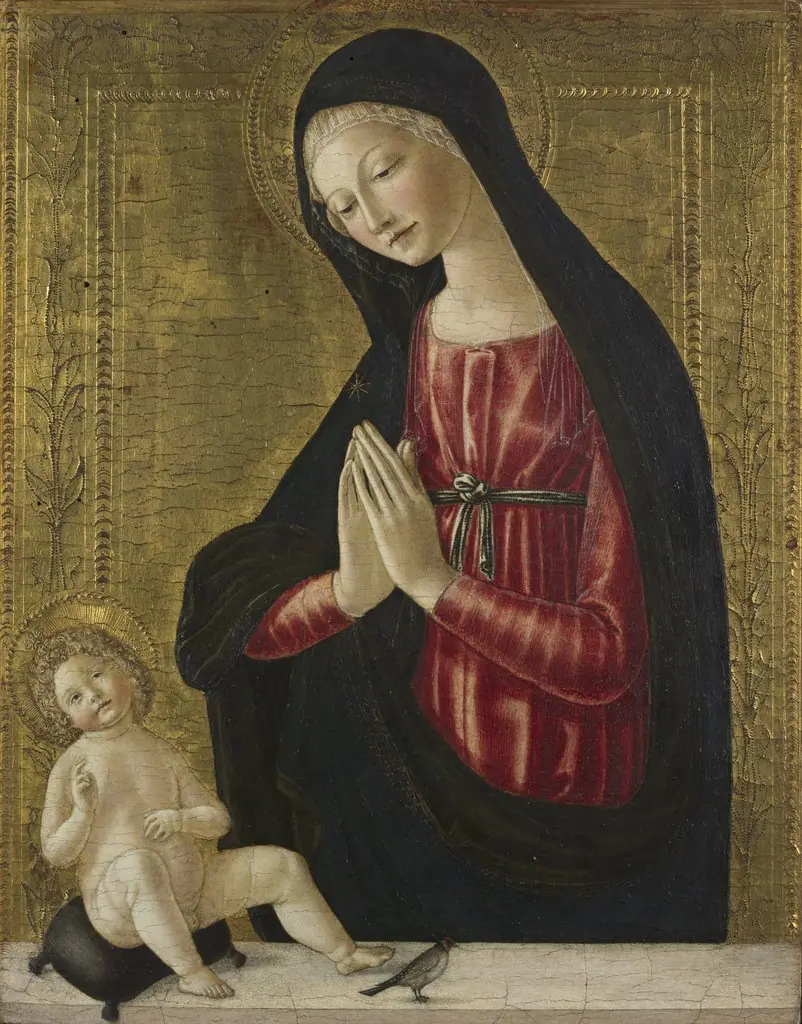
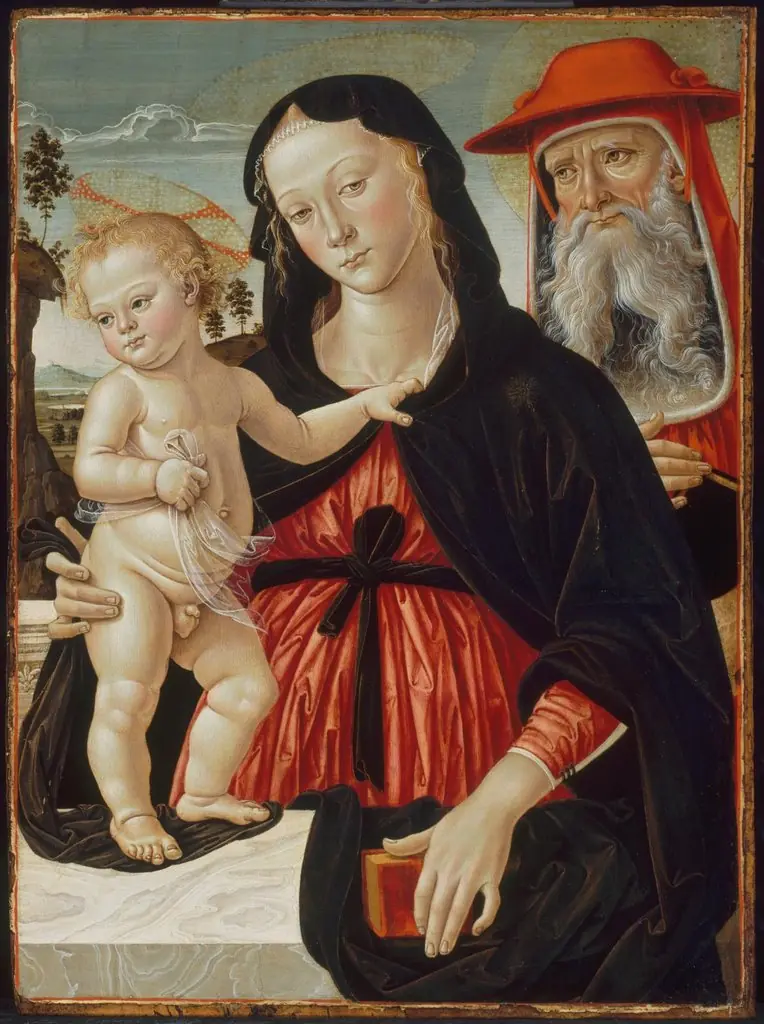 Virgin and Child with Saint Jerome
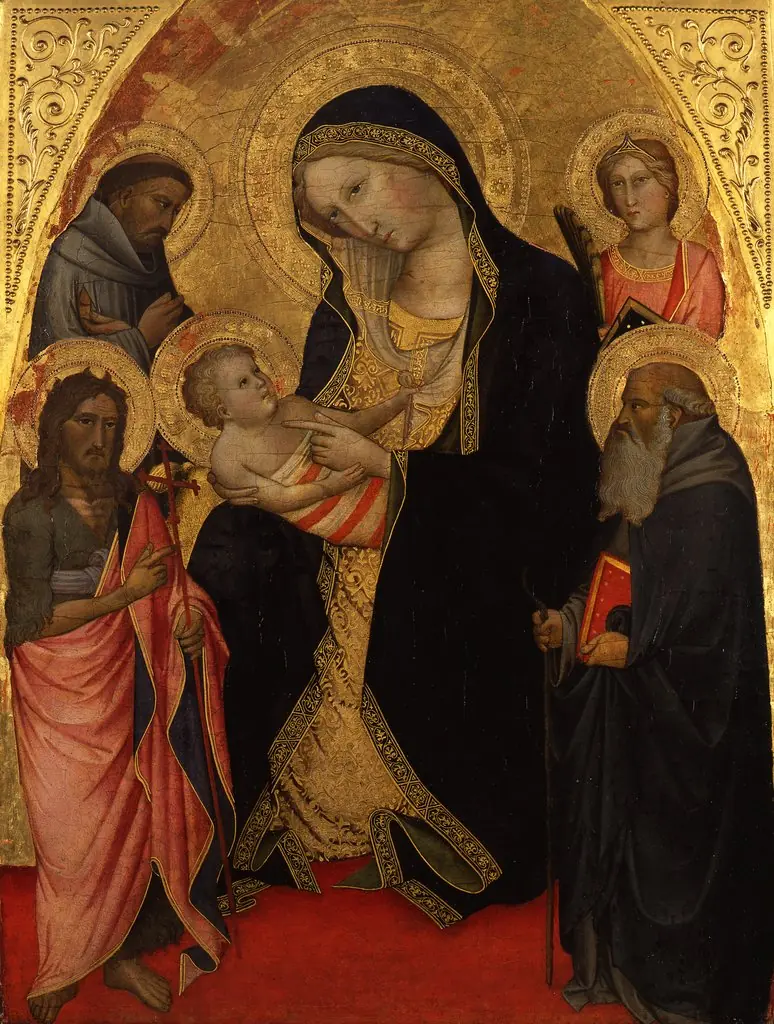 Madonna with the child, St. John the Baptist, St. Francis and St. Anthony and a martyr
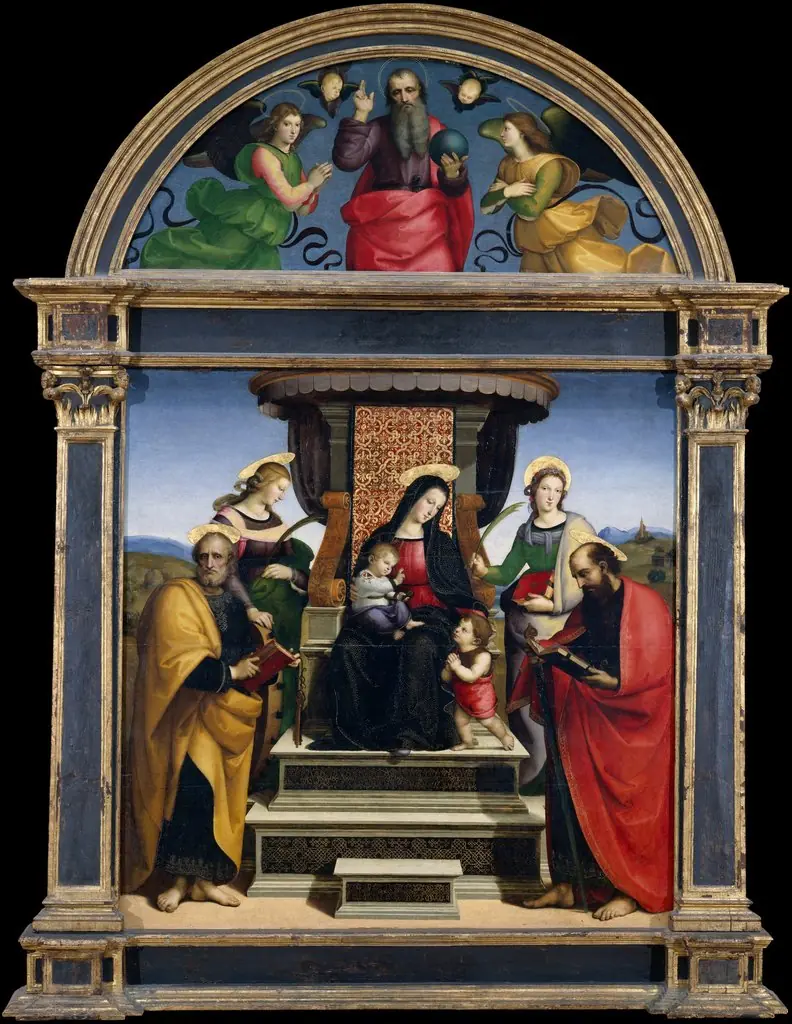 Madonna and Child Enthroned with Saints
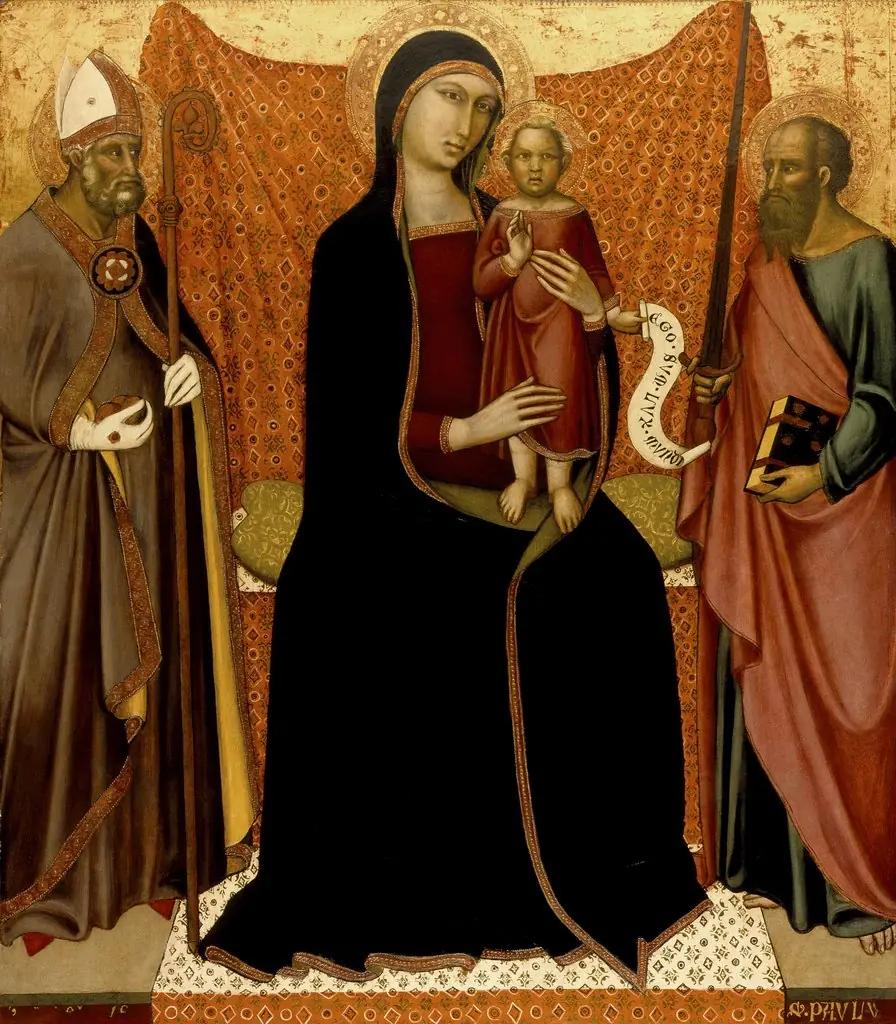 Madonna and Child with Sts. Nicholas and Paul
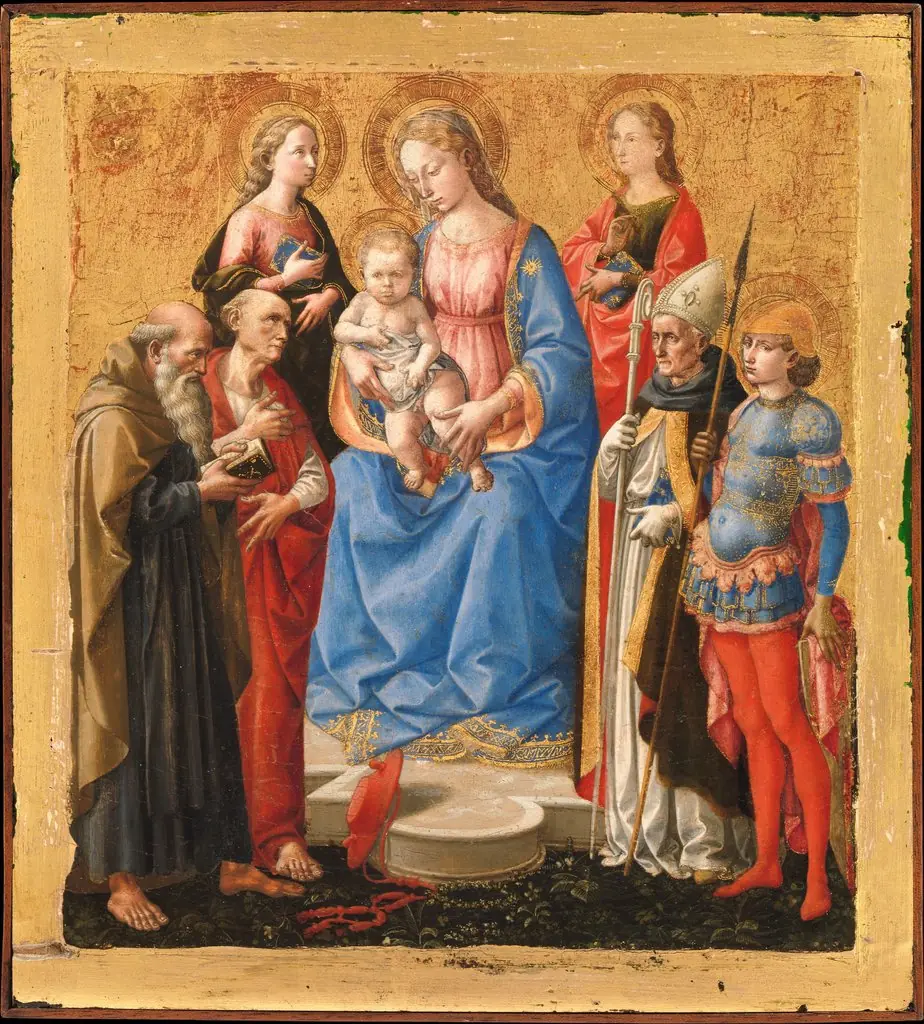 Madonna and Child with Six Saints
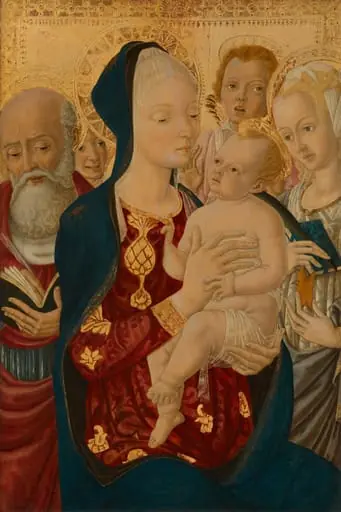 Madonna and Child with Saint Jerome, Saint Catherine of Alexandria, and Angels
 Madonna and Child Enthroned with Saint Peter and Saint Paul
 The Presentation of the Virgin in the Temple