Artwork
Madonna and Child with Saints Jerome and Mary Magdalen
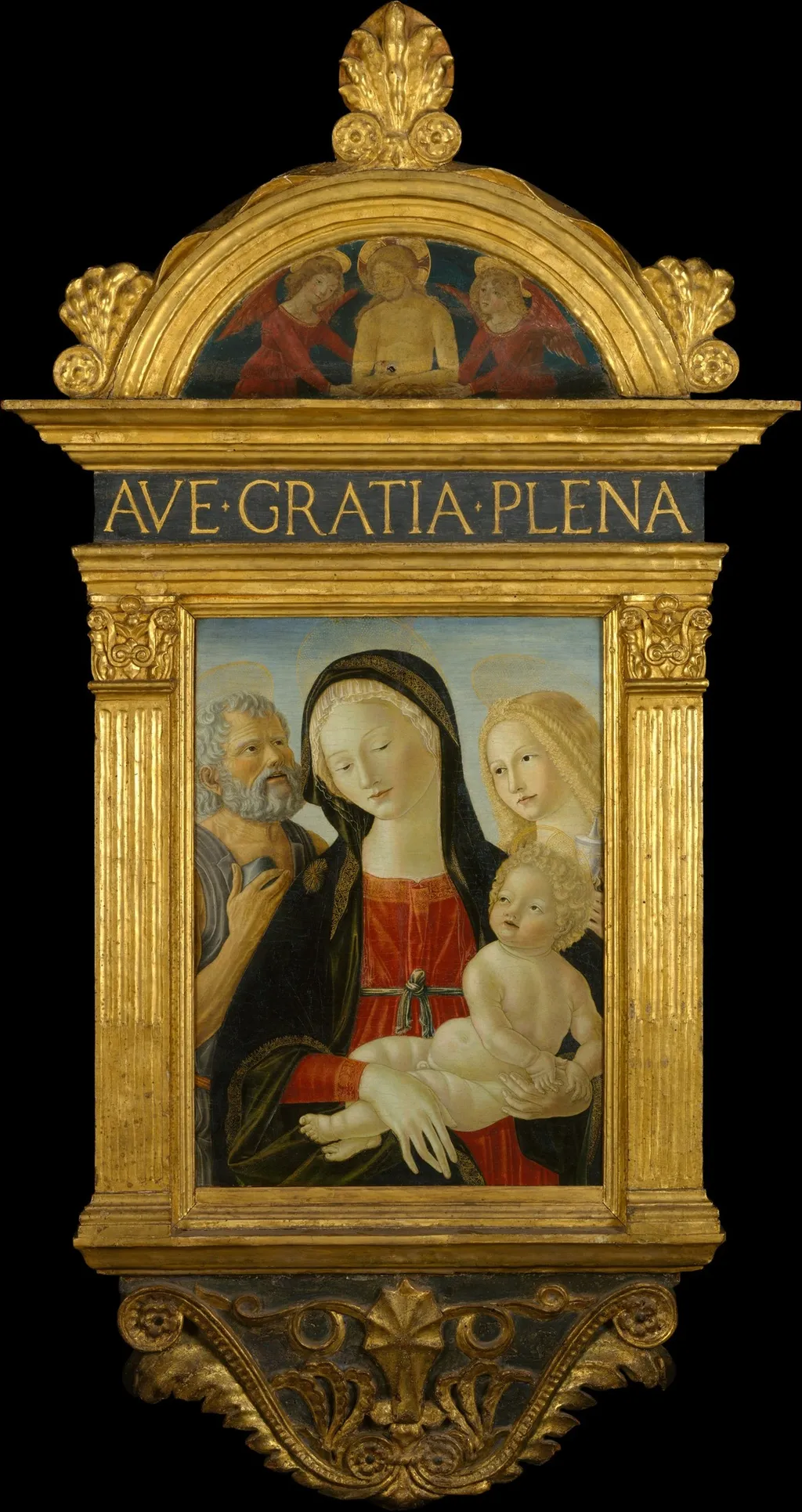
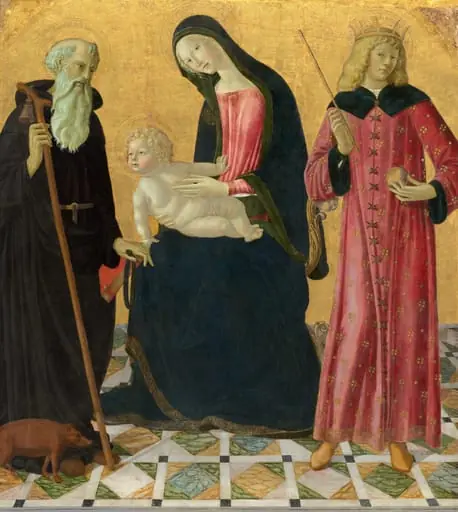
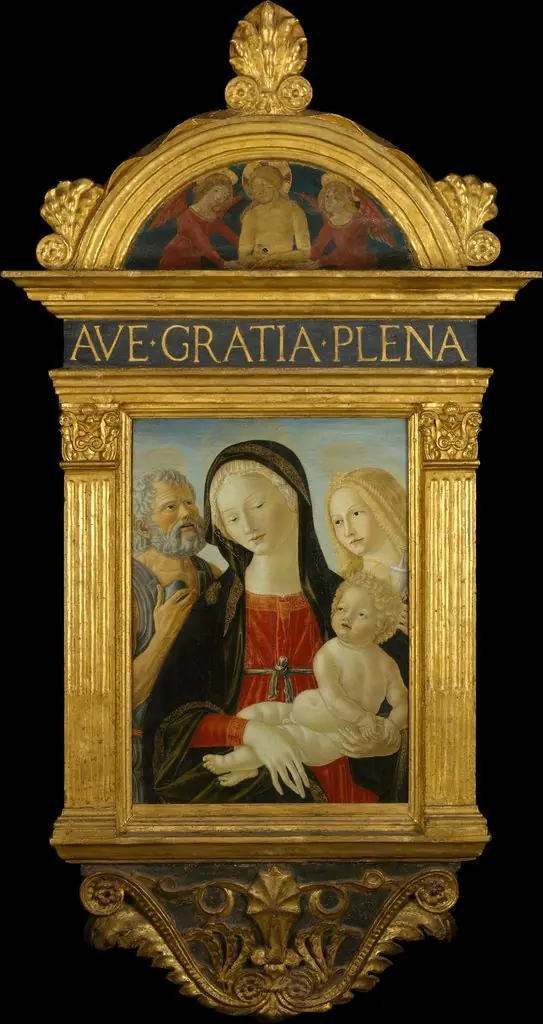
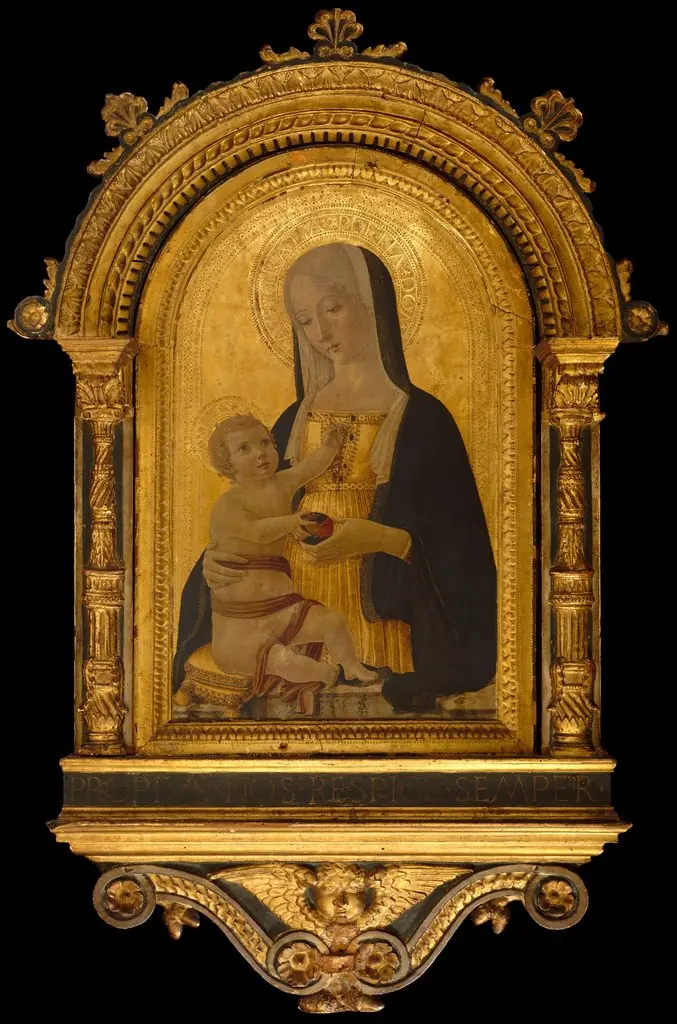
Madonna and Child with Saints Jerome and Mary Magdalen is a tempera painting by the Early Renaissance artist Neroccio de' Landi. It dates from 1496 and is held in the collection of the Metropolitan Museum of Art.
About this work
Subject & Meaning
The composition emphasizes the humanity and divinity of the central figures while integrating the saints as intercessors or exemplars of faith.
The painting depicts the Virgin Mary holding the Christ Child, flanked by two saints: Jerome and Mary Magdalene. As a work of religious art, the central subject is the Madonna and Child, representing the core of Christian devotion. The inclusion of Jerome, traditionally associated with penitence and scholarship, and Mary Magdalene, a figure of repentance and anointing, suggests a thematic focus on redemption and spiritual contemplation.
These figures surround the holy pair, creating a sacred dialogue typical of Sienese Renaissance altarpieces. The composition emphasizes the humanity and divinity of the central figures while integrating the saints as intercessors or exemplars of faith. The work functions as a devotional image, inviting viewers to meditate on the mysteries of the Incarnation and the path to salvation through the presence of these specific holy figures.
Technique & Style
The work is executed in tempera on a wooden panel, measuring roughly 61 × 43.8 cm and dating to circa 1490; it is part of the Metropolitan Museum of Art's collection in New York. The painting portrays the Virgin and Child flanked by Saints Jerome and Mary Magdalene, a composition typical of late Quattrocento Sienese devotional imagery. Neroccio di Bartolomeo de' Landi applied tempera pigment directly onto the panel, achieving a fine linear drawing and a subdued, luminous palette characteristic of the period.
The original frame was not retained; instead, a frame designed by Francesco di Giorgio Martini, a collaborator in Neroccio's workshop, was created for the piece.
History & Provenance
The work titled Madonna and Child with Saints Jerome and Mary Magdalen was executed in tempera on wood panel around 1490 in the Sienese workshop of Neroccio di Bartolomeo de’ Landi. Its creation reflects the late‑15th‑century devotional practice of commissioning portable altarpieces for private worship, although specific patron details are not recorded. The painting measures 61 × 43.8 cm and originally lacked its present frame, which was later designed by Francesco di Giorgio Martini, a collaborator of the artist.
After its execution, the work entered the collection of the Metropolitan Museum of Art in New York, where it remains on public view. Documentation of its date and provenance is provided by museum records and scholarly catalogues.
The painting has been held by the Metropolitan Museum of Art in New York, as documented in Wikidata records and the French Wikipedia entry. It is catalogued within the Samuel H. Kress Collection at the museum, having been included in Fern Rusk Shapley's 1968 publication "Paintings from the Samuel H. Kress Collection: Italian Paintings fifteenth to sixteenth century," which lists the work on page 155. It was further documented in the museum's own catalogue by Federico Zeri and Elizabeth E. Gardner, "Italian Paintings: A Catalogue of the Collection of The Metropolitan Museum of Art, Sienese and Central Italian Schools" (Vicenza, Neri Pozza Editore, 1980), appearing on pages 55–56.
Earlier scholarly attention is recorded in Gertrude Coor's monograph "Neroccio de' Landi 1447–1500" (Princeton, 1961). No specific accession number is provided in the available sources.
Context
Neroccio di Bartolomeo de' Landi's 1490 tempera panel, Madonna and Child with Saints Jerome and Mary Magdalen, exemplifies his mature Sienese style within the late Quattrocento. The work's historical significance is amplified by its former association with Francesco di Giorgio Martini, who designed the original frame; the two artists shared a workshop between 1468 and 1475, a collaboration that shaped Neroccio's artistic development. Scholarly attention to the painting includes its cataloging in major reference works such as Gertrude Coor's definitive monograph on Neroccio and the Metropolitan Museum of Art's own catalogue of Italian paintings by Zeri and Gardner.
These sources situate the piece as a key example of religious art from the Sienese school, currently held in the Metropolitan Museum of Art collection, reflecting the region's distinct contribution to Renaissance devotional imagery.
Overview
This tempera painting, titled Madonna and Child with Saints Jerome and Mary Magdalen, presents a devotional scene. It features the central figures of the Virgin Mary and infant Jesus, flanked by two significant saints. The composition emphasizes a sense of gentle realism and harmonious arrangement, drawing the viewer's attention to the sacred interaction. The artist, Neroccio di Bartolomeo de' Landi, used tempera to create a warm and intimate atmosphere.
Artist & collection