Artwork
The Circumcision
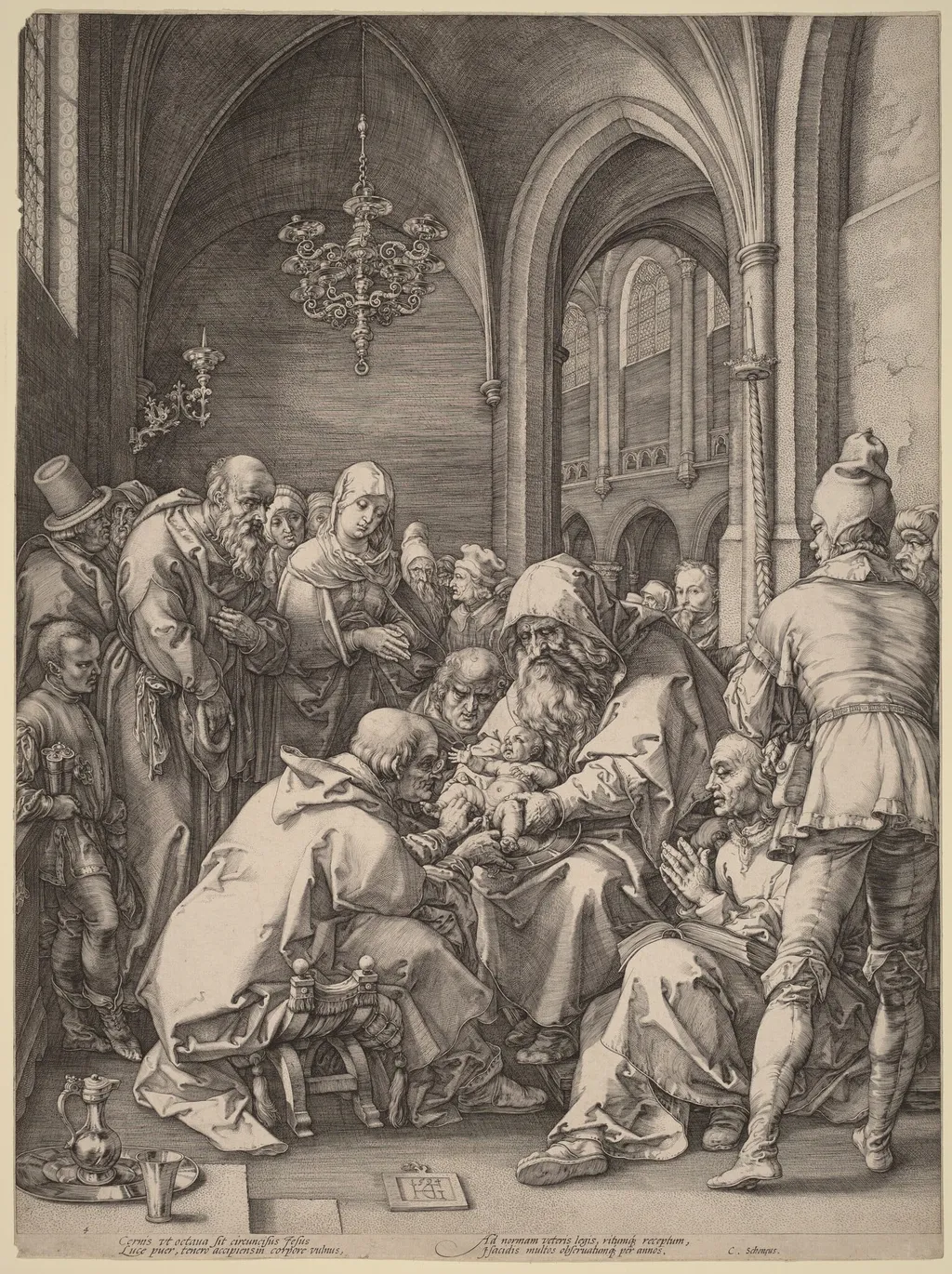
The Circumcision is an ink print by the Renaissance artist Netherlandish 16th Century. It dates from 1594 and is held in the collection of the National Gallery of Art.
- Inscription
- Inscribed:lower center in plate: 1594 / HG; lower left, numbered in image, in plate: 4; below image, in plate: Cernis ut octava sit circuncisus Iesus / Luce puer, tenero accipiens in corpore vulnus, / Ad normam veteris legis, ritumque receptum, / Isacidis multos observatumque per annos. / C. Schonaeus (You see how Jesus is circumcised on the eighth day and in his tender little body receives a wound according to the rules of the ancient law and the custom that has been observed for many years. C[ornelius] Schonaeus [Latin translations from Leeflang, Huigen, and Ger Luijten. _Hendrick Goltzius (1558-1617): Drawings, Prints and Paintings._ Amsterdam: Rijksmuseum, 2003, p. 210.]
About this work
Overview
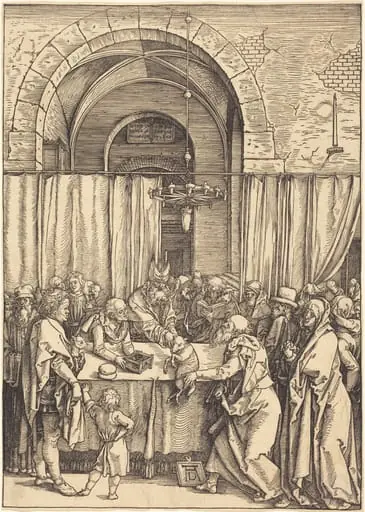
The Circumcision is an engraving on laid paper depicting a solemn scene in a dimly lit, arched room.
Subject & Meaning
The engraving centers on a baby being circumcised, surrounded by onlookers. A bearded man performs the ritual, while a woman holds the infant. The scene conveys a sense of quiet tension, with the figures' attention focused on the ceremony.
Technique & Style
The artist achieved a high level of detail through fine lines, rendering textures and facial expressions with precision. The use of shading and linework creates a three-dimensional effect, drawing the viewer's eye to the central figures and the ritual being performed.
Artist & collection

Artist
This artist carved scenes with fine lines, mostly religious and mythological ones.