Artwork
The Drunkard Pushed into the Pig Sty
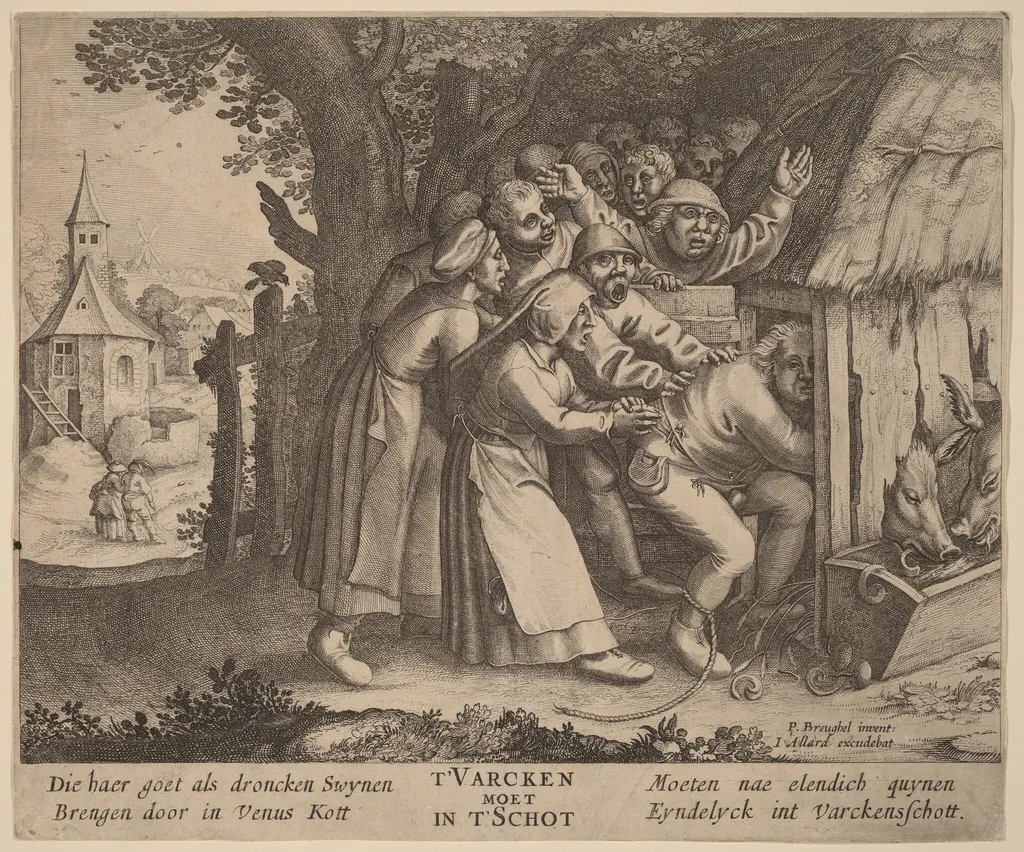
The Drunkard Pushed into the Pig Sty is an ink print by the Renaissance artist Netherlandish 16th Century. It dates from 1568 and is held in the collection of the National Gallery of Art.
About this work
This engraving is reminiscent of the work of Netherlandish 16th Century artists, who were known for their detailed and realistic depictions of everyday life.
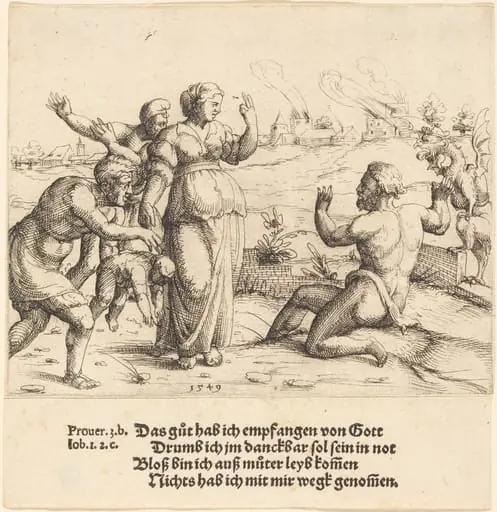
In this engraving, a group of people are gathered around a man who is being pushed into a pig sty. The man is dressed in a long coat and hat, and he appears to be drunk. He is being held by two men, one of whom is wearing a helmet.
The group is standing in front of a building with a thatched roof, and there are trees and other buildings in the background.
The scene is depicted in a detailed and realistic style, with intricate cross-hatching used to create texture and depth. The engraving is a commentary on the dangers of drunkenness and the consequences of one's actions.
This engraving is reminiscent of the work of Netherlandish 16th Century artists, who were known for their detailed and realistic depictions of everyday life.
Overview
The print, titled The Drunkard Pushed into the Pig Sty, is an engraving that portrays a public scene in which a visibly intoxicated man is forced toward a pig pen. Two figures, one wearing a helmet, grasp his coat and hat while a surrounding crowd watches. The setting includes a thatched-roof building, trees, and additional structures in the distance, rendered with meticulous detail.
Subject & Meaning
The composition serves as a moral illustration, warning against the perils of excessive drinking. By placing the inebriate at the brink of a filthy pig sty, the artist underscores the degradation and social embarrassment that result from loss of self‑control, a common didactic theme in early modern visual culture.
Technique & Style
Executed with fine cross‑hatching, the engraving achieves a rich tonal range and a sense of three‑dimensional space. The line work emphasizes textures, from the coarse thatch of the roof to the roughness of the pig sty, and creates depth among the figures, reflecting a realistic approach reminiscent of 16th‑century Netherlandish prints.
History & Provenance
The work belongs to the tradition of Northern European printmaking, where artists often employed engraving to disseminate moral narratives. While the specific creator and date are not recorded here, its stylistic affinities place it within the lineage of Netherlandish visual satire that flourished in the late Renaissance.
Context
During the period when such prints circulated, public admonitions against drunkenness were common in both civic regulations and religious preaching. The engraving would have functioned as a visual supplement to these messages, accessible to a broad audience through its reproducible medium.
Legacy
Prints like this contributed to the development of genre scenes that combined everyday life with moral instruction. Their influence persisted into later centuries, informing the visual language of social critique in both fine art and popular illustration.
Artist & collection

Artist
This artist carved scenes with fine lines, mostly religious and mythological ones.

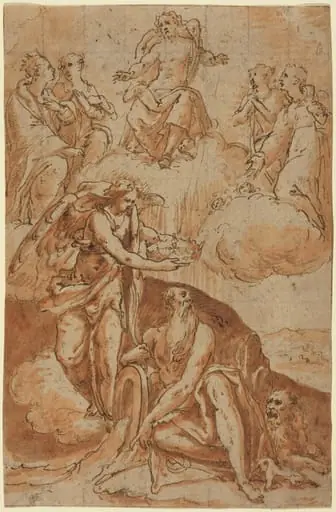
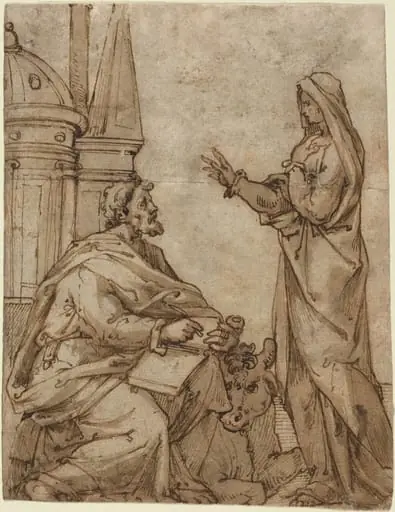
- Epileptics Walking to the Right
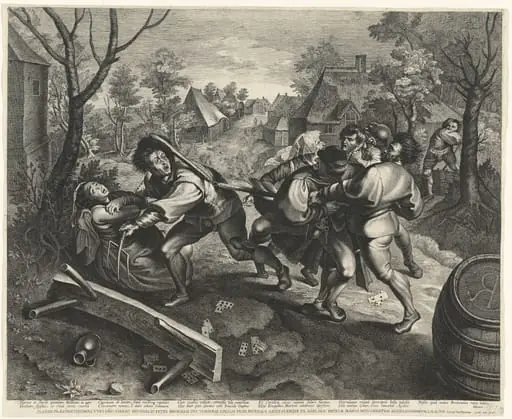 Peasants Fighting over a Game of Cards
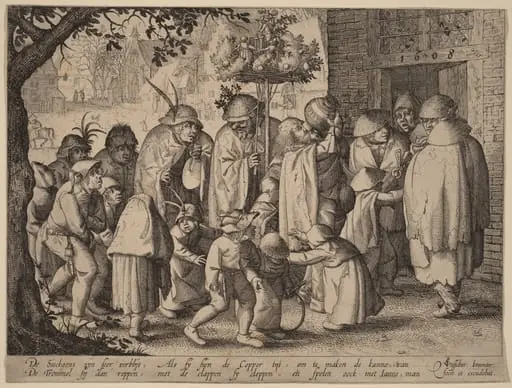 Procession of Feasting Lepers
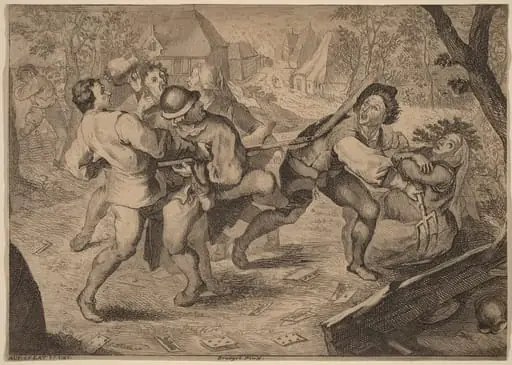 Peasants Fighting
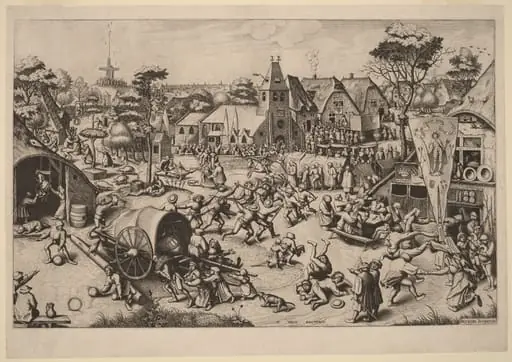 The Festival of Saint George
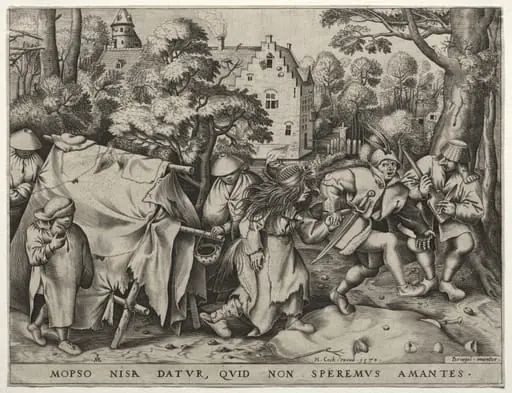 The Wedding of Mopsus and Nisa (The Dirty Bride)
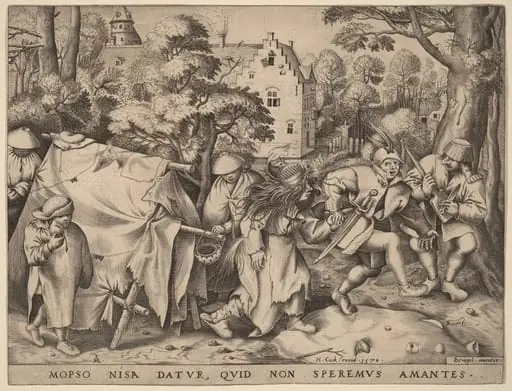 The Wedding of Mopsus and Nisa
 The Blind Leading the Blind
 Saint James the Less
 Tavern
 The Peasant Wedding or the Twelve Months: No. 10
 Job Learns of His Misfortunes