Artwork
The Masquerade of Ourson and Valentin
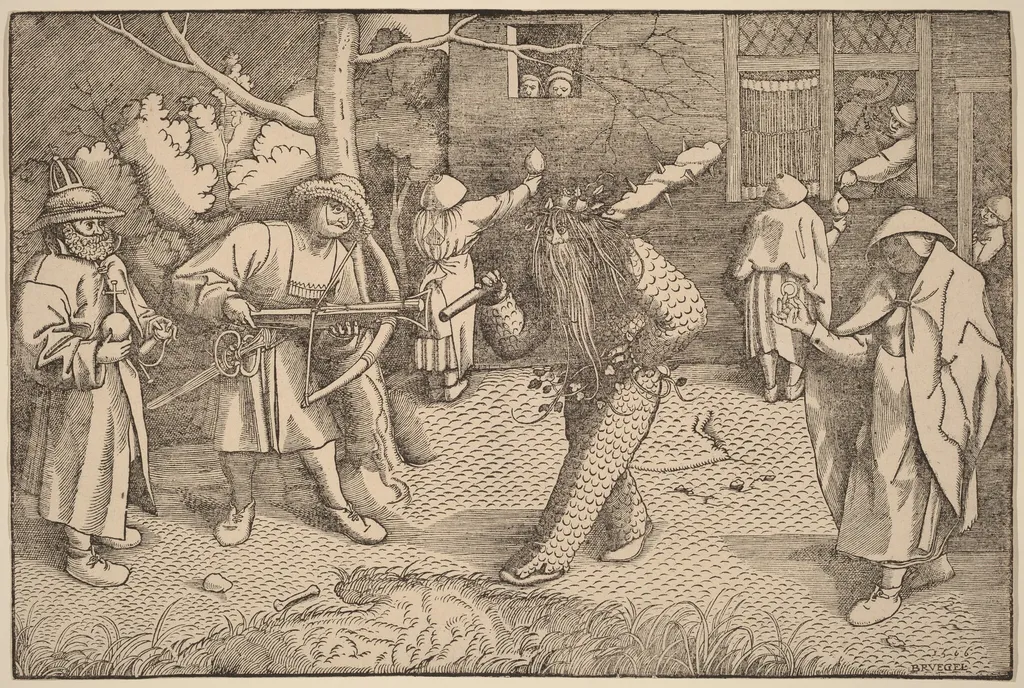
The Masquerade of Ourson and Valentin is an ink print by the Renaissance artist Netherlandish 16th Century. It dates from 1566 and is held in the collection of the National Gallery of Art. This woodcut depicts a frenetic street scene filled with figures in eccentric attire, engaged in dancing, brawling, and merriment.
- Inscription
- Inscribed:lower right, in block: 1566 / BRVEGEL
About this work
Overview
This woodcut depicts a frenetic street scene filled with figures in eccentric attire, engaged in dancing, brawling, and merriment.
This woodcut depicts a frenetic street scene filled with figures in eccentric attire, engaged in dancing, brawling, and merriment. Rendered in bold, angular lines, the composition teems with motion and disorder. Masks, animal pelts, and peculiar objects such as a barrel and a cross populate the foreground, while a house with a rooftop cross and leafless trees frame the background. The image suggests a ritualized or allegorical gathering rather than a literal event.
Subject & Meaning
The figures, dressed in grotesque or symbolic costumes, imply a carnivalesque or satirical ritual, possibly reflecting seasonal festivals or moral allegories common in early 16th-century Europe. The presence of a cross amid revelry may hint at religious irony or the inversion of sacred norms. The title, referencing two names, could allude to specific participants in a known tradition, though their identities remain unverified.
Technique & Style
Executed as a woodcut, the image relies on sharp, incised lines and high-contrast black-and-white forms to convey movement and density. The artist compressed numerous figures into a tight space using simplified, almost schematic shapes, emphasizing rhythm over realism. The lack of shading and uniform line weight enhances the print’s graphic intensity, characteristic of Northern European printmaking of the period.
History & Provenance
The work originates from the early 1500s, a time when woodcut prints were widely circulated as affordable images for public consumption. Though the artist’s identity is unrecorded, the style aligns with regional workshops in the Holy Roman Empire. No documented ownership chain exists prior to modern collections, suggesting it was likely a standalone broadsheet or part of a lost series.
Context
This image reflects the persistence of pre-Christian folk traditions during the Reformation, when the Church sought to suppress public revelry. Similar scenes appear in contemporary prints depicting Shrovetide or Feast of Fools, where social hierarchies were temporarily overturned. The chaotic energy here mirrors broader anxieties about moral decay and the blurring of sacred and profane.
Legacy
As a surviving example of vernacular print culture, the work offers insight into how ordinary people engaged with symbolic imagery outside elite artistic circles. Its raw energy and unpolished form distinguish it from refined engravings of the era, preserving a glimpse of popular visual language that influenced later satirical and expressionist traditions.
Artist & collection

Artist
This artist carved scenes with fine lines, mostly religious and mythological ones.

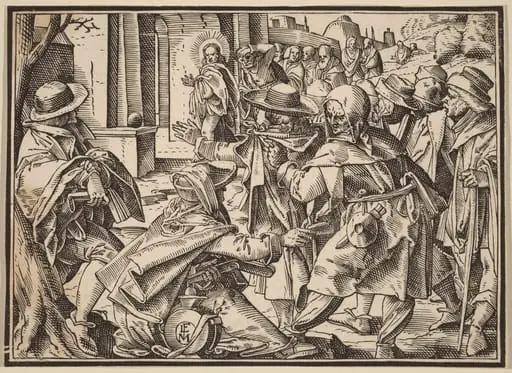 Christ Tells His Disciples of the Last Judgment
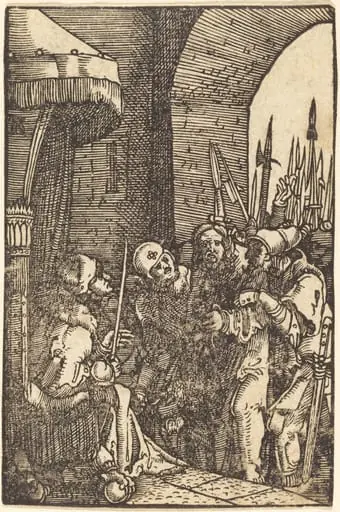 Christ before Pilate
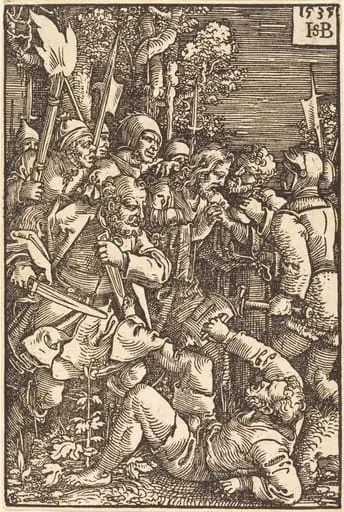 The Betrayal of Christ
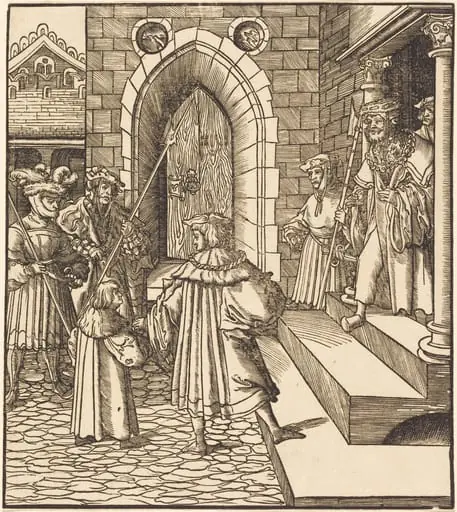 Three Men and a Boy in the Court of a Castle, to the Right Three Men on a Staircase
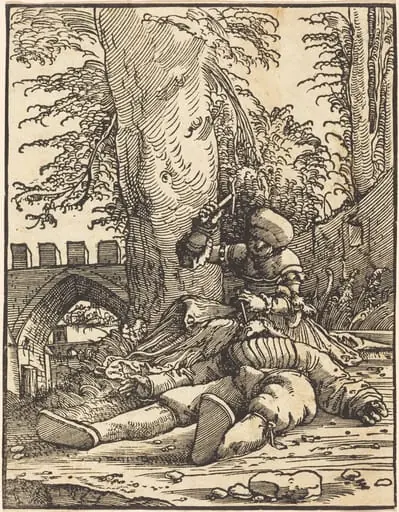 Jael and Sisera
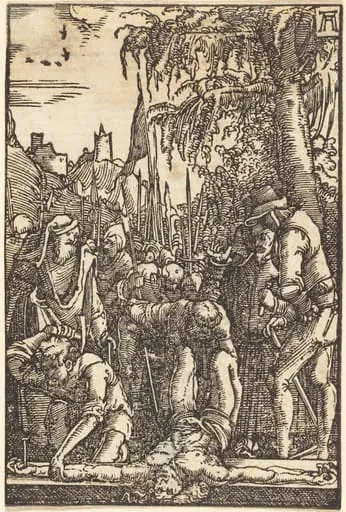 Christ Nailed to the Cross
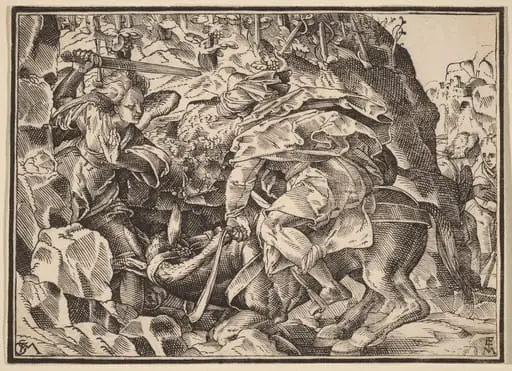 Christ Tells His Disciples of the Last Judgment
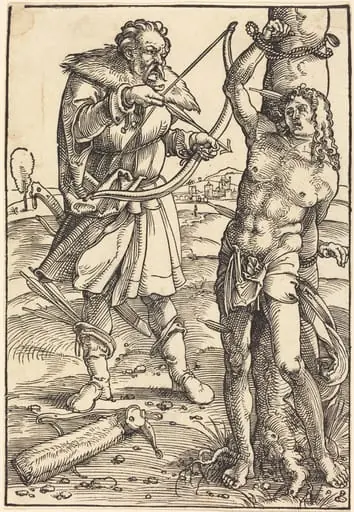 The Martyrdom of Saint Sebastian
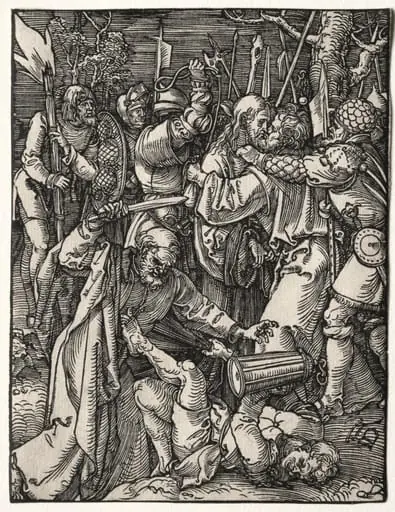 The Small Passion: The Betrayal of Christ
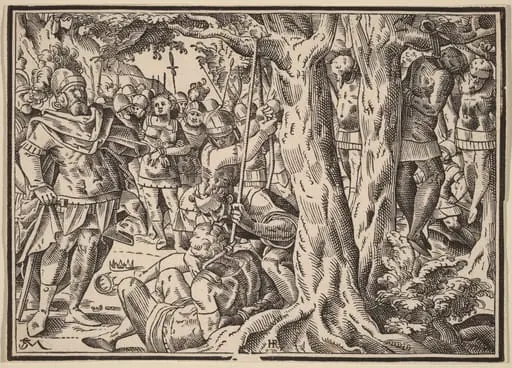 Christ Tells His Disciples of the Last Judgment
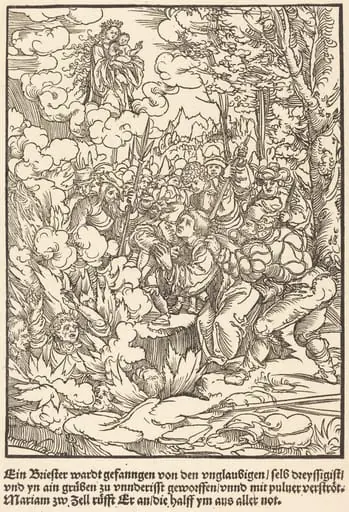 Ein Briester wardt gefanngen ...
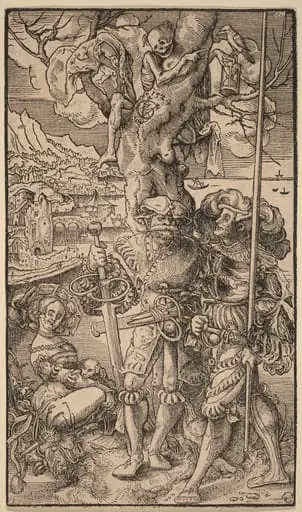
- Two Mercenaries and a Woman