Artwork
Dedication: Ich bin die Auferstehung und das Leben (I am the resurrection and the life)
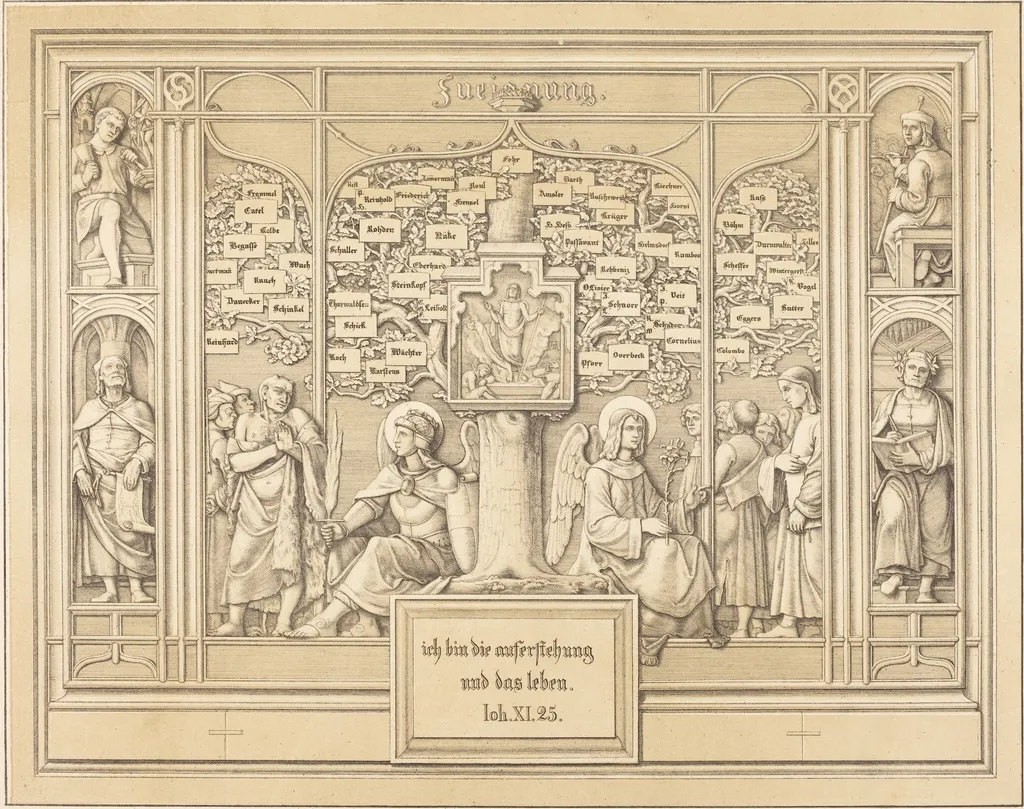
Dedication: Ich bin die Auferstehung und das Leben (I am the resurrection and the life) is an ink print by the Romanticist artist Ferdinand Olivier. It dates from 1823 and is held in the collection of the National Gallery of Art.
About this work
Overview
At the center, a woman kneels beside an open tomb while an angel stands in attendance, directly illustrating the biblical moment of the resurrection.
Created in 1823 by Ferdinand Olivier, a central figure of the Nazarene movement, this lithograph titled 'Dedication: Ich bin die Auferstehung und das Leben' (I am the resurrection and the life) serves as a visual meditation on Christian resurrection. The composition is structured as a complex allegorical tableau rather than a single narrative scene. At the center, a woman kneels beside an open tomb while an angel stands in attendance, directly illustrating the biblical moment of the resurrection.
This core scene is encircled by smaller, distinct figures framed within arches; these figures hold books and tools, symbolizing the intersection of spiritual devotion and earthly labor or learning. Above this arrangement, a framed painting depicts a floating figure, likely representing Christ in glory, while the lower section contains inscribed text that anchors the work's theological message. Olivier, known for his mystical landscapes and religious prints, utilized the lithographic medium to achieve the detailed, linear clarity favored by the Nazarenes.
This work exemplifies the movement's rejection of academic classicism in favor of a spiritual, quasi-medieval aesthetic that sought to revive the piety of early German art.
Subject & Meaning
At the centre a kneeling woman attends a tomb while an angel stands nearby, suggesting a moment of mourning and hope. Surrounding figures, some bearing books or tools, are arranged in arched niches that frame the central action, reinforcing the theme of resurrection and the promise of new life.
Technique & Style
The lithograph employs strong linear contrasts and deep shadows characteristic of early 19th‑century German printmaking. Olivier’s handling of the stone surface creates crisp outlines for the figures and decorative frames, while the tonal gradations give the scene a dramatic, almost theatrical atmosphere.
History & Provenance
Created in the early 1820s, the print reflects Olivier’s interest in religious subjects during a period when lithography was gaining popularity as a medium for both artistic and devotional works. The inclusion of numerous names within the surrounding frames suggests it may have been commissioned as a dedication for specific individuals or families.
Context
The work belongs to a broader German Romantic fascination with biblical motifs and the spiritual renewal of the post‑Napoleonic era. Its compositional complexity and use of multiple inset frames echo contemporary altar pieces and devotional prints that aimed to engage viewers on both visual and contemplative levels.
Legacy
While not as widely reproduced as later lithographs, this piece illustrates Olivier’s contribution to the development of narrative printmaking in Germany and offers insight into the devotional visual culture of the early 19th century.
Own this work as a print
Artist & collection


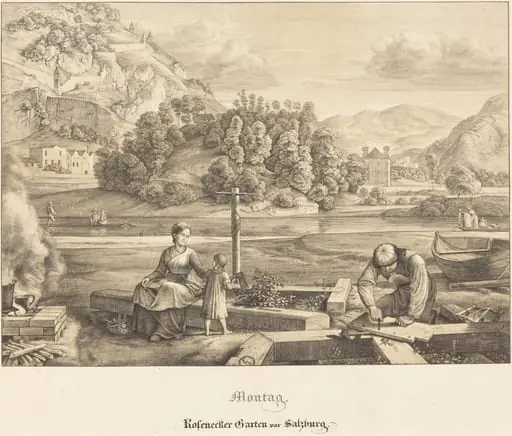 Montag - Rosenecker Garten vor Salzburg (Monday - Rosenecker Garden near Salzburg)
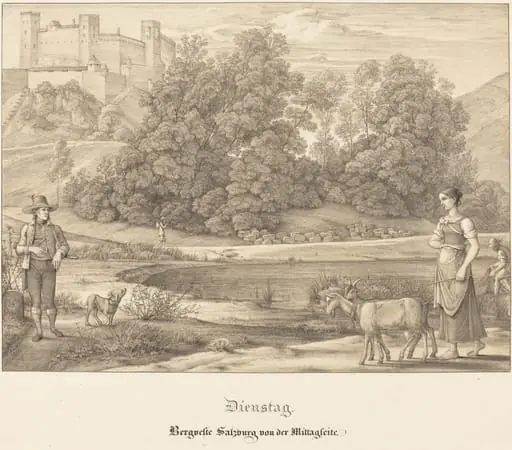 Dienstag - Bergveste Salzburg vor der Mittagseit (Tuesday - The Castle of Salzburg from the Noontime Side)
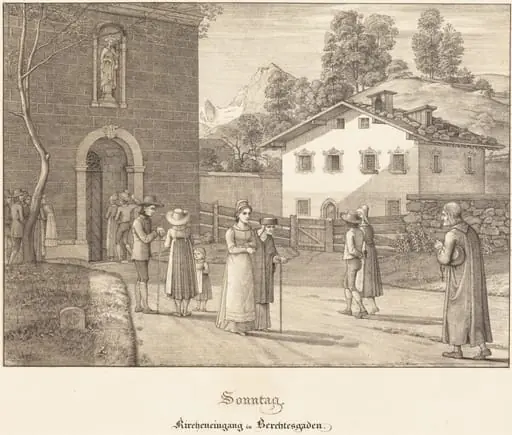 Sonntag - Kircheneingang in Berchtesgaden (Sunday - Going to Church near Berchtesgaden)
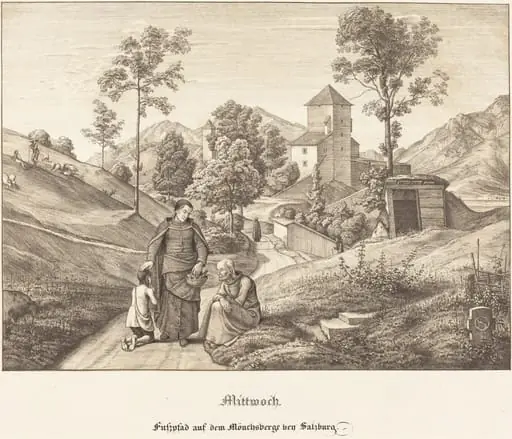 Mittwoch - Fusspfad auf dem Mönchsberge bey Salzburg (Wednesday - Footpath on the Mönchsberge near Salzburg)
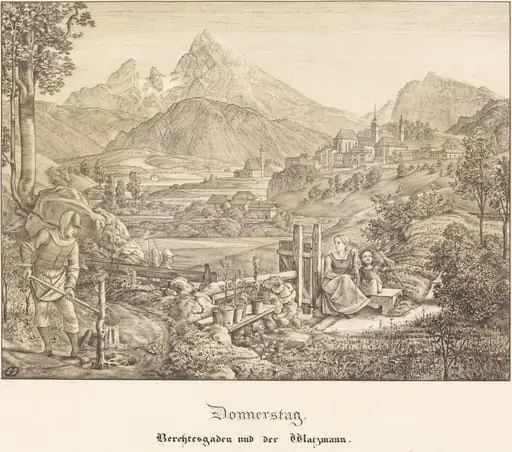 Donnerstag - Berchtesgaden und der Watzmann (Thursday - Berchtesgaden and the Watzmann Mountain)
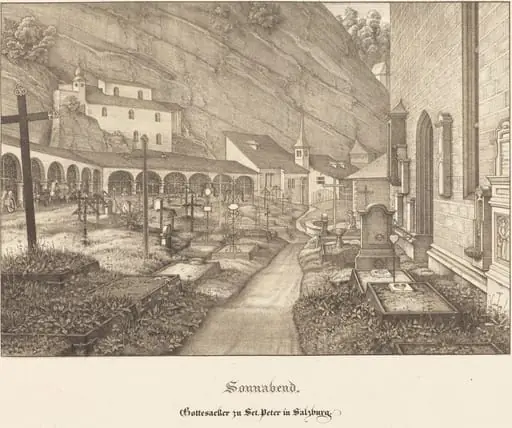 Sonnabend - Gottesacker zu St. Peter in Salzburg (Saturday - Graveyard of St. Peter's in Salzburg)
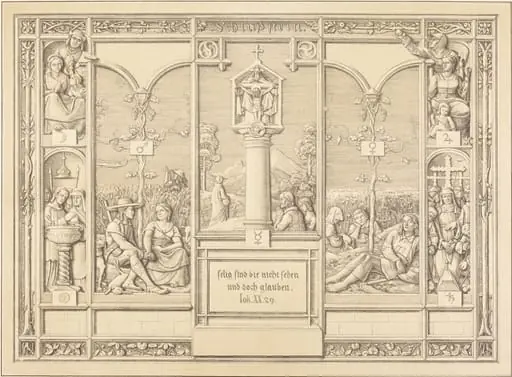
- Tailpiece: Selig sind die nicht sehen und doch glauben (Blessed are those who do not
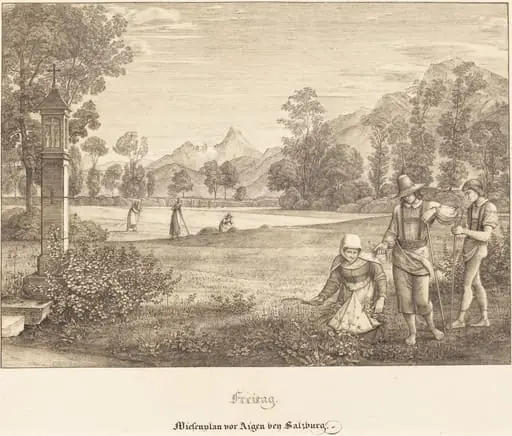 Freitag - Wiesenplan vor Aigen bey Salzburg (Meadow before Aigen near Salzburg)
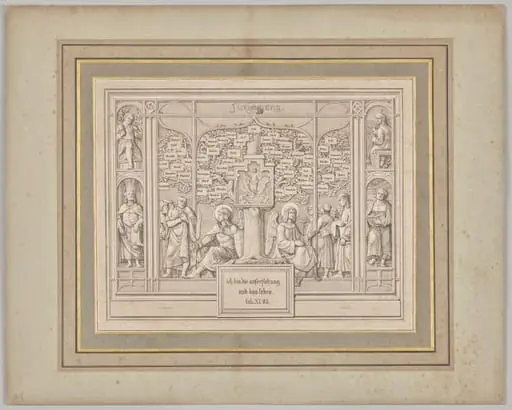 Dedication. John XI, 25
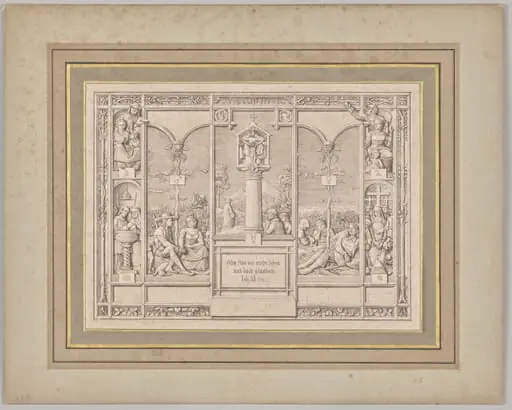 Capstone. John XX, 29
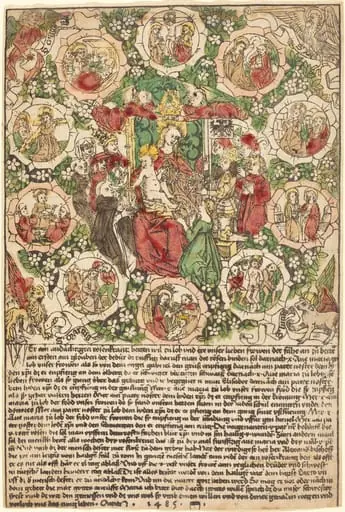 Madonna with the Rosary
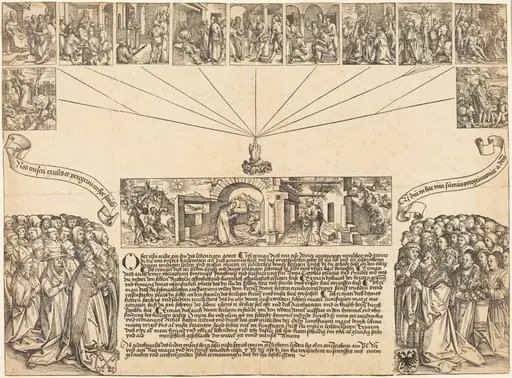 The Nativity and Passion of Christ
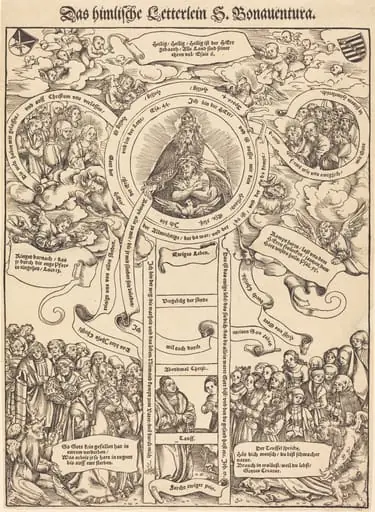 The Celestial Ladder of Saint Bonaventura
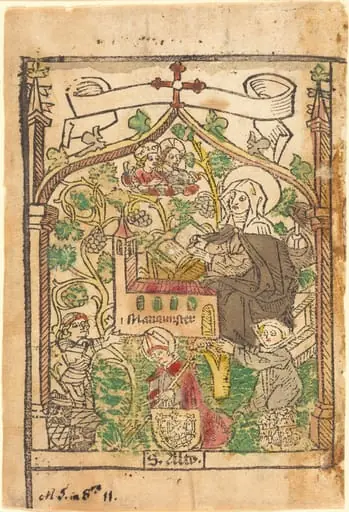 Saint Alto, Saint Bridget and the Founders of the Mariamunster
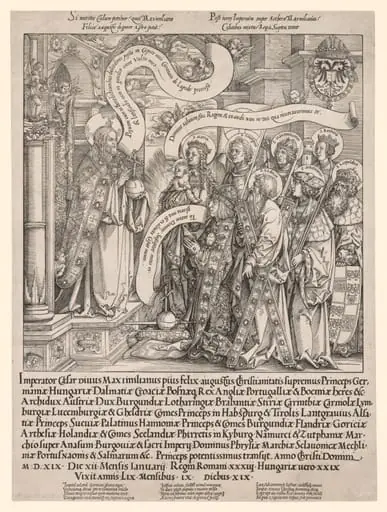 The Emperor Maximilian Presented by His Patron Saints to the Almighty
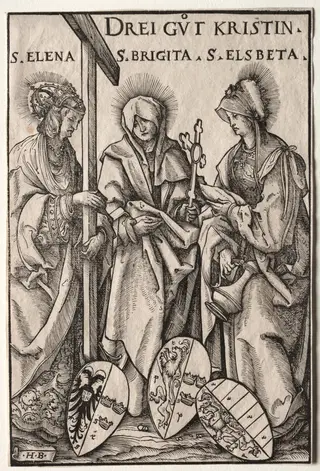 The Three Christian Heroines: Saints Helen, Bridget and Elizabeth
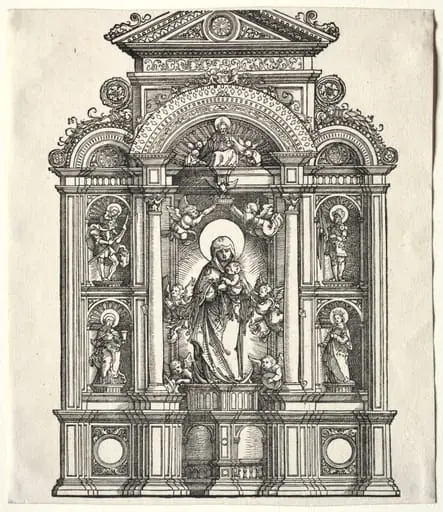 Great Altar with the Virgin, in a border with SS. Christopher, George, Barbara, Catherine
!["Obliterate the Trace of the Pot in the Ashes" [fol. 32 verso / 33 recto], by French early 16th Century](https://artifactworldgallery.com/img/french-early-16th-century--obliterate-the-trace-of-the-pot-in-the-ashes-fol-32-verso-33--e808688d684304b0-w320.webp) "Obliterate the Trace of the Pot in the Ashes" [fol. 32 verso / 33 recto]
"Obliterate the Trace of the Pot in the Ashes" [fol. 32 verso / 33 recto]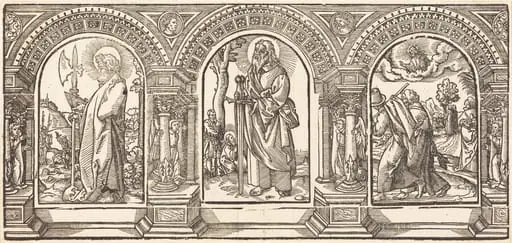 Christ and His Disciples V