Artwork
Village Schoolmaster with Three Pupils
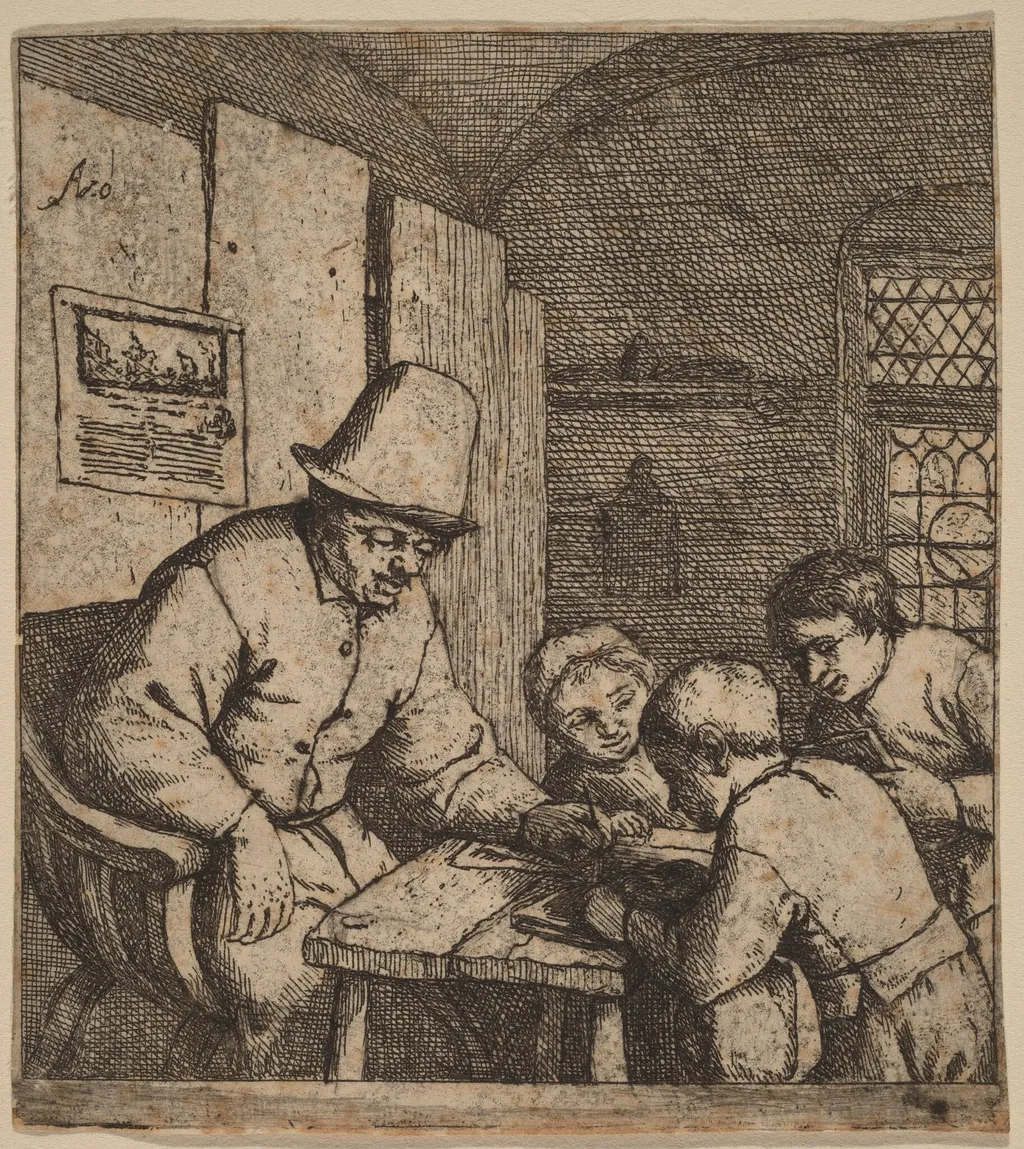
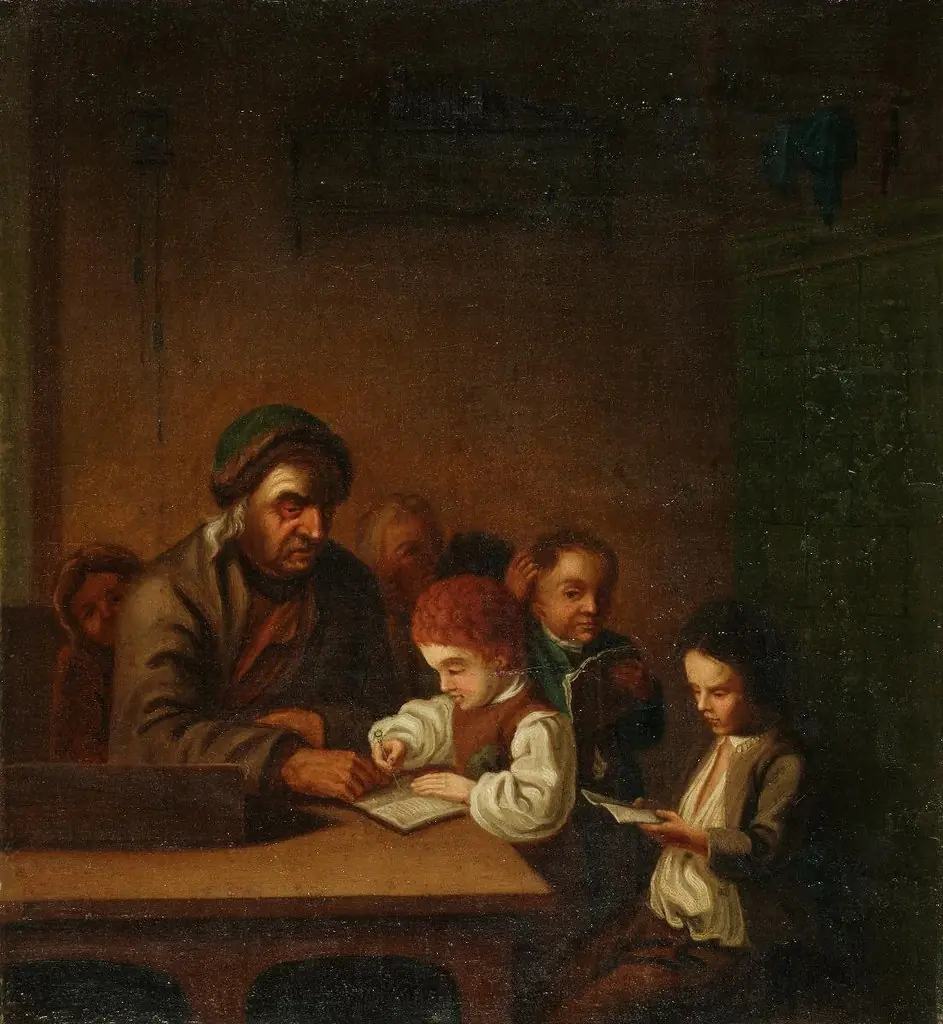
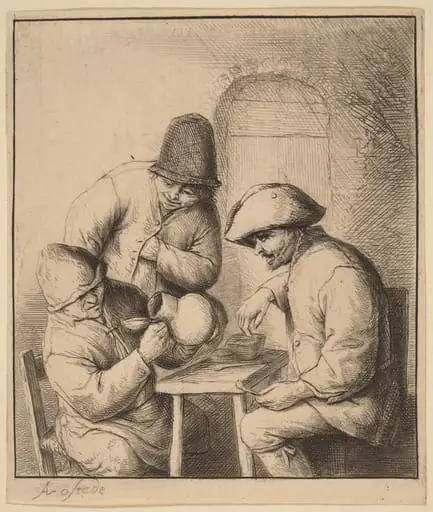
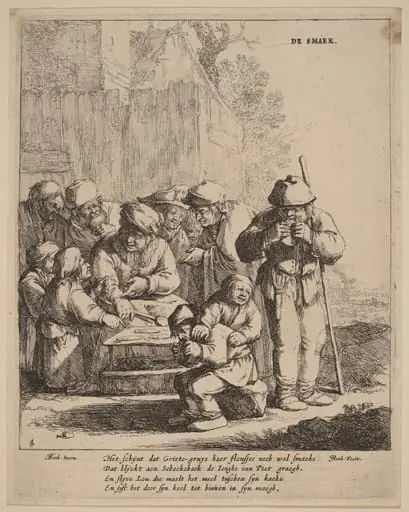
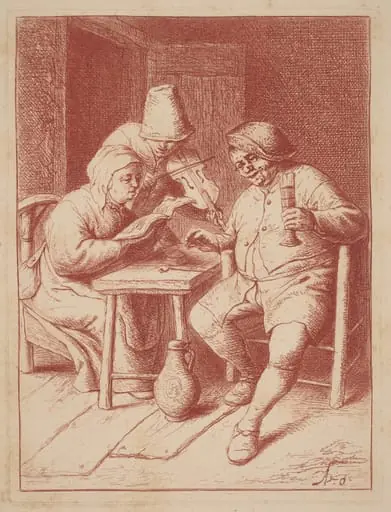
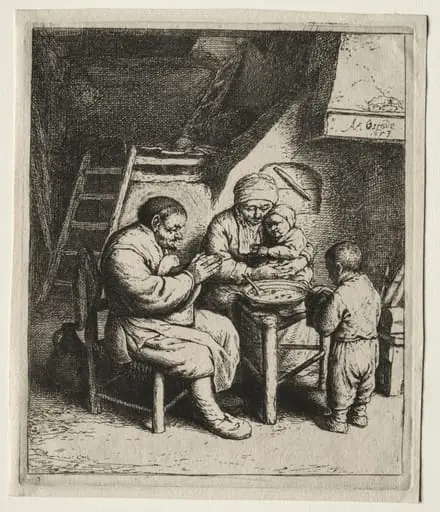
Village Schoolmaster with Three Pupils is an ink print by the Baroque artist Adriaen van Ostade. It dates from 1679 and is held in the collection of the National Gallery of Art.
- Inscription
- Inscribed:in plate, in image at upper left: Av.O; verso, lower center, in graphite by a later hand: B.17; lower right, in graphite by a later hand: B.17 Dav I
About this work
Overview
Created around 1679, this etching by Adriaen van Ostade captures a quiet moment in a rural classroom. Executed on laid paper, the work belongs to a series of prints in which Ostade explored domestic and communal life in the Dutch countryside. The composition centers on an elderly schoolmaster instructing three young pupils, rendered with careful attention to posture and expression.
Subject & Meaning
The scene portrays a humble educational setting, emphasizing the quiet authority of the teacher and the focused attention of his students. No grand narrative is present, instead, the image conveys the dignity of ordinary labor and the transmission of knowledge in rural society. The modest interior and unadorned clothing reinforce the work’s grounding in everyday reality.
Technique & Style
Ostade employed fine, controlled lines to model form and texture, using etching to achieve subtle gradations of light and shadow. The folds of the pupils’ garments and the brim of the schoolmaster’s hat are rendered with delicate hatching, lending a tactile quality to the figures. The crooked frame on the wall and woven wall patterns add quiet detail, typical of Ostade’s observational precision.
History & Provenance
The print was produced late in Ostade’s career, during a period when he increasingly turned to etching as a medium. While its early ownership is undocumented, it entered major collections in the 19th century, reflecting growing appreciation for Dutch genre prints. Its survival in good condition speaks to its enduring appeal among collectors of Northern European printmaking.
Context
In late 17th-century Holland, genre scenes like this one resonated with urban audiences fascinated by rural life. Though often idealized, Ostade’s depictions avoided sentimentality, presenting village subjects with unembellished realism. This etching aligns with broader trends in Dutch art that valued moral quietude and the observation of daily routines over heroic or religious themes.
Legacy
Ostade’s etchings, including this one, influenced later generations of printmakers who sought to capture the dignity of common life. His ability to convey character through minimal yet precise linework set a standard for narrative clarity in print. Though less celebrated than his paintings, these works remain key to understanding the breadth of Dutch Golden Age visual culture.
Own this work as a print
Artist & collection

Artist
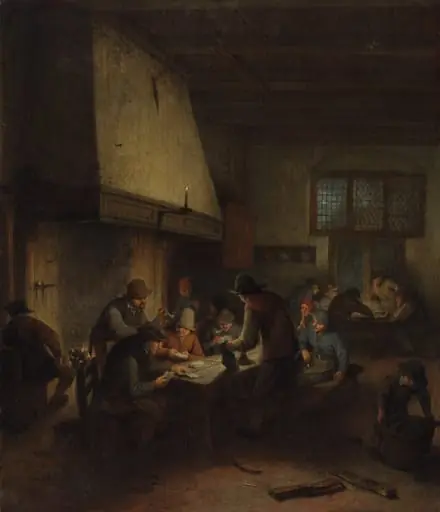
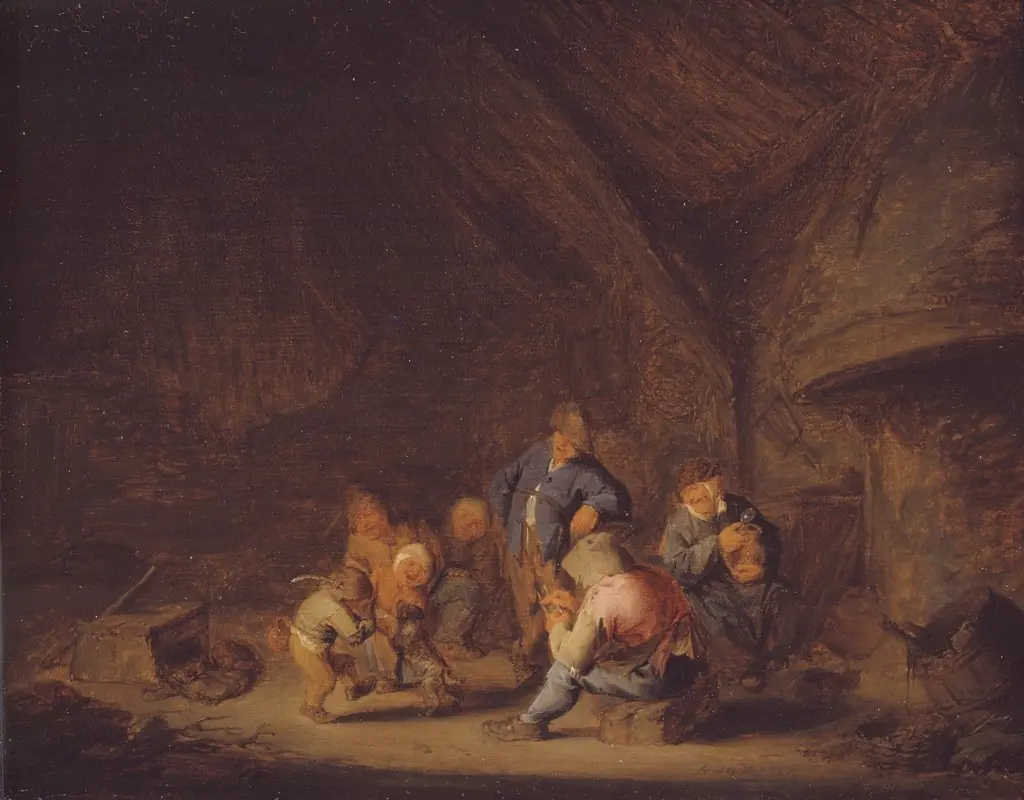
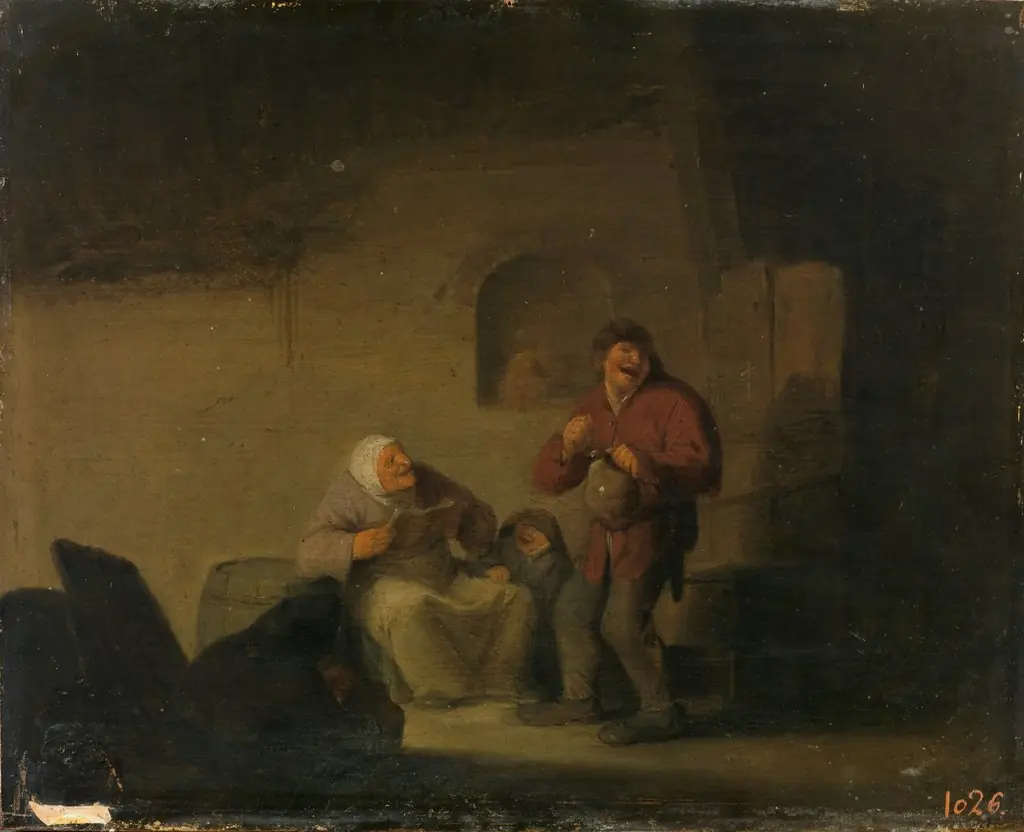
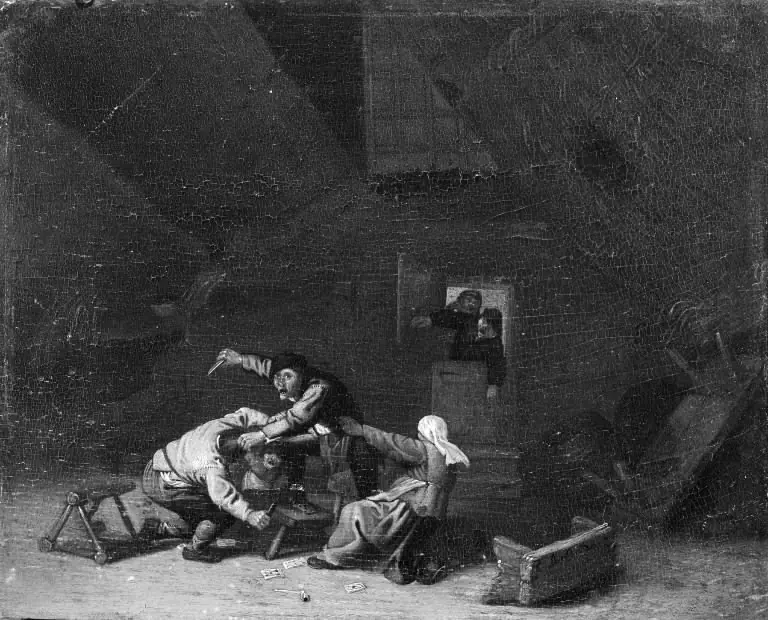
Adriaen van Ostade (baptized as Adriaen Jansz Hendricx 10 December 1610 – buried 2 May 1685) was a Dutch Golden Age painter of genre works, showing the everyday life of ordinary men and women.