Artwork
Pietà
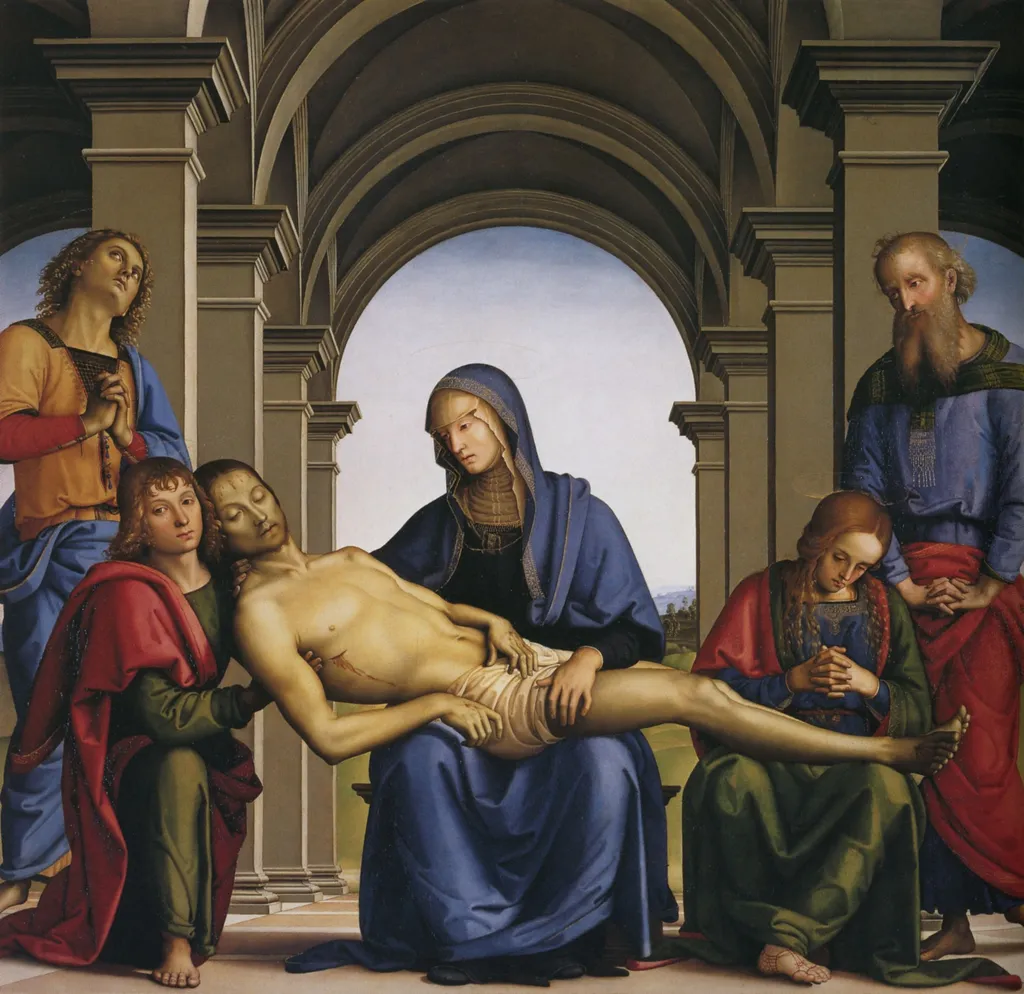
Pietà is an oil painting by the Early Renaissance artist Pietro Perugino. It dates from 1492 and is held in the collection of the Uffizi Gallery.
About this work
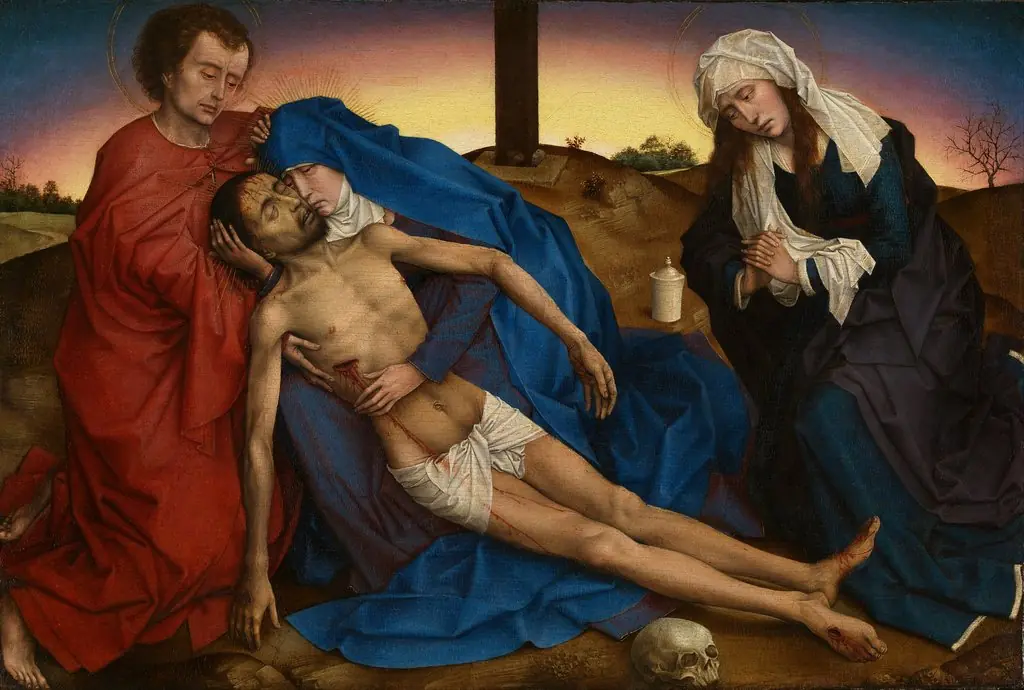
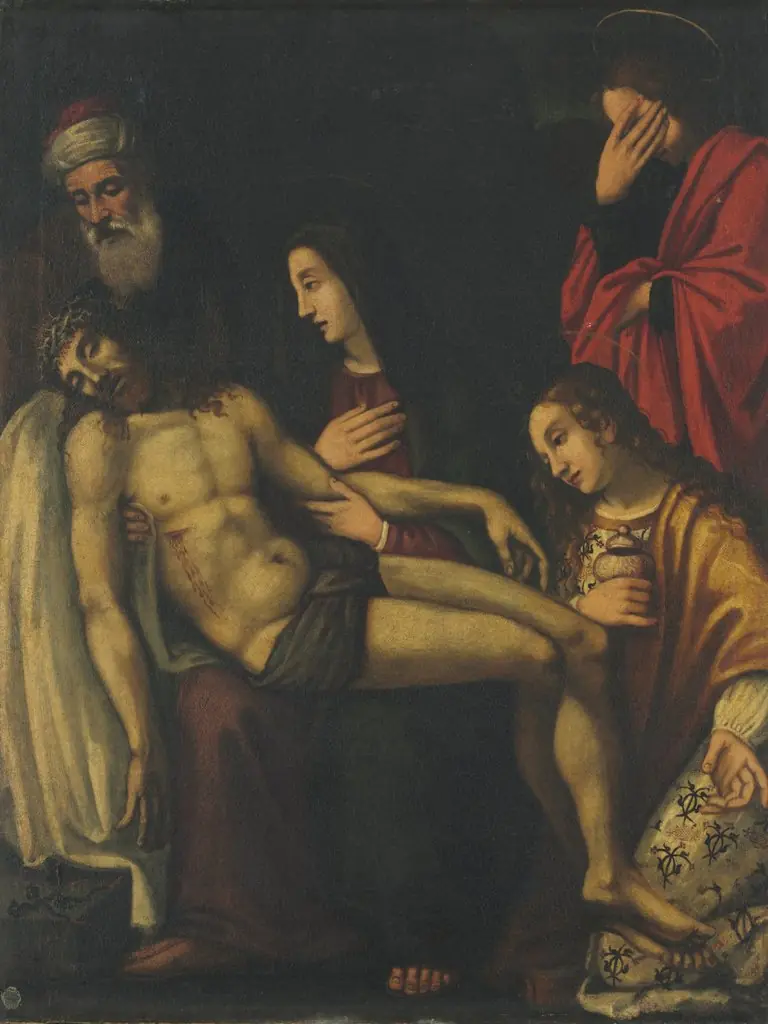
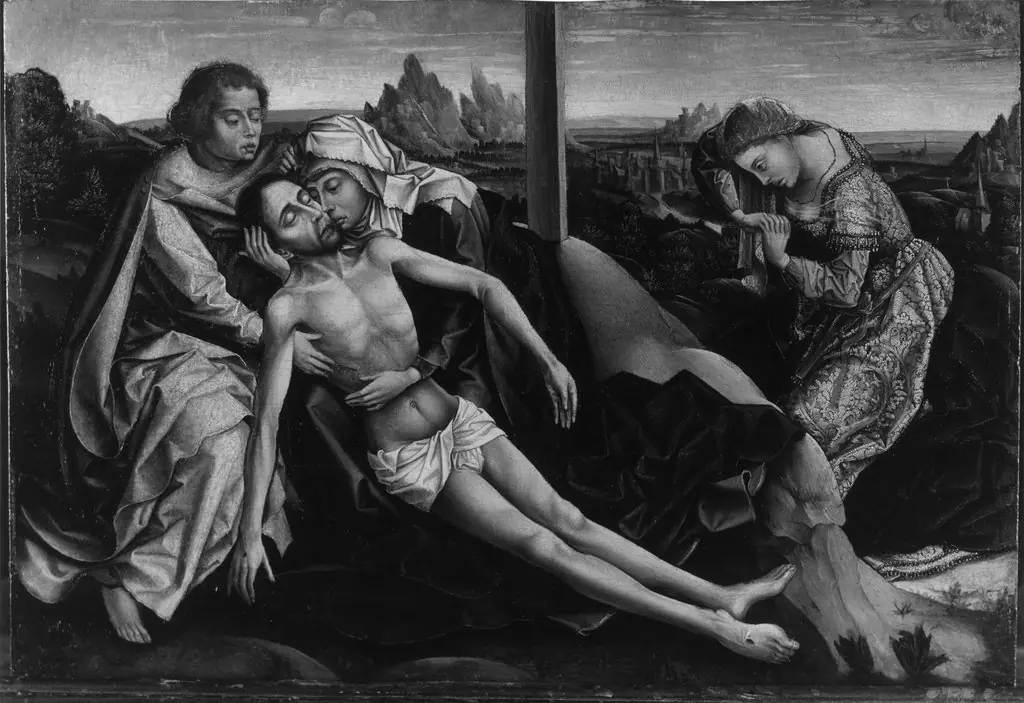
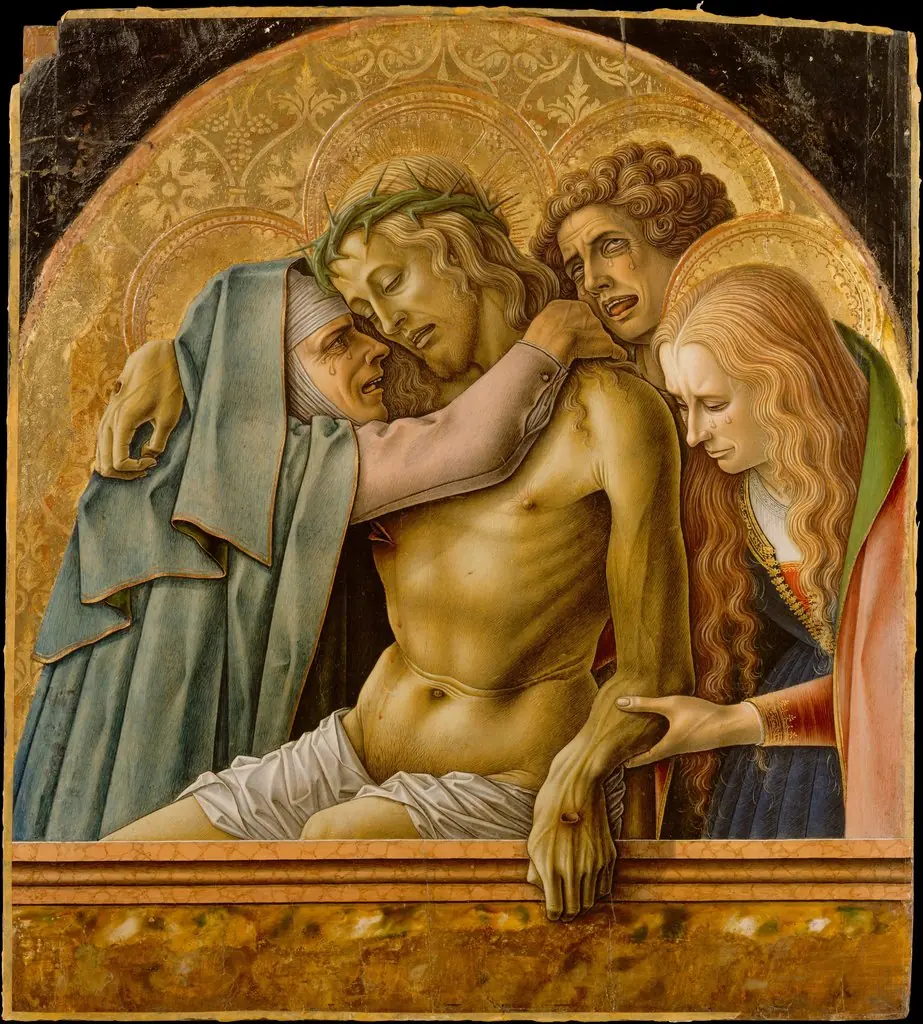
The work shows the traditional Christian scene of the Virgin Mary holding the dead Christ, a subject that many artists revisited.
Pietà is a painting by the Italian Renaissance master Pietro Perugino, created roughly between 1483 and 1493. He worked in oil paint, a medium that lets him build subtle colour layers. The work shows the traditional Christian scene of the Virgin Mary holding the dead Christ, a subject that many artists revisited.
It is part of the Uffizi Gallery’s collection in Florence, where it has been on view for centuries. If you’re curious to learn more, check out the artist Pietro Perugino.
Subject & Meaning
The subject depicted is a Pietà, a scene of the Virgin Mary mourning her dead son, central to Christian iconography of sorrow and compassion. Symbolically, it represents maternal grief, divine suffering, and the humanity of Christ's sacrifice, embodying themes of sacrifice and redemption. The work shows Mary holding Christ's rigid, lifeless body on her lap, accompanied by John the Evangelist, Mary Magdalene, Nicodemus, and Joseph of Arimathea, all positioned under a classical portico with architectural framing typical of Perugino's style. This arrangement creates a serene, meditative atmosphere through balanced composition, restrained gestures, and harmonious colors that blend softly, emphasizing contemplative stillness over dramatic emotion. The painting draws on German Vesperbilder traditions but adapts them with Perugino's characteristic calm, geometric perspective, and integration of figures within a defined architectural space, reflecting Renaissance ideals of order and spiritual reflection.
Technique & Style
Executed in oil paint on a wooden panel measuring 168 by 176 cm, this work represents an experimental phase in the artist's transition to linseed oil binders. The composition adheres to a serene, symmetrical arrangement typical of the 1480s, featuring a portico with round arches and square pillars that frames a soft, atmospheric landscape of rolling hills. Christ's body is depicted horizontally and rigidly across the foreground, supported by John the Evangelist and Mary Magdalene, echoing the German Vesperbilder tradition rather than later dramatic interpretations. The figures display clear, sharp forms with muted emotional intensity; notably, Mary Magdalene is rendered in darker, browner tones reminiscent of Luca Signorelli's contemporary style. Historical accounts note that the painting suffered damage due to technical errors as early as the sixteenth century and underwent repainting in 1799 before a modern restoration in 1998.
History & Provenance
The Pietà was painted by Pietro Perugino for the church of the convent of San Giusto alle mura of the Jesuati friars, as part of a commission that also included an Agony in the Garden and a Crucifixion. The dating remains uncertain: the art historian Pietro Scarpellini proposed 1482, shortly after Perugino's return from Rome, during years when the Jesuati were undertaking significant work at their church, also commissioning a Madonna and Saints from Domenico Ghirlandaio for the high altar. Other scholars have suggested a slightly later date, though still before the end of the fifteenth century, when Perugino fully adopted linseed oil as a binding medium, used here only experimentally. Giorgio Vasari saw the three panels on the side altars of the church of San Giovanni Battista alla Calza, to which they had been transferred after San Giusto alle mura was destroyed during the 1529 Siege of Florence. The Pietà was already damaged in Vasari's time, which he attributed to technical errors. After the suppression of the Calza convent in the late eighteenth century, the painting was taken to Paris under the Treaty of Tolentino, where it was repainted in 1799, and was returned to Italy during the Restoration. It was eventually installed at the Uffizi Gallery in 1919 and underwent restoration in 1998. The Pietà by Pietro Perugino is held in the Uffizi Gallery in Florence. It was originally painted for the church of the convent of San Giusto alle mura, together with an Agony in the Garden and a Crucifixion. After the original church was destroyed during the Siege of Florence in 1529, the panels were moved by the Jesuate friars to the convent of San Giovanni Battista alla Calza near Porta Romana, where Giorgio Vasari saw them on side altars. Following the suppression of the convent in the late eighteenth century, the painting was taken to Paris under the Treaty of Tolentino, where it was repainted in 1799, and was subsequently returned to Italy during the Restoration. After further transfers, it was installed at the Uffizi in 1919. The work underwent restoration in 1998.
Context
The painting Pietà by Pietro Perugino was created circa 1483-1493 and is housed in the Uffizi Gallery, Florence. It was painted for the church of San Giusto alle mura alongside The Agony in the Garden and a Crucifixion. Giorgio Vasari documented the work in situ before its relocation following the 1529 Siege of Florence, after which it was eventually moved to the Uffizi in the 20th century. The dating of the piece remains debated, with scholarly proposals ranging from 1482 to the close of the 15th century, reflecting shifts in Perugino’s technique, particularly his experimental use of linseed oil. Restoration in 1998 revealed details of its original execution. The composition depicts the Virgin Mary cradling the dead Christ, flanked by Saint John, Mary Magdalene, Nicodemus, and Joseph of Arimathea, arranged beneath a classical portico within a serene, perspective-driven landscape. Figures are rendered with restrained emotion and precise line work, characteristic of Perugino’s mature style, while the architectural framing and atmospheric depth reflect influences from both Early Renaissance models and German Vesperbilder. The work has been subject to scholarly analysis regarding its stylistic connections to contemporaries such as Luca Signorelli and its role in the evolution of devotional imagery in late 15th-century Italy
Legacy
The Pietà by Pietro Perugino, painted circa 1483-1493, became influential through its devotional composition and architectural framing. Its depiction of the Virgin Mary holding the dead Christ, surrounded by saints such as John the Evangelist and Mary Magdalene, established a model later echoed in German Vesperbilder and reinterpreted by Michelangelo. The work’s serene mood, balanced symmetry, and use of perspective influenced High Renaissance approaches to sacred narrative. Replicas and copies, including one in the National Gallery of Ireland, attest to its circulation. Art historians note its technical experimentation with oil binding media and its role in Perugino’s transition toward naturalistic color application. The painting’s provenance, originally created for the convent of San Giusto alle mura, relocated after the Siege of Florence, and acquired by the Uffizi Gallery in 1919, reflects its shifting institutional significance.
Own this work as a print
Artist & collection
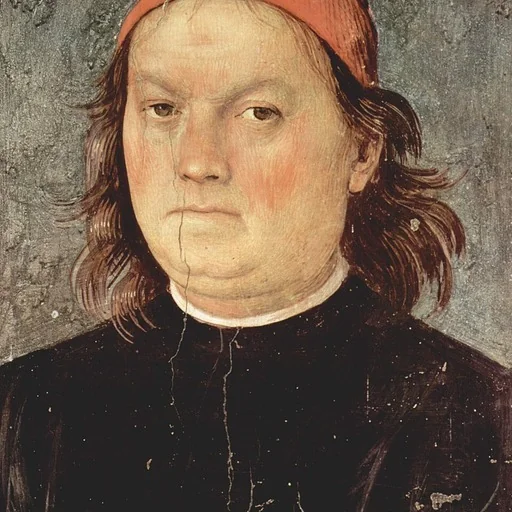
Artist
Pietro Perugino (US: PERR-ə-JEE-noh, -oo-; Italian:; born Pietro Vannucci or Pietro Vanucci; c.

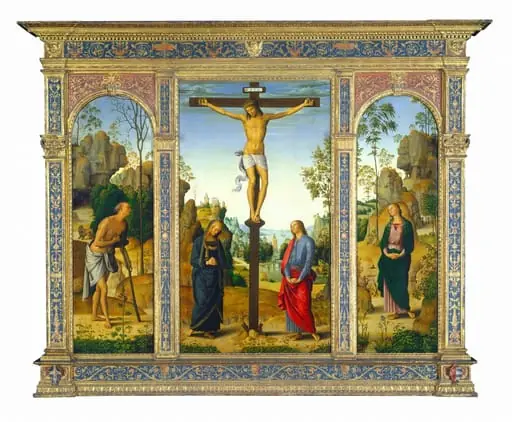 The Crucifixion with the Virgin, Saint John, Saint Jerome, and Saint Mary Magdalene
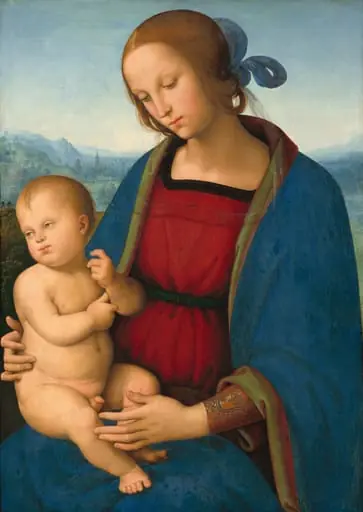 Madonna and Child
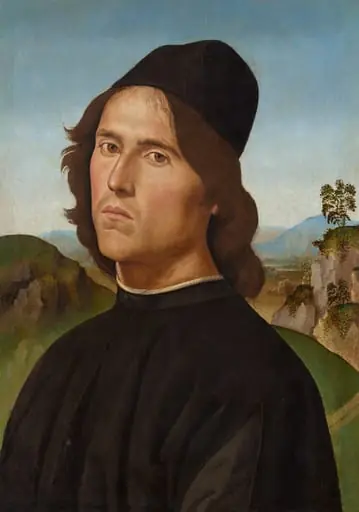 Portrait of Lorenzo di Credi
![The Crucifixion with the Virgin, Saint John, Saint Jerome, and Saint Mary Magdalene [right panel], by Pietro Perugino](https://artifactworldgallery.com/img/pietro-perugino--the-crucifixion-with-the-virgin-saint-john-saint-jerome-and--7d9a2b1f47b9fc9b-w320.webp) The Crucifixion with the Virgin, Saint John, Saint Jerome, and Saint Mary Magdalene [right panel]
The Crucifixion with the Virgin, Saint John, Saint Jerome, and Saint Mary Magdalene [right panel]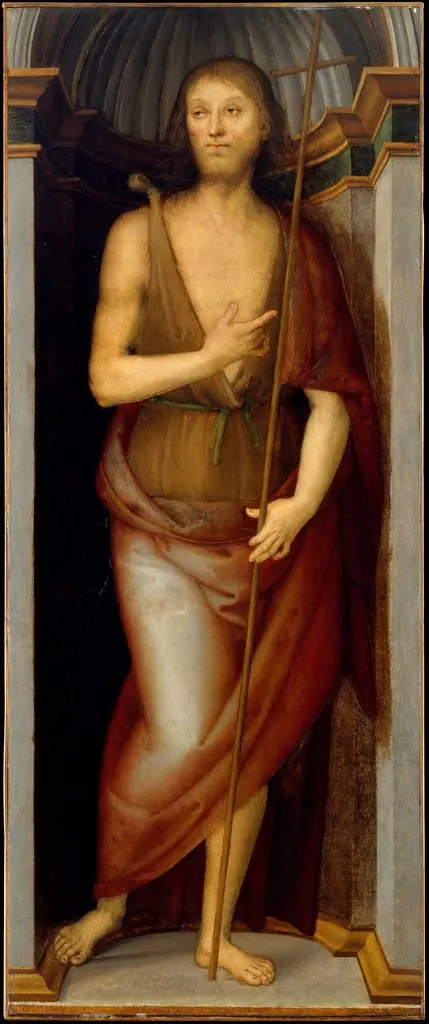 Saint John the Baptist; Saint Lucy
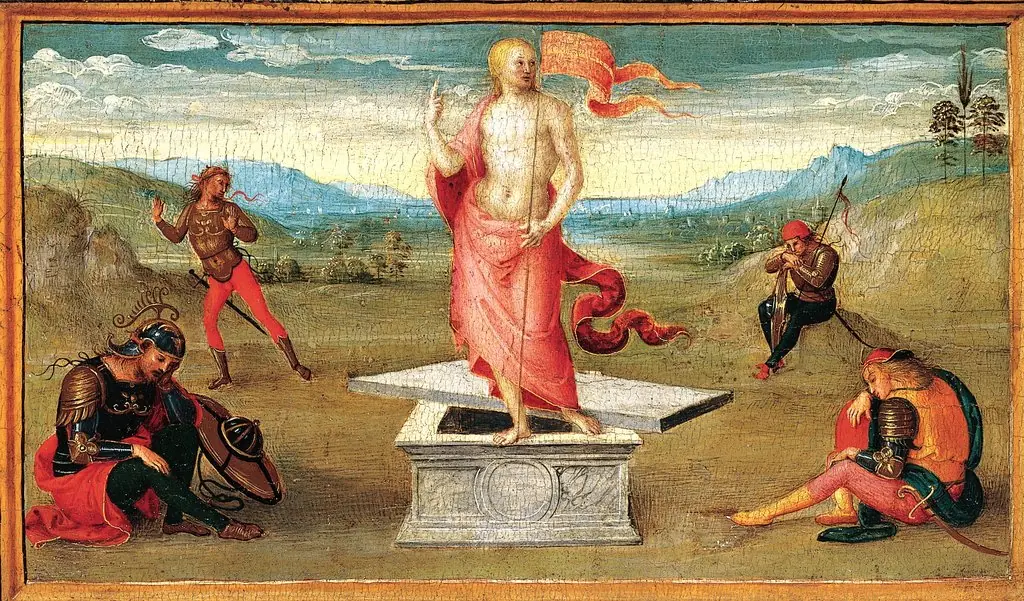 The Resurrection
![The Crucifixion with the Virgin, Saint John, Saint Jerome, and Saint Mary Magdalene [left panel], by Pietro Perugino](https://artifactworldgallery.com/img/pietro-perugino--the-crucifixion-with-the-virgin-saint-john-saint-jerome-and--1017dec17318baa5-w320.webp) The Crucifixion with the Virgin, Saint John, Saint Jerome, and Saint Mary Magdalene [left panel]
The Crucifixion with the Virgin, Saint John, Saint Jerome, and Saint Mary Magdalene [left panel]![The Crucifixion with the Virgin, Saint John, Saint Jerome, and Saint Mary Magdalene [middle panel], by Pietro Perugino](https://artifactworldgallery.com/img/pietro-perugino--the-crucifixion-with-the-virgin-saint-john-saint-jerome-and--a9b4c312771e3f71-w320.webp) The Crucifixion with the Virgin, Saint John, Saint Jerome, and Saint Mary Magdalene [middle panel]
The Crucifixion with the Virgin, Saint John, Saint Jerome, and Saint Mary Magdalene [middle panel]