Artwork
Visitation
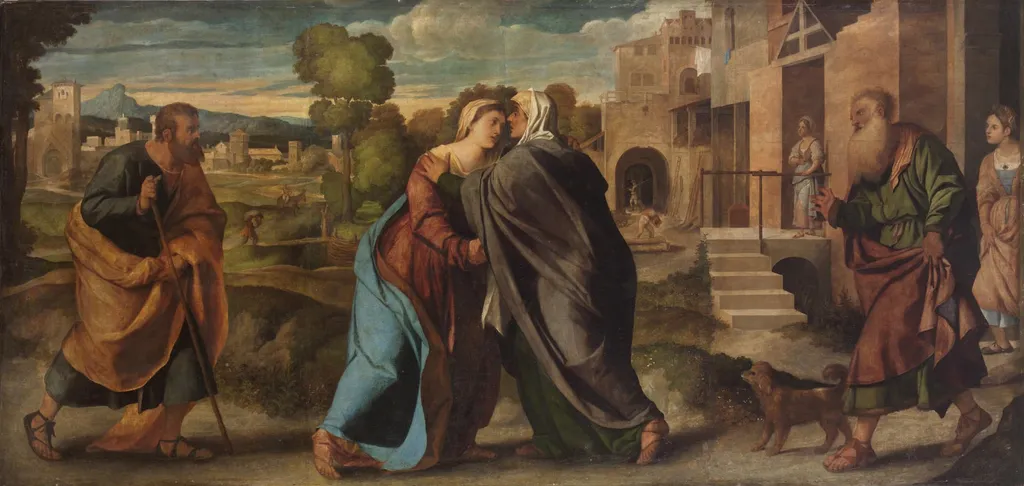
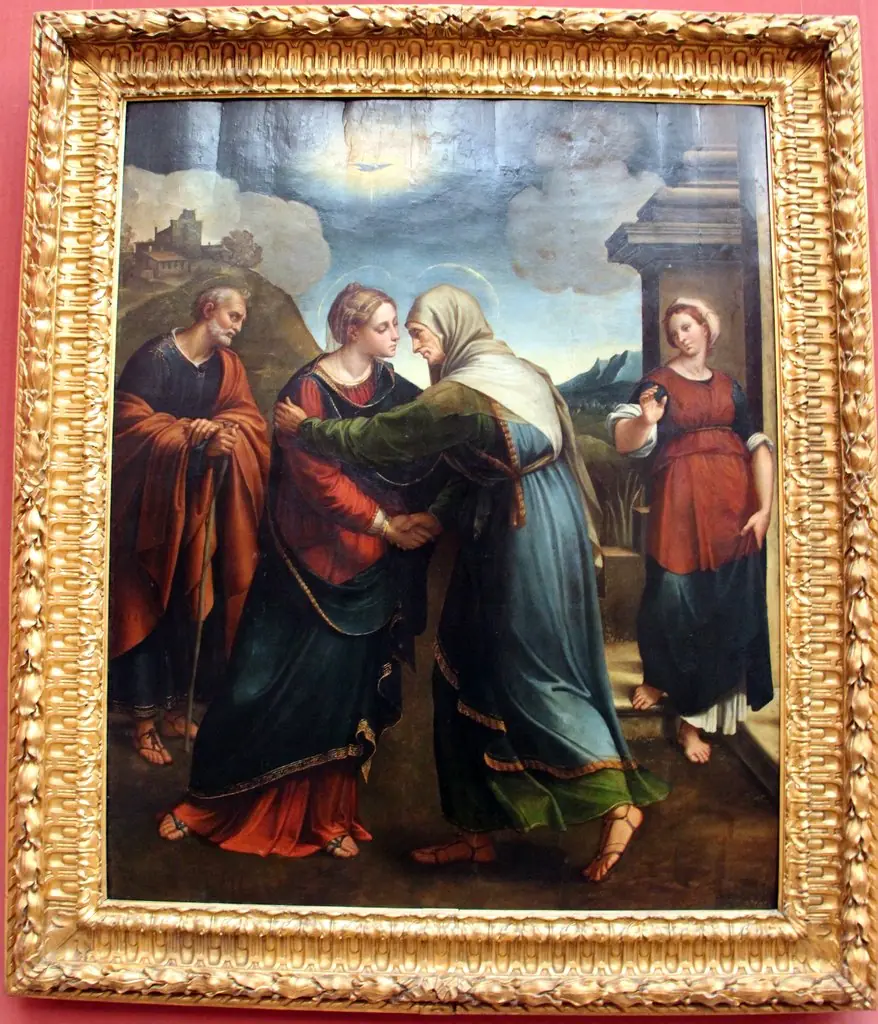
Visitation is an oil painting by the High Renaissance artist Palma Vecchio. It dates from 1522 and is held in the collection of the Kunsthistorisches Museum.
About this work
Subject & Meaning
The work is classified as religious art, with the Visitation named as its main subject.
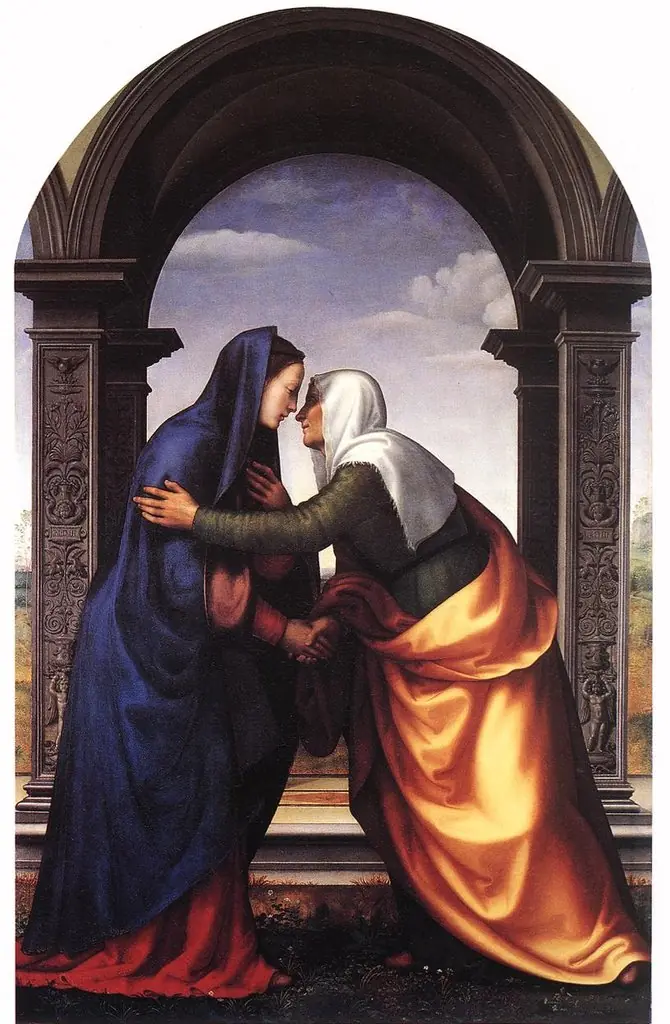
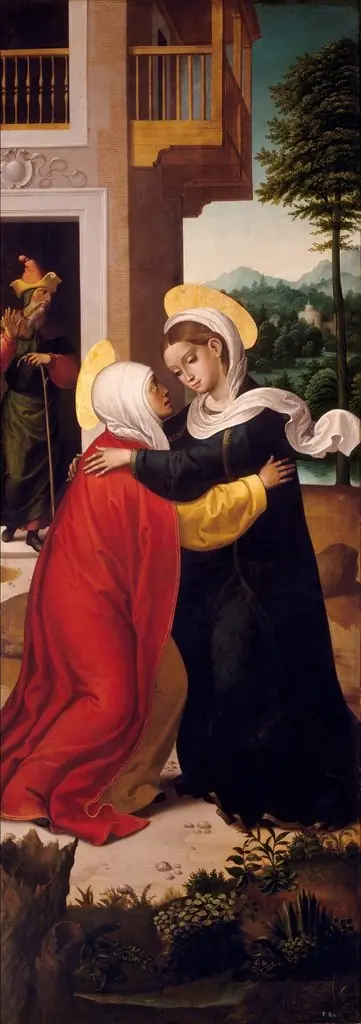
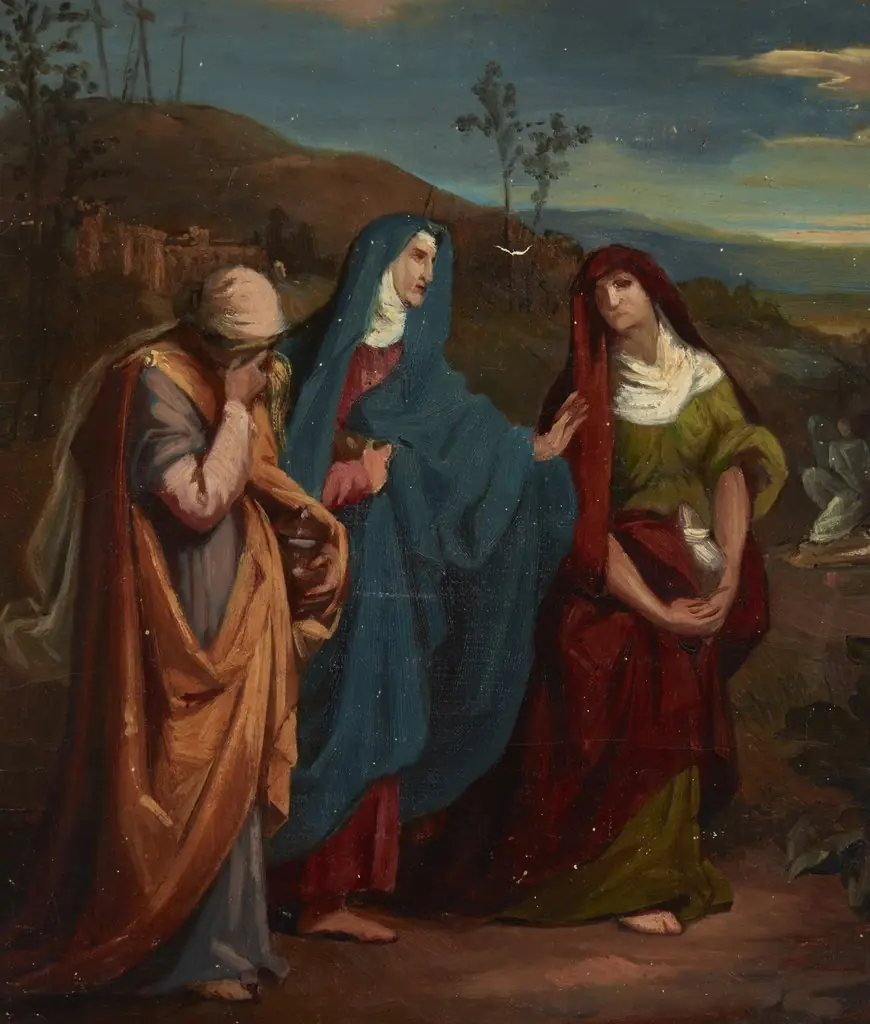
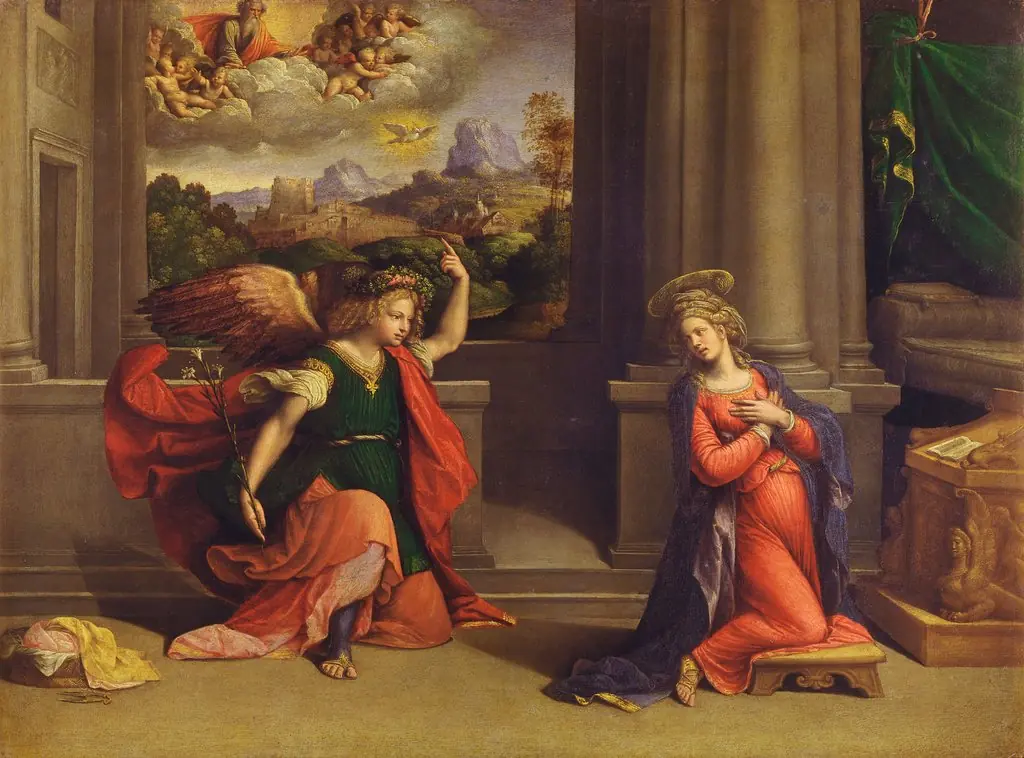
The painting depicts the Visitation, the biblical episode in which the pregnant Virgin Mary visits her older cousin Elizabeth, who is also expecting a child (John the Baptist). In Christian iconography the meeting is treated as a moment of joyful recognition between the two unborn children and a fulfillment of prophecy, and it is commonly rendered as an intimate encounter between the two women, often accompanied by attendants.
The work is classified as religious art, with the Visitation named as its main subject. As a devotional image, the subject would have invited viewers to meditate on Mary's humility, the sanctity of Elizabeth, and the beginnings of salvation history, themes central to the feast celebrated in July.
Technique & Style
The painting Visitation by Palma Vecchio is executed in oil paint on canvas, a medium typical of High Renaissance religious works. Its dimensions of 168 cm in height and 354 cm in width establish a substantial scale that emphasizes the narrative gravity of the Visitation scene. The composition demonstrates balanced spatial arrangement and controlled chiaroscuro, reflecting the stylistic conventions of early 16th-century Venetian altarpieces. The artwork’s condition appears stable, with no noted alterations to its original handling or support structure.
History & Provenance
The Visitation was painted by Palma Vecchio in 1522, executed in oil on canvas. According to its documented ownership chain, the work was held by Bartolomeo della Nave before passing into the collection of Archduke Leopold Wilhelm of Austria. It subsequently entered the holdings of the Kunsthistorisches Museum, where it remains today.
The painting measures 168 cm in height by 354 cm in width, a notably horizontal format suited to its religious subject of the Visitation of Mary. Its early provenance through Bartolomeo della Nave, a prominent seventeenth-century Venetian collector, and then into the Habsburg collection assembled by Leopold Wilhelm, is consistent with the documented movement of Italian Renaissance works into imperial holdings during that period.
Visitation is an oil painting on canvas created by Palma Vecchio in 1522. It measures 168 cm in height and 354 cm in width and depicts the biblical scene of Mary's Visitation. The work entered the collection of Bartolomeo della Nave before being acquired by Archduke Leopold Wilhelm of Austria, who later placed it in the Kunsthistorisches Museum, where it remains in the museum's collection today.
Overview
Created in 1522 by the Venetian painter Jacopo Palma, known as Palma il Vecchio, this oil on canvas depicts the biblical episode of the Visitation. The work is part of the permanent holdings of Vienna’s Kunsthistorisches Museum and exemplifies the artist’s mature phase within the Italian High Renaissance.
Context
Produced during the later years of Palma’s career, the work reflects the Venetian tradition of integrating sacred narratives with everyday life. The inclusion of domestic details and a naturalistic landscape aligns with contemporary trends that sought to make religious scenes more accessible to viewers.
Artist & collection

Artist
Palma Vecchio (c. 1480 – 30 July 1528), born Jacopo Palma, also known as Jacopo Negretti, was a Venetian painter of the Italian High Renaissance. He is called Palma Vecchio in English and Palma il Vecchio in Italian…