Artwork
Bathing Nymphs
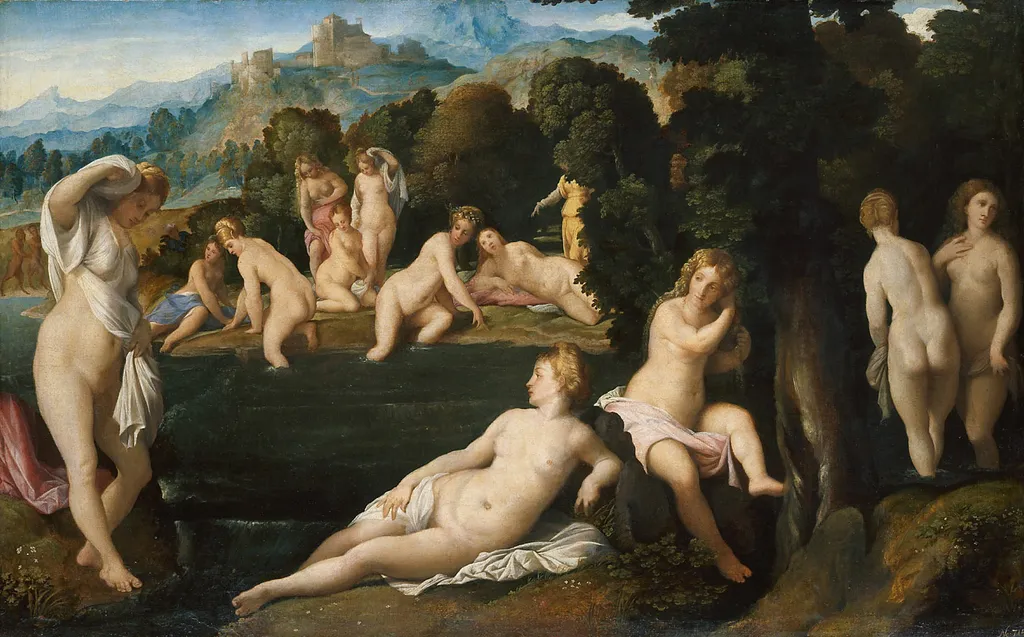
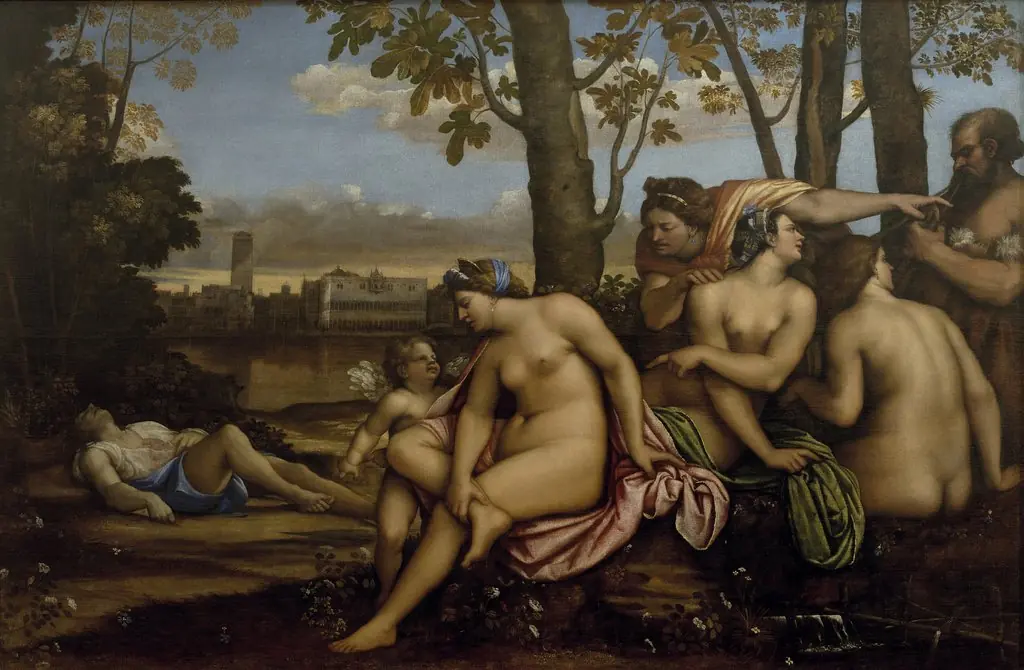
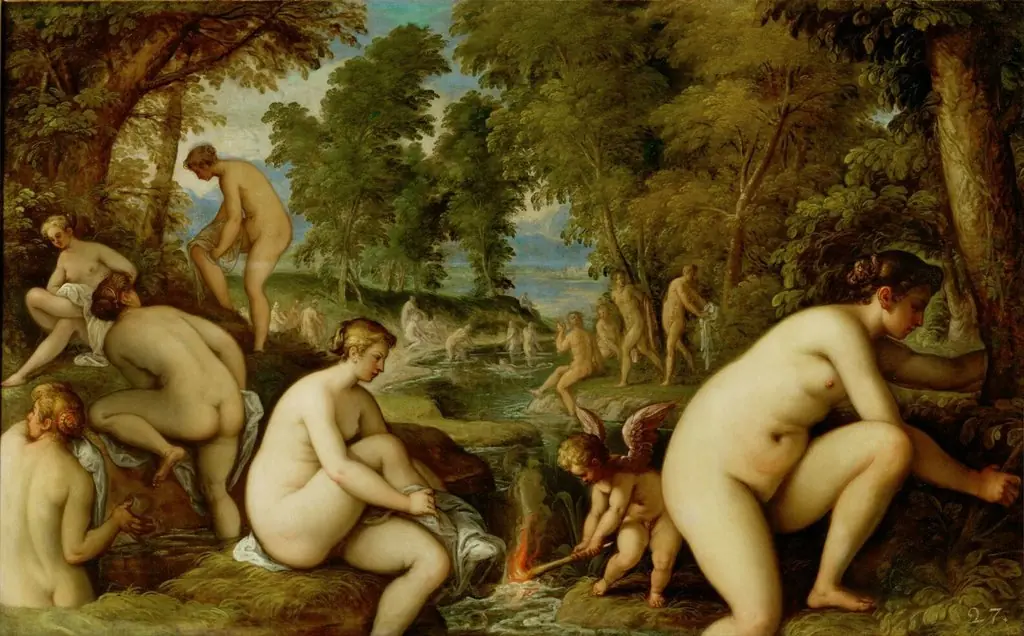
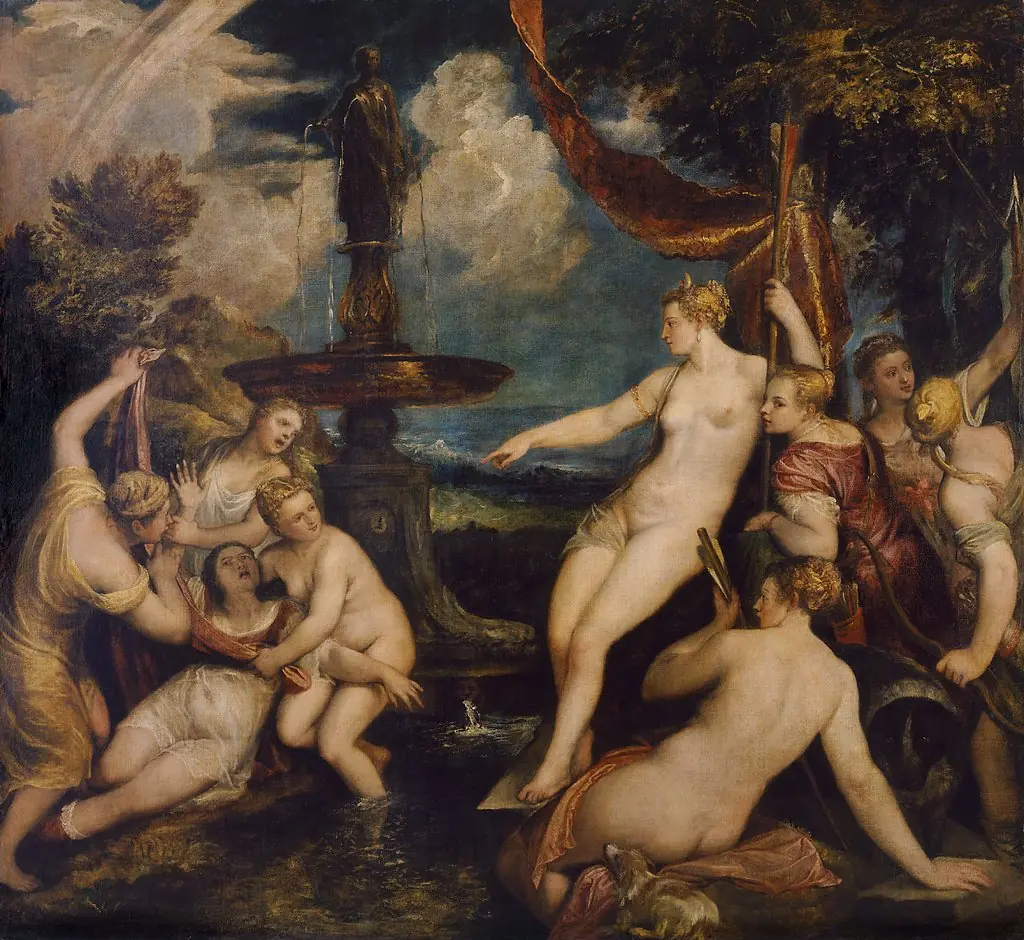
Bathing Nymphs is an oil painting by the High Renaissance artist Palma Vecchio. It dates from 1527 and is held in the collection of the Kunsthistorisches Museum.
About this work
Subject & Meaning
The work is classified as a nude and portrays the bathing act itself, situating the figures within a tradition that celebrated classical and pastoral imagery.
Bathing Nymphs by Palma Vecchio is an oil painting from 1527 that depicts women bathing. The subject of nude women at their bath was a recurring theme in Venetian Renaissance art, often used to explore the female form within a pastoral or mythological setting. The work is classified as a nude and portrays the bathing act itself, situating the figures within a tradition that celebrated classical and pastoral imagery.
The painting belongs to the Kunsthistorisches Museum and was historically owned by figures including Archduke Leopold Wilhelm of Austria and Bartolomeo della Nave, indicating its long-standing recognition as a significant example of the bathing-nymph genre.
History & Provenance
Bathing Nymphs is held in the collection of the Kunsthistorisches Museum in Vienna, where it remains part of the institution's holdings. Its provenance traces through several owners before reaching the museum, having been owned by Bartolomeo della Nave and subsequently by Archduke Leopold Wilhelm of Austria prior to its current institutional home. The painting, executed in oil in 1527, measures 78 by 124 cm.
No specific exhibition history beyond its presence in the Kunsthistorisches Museum collection is documented in the available sources.
Context
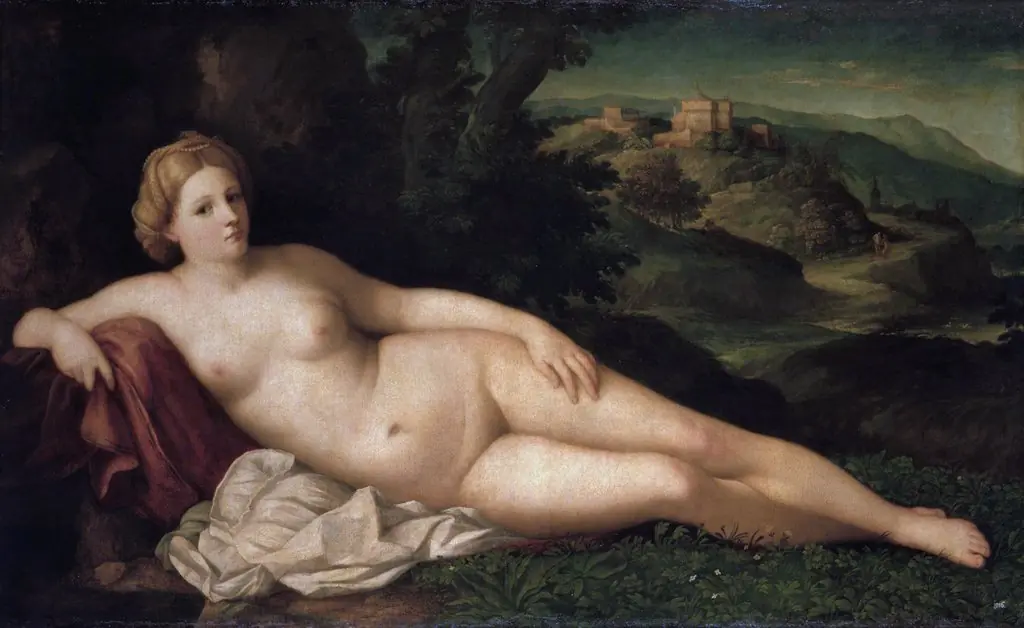
Palma Vecchio painted Bathing Nymphs in 1527 as an oil on canvas work portraying a nude woman in a bathing scene. The painting entered the collection of Archduke Leopold Wilhelm of Austria and now resides in the Kunsthistorisches Museum in Vienna. Its genre as a nude aligns with High Renaissance explorations of the human form, situating it within the broader Venetian school's emphasis on sensuality and chiaroscuro.
Scholarship on the piece remains limited, though its provenance through Archduke Leopold Wilhelm underscores its significance in 16th-century European collecting practices.
Legacy
Bathing Nymphs by Palma Vecchio exerted influence through its sensual treatment of the female nude that informed later Venetian depictions of mythological subjects. The composition of intertwined figures and the delicate handling of light were cited as precedents for 17th-century reproductive prints and for the eroticism found in Baroque painting. Its presence in the imperial collection of Archduke Leopold Wilhelm further amplified visibility, leading to repeated reproductions in the 19th century and scholarly discussion of its role in shaping the erotic tradition of the Venetian school.
The work is held by the Kunsthistorisches Museum and was previously owned by Archduke Leopold Wilhelm of Austria and Bartolomeo della Nave.
Overview
Created around 1527 by the Venetian painter Jacopo Palma Vecchio, this oil work presents a tranquil riverside setting populated by several nude women. The scene unfolds beneath a clear sky, framed by trees and a distant castle perched on a hill, offering a harmonious blend of figure and landscape typical of early sixteenth‑century Italian painting.
Technique & Style
Palma employs a pronounced chiaroscuro, using deep shadows to model the bodies against the brighter surroundings, thereby enhancing three‑dimensionality. The flesh tones are rendered with a smooth, luminous quality, and the drapery is depicted in gentle, flowing folds that echo the softness of the surrounding foliage.
Artist & collection

Artist
Palma Vecchio (c. 1480 – 30 July 1528), born Jacopo Palma, also known as Jacopo Negretti, was a Venetian painter of the Italian High Renaissance. He is called Palma Vecchio in English and Palma il Vecchio in Italian…