Artwork
Virgin and Child
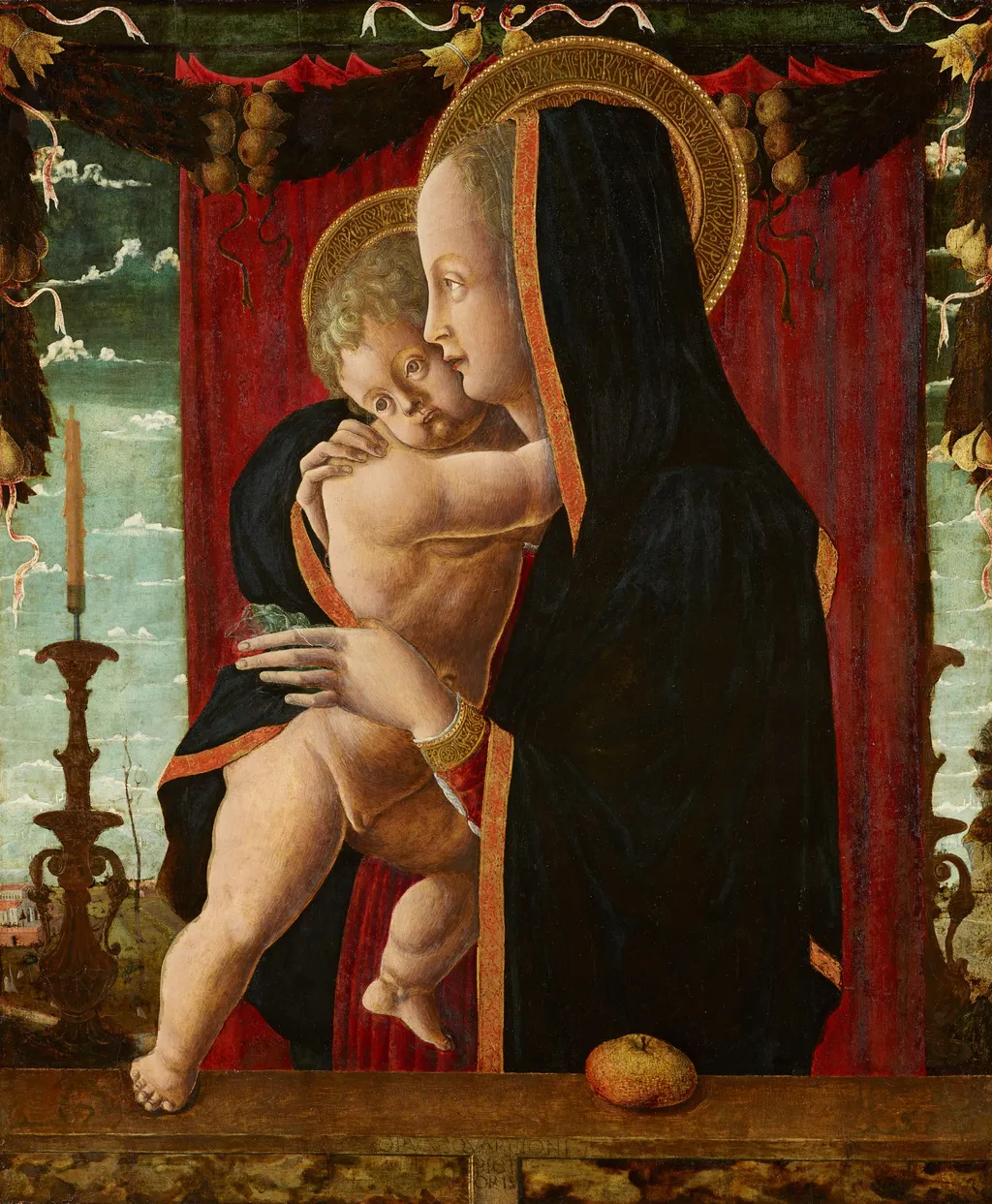
Virgin and Child is a paint painting by the Early Renaissance artist Francesco Squarcione. It dates from 1455 and is held in the collection of the Gemäldegalerie Berlin.
About this work
Subject & Meaning
Above the figures, a lavish garland of fruit, ribbons, and flowers stretches across the top, incorporating an inscription derived from antiquity.
The painting depicts the Virgin Mary and the Christ Child, a central subject in religious art known as the Madonna and Child. Mary is shown in profile against a red drape, wearing a dark veil with a red border, while the Child reaches toward his mother. A low wooden ledge in the foreground holds a melon, and the composition includes a candelabro to the left.
Above the figures, a lavish garland of fruit, ribbons, and flowers stretches across the top, incorporating an inscription derived from antiquity. Hidden inscriptions disguised as embroidery appear within the halos and the Child's gold-embroidered sleeve. The work reflects the influence of Donatello, utilizing perspective and clear lines to define form, with the overall composition drawing from a sculptural plaquette by that artist.
Technique & Style
Executed in 1455, the painting is a tempera on poplar panel measuring 82 × 70 cm. Its composition centers on the Virgin in profile, draped in a red robe beneath a dark veil edged in red, while the Christ Child stands on a low wooden ledge, reaching toward her. A red cloth backdrop frames the scene, opening at the sides to reveal a sky dotted with small clouds. The artist’s signature appears on the ledge, alongside a still-life element, a single apple, echoing motifs derived from Donatello’s plaquettes. The Child’s full figure contrasts with the Virgin’s half-length format, a deliberate arrangement reflecting Tuscan influence.
Stylistic hallmarks include sharply defined contours, intense, almost marble-like coloration, and elaborate drapery folds that project figures forward. Ornamental garlands of fruit, ribbons, and flowers, along with inscribed pseudo-embroidery in the halos and gilded sleeve, further characterize Squarcione’s manner, which he transmitted to his Paduan workshop, including pupils such as Mantegna and Crivelli.
History & Provenance
The Virgin and Child was painted in 1455 by Francesco Squarcione and remains in the Gemäldegalerie Berlin. The work is executed in tempera on a poplar panel measuring 82 by 70 centimeters. It is one of only two works by Squarcione that can be securely attributed to him, the other being a signed and dated panel also housed in Berlin.
The painting entered the museum’s collection shortly after its creation and has been part of the institution’s permanent display since the mid‑20th century. Its composition reflects the influence of Donatello, whose time in Padua (1443–1453) shaped Squarcione’s style; the Madonna and Child draws on a Donatellian plaquette, while decorative festoons, intense colors, and sharply defined lines are characteristic of Squarcione’s workshop. The attribution is confirmed by the artist’s signature and date on the lower wooden panel.
The painting is held in the Gemäldegalerie, Berlin, where it remains today.
Its inventory/accession details align with the museum’s records for the work: a tempera on poplar panel, signed and dated 1455, measuring 82 × 70 cm.
The painting’s exhibition history includes inclusion in the 2018–2019 exhibition “Mantegna and Bellini,” held at the Gemäldegalerie, Berlin, and at the National Gallery, London.
Context
Created in 1455, the Virgin and Child by Francesco Squarcione stands as one of only two definitively confirmed works by the Paduan master, distinguished by its explicit signature and date. The painting serves as a critical document of the Paduan Renaissance, exemplifying the artistic inputs Squarcione transmitted to his extensive workshop, which included notable figures such as Andrea Mantegna and Carlo Crivelli. Stylistically, the work is deeply rooted in the influence of Donatello, who resided in Padua from 1443 to 1453.
Squarcione, recognized as Donatello's primary imitator in the Veneto, adopted the sculptor's emphasis on perspective and clear, defining lines. The composition specifically draws upon a plaquette by Donatello, while other elements like the full-length depiction of the Christ Child reflect Tuscan influences adapted within the Venetian context.
Legacy
The 1455 Virgin and Child by Francesco Squarcione serves as a definitive example of the stylistic transmission within his Paduan workshop. As one of only two confirmed works by the artist, it encapsulates the visual language he imparted to significant pupils, including Andrea Mantegna, Carlo Crivelli, Marco Zoppo, and Giorgio Schiavone. The painting's composition and emphasis on perspective and clear linearity directly reflect Squarcione's role as the primary imitator of Donatello in the Veneto region during the sculptor's residence in Padua.
Specifically, the work's arrangement derives from a Donatellian plaquette, while its decorative elements, such as the fruit and flower garlands, exemplify the intense, marble-like colors and sharp, elaborate lines characteristic of the artist's output. These features established a distinct aesthetic that influenced the next generation of Renaissance painters in the area.
Overview
Created in 1455, the Virgin and Child is a tempera painting executed on a poplar panel. It bears the artist’s signature and date, confirming its attribution to Francesco Squarcione. The work is one of only two pieces that can be definitively linked to Squarcione, and it currently resides in Berlin’s Gemäldegalerie.
Own this work as a print
Artist & collection
Artist
Francesco Squarcione (c. 1395 – after May 1468) was an Italian artist from Padua. Squarcione is considered by some to be the head of the first independent school for painters. His pupils included Andrea Mantegna (with…

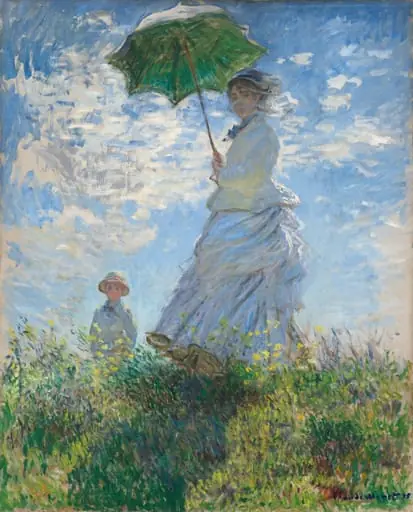 Woman with a Parasol - Madame Monet and Her Son
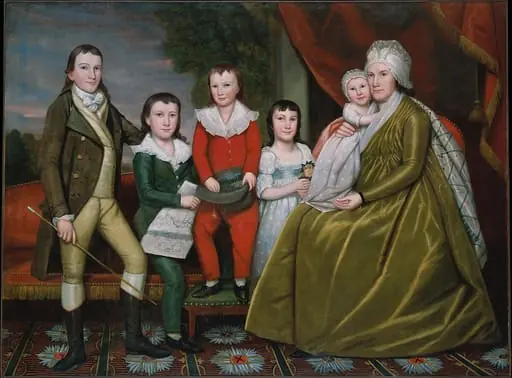 Mrs. Noah Smith and Her Children
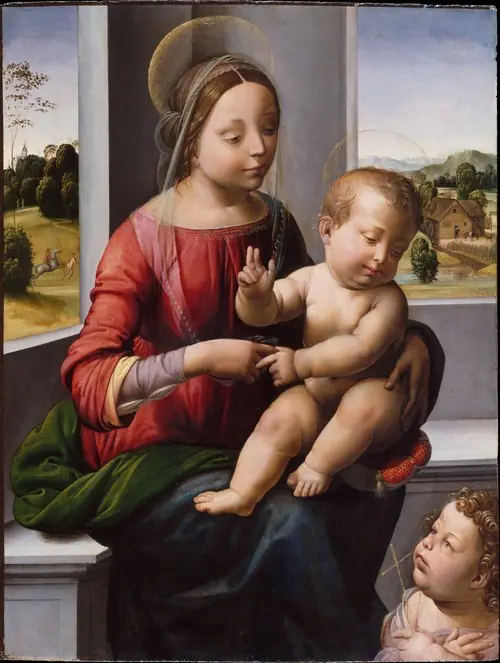 Madonna and Child with the Young Saint John the Baptist
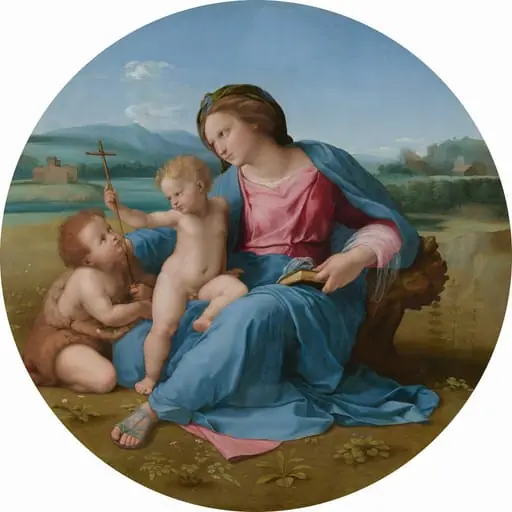 The Alba Madonna
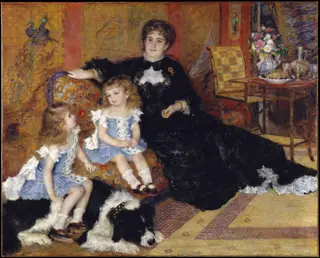 Madame Georges Charpentier and her Children
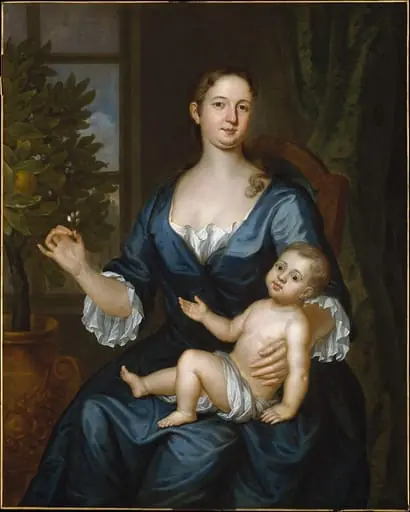 Mrs. Francis Brinley and Her Son Francis
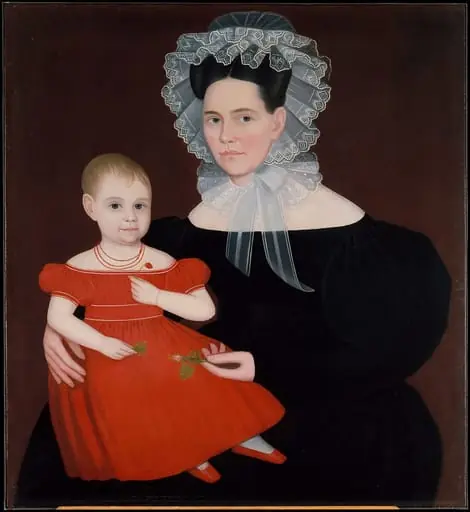 Mrs. Mayer and Daughter
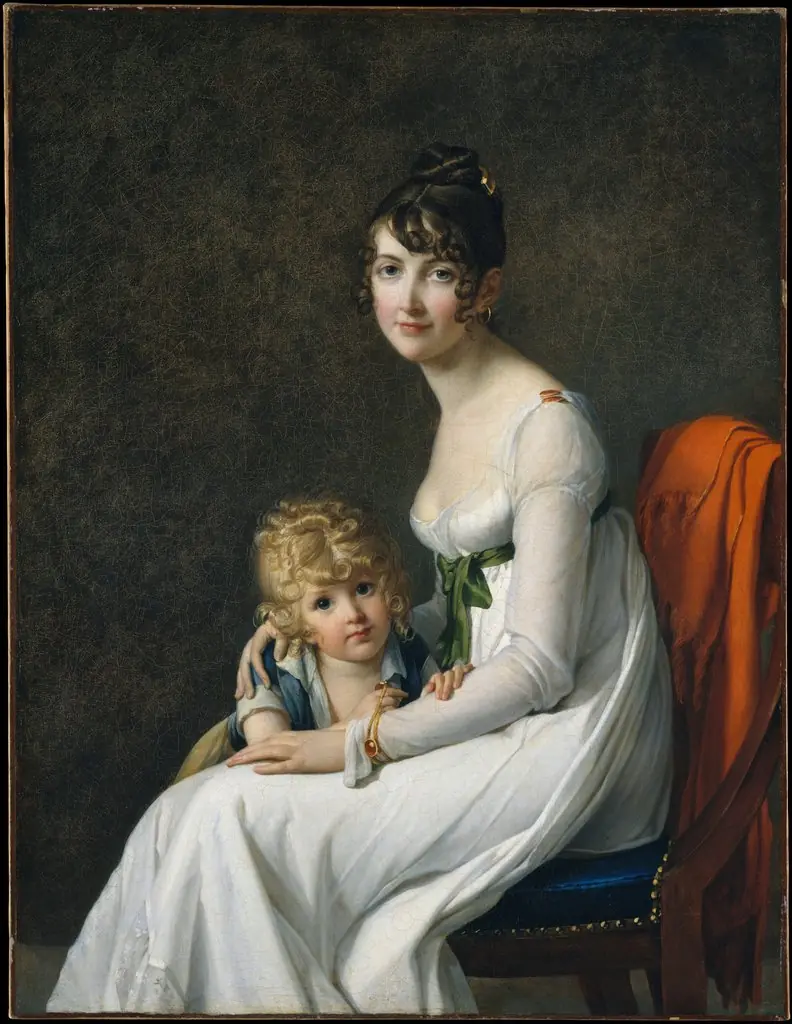 Madame Philippe Panon Desbassayns de Richemont (Jeanne Eglé Mourgue, 1778–1855) and Her Son, Eugène (1800–1859)