Artwork
The Penitent Magdalen
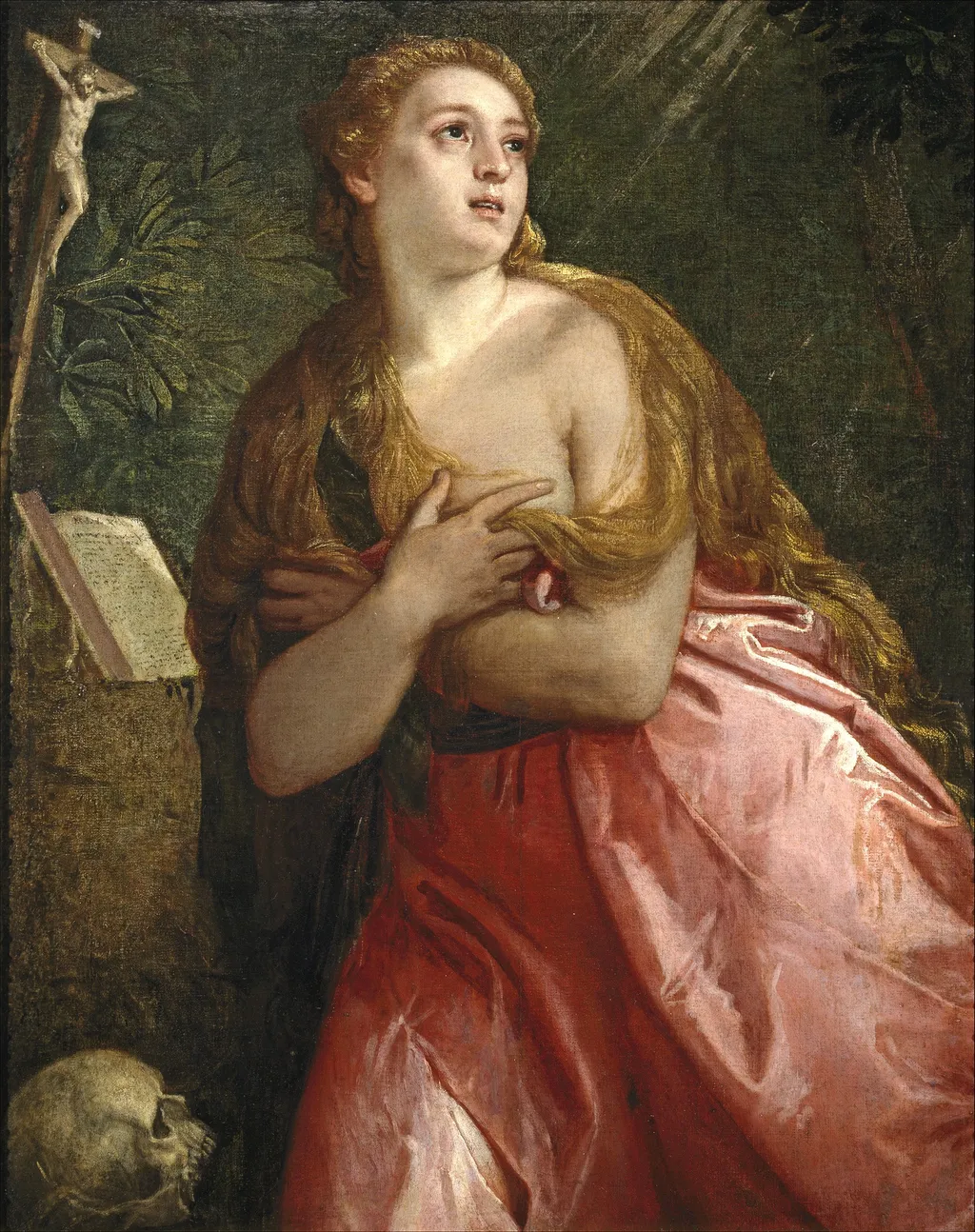
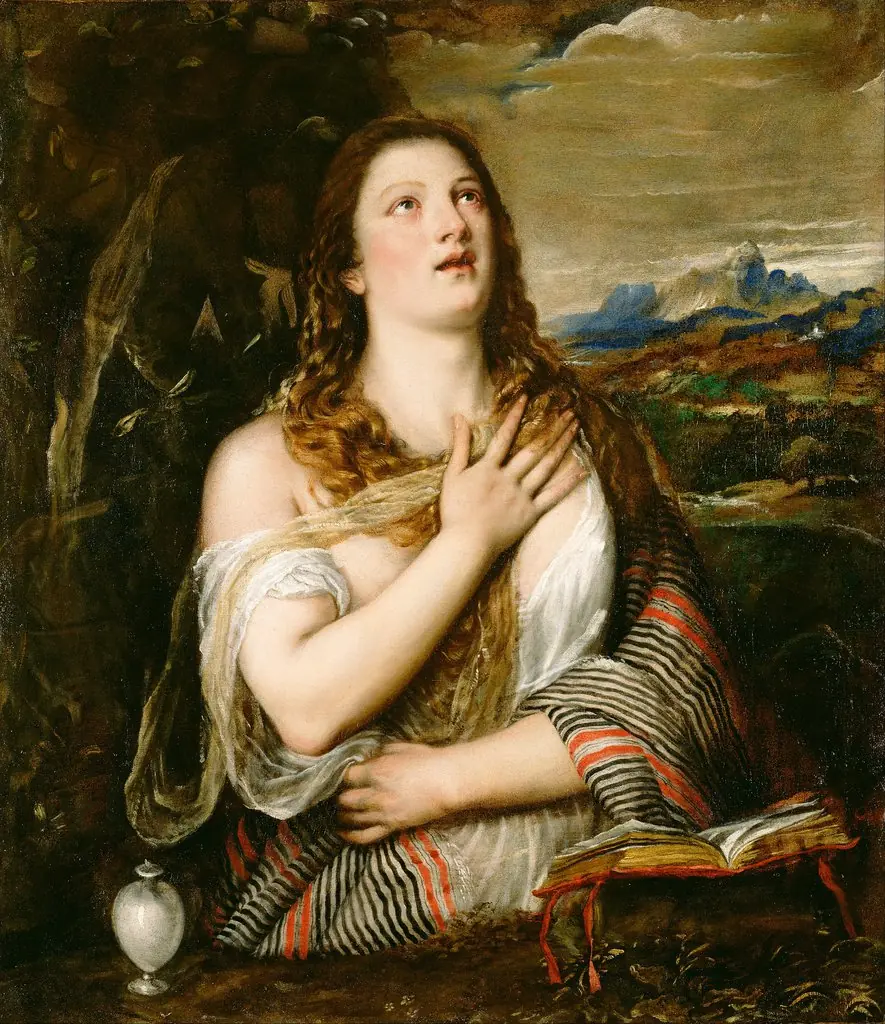
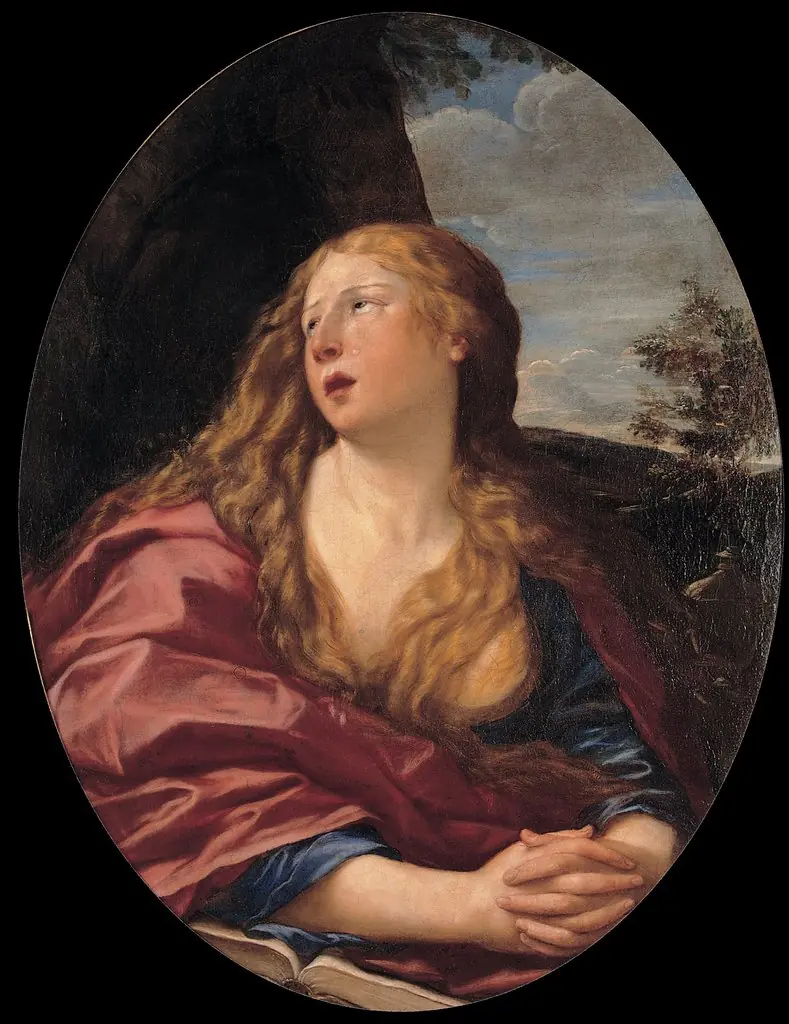
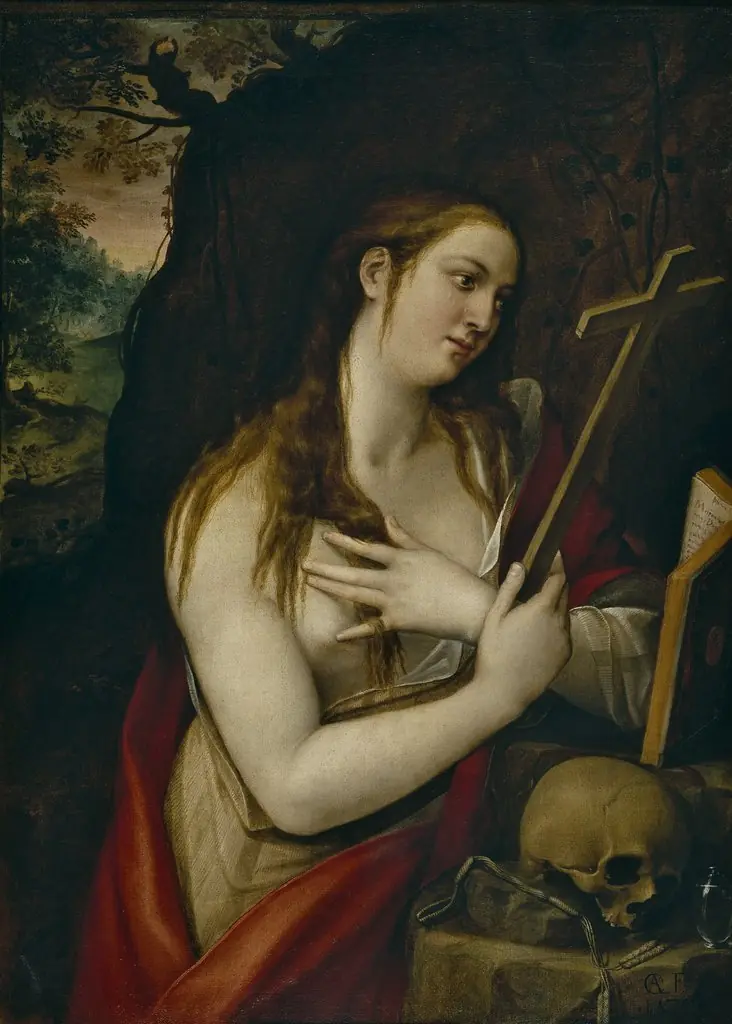
The Penitent Magdalen is an oil painting by the Mannerist artist Paolo Veronese. It is held in the collection of the Museo del Prado.
About this work
Subject & Meaning
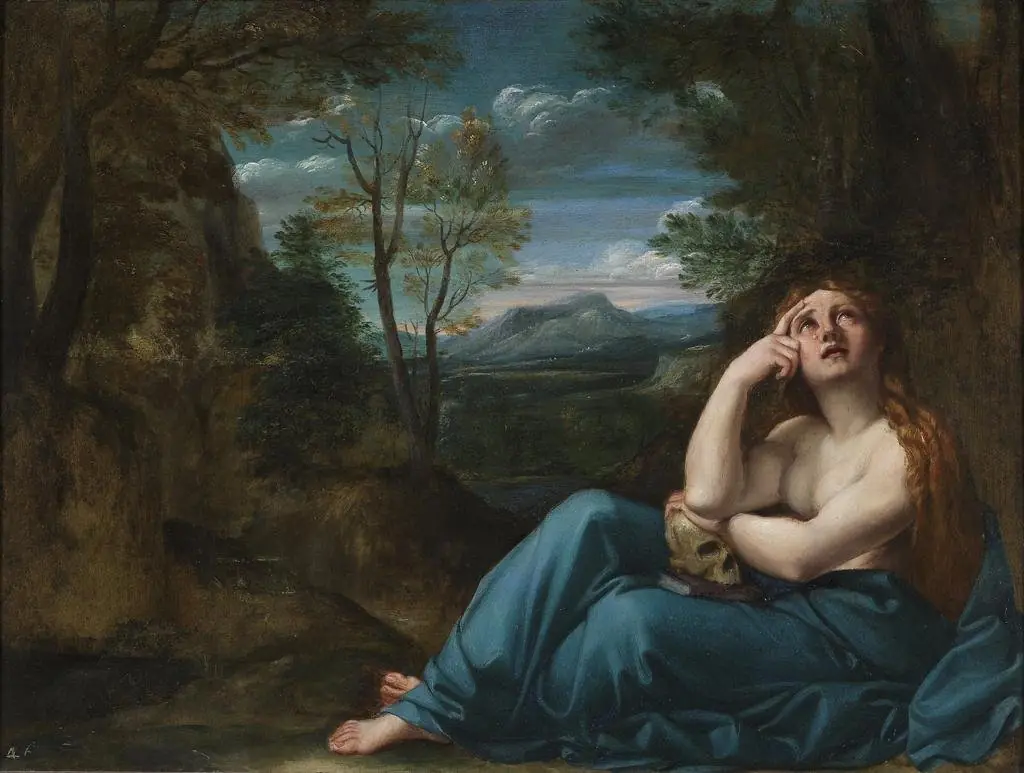
Central to this symbolism is the inclusion of a skull, which serves as a memento mori reminding the viewer of mortality and the vanity of earthly life.
Paolo Veronese's 1583 oil painting depicts Mary Magdalene in her traditional role as the Penitent Magdalene, a subject within religious art. The composition utilizes specific iconographic elements to convey her narrative of repentance and spiritual devotion. Central to this symbolism is the inclusion of a skull, which serves as a memento mori reminding the viewer of mortality and the vanity of earthly life.
Accompanying the skull are a book and a crucifix, objects that signify her turn toward scripture and contemplation of Christ's sacrifice. Together, these attributes define the figure not merely as a historical person, but as an embodiment of contrition and the possibility of redemption through faith.
Technique & Style
Executed in oil on canvas in 1583, the work demonstrates Veronese’s characteristic handling of loose, luminous brushwork and a silvery palette that modulates across the figure’s drapery and flesh tones.
The composition centers on the half-length figure of the Magdalen, her clasped hands and upward gaze conveying devotional intensity. A skull and crucifix rest on a stone ledge beside an open book, while a diaphanous veil and rich brocade underscore the painter’s command of varied textures and reflective surfaces. The measured chiaroscuro and restrained palette align with late-1580s Venetian practice, emphasizing atmospheric unity over dramatic contrast.
History & Provenance
Paolo Veronese executed The Penitent Magdalen in 1583 as an oil painting on canvas. The work depicts Mary Magdalene accompanied by a skull, book, and crucifix. Historically, the painting entered the Spanish royal collection, where it was owned by Elisabeth Farnese and subsequently by Charles III of Spain. It is currently held in the collection of the Museo del Prado.
The Penitent Magdalen by Paolo Veronese is held in the collection of the Museo del Prado in Madrid. Its provenance traces back to the holdings of Elisabeth Farnese and Charles III of Spain, who are recorded as former owners of the work.
No specific inventory or accession number is recorded in the available sources, and no exhibition history is documented beyond its current location at the Prado.
Overview
Paolo Veronese’s The Penitent Magdalen, painted in 1592, belongs to the final phase of the Venetian master’s long career. Executed in oil on canvas, the work presents a solitary female figure against a dark, forested backdrop, her red garment and fur shawl sharply contrasting with the surrounding gloom. The painting is part of the Museo del Prado’s permanent collection.
Own this work as a print
Artist & collection
Artist
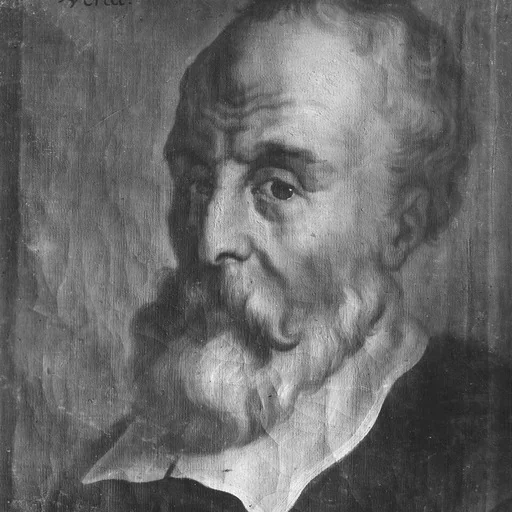
Paolo Caliari (1528 – 19 April 1588), known as Paolo Veronese ( VERR-ə-NAY-zay, -zee, US also -see; Italian: ), was an Italian Renaissance painter based in Venice, known for extremely large history paintings of…