Artwork
The Spanish Parliament from Vox Populi Eoricum, by Thomas Scott
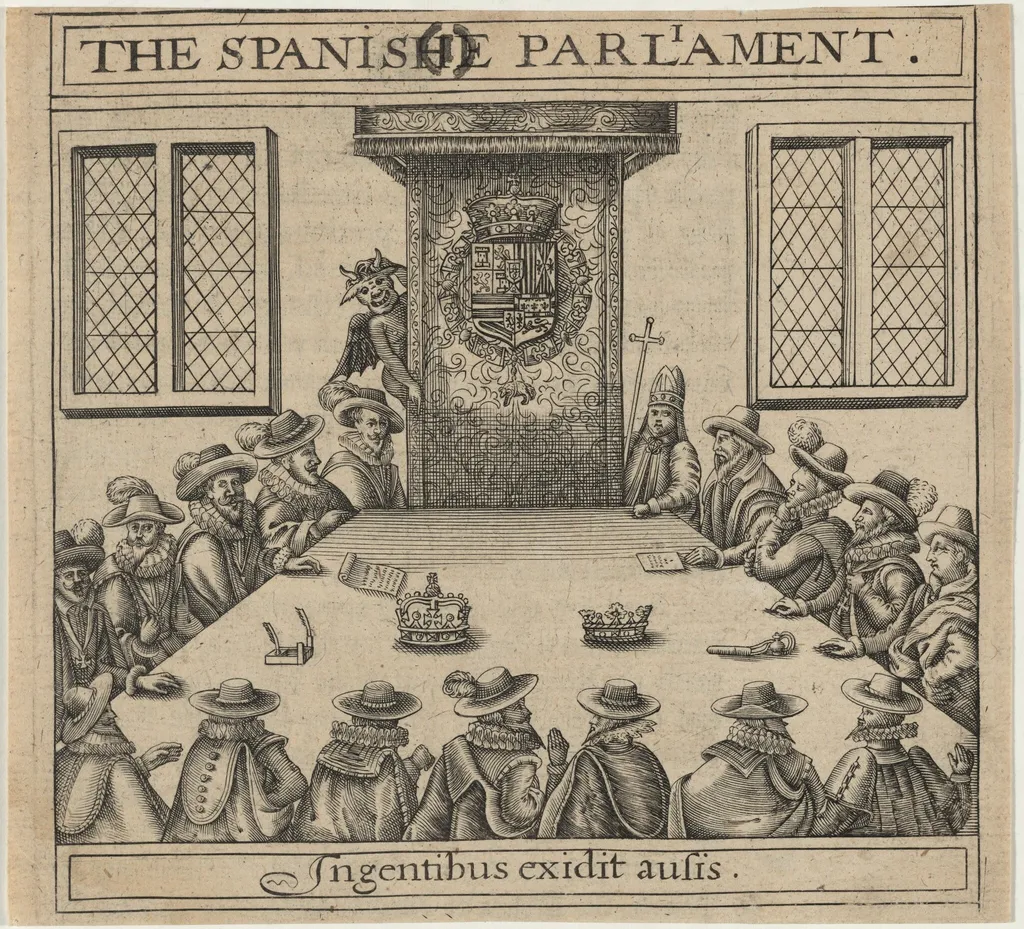
The Spanish Parliament from Vox Populi Eoricum, by Thomas Scott is an ink print by the Baroque artist Crispijn van de Passe I. It dates from 1624 and is held in the collection of the Rosenwald Collection.
About this work
Overview
The composition captures a crowded interior space, rendered with fine, precise strokes typical of early 17th-century Northern European printmaking traditions.
This 1624 engraving by Crispijn van de Passe I depicts a scene titled The Spanish Parliament from Vox Populi Eoricum, attributed to Thomas Scott. As a printed image, it was produced using incised lines on a metal plate, allowing multiple impressions. The composition captures a crowded interior space, rendered with fine, precise strokes typical of early 17th-century Northern European printmaking traditions.
Subject & Meaning
The scene portrays a disorderly assembly, possibly satirizing political deliberation. Figures in period dress gather around two officials seated beneath a heraldic emblem, while bystanders lean in, gesture, and even carry a cat. The banner above explicitly labels the setting, yet the chaotic energy suggests commentary on the unpredictability or absurdity of parliamentary procedure, common in contemporary political satire.
Technique & Style
Van de Passe employed fine, controlled engraving lines to model light, texture, and volume. The intricate detailing of clothing, facial expressions, and architectural elements, such as diamond-patterned windows, demonstrates mastery of the medium. The use of cross-hatching and stippling creates depth without color, relying on tonal variation to distinguish forms and spatial relationships within the crowded room.
History & Provenance
Created in 1624, the print emerged from a Dutch publishing context known for political and satirical imagery. Crispijn van de Passe I, a prominent engraver and publisher, often reproduced foreign subjects for Northern European audiences. The attribution to Thomas Scott, an English writer, suggests the image was intended as a visual accompaniment to a published text, though the original source remains obscure.
Context
In the early 1600s, printed images like this circulated widely as tools of political commentary and public education. The depiction of a Spanish parliamentary session reflects Northern European interest in Iberian institutions, often viewed through a lens of skepticism or rivalry. Such prints served both informational and critical purposes, shaping perceptions of foreign governance among literate audiences.
Legacy
The engraving exemplifies the role of print in disseminating visual narratives beyond elite circles. While not widely reproduced today, it stands as a representative work of its time, capturing the intersection of politics, satire, and technical precision in early modern print culture. Its survival offers insight into how contemporary viewers interpreted distant political systems through caricature and detail.
Own this work as a print
Artist & collection

Artist
Crispijn van de Passe I (1564–1637) was an artist, born in Arnemuiden.
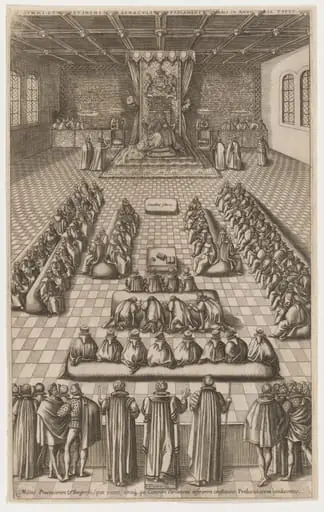 Queen Elizabeth in Parliament
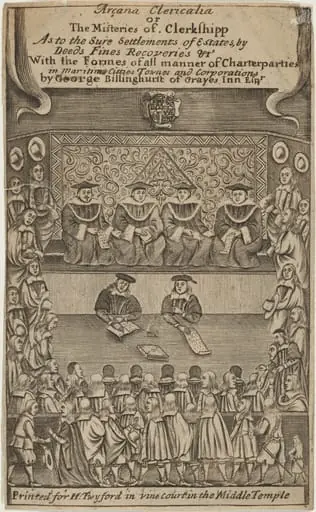 Title Page to Arcana Clericalia or the Misteries of Clerkshipp by George Billinghurst
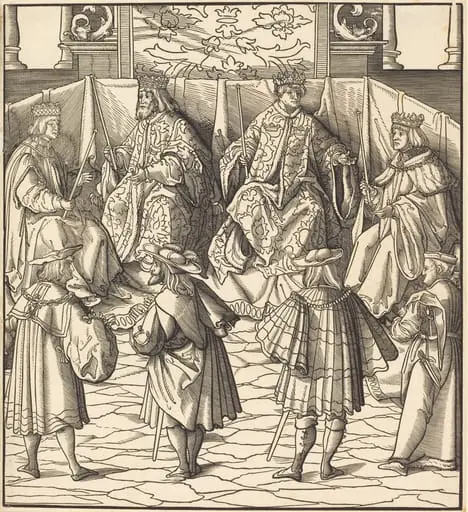 Assembly of Four Kings, in the foreground Four Men
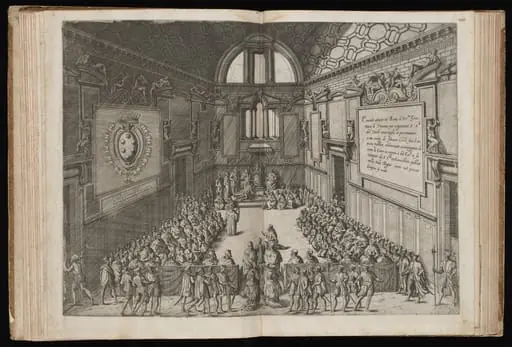 The Coronation of Cosimo I de' Medici
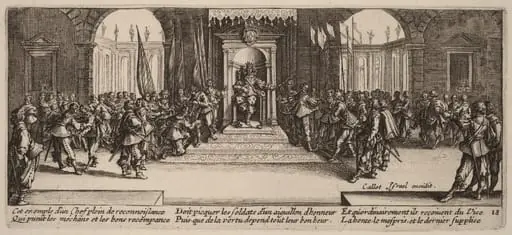 Distribution of Rewards
![Meeting of Margaret of Austria and Philip III [recto], by Jacques Callot](https://artifactworldgallery.com/img/jacques-callot--meeting-of-margaret-of-austria-and-philip-iii-recto--2aafd0c5f9d0b247-w320.webp) Meeting of Margaret of Austria and Philip III [recto]
Meeting of Margaret of Austria and Philip III [recto]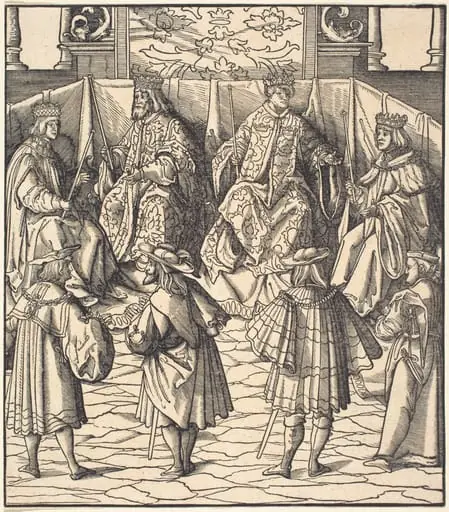 Assembly of Four Kings, in the foreground Four Men
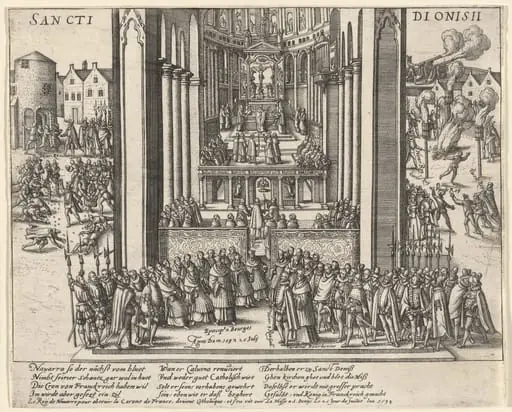 Composite Image Depicting Actions of Henri IV, King of France, upon His Abjuration of the Protestant Faith
![King and Queen in Consultation about the Turks [recto], by Jacques Callot](https://artifactworldgallery.com/img/jacques-callot--king-and-queen-in-consultation-about-the-turks-recto--5b03792b86815455-w320.webp) King and Queen in Consultation about the Turks [recto]
King and Queen in Consultation about the Turks [recto]