Artwork
Title Page for Vox Populi Eoricum, by Thomas Scott
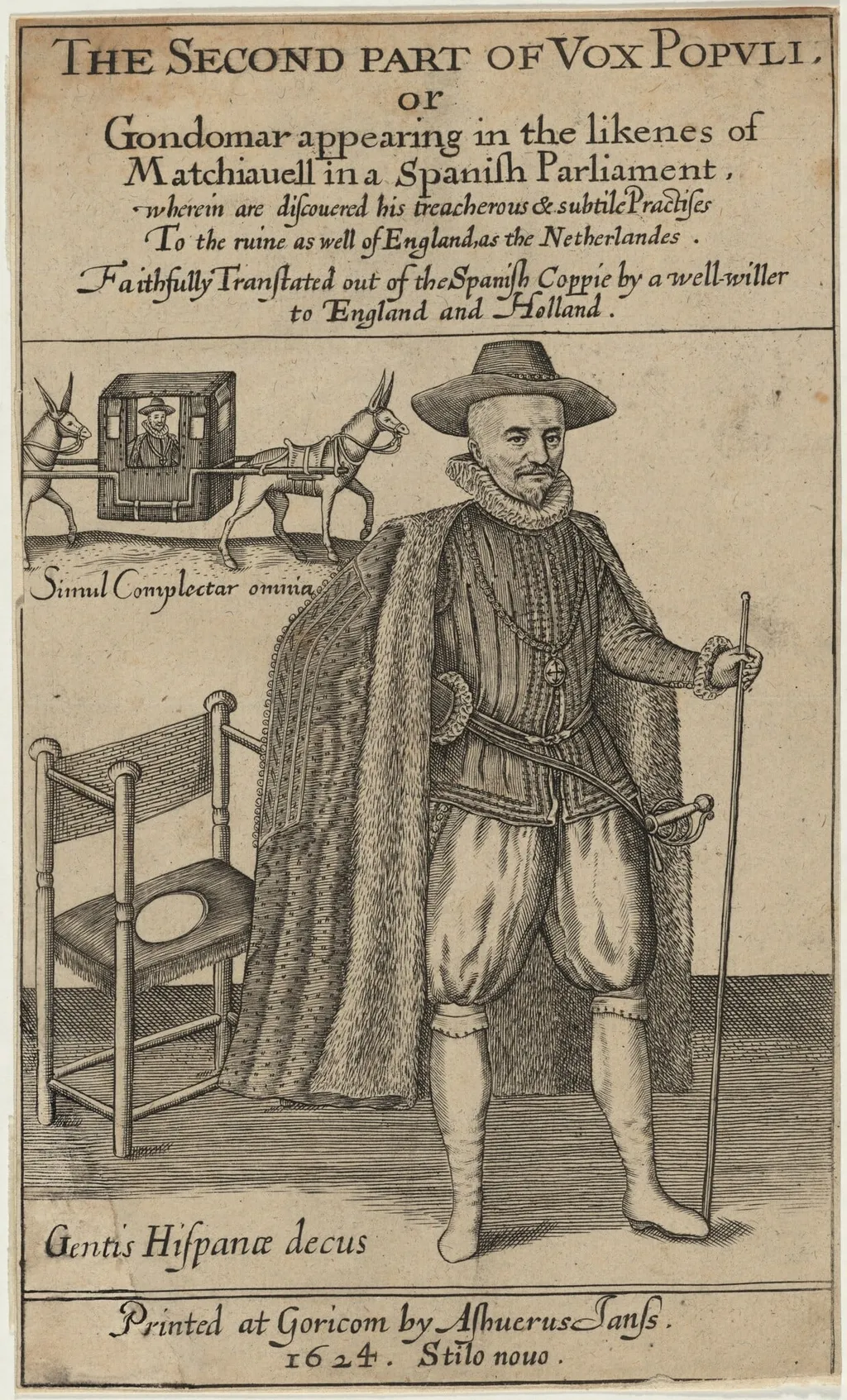
Title Page for Vox Populi Eoricum, by Thomas Scott is an ink print by the Baroque artist Crispijn van de Passe I. It dates from 1624 and is held in the collection of the National Gallery of Art.
About this work
Overview
Created in 1624 by the Dutch engraver Crispijn van de Passe I, this print serves as the title page for Thomas Scott's satirical pamphlet, Vox Populi Eoricum.
Created in 1624 by the Dutch engraver Crispijn van de Passe I, this print serves as the title page for Thomas Scott's satirical pamphlet, Vox Populi Eoricum. The work functions as a direct political caricature targeting the Spanish diplomat Gondomar, whose influence over King James I of England was a subject of intense controversy. The composition centers on a figure dressed in elaborate 17th-century attire, including a wide-brimmed hat, a fur-lined cape, and a sword, identified by the inscription above as Gondomar.
Behind him, a donkey pulls a small wagon containing another figure, a visual metaphor likely alluding to foolishness or a specific narrative from the accompanying text. The engraving utilizes the sharp, linear precision characteristic of van de Passe's reproductive and original prints to convey a biting critique of foreign interference in English politics. Produced during a period of heightened anti-Spanish sentiment, the image exemplifies the use of print media as a tool for political propaganda in the early Stuart era.
It stands as a significant document of the visual culture surrounding the diplomatic tensions between England and Spain in the 1620s.
Subject & Meaning
At the centre stands a well‑dressed gentleman, identified by an inscription as "Gondomar," a reference to the Spanish ambassador to England. He wears a broad hat, a fur‑trimmed cloak, and a sword, while a donkey drags a small wagon bearing a captive figure. The surrounding objects, a chair, a dog, and a cane, enhance the sense of moral warning, portraying Gondomar as duplicitous and his policies as treacherous.
Technique & Style
Van de Passe employed the intaglio engraving method, incising fine lines into a copper plate to achieve intricate shading and texture. The print displays the characteristic crispness of early‑17th‑century Dutch engraving, with careful hatching to model fabrics, fur, and the animal’s fur. The tight control of line weight allows the crowded scene to remain legible at a small scale.
History & Provenance
Created for the 1624 edition of Vox Populi Eoricum, the engraving circulated as part of a pamphlet that criticized Spanish influence in England. Copies of the title page survive in several European libraries, indicating its wide distribution as a piece of political propaganda. The work reflects the collaborative network of English authors and Dutch printmakers active during the period.
Context
The image emerges from a turbulent era of Anglo‑Spanish relations, when ambassadors like the Count of Gondomar were subjects of intense public scrutiny. Print media served as a rapid means of shaping opinion, and the exaggerated portrayal of the ambassador aligns with contemporary pamphleteering that blended news, satire, and moral instruction.
Legacy
While the engraving itself is a modest illustration, it exemplifies the role of print in early modern political discourse. Its visual rhetoric influenced later caricatures of foreign diplomats and contributed to the development of satirical print culture that would flourish in the eighteenth century.
Own this work as a print
Artist & collection

Artist
Crispijn van de Passe I (1564–1637) was an artist, born in Arnemuiden.

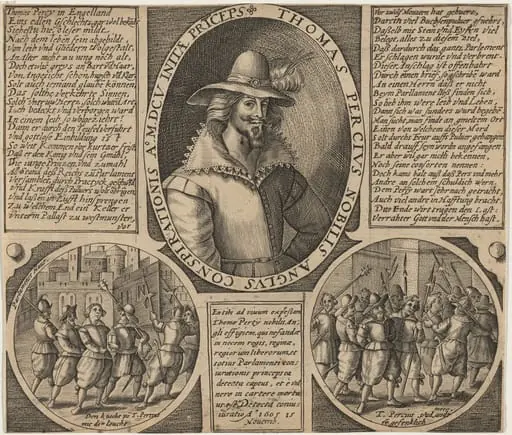 Thomas Percy, Gunpowder Plot Conspirator
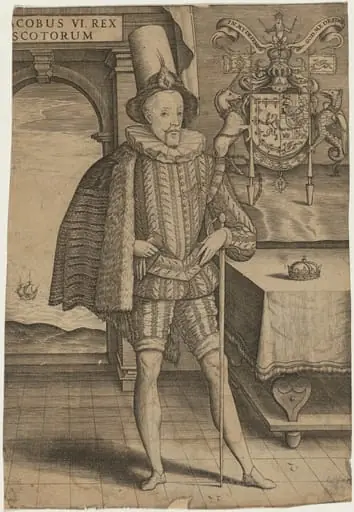 James I of England and James VI of Scotland
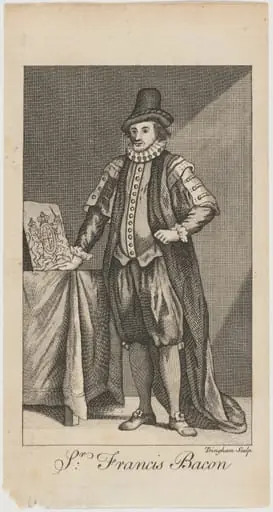 Sir Francis Bacon
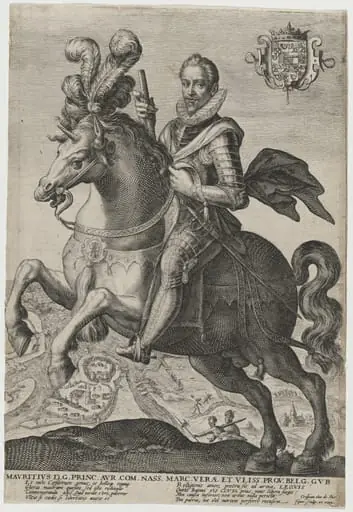
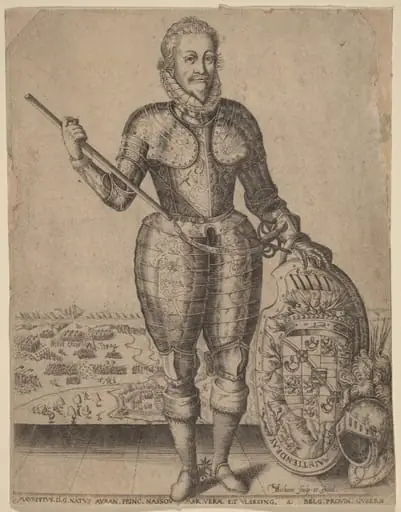 Maurice of Nassau, Prince of Orange
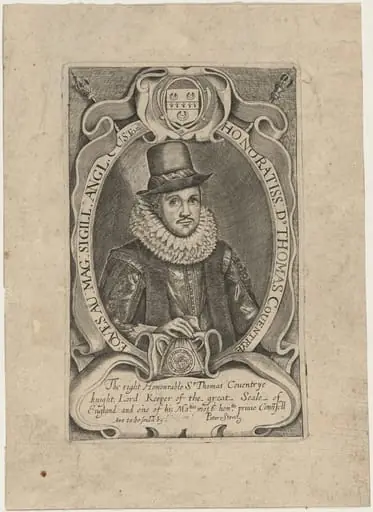 Thomas, First Baron Coventry
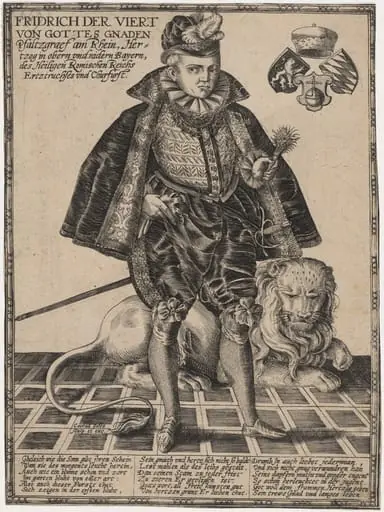 Frederick IV
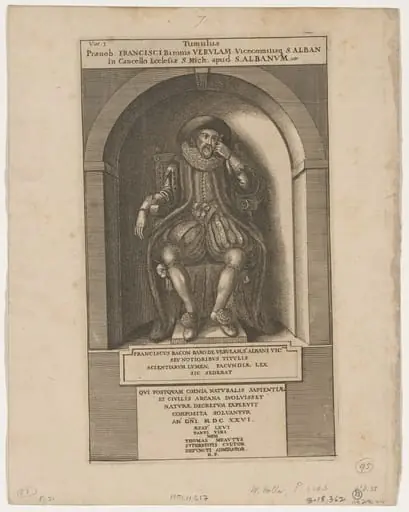 Francis Bacon in a Niche
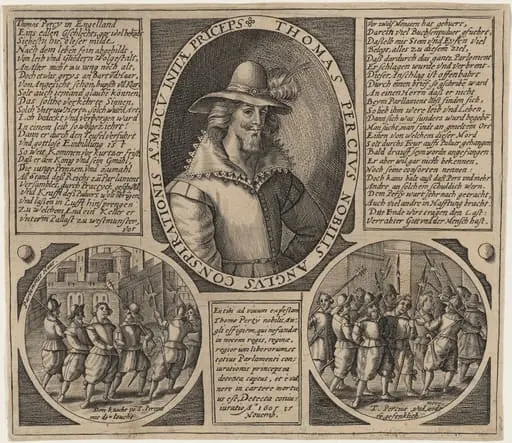 Thomas Percy and the Gunpowder Plot
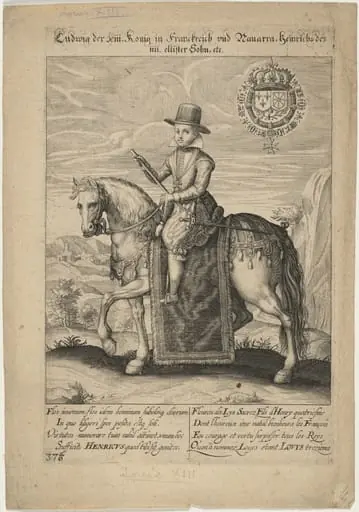 Louis XIII of France
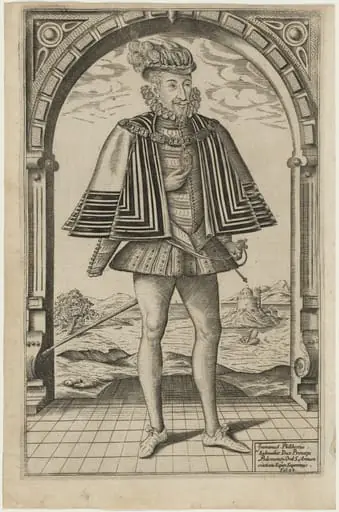 Emmanuel Philibert, Duke of Savoy
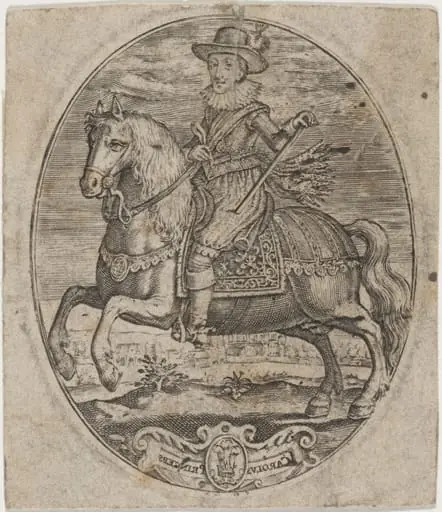 Charles I, King of England, on Horseback
- Title Page for Vox Populi Eoricum, by Thomas Scott