Artwork
Rideau, Cruchon et Compotier
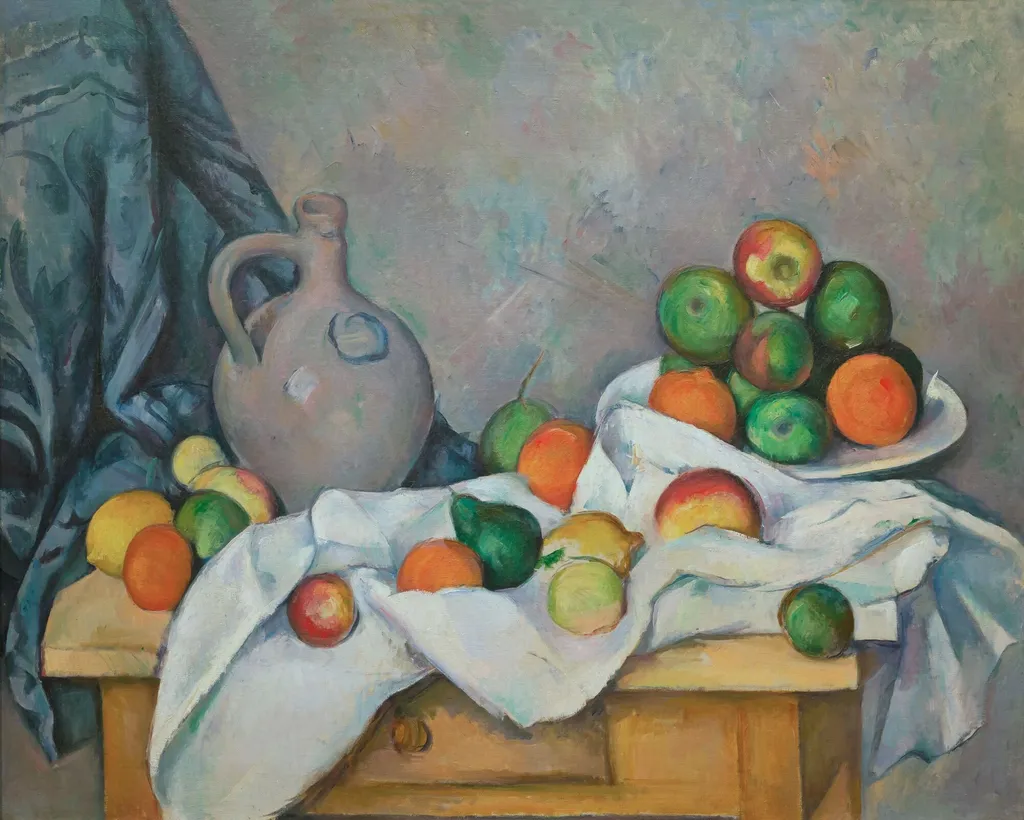
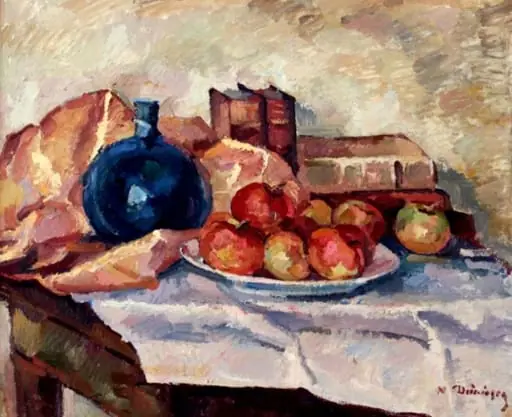
Rideau, Cruchon et Compotier is an oil painting by the Post-Impressionist artist Paul Cézanne. It dates from 1897 and is held in the collection of the Whitney Museum of American Art.
About this work
Overview
Created around 1893‑94, this oil on canvas by Paul Cézanne presents a restrained still‑life arrangement. A white cloth hangs over a table edge, supporting a pitcher, a fruit bowl and several loose pieces of fruit. The composition is organized to emphasize balance and spatial depth, with a muted background that recedes behind the objects.
Subject & Meaning
The work focuses on everyday objects, a jug, a bowl of fruit, and a draped cloth, arranged to explore their formal relationships. By positioning the pitcher and bowl centrally and scattering fruit around them, Cézanne investigates how simple items generate visual tension and harmony, inviting contemplation of shape and proportion rather than narrative content.
Technique & Style
Cézanne employs a subdued palette and soft, layered brushwork that modulates light across the surfaces. The handling of paint creates subtle tonal transitions, giving the cloth, ceramic, and fruit a tactile presence. The composition’s geometric underpinnings, vertical drapery, horizontal table edge, and circular forms, reflect his interest in constructing space through measured brushstrokes.
History & Provenance
After remaining in private collections for more than a century, the painting entered the market at Sotheby’s on 10 May 1999. It fetched $60.5 million, setting a record for the highest price ever paid for a still‑life at auction. The sale underscored the work’s significance within Cézanne’s oeuvre and the broader market for late‑19th‑century French art.
Own this work as a print
Artist & collection

Artist
Paul Cézanne ( say-ZAN, UK also siz-AN, US also say-ZAHN; French: ; Occitan: Pau Cesana; 19 January 1839 – 22 October 1906) was a French Post-Impressionist painter whose work introduced new modes of representation,…

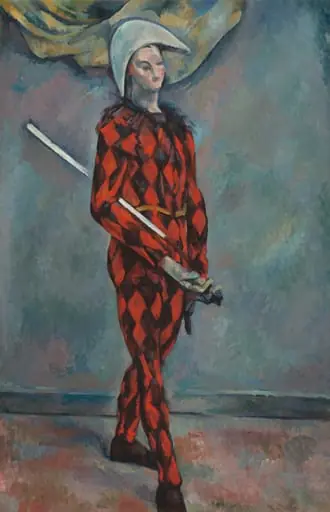 Harlequin
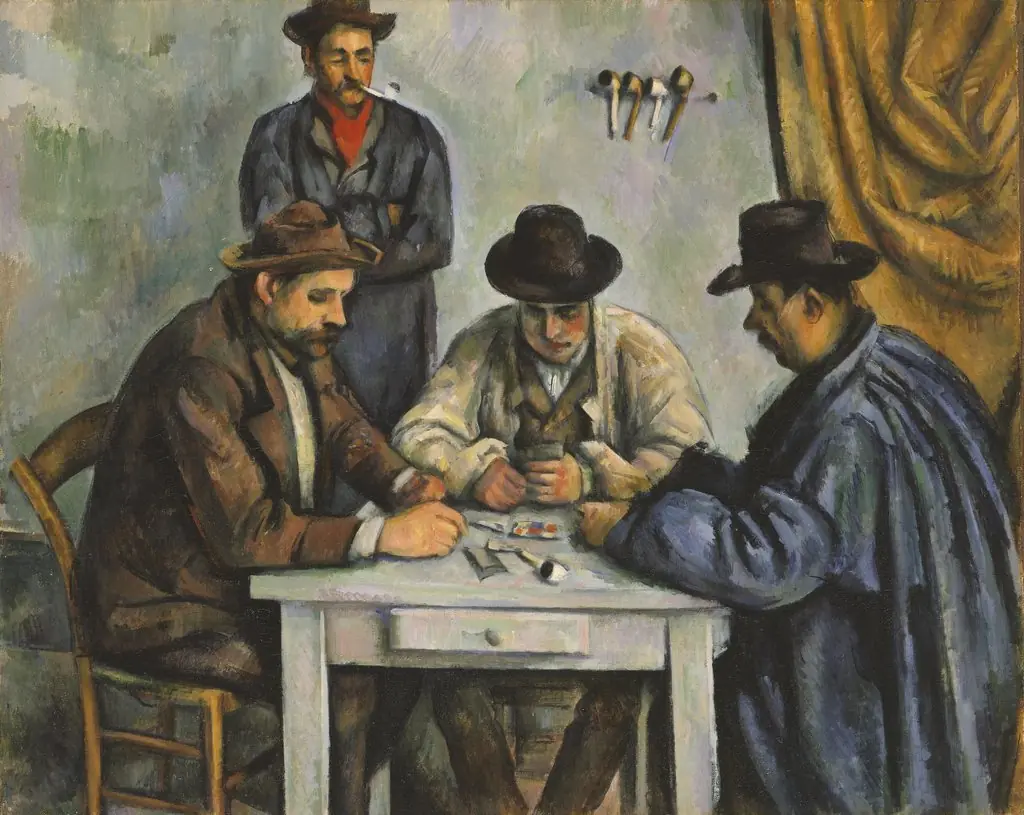 The Card Players
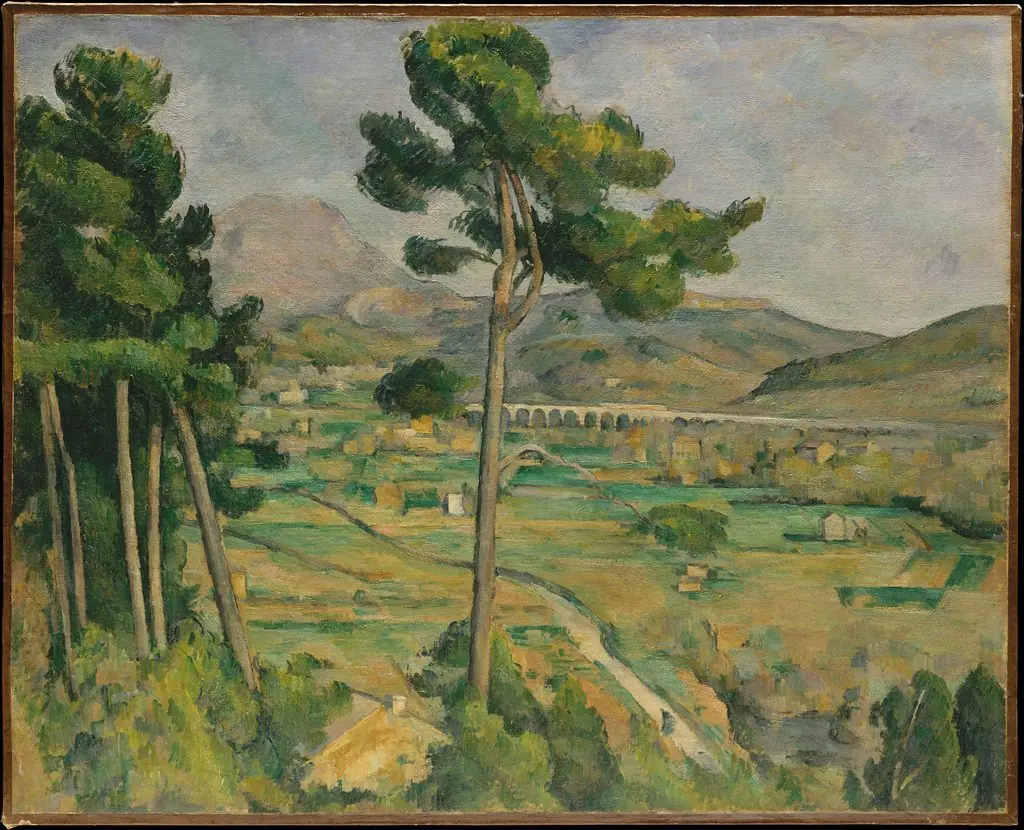 Mont Sainte-Victoire and the Viaduct of the Arc River Valley
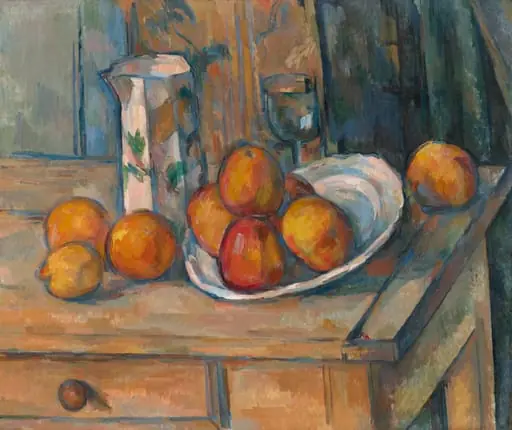 Still Life with Milk Jug and Fruit
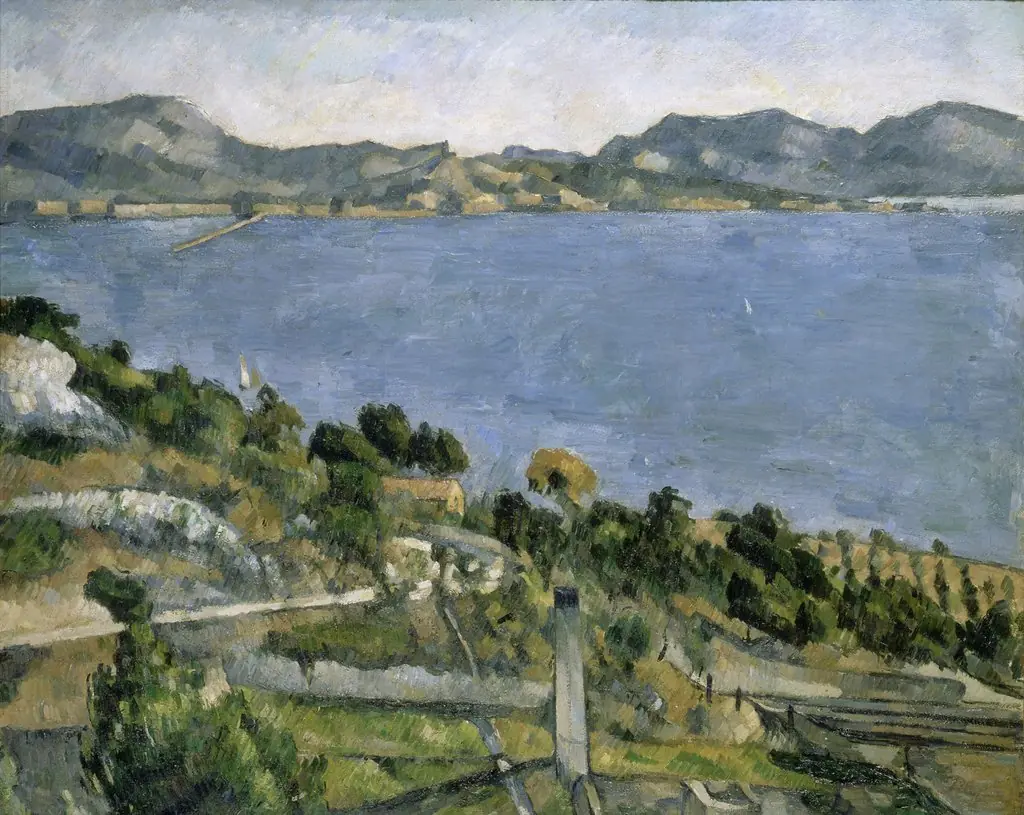 Le Golfe de Marseille vu de l'Estaque (The Gulf of Marseille Seen from L'Estaque)
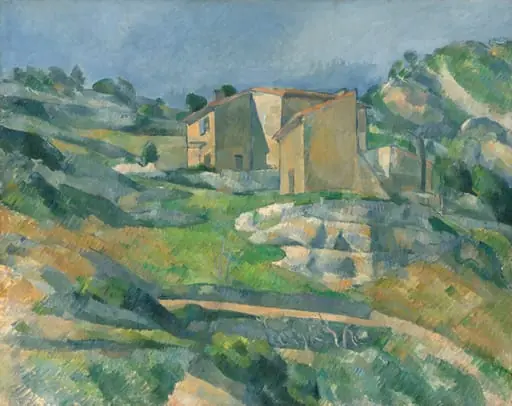 Houses in Provence: The Riaux Valley near L'Estaque
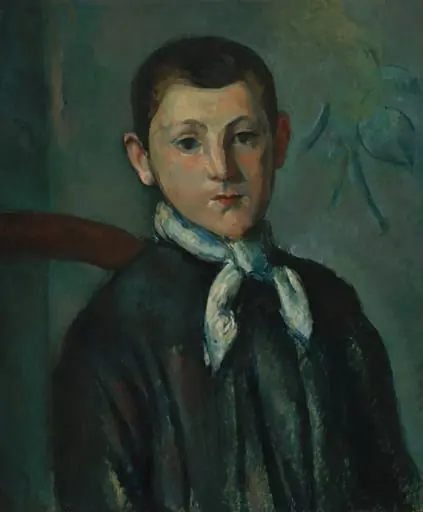 Louis Guillaume
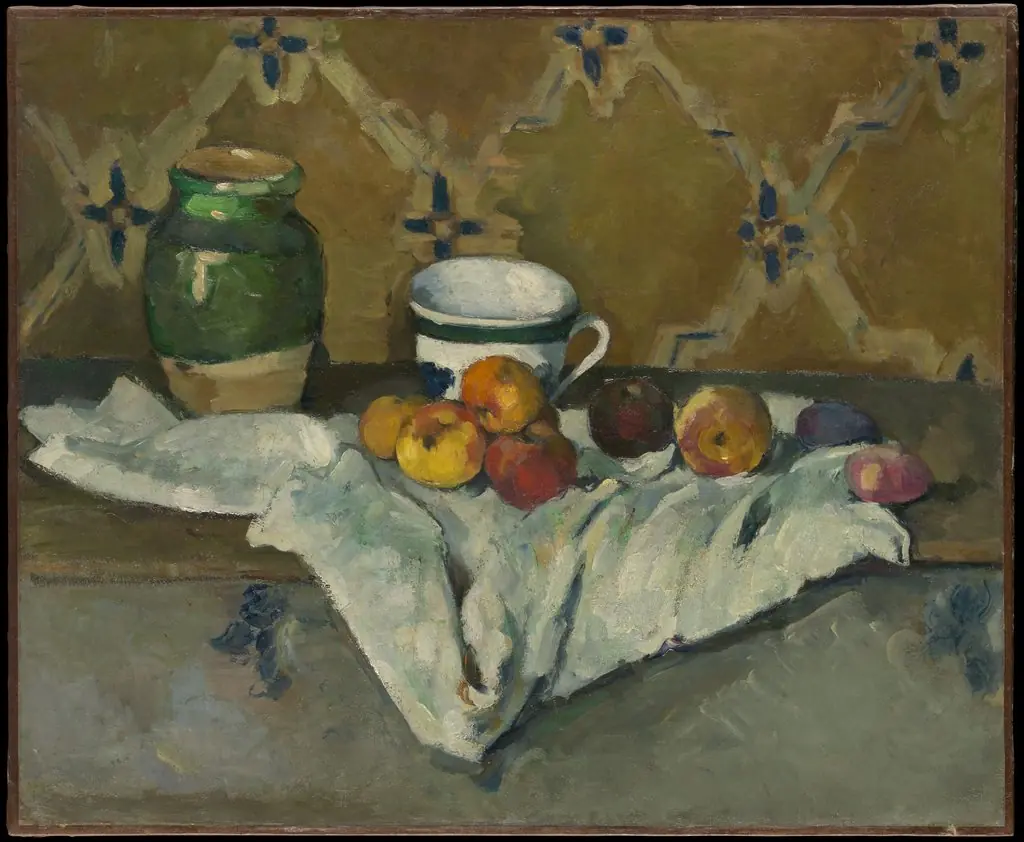 Still Life with Jar, Cup, and Apples
- Still Life with Apples and a Pot of Primroses
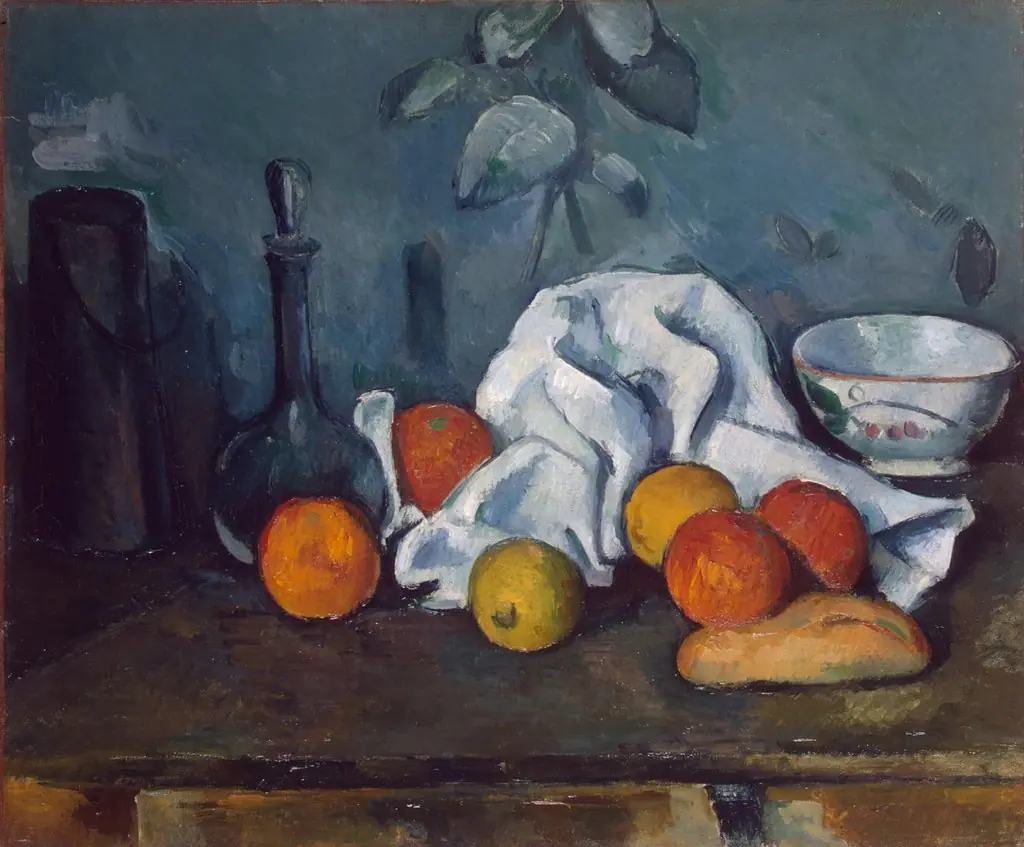 Boîte à lait, carafe et bol
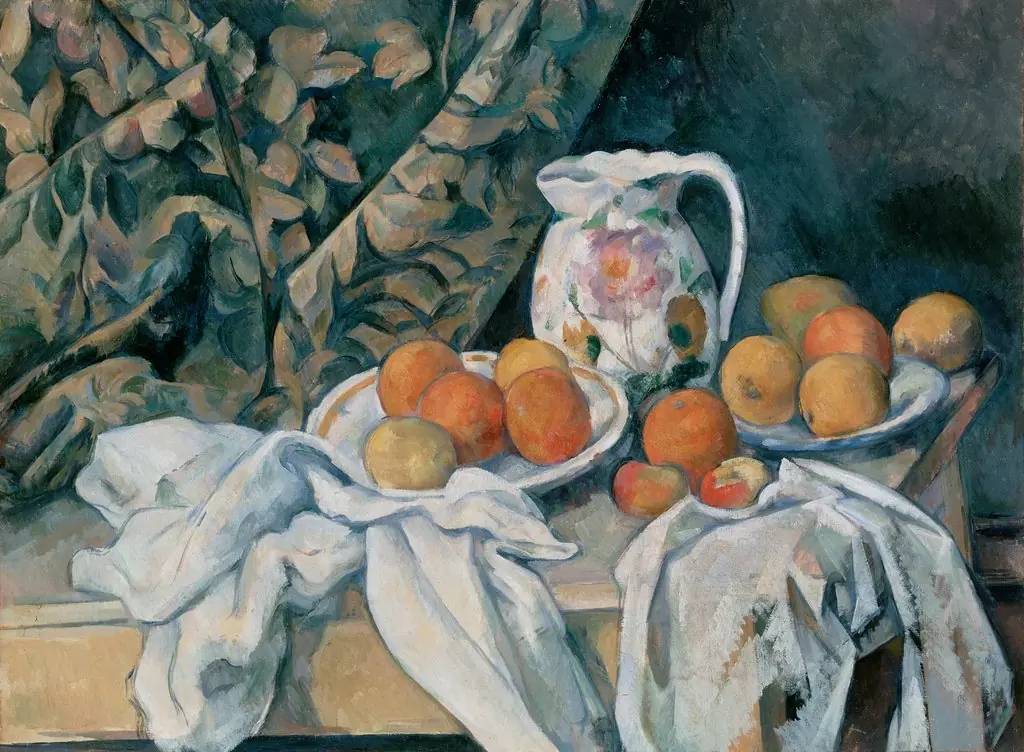 Still Life with a Curtain
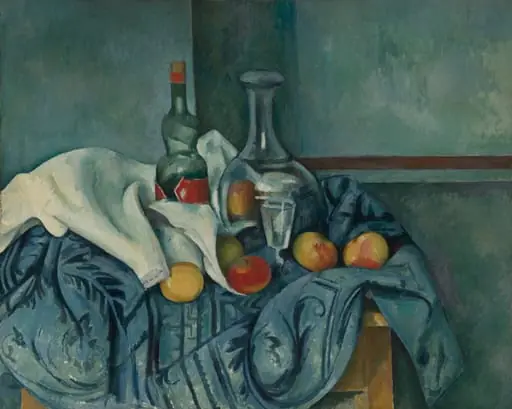 The Peppermint Bottle
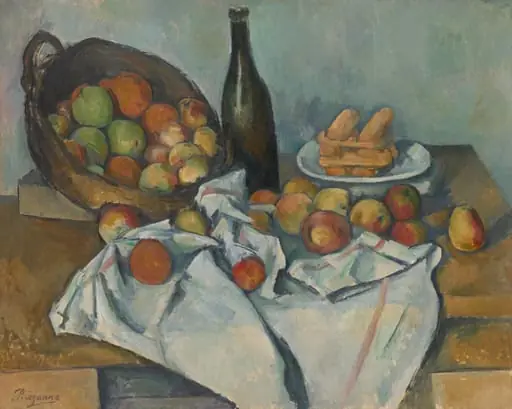 The Basket of Apples
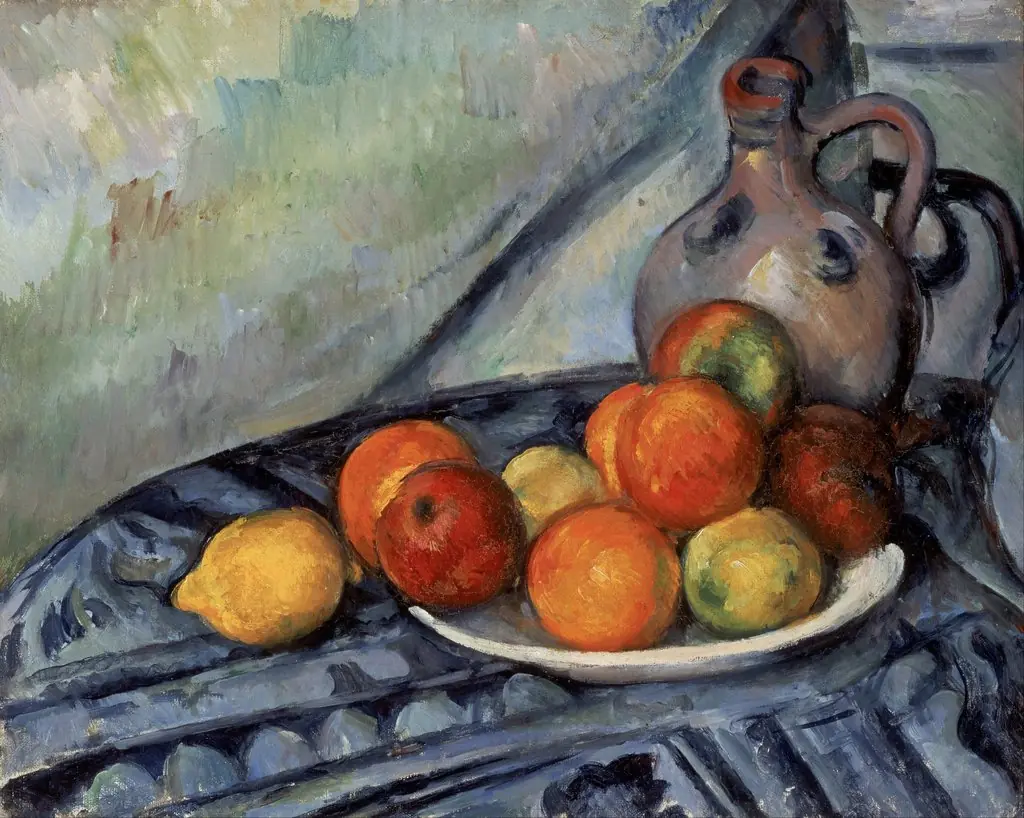 Fruit and a Jug on a Table
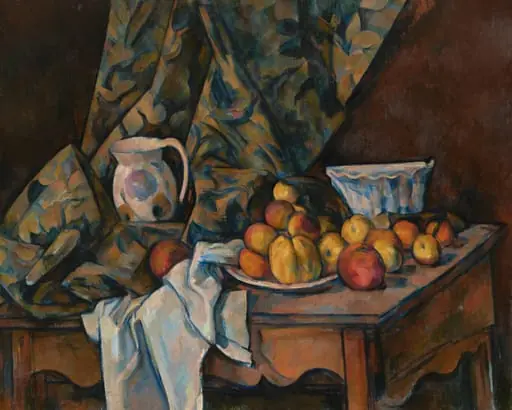 Still Life with Apples and Peaches
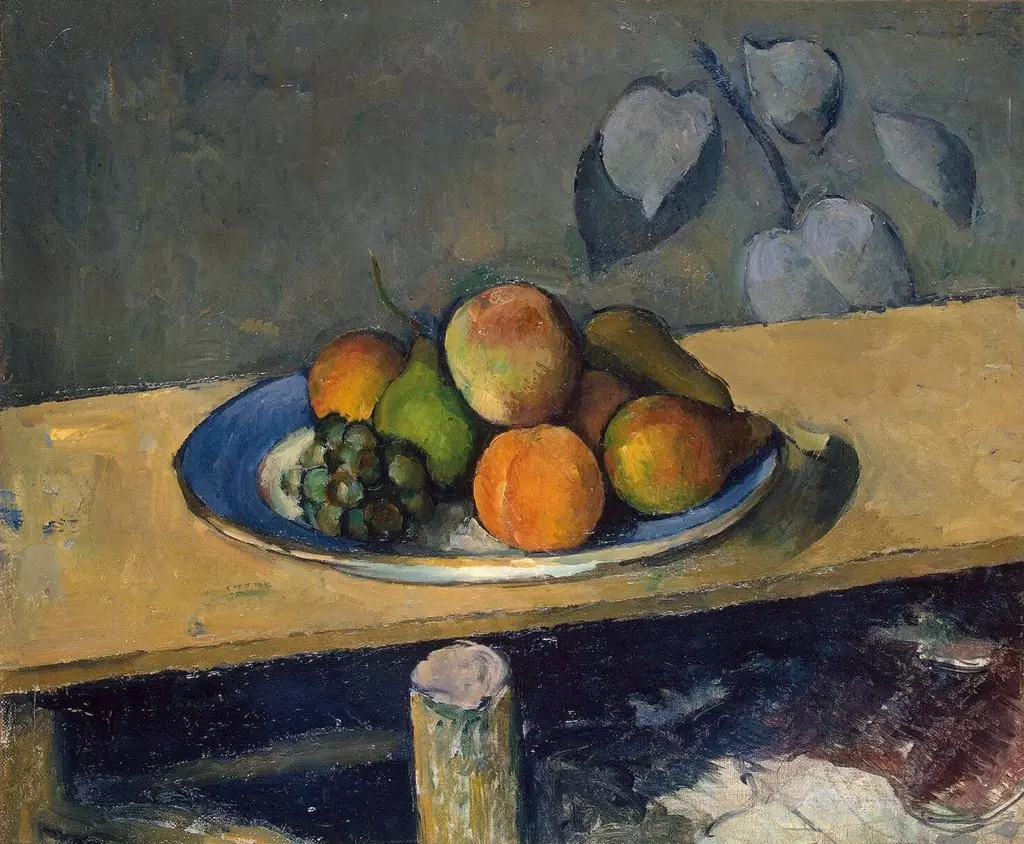 Apples, Peaches, Pears and Grapes
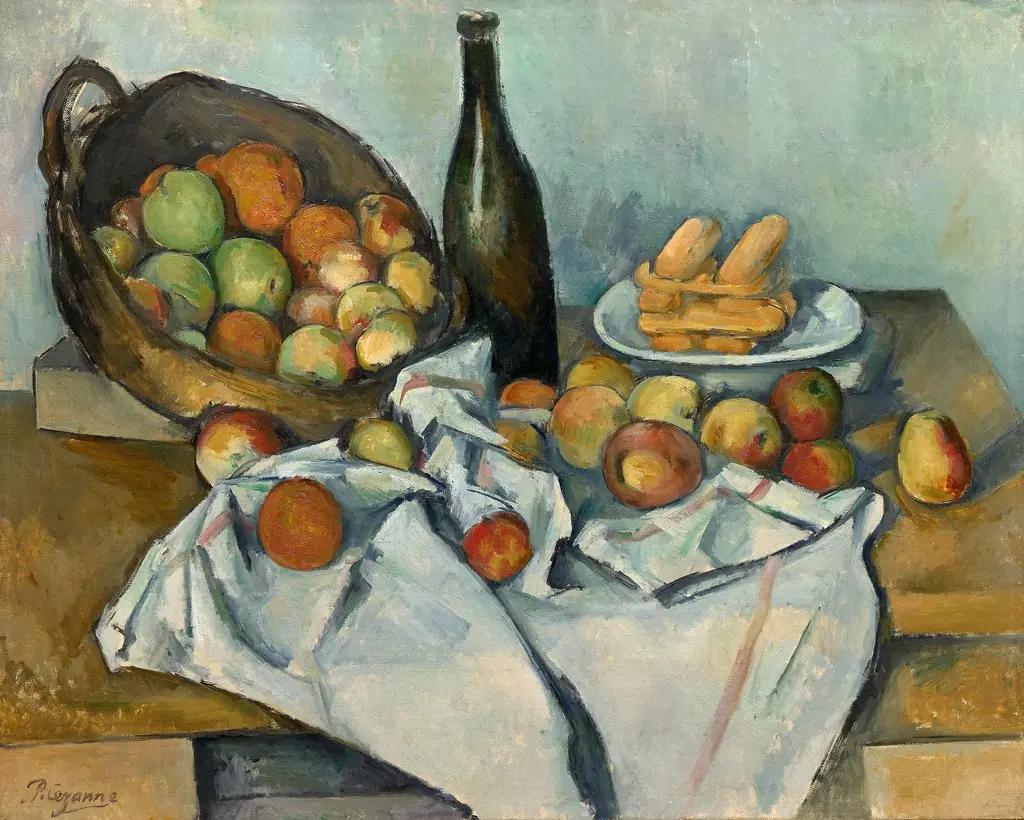 The Basket of Apples
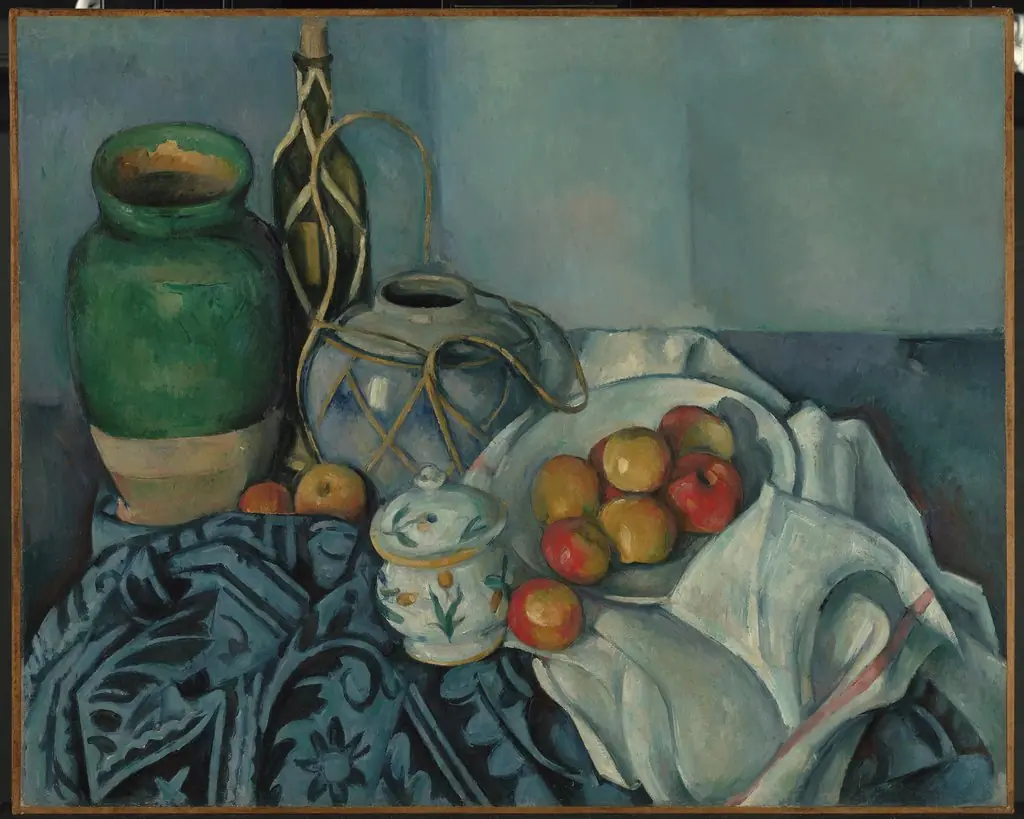 Still Life with Apples
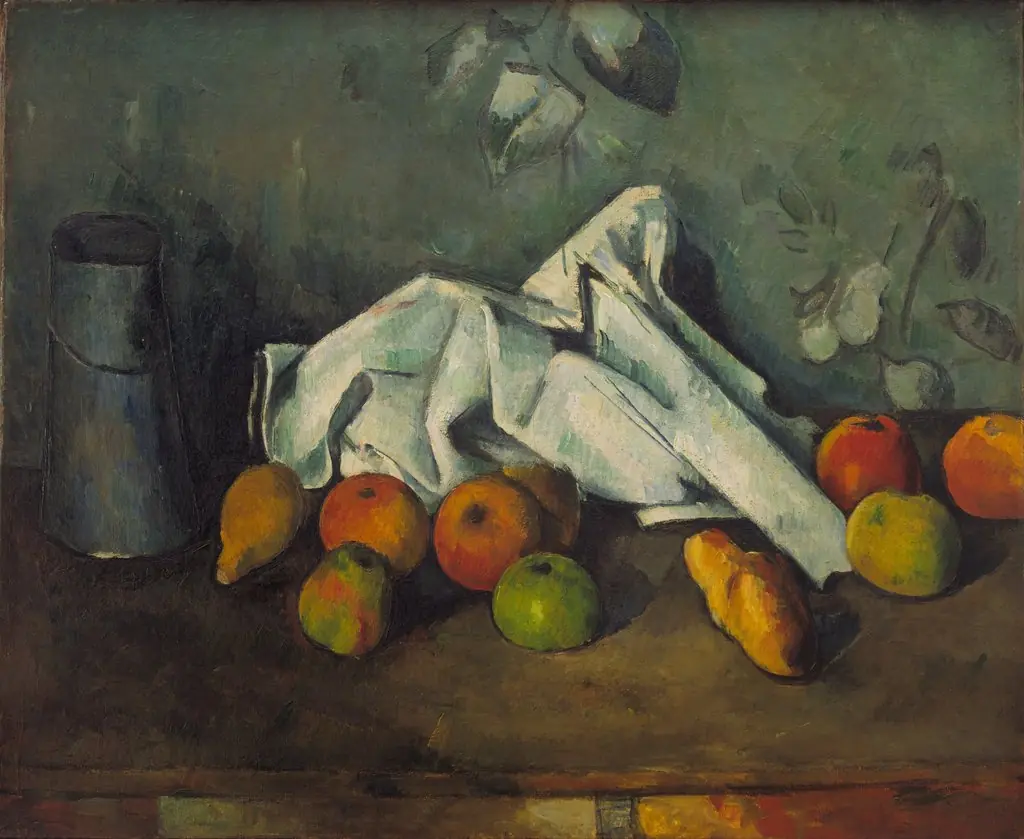 Milk Can and Apples
 Natură moartă