Artwork
Gardanne
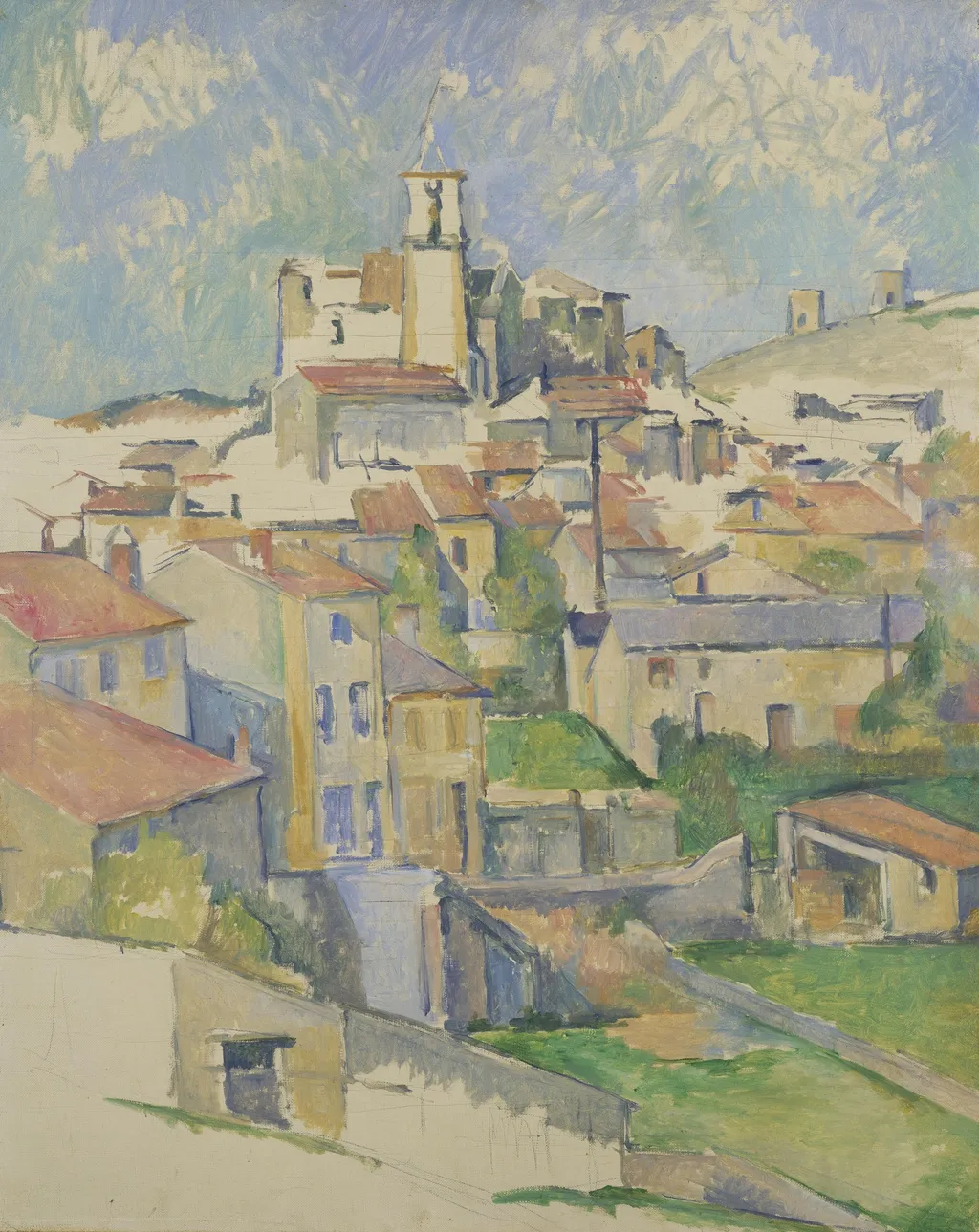
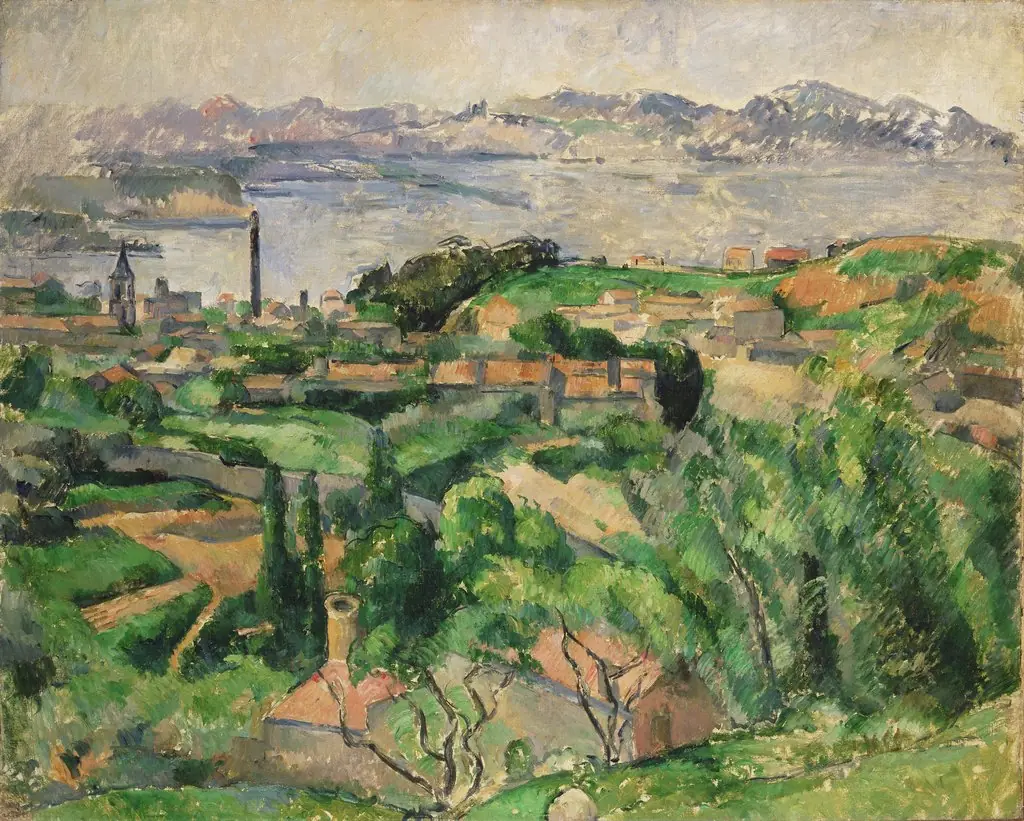
Gardanne is an oil painting by the Post-Impressionist artist Paul Cézanne. It dates from 1893 and is held in the collection of the Metropolitan Museum of Art.
About this work
Subject & Meaning
Rather than conveying overt symbolism, the painting embodies Cézanne’s evolving approach to landscape as a means of synthesizing observation and formal order.
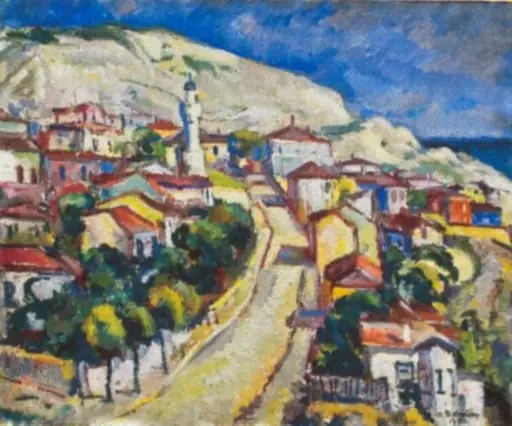
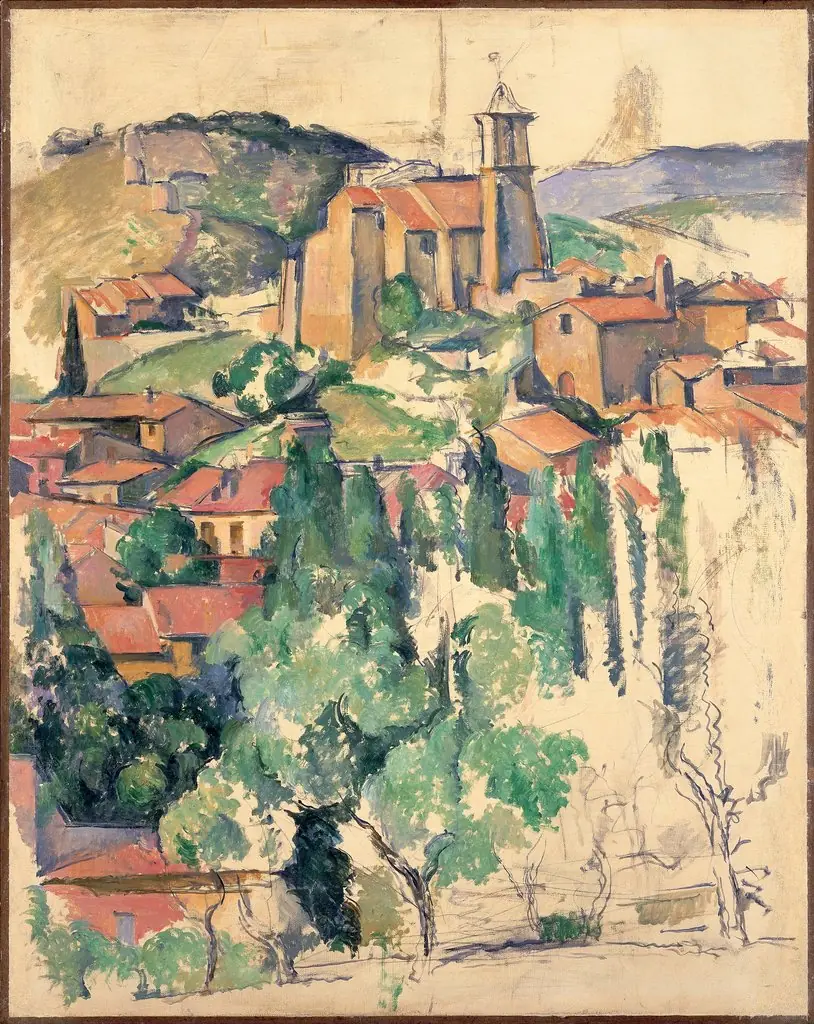
The subject of Cézanne’s Gardanne is the Provençal town of Gardanne, depicted as a structured landscape rather than a topographical record. The composition emphasizes architectural forms, buildings stacked along a sloping street, rendered with planar geometry and muted, earthy tones that suggest volume and solidity. The work conveys Cézanne’s interest in reconciling natural appearances with structured composition, foregrounding the town’s built environment as a motif for exploring spatial relationships and light.
Rather than conveying overt symbolism, the painting embodies Cézanne’s evolving approach to landscape as a means of synthesizing observation and formal order.
Technique & Style
Executed in 1885, Gardanne is an oil painting applied to a canvas support. The work measures 80 cm in height by 64.1 cm in width. As a landscape, the composition depicts the town of Gardanne, specifically focusing on its architectural structures and buildings.
The piece is classified formally as a painting within the landscape genre, utilizing oil paint as its primary medium to render the urban scene.
History & Provenance
Paul Cézanne created the landscape painting Gardanne in 1885, executing the work in oil on canvas. The piece measures 80 centimeters in height and 64.1 centimeters in width. It depicts the town of Gardanne, specifically focusing on its buildings and surrounding landscape.
While the specific commission details are not recorded in the available sources, the work was completed during the mid-1880s, a period when Cézanne frequently returned to the Provençal countryside. The painting is currently held in the collection of the Metropolitan Museum of Art, where it remains a significant example of the artist's landscape studies from that era.
Overview
Paul Cézanne's 1893 oil painting, Gardanne, captures a view of the eponymous French town. This landscape exemplifies the artist's distinctive Post-Impressionist style, characterized by a deliberate exploration of form and color. The work is a significant example of his mature period, showcasing his departure from the fleeting impressions of his contemporaries.
It is currently housed in the collection of The Metropolitan Museum of Art, representing a key moment in the development of modern art.
Context
As a leading figure of Post-Impressionism, Cézanne moved beyond the optical concerns of Impressionism to explore the enduring qualities of form and space. Gardanne reflects his ambition to "make of Impressionism something solid and durable, like the art of the museums." His systematic method of breaking down objects into their constituent geometric shapes and rebuilding them through color planes proved foundational, directly influencing the emergence of Cubism in the early 20th century.
Own this work as a print
Artist & collection

Artist
Paul Cézanne ( say-ZAN, UK also siz-AN, US also say-ZAHN; French: ; Occitan: Pau Cesana; 19 January 1839 – 22 October 1906) was a French Post-Impressionist painter whose work introduced new modes of representation,…

 Harlequin
 The Card Players
 Mont Sainte-Victoire and the Viaduct of the Arc River Valley
 Still Life with Milk Jug and Fruit
 Le Golfe de Marseille vu de l'Estaque (The Gulf of Marseille Seen from L'Estaque)
 Houses in Provence: The Riaux Valley near L'Estaque
 Louis Guillaume
 Still Life with Jar, Cup, and Apples