Artwork
Coast at Dieppe
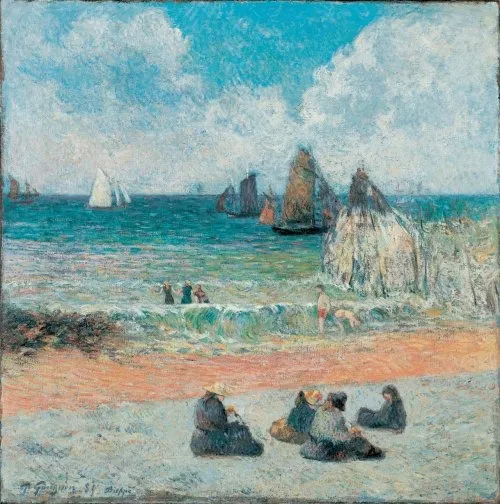
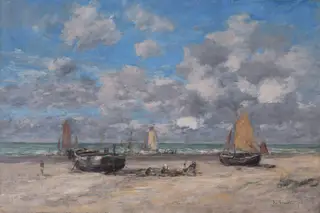
Coast at Dieppe is an oil painting by Paul Gauguin. It dates from 1893 and is held in the collection of the Statens Museum for Kunst. Created in 1893, this oil painting presents a coastal view of Dieppe, France.
About this work
Subject & Meaning
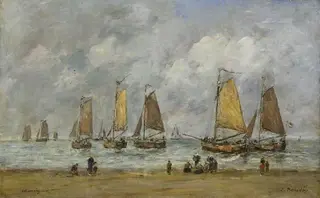
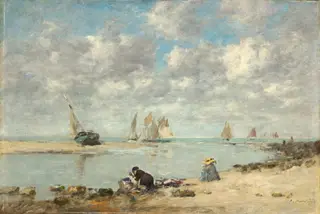
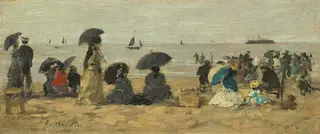
The painting shows a sunlit beach at Dieppe with a sailing ship on the horizon under a bright blue sky, its subject being a coastal scene of leisure and travel.
The painting shows a sunlit beach at Dieppe with a sailing ship on the horizon under a bright blue sky, its subject being a coastal scene of leisure and travel. Symbolically, the expansive sea and sky convey freedom and the allure of the exotic, while the presence of bathers hints at contemporary bourgeois recreation. The work thus represents Gauguin’s early fascination with light, atmosphere, and the sensory experience of the French coast, foreshadowing his later symbolic use of landscape.
The composition emphasizes the interplay of sea, sky, and human activity, reflecting 19th‑century French beach culture and the era’s growing fascination with the ocean as a space of both leisure and artistic exploration.
Technique & Style
Coast at Dieppe is an oil painting executed on canvas by Paul Gauguin in 1885. The work depicts a beach scene at Dieppe featuring a sailing ship, bathing figures, and a blue sky. As an oil-on-canvas piece from the mid-1880s, it represents Gauguin's handling of marine subjects during this period.
History & Provenance
Paul Gauguin created the oil painting Coast at Dieppe in 1885. Executed on canvas, the work depicts the beach at Dieppe featuring a sailing ship and figures bathing under a blue sky. The painting is currently held in the collection of the Statens Museum for Kunst, with its location noted as the Ny Carlsberg Glyptotek.
Overview
Created in 1893, this oil painting presents a coastal view of Dieppe, France. The composition centers on a sunlit beach where several figures are either bathing or walking, while a sailing vessel drifts on the horizon beneath a clear blue sky. The work exemplifies Gauguin’s focus on everyday scenes rendered with a calm, inviting atmosphere.
Context
At this stage in his career, Gauguin was transitioning from Impressionist influences toward a more symbolic and experimental use of color. The painting reflects his interest in simplifying forms and emphasizing emotional resonance through chromatic choices, aligning with the broader Post‑Impressionist movement in late‑19th‑century France.
Legacy
The work illustrates Gauguin’s evolving methodology that would later inform his more radical experiments in Tahiti. By integrating structured composition with vivid coloration, it contributes to the understanding of his shift toward Symbolist concerns and the development of modernist painting.
Artist & collection
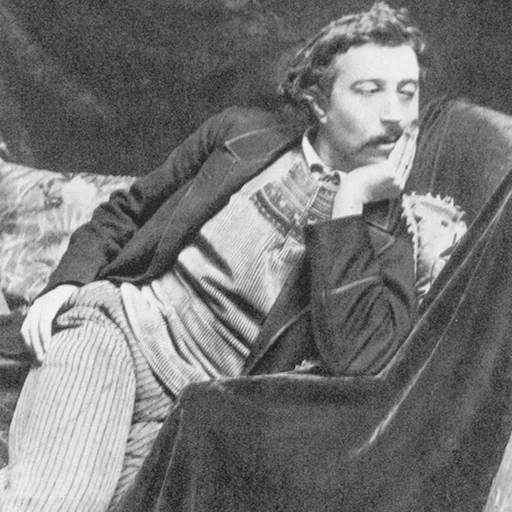
Artist
Eugène Henri Paul Gauguin (; French:; 7 June 1848 – 8 May 1903) was a French painter, sculptor, printmaker, ceramist, and writer, whose work has been primarily associated with the Post-Impressionist and Symbolist movements.