Artwork
Cliffs at Pourville
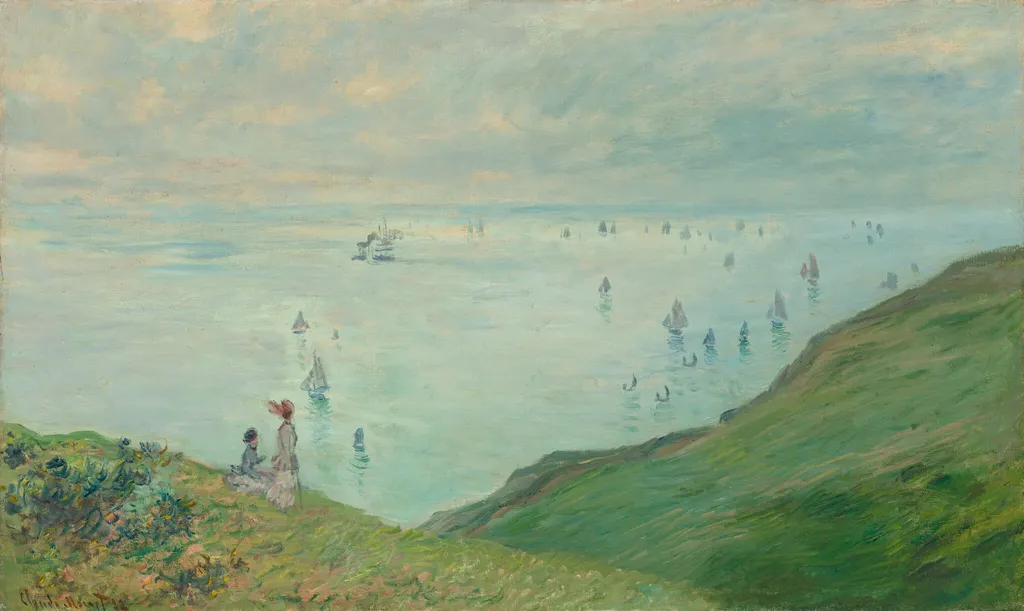
Cliffs at Pourville is an oil painting by the Impressionist artist Claude Monet. It dates from 1882 and is held in the collection of the National Gallery of Art.
- Inscription
- Inscribed:lower left: Claude Monet 82
About this work
Technique & Style
The physical support consists of a standard canvas stretched to accommodate the horizontal format, allowing for the expansive depiction of the cliffs and sea.
Executed in 1882, Cliffs at Pourville is an oil painting on canvas, measuring 60 by 100 centimeters. The work exemplifies the landscape genre through Monet's characteristic handling of the medium to capture coastal light and atmosphere. The composition features a boat within the scene, a recurring motif in his Pourville series.
The physical support consists of a standard canvas stretched to accommodate the horizontal format, allowing for the expansive depiction of the cliffs and sea. The classification as a landscape painting by Monet implies the loose, rapid application of oil paint typical of his Impressionist style during this period. The painting remains in the collection of the National Gallery of Art in Washington, D.C., having been gifted there in 1985.
History & Provenance
Cliffs at Pourville was painted by Claude Monet in 1882, executed in oil on canvas. In January 1883, the work was purchased directly from the artist by the Paris dealer Durand-Ruel. It later passed through the London gallery Arthur Tooth & Sons in 1939, and subsequently entered the collection of Lady John Hope.
In 1953, the painting was sold to the American collector Paul Mellon of Upperville, Virginia. Mellon retained the work for three decades before giving it to the National Gallery of Art in Washington, D.C., in 1985, where it remains today. The provenance is documented in Daniel Wildenstein's catalogue raisonné and in Paul Mellon records held in the NGA curatorial files. No specific accession number or exhibition history is provided in the sources.
Overview
Claude Monet's Cliffs at Pourville, an oil on canvas from 1882, captures a dramatic coastal scene. This landscape painting presents the imposing rock formations of the Normandy coast, with a small vessel navigating the choppy waters below. It exemplifies the artist's dedication to rendering the transient effects of light and atmosphere in natural settings.
Subject & Meaning
The composition centers on the formidable cliffs, their jagged faces rising sharply from the sea. A small boat with a distinct white sail is positioned near the shore, providing a sense of scale against the monumental rock. The water below is rendered with dynamic, rapid brushstrokes, conveying the restless motion of the waves and the ever-changing conditions of the maritime environment.
Context
Cliffs at Pourville reflects Monet's characteristic practice of working en plein air, or outdoors. This method allowed him to directly observe and translate the subtle shifts in light and atmospheric conditions onto the canvas in real time. His aim was to capture the immediate visual sensation of a moment, focusing on how light interacted with the landscape rather than on detailed, static representation.
Own this work as a print
Artist & collection
Artist
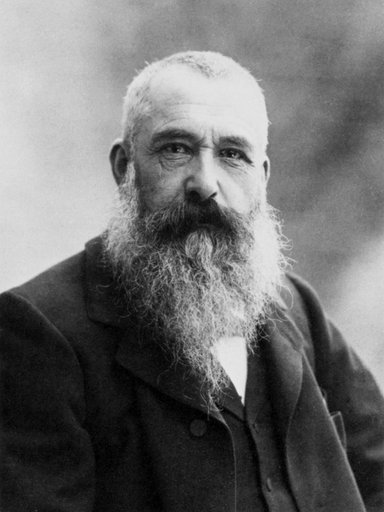
Oscar-Claude Monet was a French painter and founder of Impressionism who is seen as a key precursor to modernism, especially in his attempts to paint nature as he perceived it.


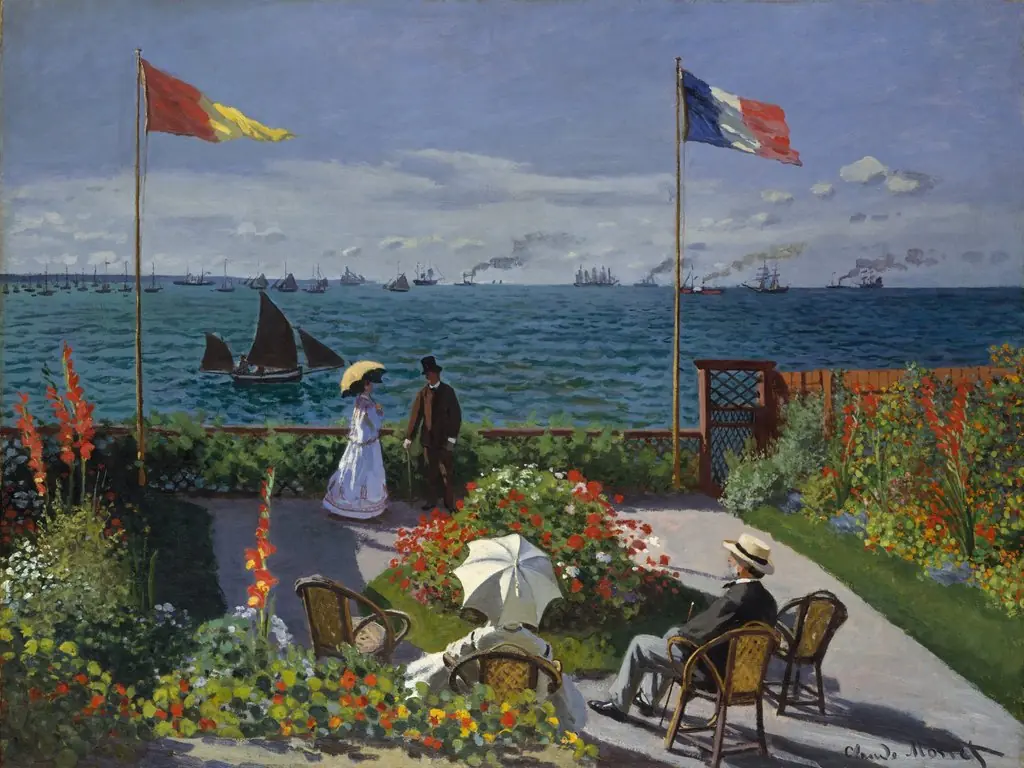
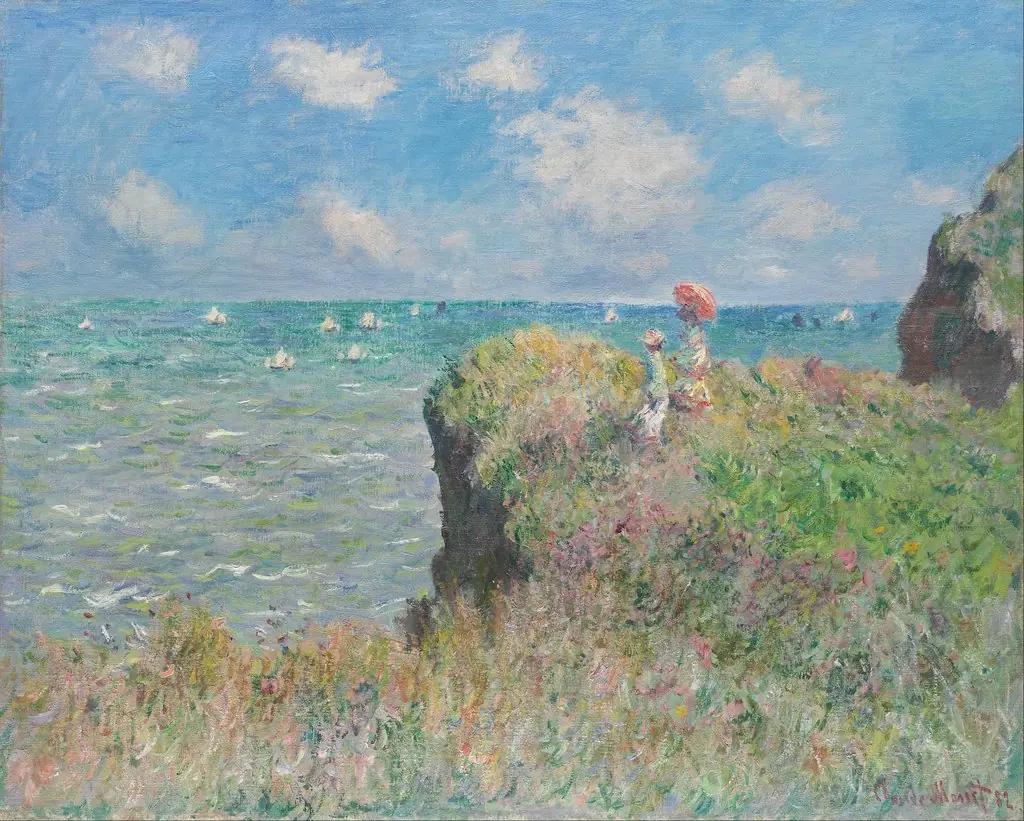
- The Cliff Walk at Pourville
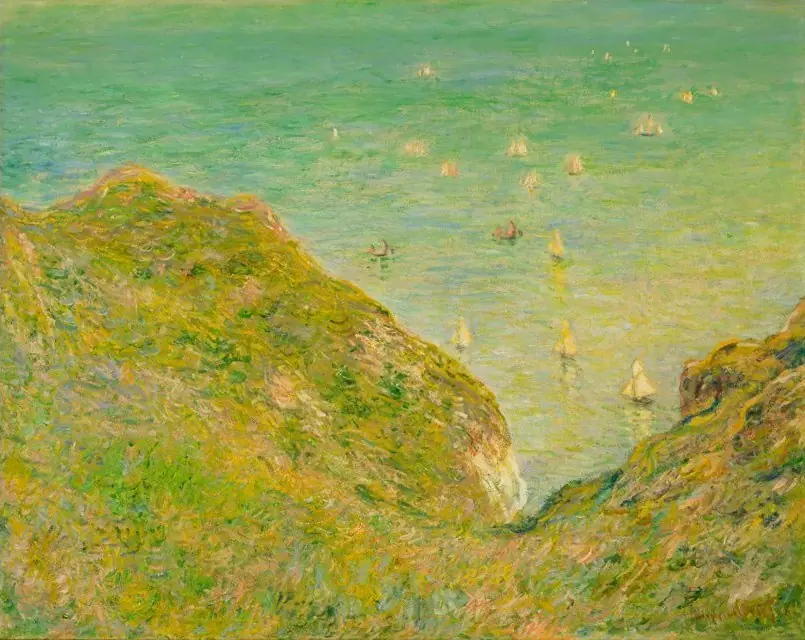 On the Cliff at Pourville Clear Weather
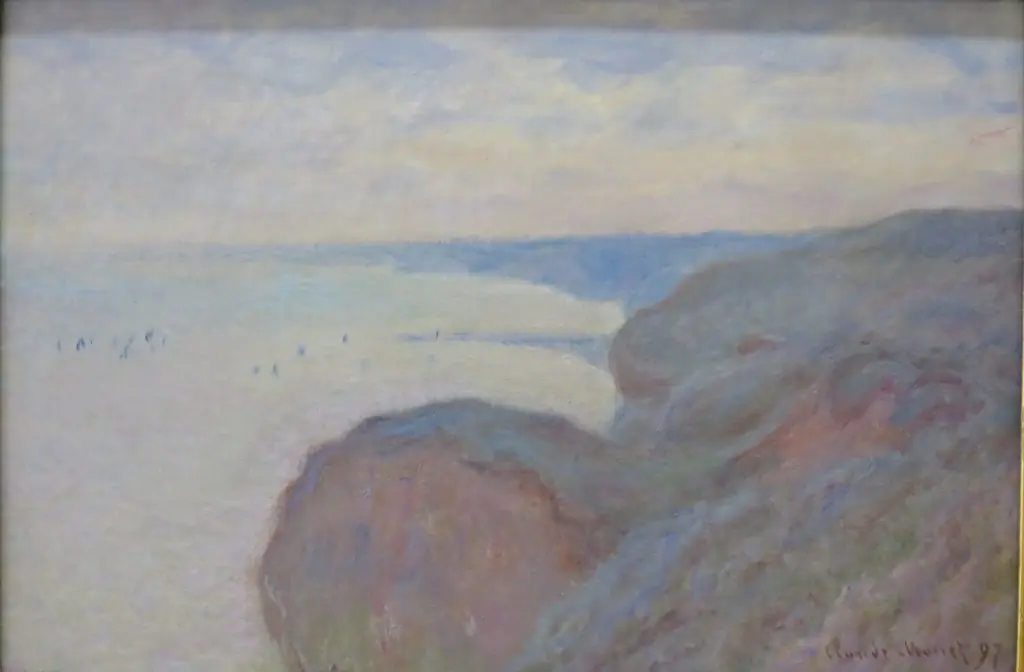 Steep Cliffs near Dieppe
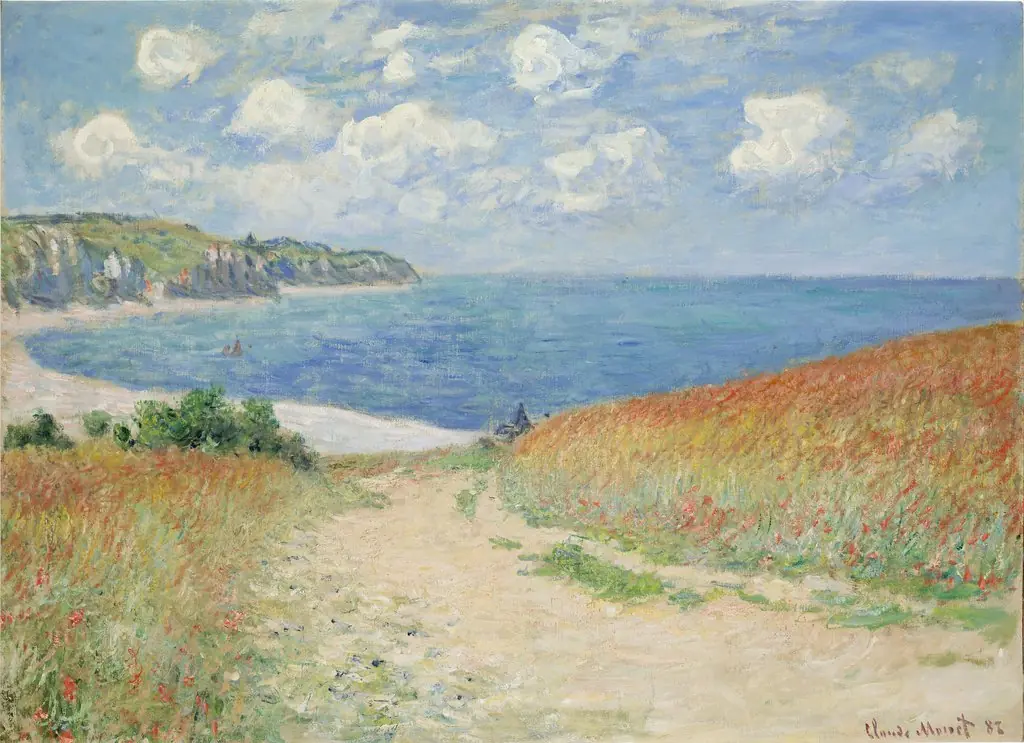 Path in the Wheat at Pourville
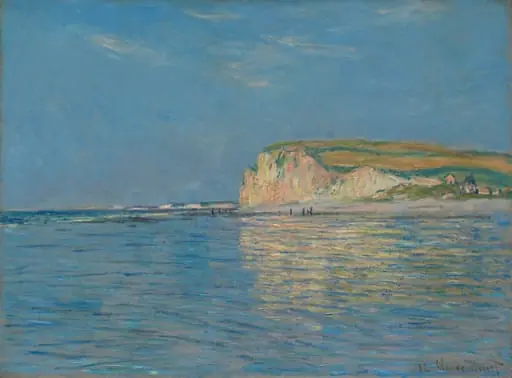 Low Tide at Pourville, near Dieppe, 1882
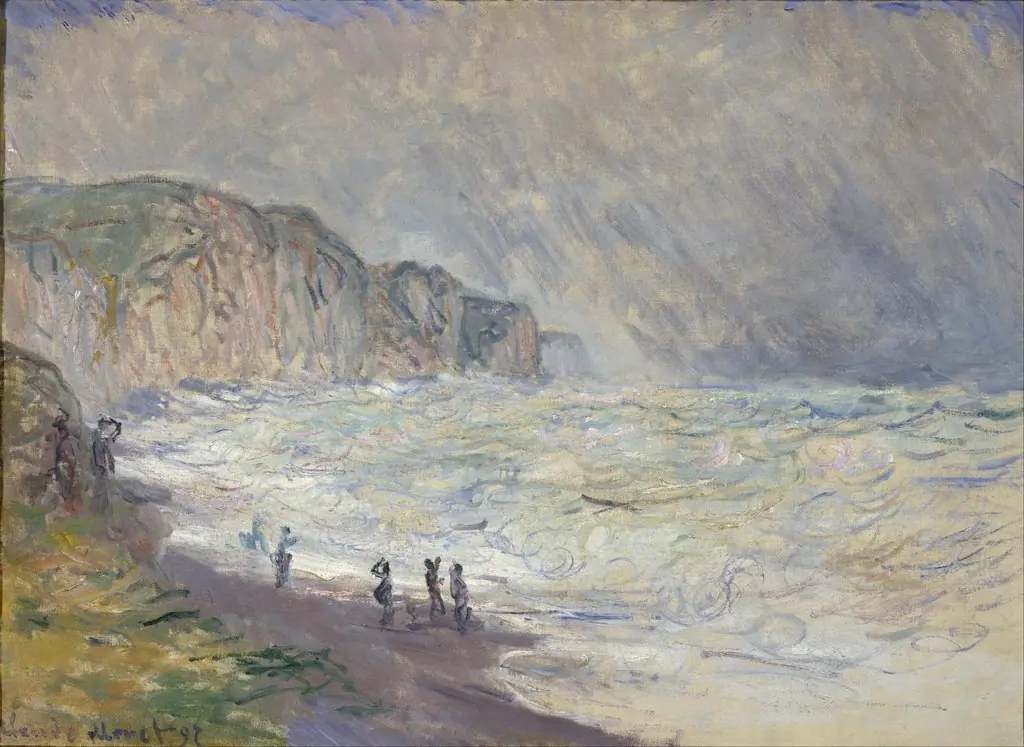 Heavy Sea at Pourville
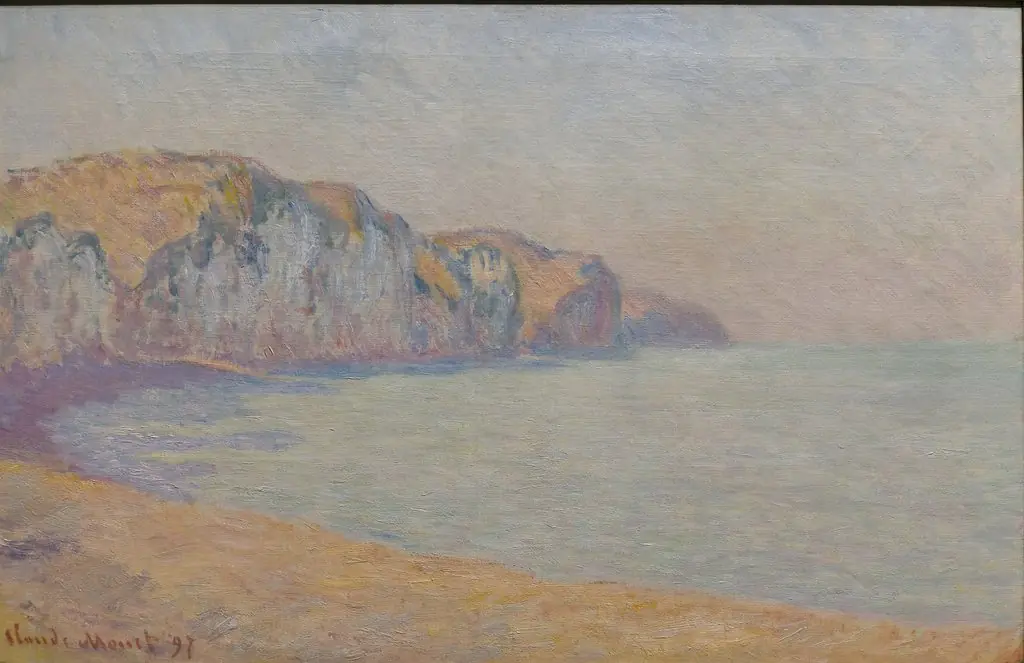 A Cliff at Pourville in the Morning
 The Cliff
 Road at La Cavée, Pourville
 Rising Tide at Pourville
 Cliffs at Ouessant, Brittany