Artwork
Merahi metua no Tehamana
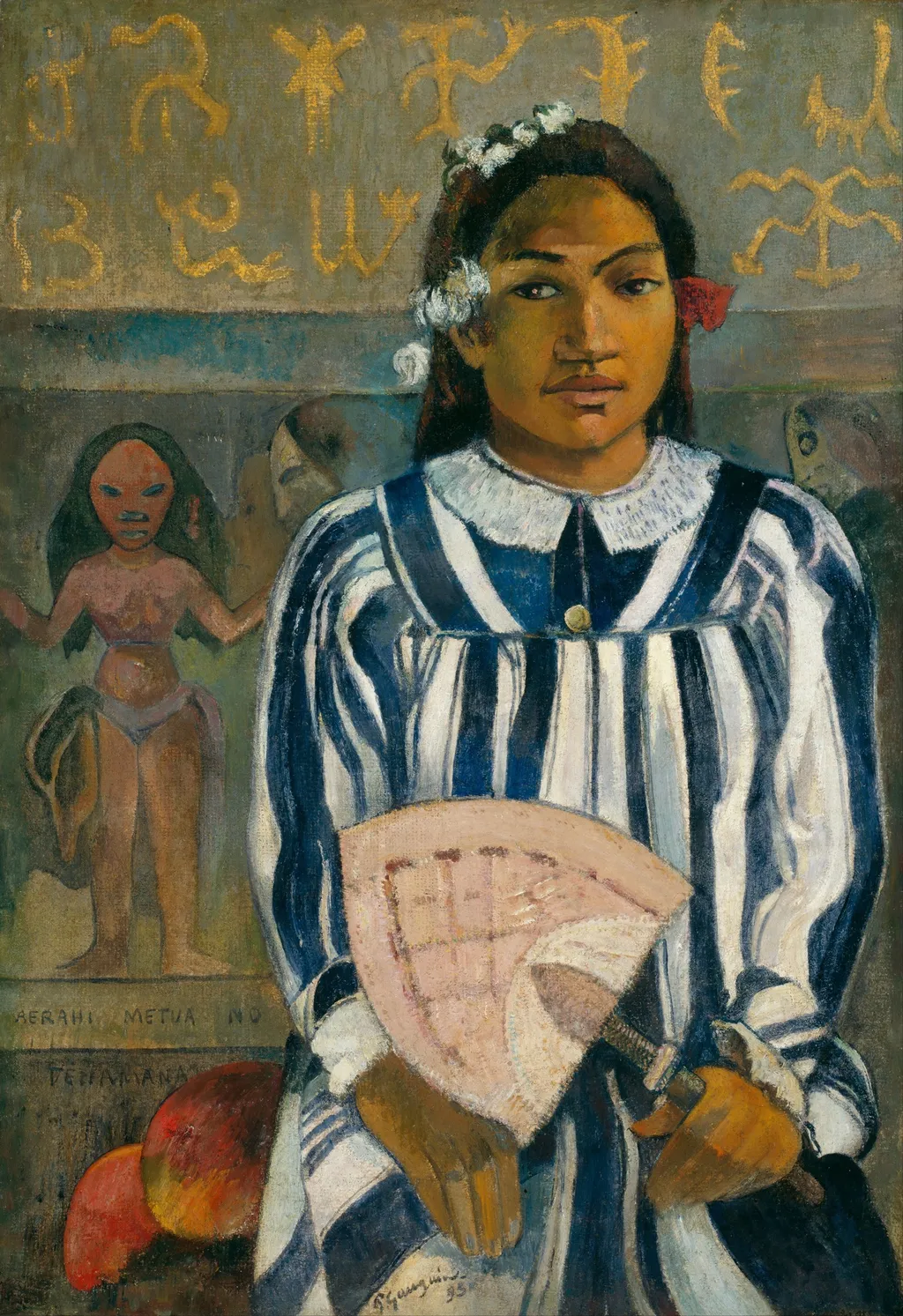
Merahi metua no Tehamana is an oil painting by the Post-Impressionist artist Paul Gauguin. It dates from 1897 and is held in the collection of the Art Institute of Chicago.
About this work
Subject & Meaning
The fan and mangos signal Western accessories and tropical abundance, while the missionary dress reflects Christian/colonial influence.
The work is a portrait of Teha'amana, a thirteen‑year‑old Tahitian girl seated in a blue missionary dress, holding a hand fan and positioned beside mangos before a decorated background. The fan and mangos signal Western accessories and tropical abundance, while the missionary dress reflects Christian/colonial influence. Her name Teha'amana derives from te (definite article), ha'a (causative) and mana (‘strength’), meaning ‘giver of strength,’ a sense echoed in the title ‘Tehamana Has Many Parents’ or ‘The Ancestors of Tehamana’.
Together, these elements present Teha'amana as a figure of Tahitian strength and lineage, yet also as a subject shaped by the encounter with missionary culture, gauging Gauguin’s view of the island as both pure and altered.
Technique & Style
Merahi metua no Tehamana is an oil painting executed on a jute canvas support. Created in 1893, the work presents a half-length portrait of the subject Teha'amana, who is depicted wearing a blue missionary dress and holding a hand fan. The figure is seated beside mangos against a decorated background.
The composition includes motifs of flowers and Tahitian figures, with the subject's age noted as thirteen at the time of the painting's inception. The physical dimensions of the canvas measure 76.3 cm in height and 54.3 cm in width.
History & Provenance
Merahi metua no Tehamana, painted by Paul Gauguin in 1893, was created during his first extended stay in Tahiti and reflects his personal relationship with Teha'amana, whom he married in a single afternoon in late 1891 or early 1892. The work was commissioned informally as a portrait of his wife and later entered the collection of the Art Institute of Chicago through a donation from Charles Deering McCormick and Marion Deering in 1980. It remains part of the museum's permanent collection in Chicago, Illinois.
The painting is an oil on canvas portrait depicting Teha'amana seated with a hand fan, dressed in missionary-style clothing, and surrounded by symbolic elements such as mangoes and a decorated background. Gauguin's account of their marriage, documented in his journal Noa Noa, describes it as brief and socially motivated, while Teha'amana's later life suggests she distanced herself from his legacy after his departure from Tahiti.
Merahi metua no Tehamana is held by the Art Institute of Chicago in Chicago, Illinois, United States. It entered the museum's collection in 1980 as a gift from Charles Deering McCormick and Marion Deering (née Denison Whipple). The painting has been part of the Art Institute's holdings since that donation and remains in its collection.
No exhibition history beyond its acquisition and ongoing presence at the Art Institute of Chicago is documented in the available sources.
Overview
Merahi metua no Tehamana is an oil painting executed in 1893 by Paul Gauguin. The work forms part of the Art Institute of Chicago’s collection and depicts a figure from Gauguin’s personal life during his early years in Tahiti.
Context
The marriage that produced this portrait was arranged in a single afternoon, a fact that has sparked ongoing debate. Gauguin asserted that Teha'amana was thirteen at the time, a claim that has contributed to the work’s complex historical reception.
Own this work as a print
Artist & collection
Artist
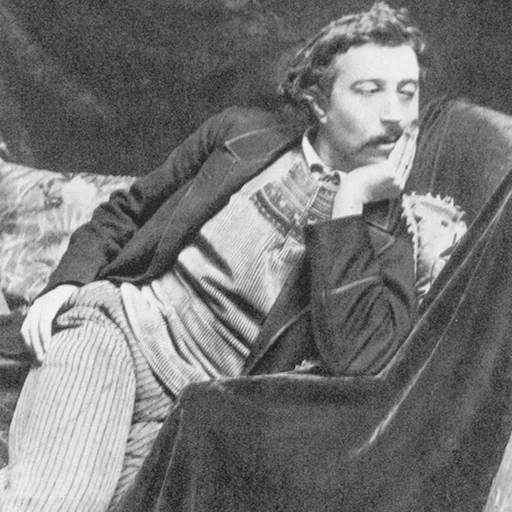
Eugène Henri Paul Gauguin (; French:; 7 June 1848 – 8 May 1903) was a French painter, sculptor, printmaker, ceramist, and writer, whose work has been primarily associated with the Post-Impressionist and Symbolist movements.