Artwork
Merahi metua no Tehamana (Tehamana Has Many Parents or The Ancestors of Tehamana)
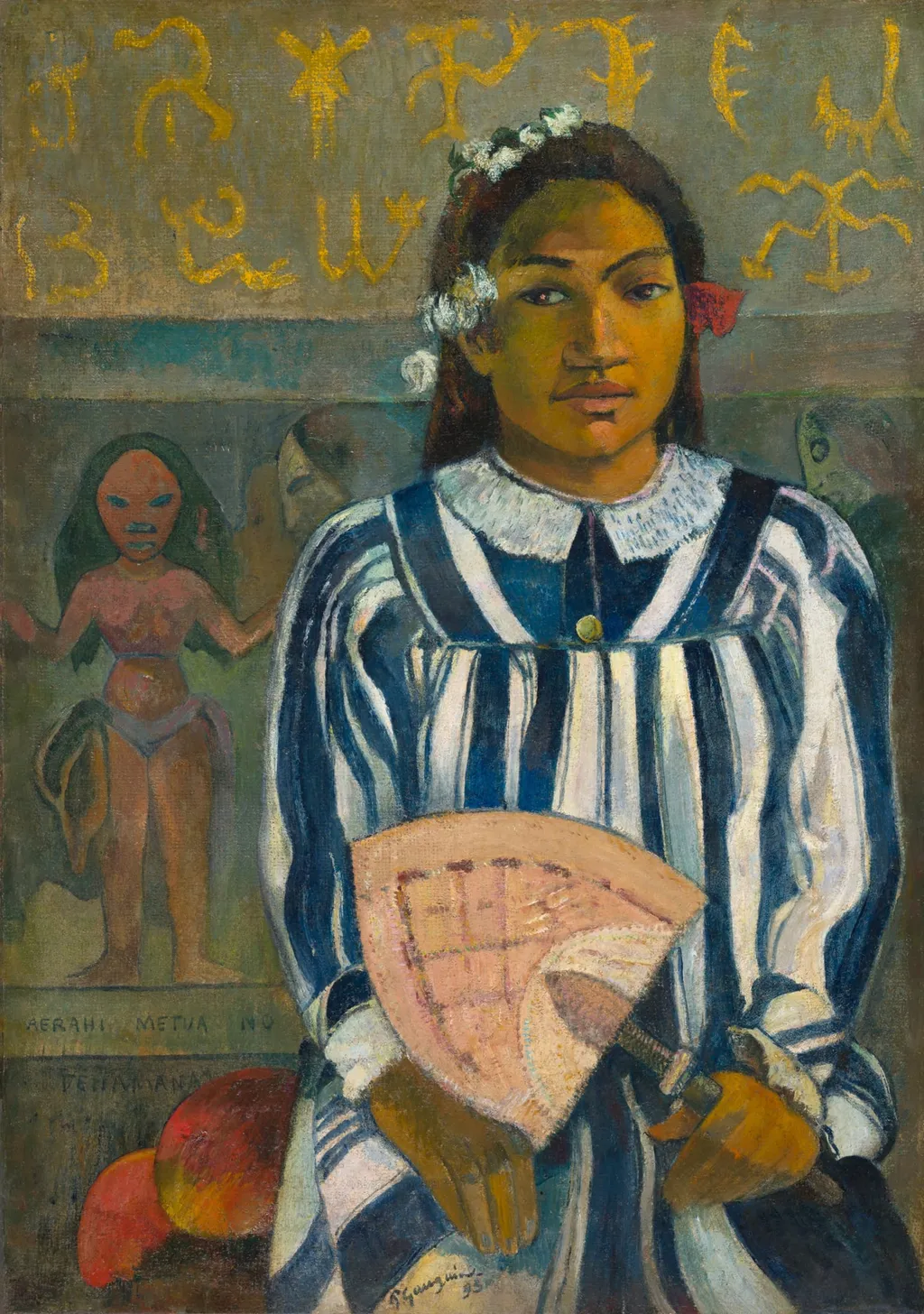
Merahi metua no Tehamana (Tehamana Has Many Parents or The Ancestors of Tehamana) is an oil painting by the Impressionist artist Paul Gauguin. It dates from 1893 and is held in the collection of the Art Institute of Chicago. The oil painting on a jute canvas portrays a teenage Tahitian girl, Tehamana, seated with a composed demeanor.
- Accession no.
- 60812
- Credit line
- Gift of Mr. and Mrs. Charles Deering McCormick
About this work
Overview
She is dressed in a Western missionary gown while holding a fan of Samoan origin, and white blossoms cascade from her hair.
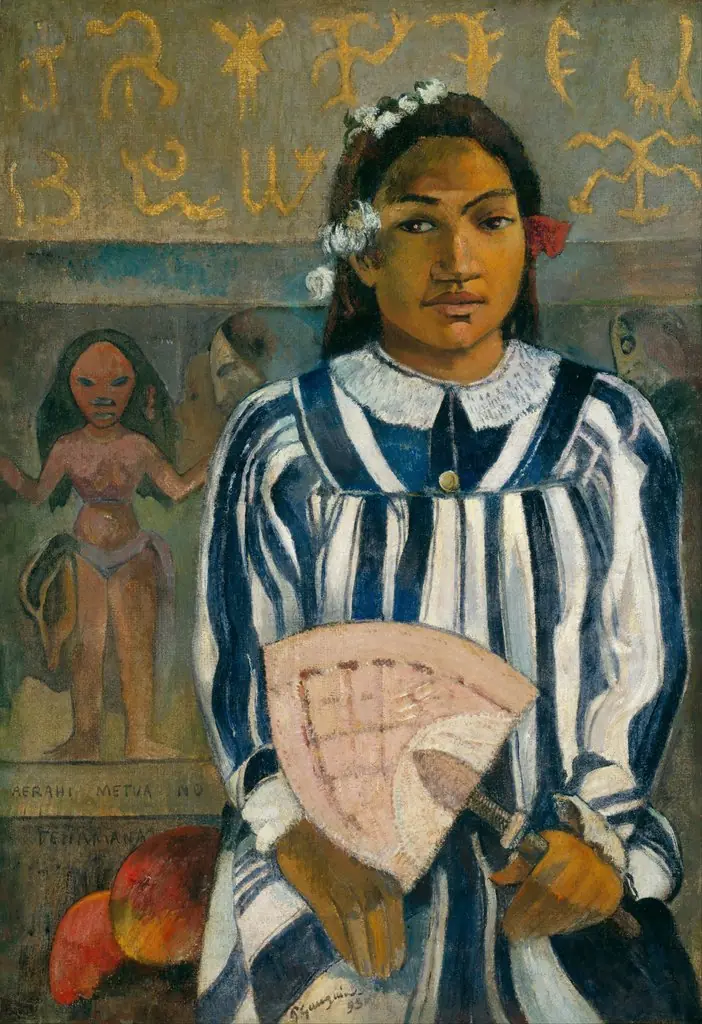
The oil painting on a jute canvas portrays a teenage Tahitian girl, Tehamana, seated with a composed demeanor. She is dressed in a Western missionary gown while holding a fan of Samoan origin, and white blossoms cascade from her hair. A ripe mango rests beside her, and the backdrop is filled with an eclectic array of symbols drawn from various Pacific and Asian sources, creating an ambiguous, exotic atmosphere.
Subject & Meaning
Tehamana, aged thirteen at the time of the work, is presented with a steady gaze and squared shoulders, suggesting resilience. The missionary attire reflects the influence of European religious presence, whereas the Samoan fan and floral elements evoke indigenous customs. The mango, a symbol of abundance, hints at themes of fertility and growth, while the composite symbols in the background serve to situate her within a broader, imagined Polynesian mystique.
Technique & Style
Executed in oil on a coarse jute surface, the painting employs a thick impasto that gives texture to the fabric, foliage, and background motifs. The artist juxtaposes realistic rendering of the figure with stylized, almost decorative glyphs and deity-like forms drawn from Easter Island tablets and Hindu iconography. This blend of detailed portraiture and abstracted exotic motifs exemplifies the late 19th‑century fascination with non‑European visual vocabularies.
History & Provenance
Created during the artist’s stay in Tahiti, the work reflects the period’s colonial encounters and the artist’s personal fascination with the islands. After its completion, the painting entered private collections before being acquired by a European museum in the early 20th century, where it has remained part of the institution’s holdings on Pacific art. Documentation traces its ownership through several sales, confirming its provenance from the artist’s Tahitian period.
Own this work as a print
Artist & collection
Artist
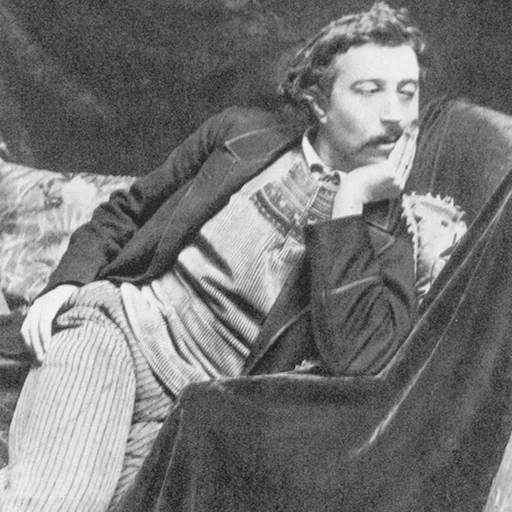
Eugène Henri Paul Gauguin (; French:; 7 June 1848 – 8 May 1903) was a French painter, sculptor, printmaker, ceramist, and writer, whose work has been primarily associated with the Post-Impressionist and Symbolist movements.