Artwork
Two Heads
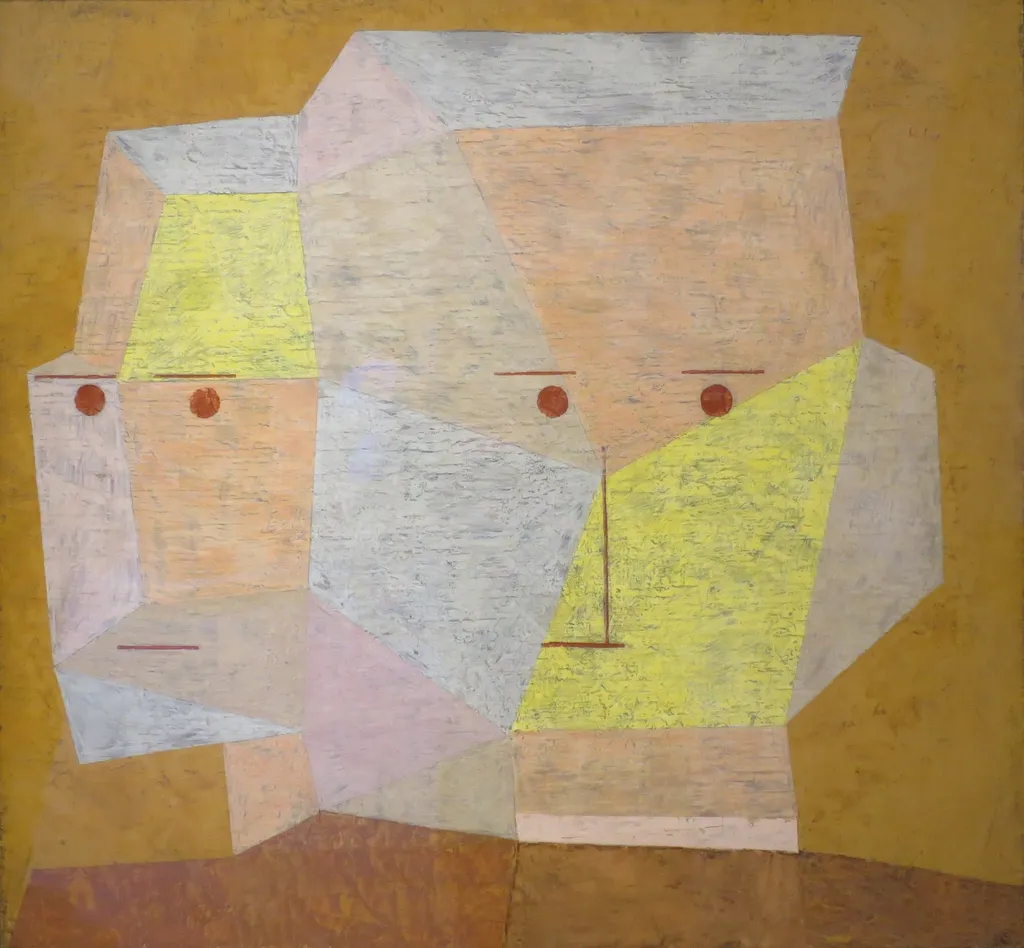
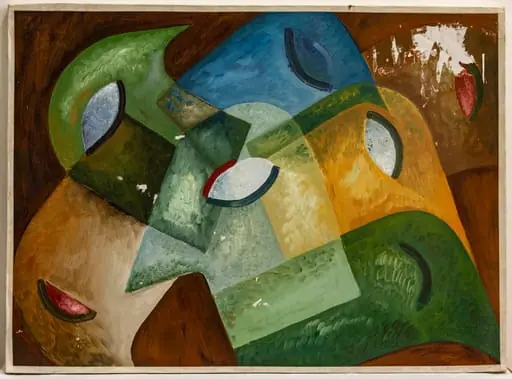
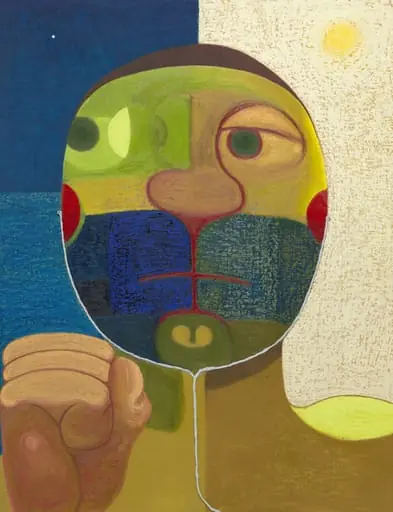
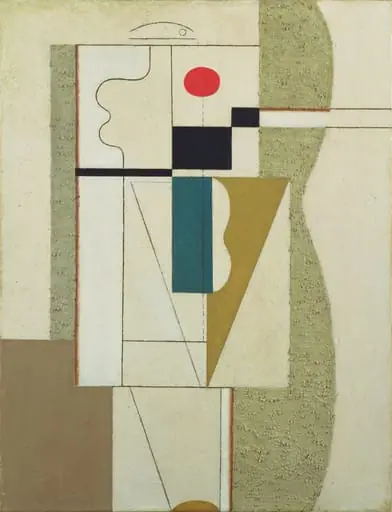
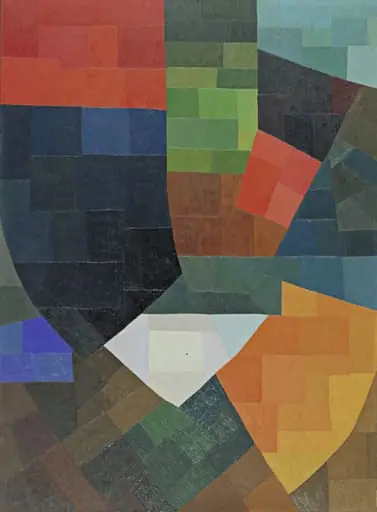
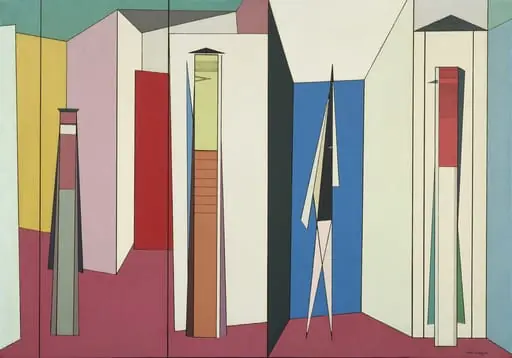
Two Heads is an unspecified painting by the Bauhaus artist Paul Klee. It dates from 1932 and is held in the collection of the Norton Simon Museum.
About this work
Overview
Their fragmented features suggest identity without literal representation, reflecting Klee’s interest in visual language as a system of signs.
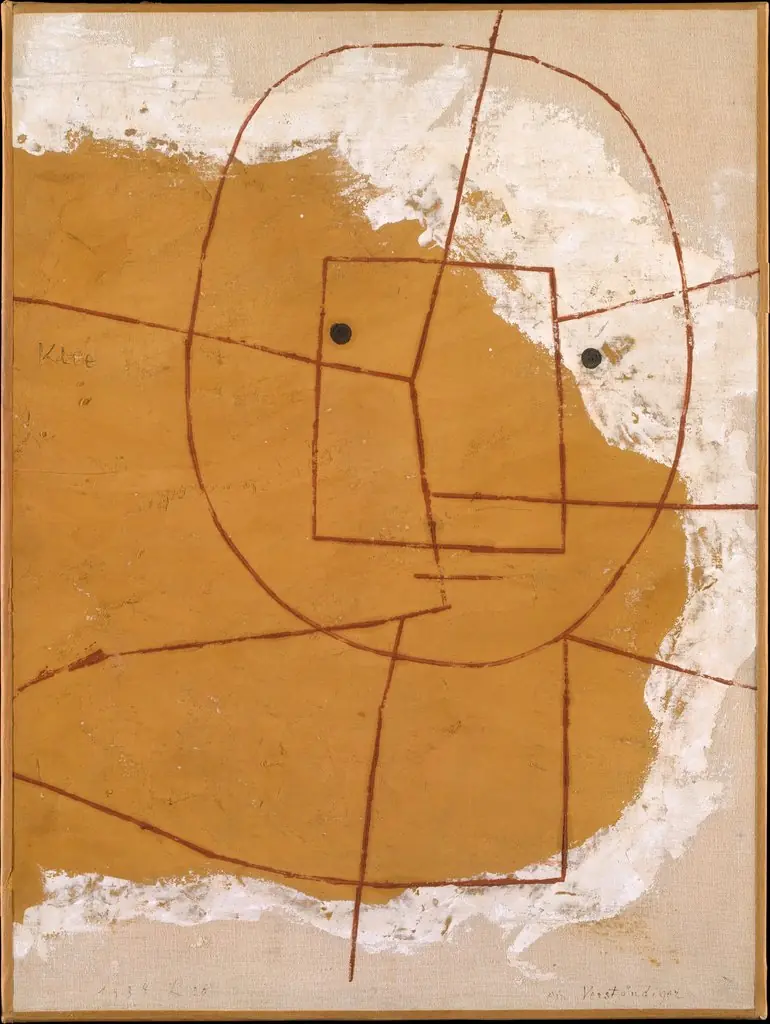
Paul Klee painted Two Heads in 1932, during his later years as a teacher and artist. Though associated with the Bauhaus, his work here transcends any single movement, blending abstraction with symbolic form. The painting presents two overlapping, simplified heads rendered in muted tones of yellow, orange, and gray.
Their fragmented features suggest identity without literal representation, reflecting Klee’s interest in visual language as a system of signs.
Subject & Meaning
The two heads appear as overlapping silhouettes, their features reduced to lines and planes. Neither face is fully rendered, and both gaze in the same direction, suggesting a shared inner state rather than individual portraits. Klee often used human forms to explore psychological or metaphysical themes. Here, the abstraction may imply duality of thought, memory, or the fragmented nature of self-perception.
Technique & Style
Klee employed a precise, linear approach rooted in his training as a draftsman. Forms are constructed from flat planes and minimal contours, avoiding modeling or shadow. Color is applied in thin, translucent layers, creating subtle tonal shifts.
The composition’s economy of elements, few shapes, restrained palette, reflects his theoretical writings on color and form, where simplicity served as a vehicle for deeper resonance.
History & Provenance
Painted in 1932, Two Heads was created after Klee’s tenure at the Bauhaus and during a period of increasing political tension in Germany. It remained in his personal collection until his death in 1940. The work later entered a public collection, where it has been consistently exhibited as an example of his mature abstract style. No significant alterations or restorations are documented.
Context
In the early 1930s, Klee’s work increasingly moved away from narrative toward symbolic abstraction. Though influenced by Expressionism and Cubism, he developed a unique visual vocabulary grounded in music, poetry, and spiritual inquiry. Two Heads reflects this shift, aligning with contemporaneous explorations of the subconscious and the limits of representation in modern art.
Legacy
Two Heads exemplifies Klee’s enduring influence on postwar abstraction. His integration of geometric form with psychological suggestion inspired later generations of artists exploring minimalism and symbolic representation. The painting’s quiet intensity and conceptual clarity continue to inform discussions on how form can convey inner experience without literal depiction.
Own this work as a print
Artist & collection
Artist
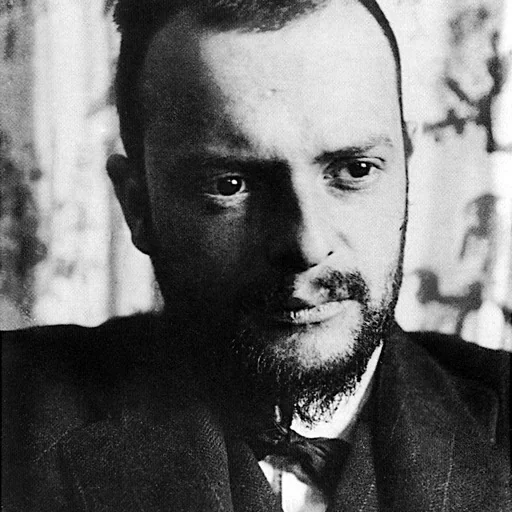
Paul Klee (German:; 18 December 1879 – 29 June 1940) was a Swiss-born German artist.