Artwork
The Lion and Leopard Hunt
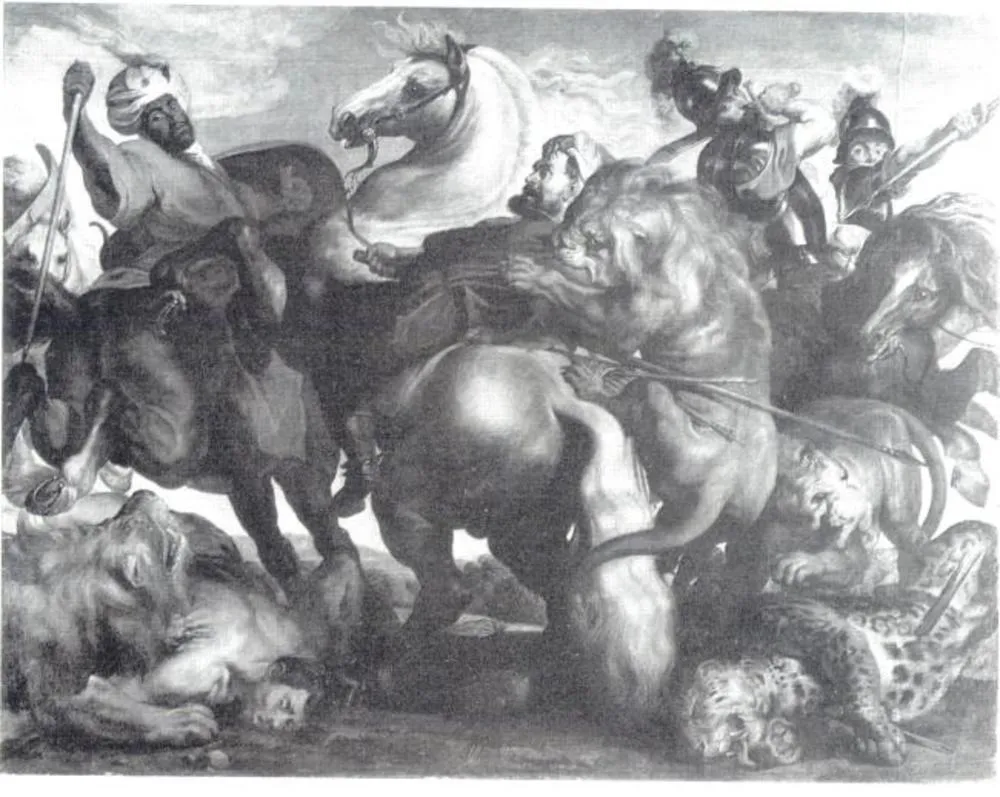
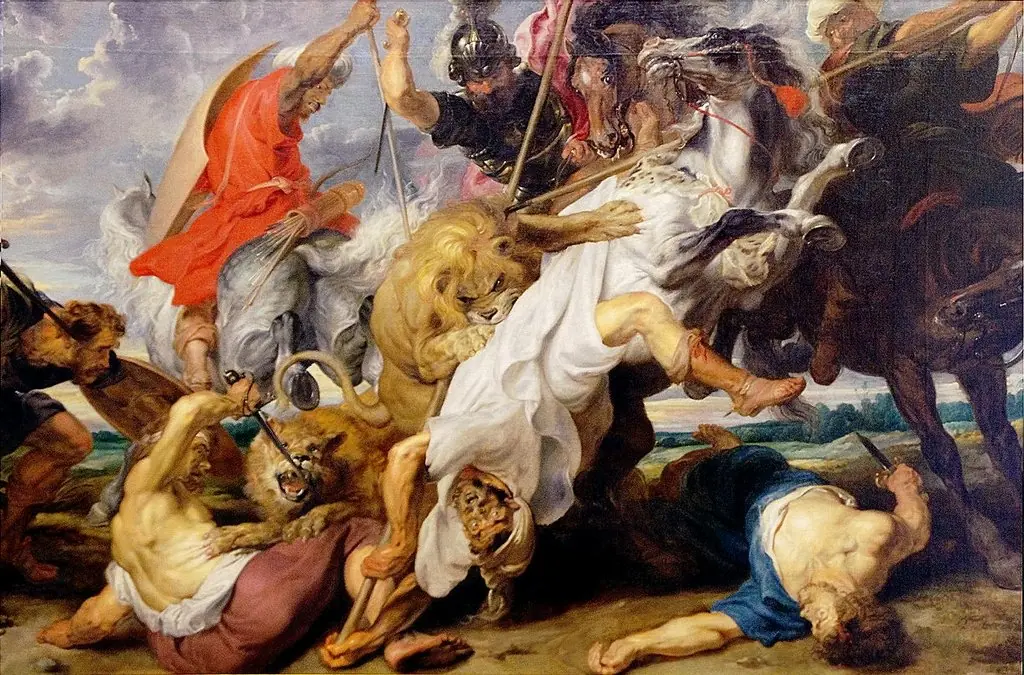
The Lion and Leopard Hunt is an oil painting by the Flemish Baroque painting artist Unknown. It dates from 1617 and is held in the collection of the Staatliche Kunstsammlungen Dresden.
About this work
Subject & Meaning
Rubens used the visual codes of court painters to glorify the nobility, aware of the appeal such dynamic hunting scenes held for ruling-class buyers.
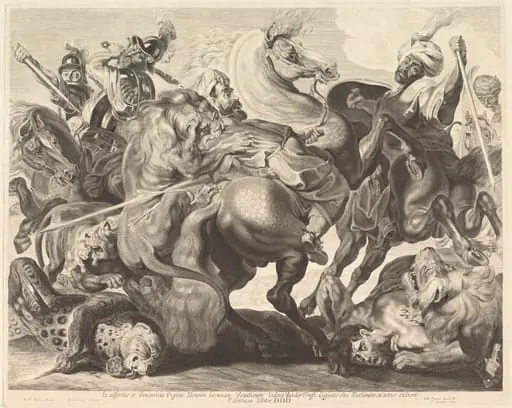
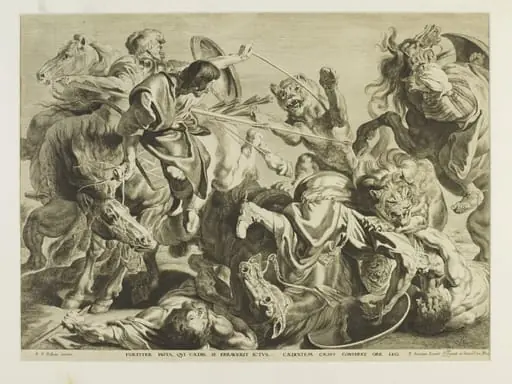
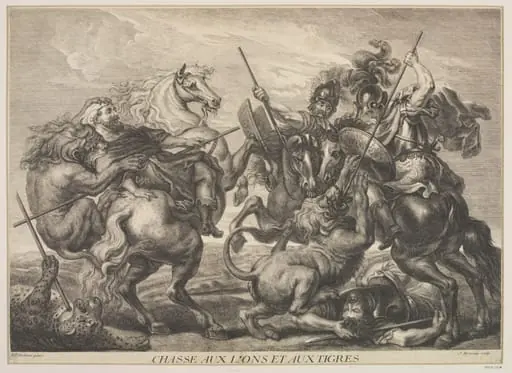
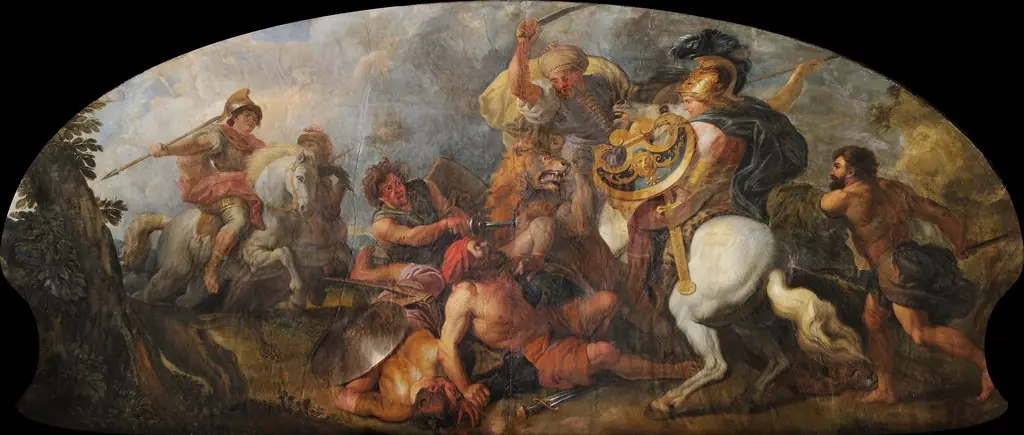
The painting depicts a violent encounter between hunters and big cats, with a rearing horse at the center carrying a turbaned rider who is pulled backward by a lion. Two armored cavalrymen on the right prepare to attack the central feline, while a lioness at the horse's feet tries to carry her cubs to safety and a dead leopard lies in the lower right. In the left foreground, a man is pinned to the ground by a lion and defends himself by thrusting a dagger between its ribs; behind them, a Moor in a turban rides a rearing horse and aims a spear at the fallen man, with another rider approaching at the far left.
The hunt functions as a symbol of aristocratic status, implying ownership of extensive hunting grounds, and reflects a passion shared by many European sovereigns. Rubens used the visual codes of court painters to glorify the nobility, aware of the appeal such dynamic hunting scenes held for ruling-class buyers.
Technique & Style
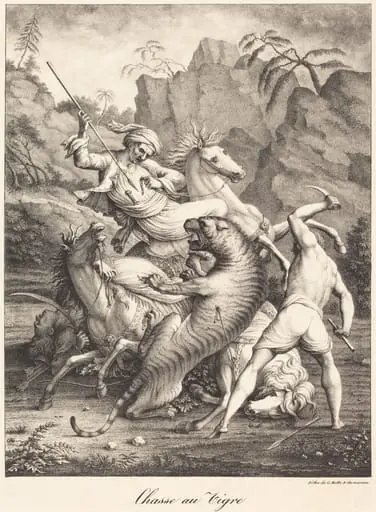
Executed in oil paint on canvas, this large-scale work measures 240 cm by 317 cm. The composition is characterized by extreme dynamism, featuring a rearing horse mounted by a turbaned hunter being dragged backward by a lion. The scene depicts a chaotic melee where armored riders prepare to attack, while a lioness attempts to rescue her cubs and a leopard lies defeated in the lower right. Another figure is shown pinned to the ground, defending himself with a dagger. Stylistically, the painting utilizes borrowed motifs, including the lioness derived from a sixteenth-century bronze statuette, and shares significant compositional elements with Rubens's Tiger Hunt, though with variations in the visibility of the horses and the specific felines depicted.
History & Provenance
The Lion and Leopard Hunt was produced in 1617, with its dating debated between 1617 and 1618. It was painted by the workshop of Peter Paul Rubens, forming part of a series of dynamic hunting scenes he created between 1616 and 1621. The work is closely related to Rubens's The Tiger Hunt in Rennes, and scholars such as Arnout Balis and David Rosand have discussed whether the Dresden composition preceded or followed the tiger variant, with an oil sketch at the National Gallery cited as a possible intermediate stage.
The painting is held by the Staatliche Kunstsammlungen Dresden and is currently located at the Gemäldegalerie Alte Meister in Dresden, Germany.
The Lion and Leopard Hunt is held in the collection of the Staatliche Kunstsammlungen Dresden, specifically located within the Gemäldegalerie Alte Meister in Dresden, Germany. The work measures 240 cm in height and 317 cm in width. While the painting is dated to 1617, some scholarship extends this timeframe to include 1618, noting that its precise chronological placement relative to similar works like The Tiger Hunt has been a subject of debate among art historians.
Context
The painting was created in 1617 by the workshop of Peter Paul Rubens and is now housed in the Gemäldegalerie Alte Meister in Dresden, Germany; its composition depicts a rearing horse, a hunter in a turban being seized by a lion, two armored riders preparing to attack a central leopard, a lioness carrying cubs, and a leopard lying in the lower right, reflecting Rubens's engagement with hunting scenes as both a symbolic status motif and a commercially viable genre in early‑17th‑century Europe (source 2, source 3); scholars have noted that the work belongs to Rubens's early series of dynamic hunt paintings (1616-1621) and represents a variant of his earlier 'The Tiger Hunt' (source 4); comparative analysis with 'The Tiger Hunt' in Rennes and preparatory sketches suggests a evolving compositional strategy in which the Dresden version may precede the more complex 'Tiger Hunt', although the precise chronology remains debated (source 3, source 4); the figures are derived from recurring motifs in Rubens's oeuvre, such as the lion‑attacking rider also seen in 'The Tiger Hunt' and a lioness motif drawn from a 16th‑century bronze statuette (source 4); this interplay of source material and iterative refinement illustrates the work's significance within Rubens's broader artistic practice and its role in the development of hunting imagery in Baroque art (source 1, source 2, source 3, source 4)
Legacy
The painting's legacy lies in its role as a pivotal variant within Rubens's celebrated lion and leopard hunt series, directly influencing later compositions and scholarly discourse. It served as a key reference point for understanding Rubens's evolving technique and compositional strategies, particularly in relation to his 'Tiger Hunt' variants. Art historians such as Arnout Balis and David Rosand analyzed its relationship to other works, noting its significance as a precursor to the more complex 'Tiger Hunt' and as evidence of Rubens's iterative development of hunting scenes. The work's presence in the Gemäldegalerie Alte Meister in Dresden cemented its reputation as a canonical example of Baroque hunting art, frequently cited in studies of Rubens's workshop practices and the genre's evolution. Its debated dating and compositional nuances continue to inform research on Rubens's artistic process and the cultural symbolism of the hunt.
Artist & collection