Artwork
Benjamin and Eleanor Ridgely Laming
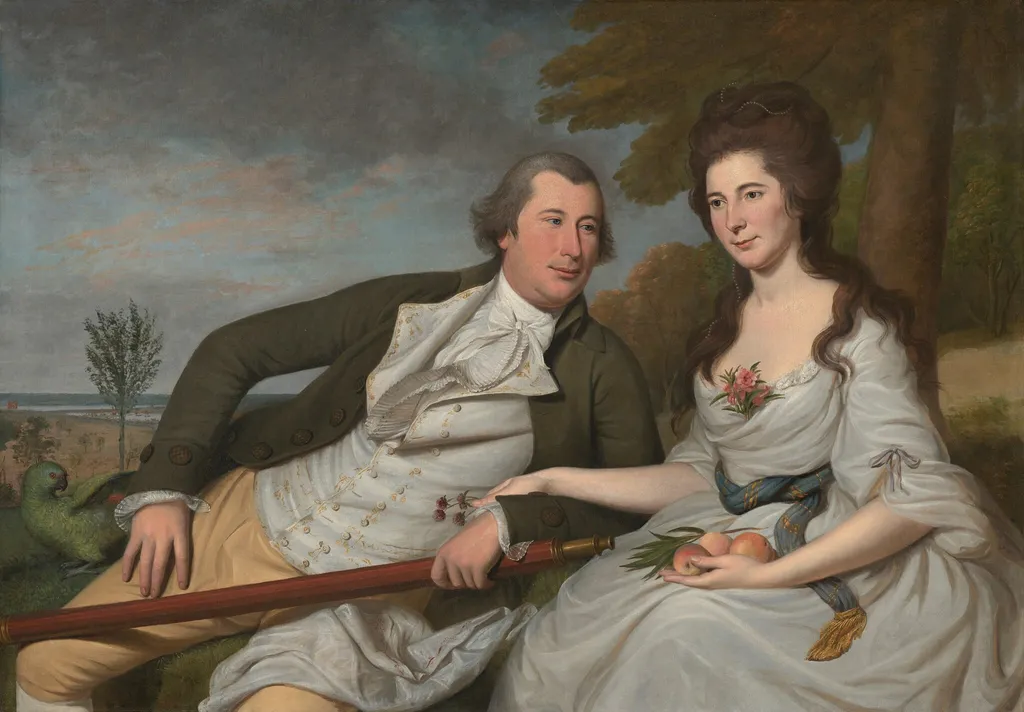
Benjamin and Eleanor Ridgely Laming is an oil painting by the American Impressionist artist Charles Willson Peale. It dates from 1788 and is held in the collection of the National Gallery of Art.
About this work
Subject & Meaning
Its presence in the National Gallery of Art underscores its historical significance as an example of early American portraiture.
The painting depicts Benjamin Laming alongside his wife Eleanor Ridgely Laming, a portrait that functions as both a family record and a statement of social standing in the early American republic. The composition emphasizes the couple's union through their matching attire and intimate proximity, symbolizing marital partnership and the continuity of the Laming lineage. As a commissioned work by Charles Willson Peale, the portrait reflects the cultural value placed on elite domestic life and the aspiration toward refinement in the young nation.
Its presence in the National Gallery of Art underscores its historical significance as an example of early American portraiture.
Technique & Style
The portrait is executed in oil on canvas, measuring 106 × 152.5 cm. Peale rendered the sitters with smooth, blended handling, emphasizing clarity and precision in facial features and costume details. The composition is arranged in a conventional three-quarter view, with Benjamin Laming positioned slightly to the left and Eleanor Ridgely Laming to the right, their gazes directed toward the viewer. Formal qualities include the restrained palette of darks and silvery highlights, typical of Peale’s mature portrait style, which underscores the sitters’ social standing through dignified posture and refined attire.
History & Provenance
The portrait was painted in 1788 for Benjamin and Eleanor Ridgely Laming, members of a prominent Maryland family. It remained in the possession of their daughter, Mary Ridgely Palmer, who inherited it following the deaths of her parents, as indicated by the absence of the work from their respective wills and the inheritance pattern documented in genealogical records. The painting passed to Mary’s son, Edward Ridgely, and subsequently to her daughter-in-law, Alice Gardner Burnell Lockwood, by 1926.
It was sold by Lockwood and her husband in 1954 through Parke-Bernet Galleries and later acquired by the National Gallery of Art in 1966 as a gift.
The painting is held by the National Gallery of Art in Washington, D.C., where it is listed with the accession number 1966.6.6. It entered the museum through a gift from Morris Schapiro in 1966. The work was previously owned by Mary Ridgely Palmer, Luke Vincent Lockwood and Alice Gardner Burnell Lockwood, and was sold at Parke-Bernet Galleries in New York in May 1954 before Schapiro acquired it.
Context
The portrait entered the National Gallery of Art through the 1954 Parke-Bernet auction, where it was acquired by Morris Schapiro before being gifted to the museum in 1966. It remained in the Lockwood family collection in Greenwich, Connecticut, by 1926, as documented in the auction records. The work's provenance reflects a documented chain of ownership from the Ridgely family through Mrs. Henry Clay Palmer and the Lockwoods, with genealogical connections established through Maryland archives and scholarly research on Laming family descendants.
This trajectory illustrates the painting's journey from private family holdings to public collection, underscoring its significance within early American portraiture and the broader context of 18th-century American art.
Overview
Painted in 1788 by Charles Willson Peale, 'Benjamin and Eleanor Ridgely Laming' is a double portrait depicting the Maryland couple seated side by side on a garden bench. The composition places the figures against a soft, naturalistic landscape background, characteristic of Peale's post-Revolutionary War portraiture which often integrated sitters with their estates. Benjamin Laming is dressed in a white coat with gold buttons over a dark jacket, while Eleanor Laming wears a light dress featuring a floral pattern on the bodice and a blue sash.
She holds a branch bearing fruit, a traditional symbol of fertility and domestic abundance. Peale renders the couple with a relaxed, informal demeanor, moving away from the rigid formality of earlier colonial portraiture toward a more intimate, conversational style. This work exemplifies Peale's skill in capturing the status and character of the American gentry during the early Republic.
The painting remains a significant example of late 18th-century American portraiture, illustrating the artist's ability to blend individual likeness with symbolic elements of prosperity and family continuity.
Own this work as a print
Artist & collection
Artist
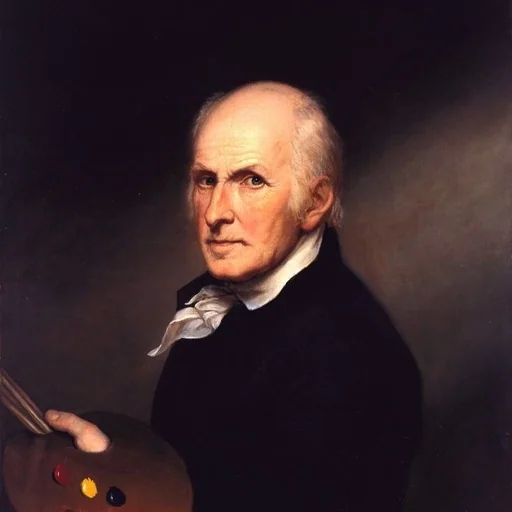
Charles Willson Peale (April 15, 1741 – February 22, 1827) was an American painter, military officer, scientist, and naturalist.

- Mr and Mrs William Lindow
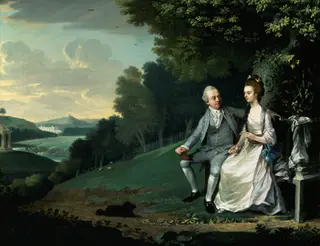 Portrait of a Couple, said to be Sir Francis and Lady Dashwood at Wycombe Park
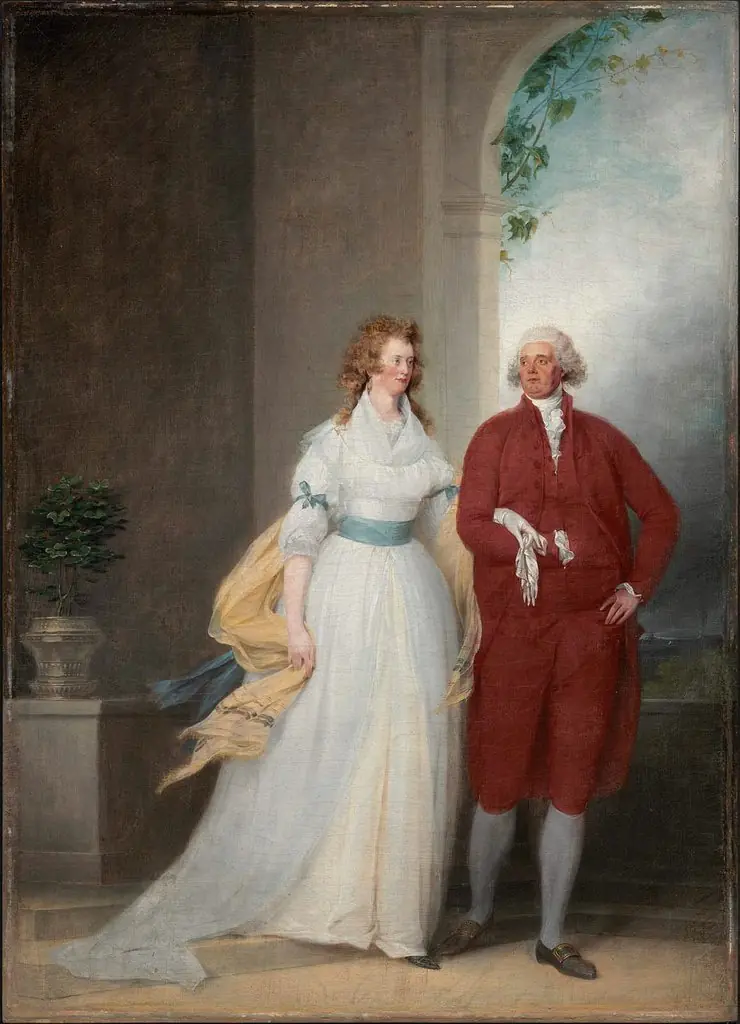 Mr. and Mrs. Thomas Russell
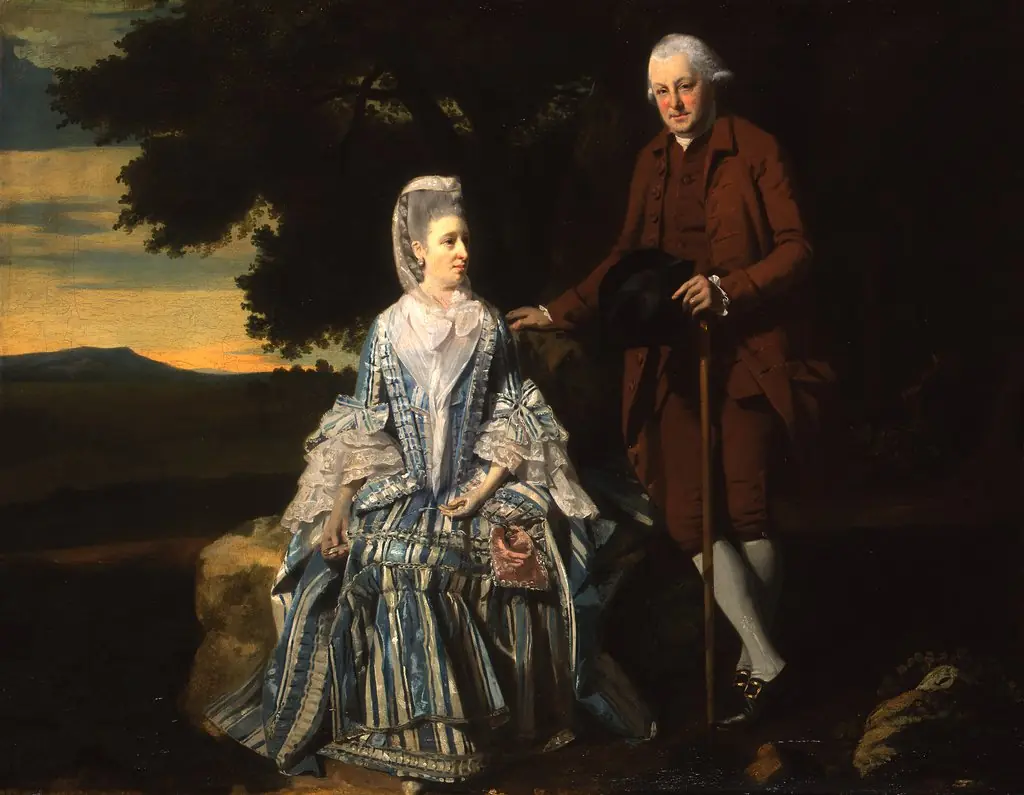 Portrait of a Married Couple in a Park
 John Johnstone, Betty Johnstone, and Miss Wedderburn
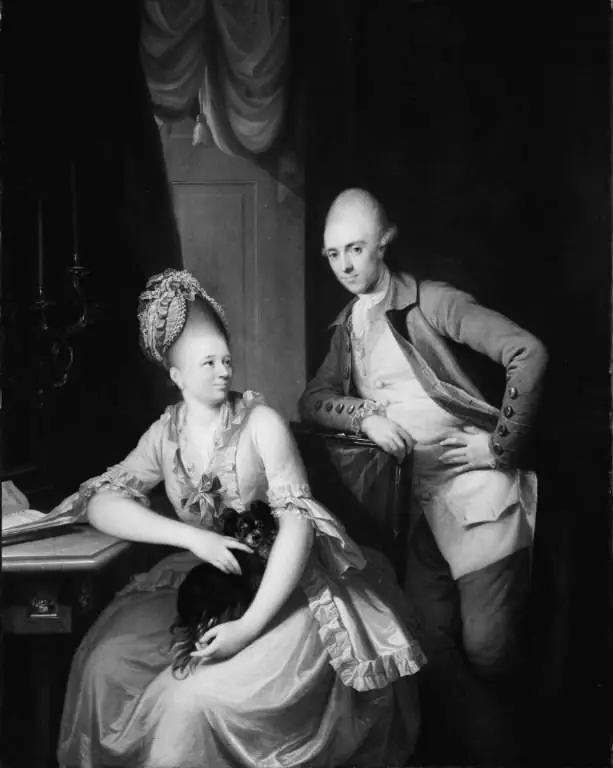 Portrait of Colonel Jean-Jacques Gautier and His Wife
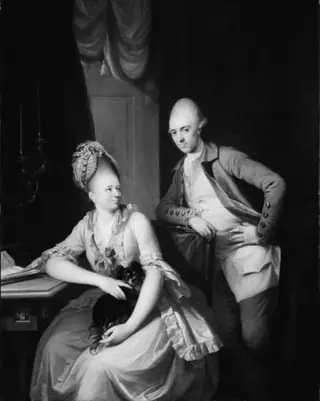 Portrait of Colonel Jean-Jacques Gautier and His Wife
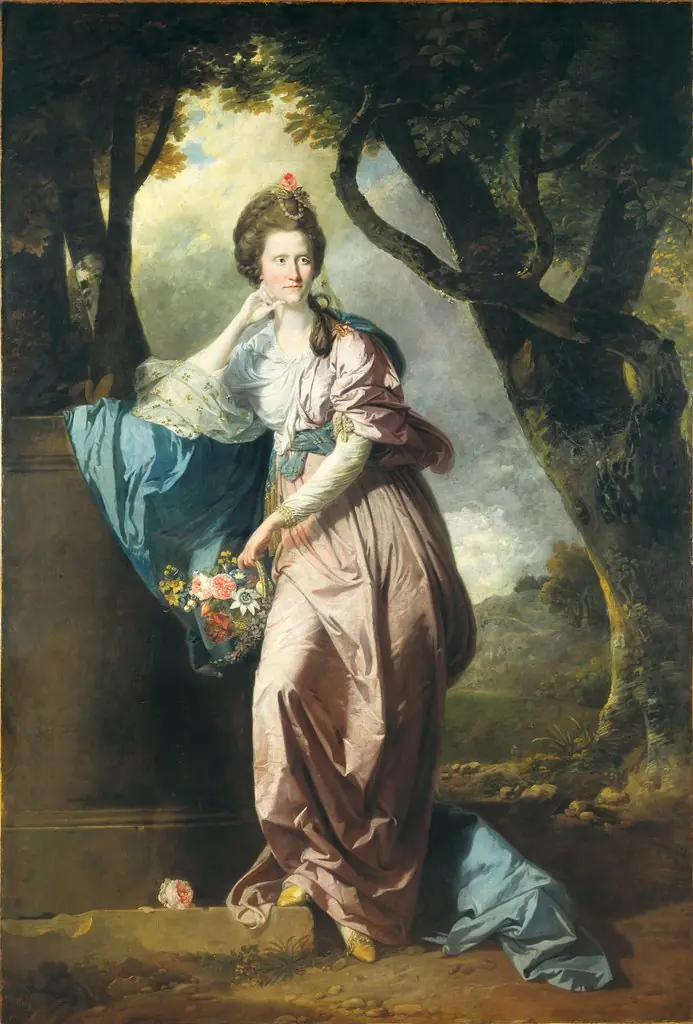 Mrs Woodhull
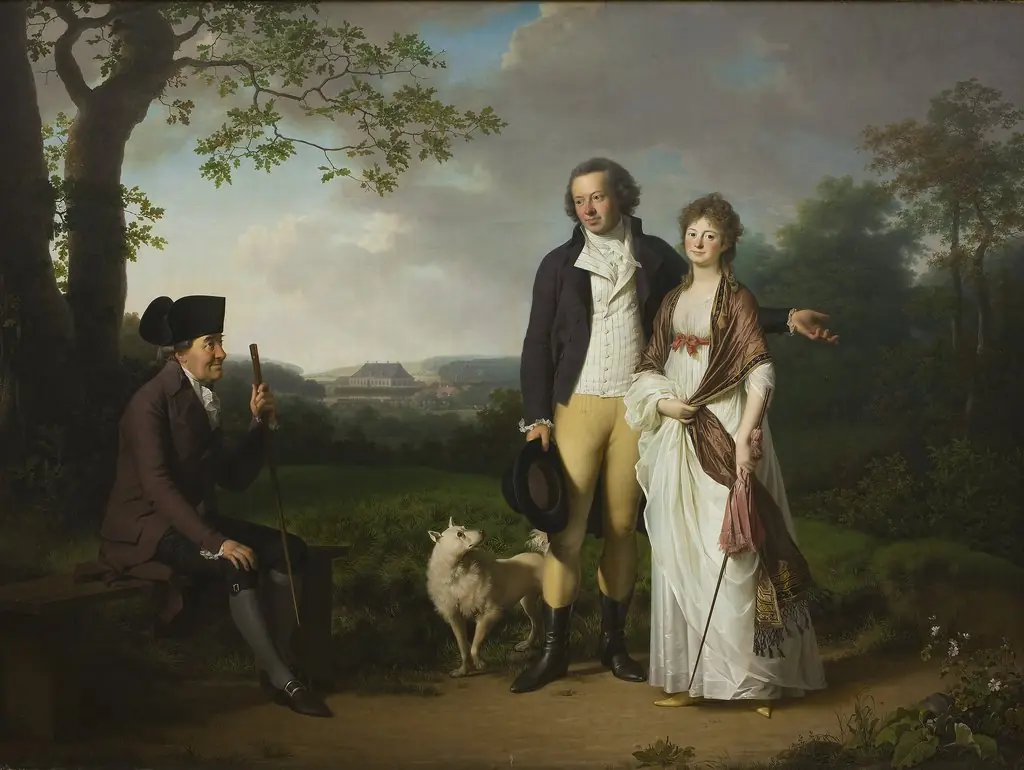 Niels Ryberg with his Son Johan Christian and his Daughter-in-Law Engelke, née Falbe
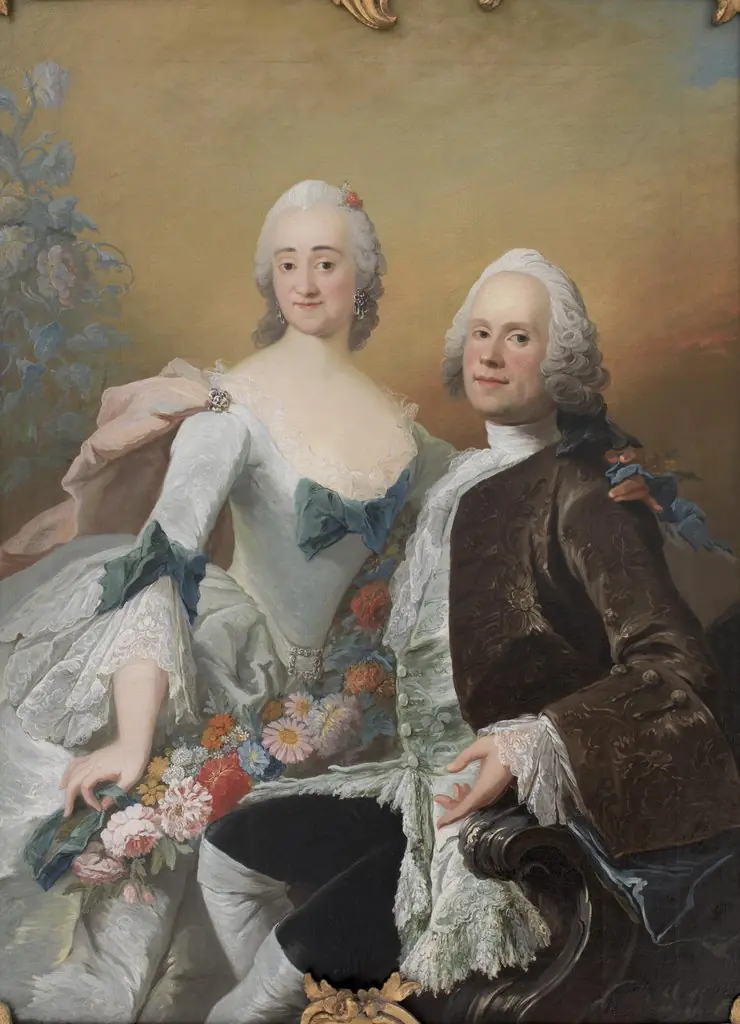 The Court Jeweller Christopher Fabritius and his Wife Gundel, née Berntz
 Colonel William Fitch and His Sisters Sarah and Ann Fitch
 Heneage Lloyd and His Sister