Artwork
The Fight Between Carnival and Lent
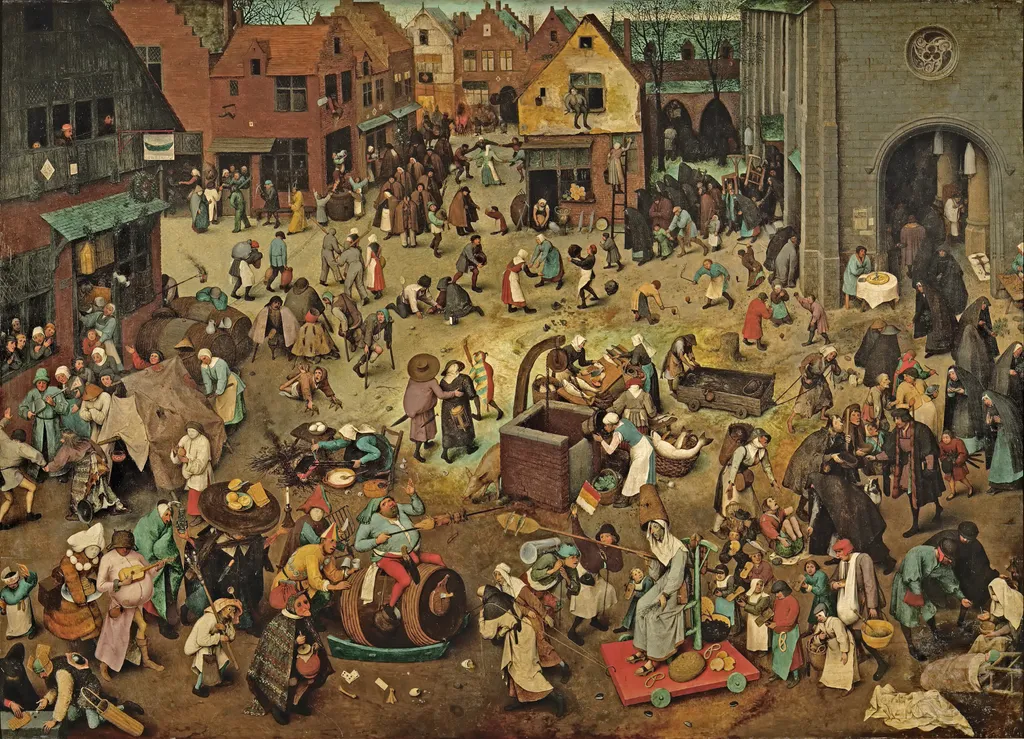
The Fight Between Carnival and Lent is an oil painting by the Northern Renaissance artist Pieter Brueghel I. It dates from 1559 and is held in the collection of the Kunsthistorisches Museum.
About this work
To learn more about the artist's use of oil paint and other techniques, look up the artist: Pieter Brueghel the Elder.
The Fight Between Carnival and Lent is a painting by Pieter Brueghel the Elder. It's an oil paint work from 1559.
This painting shows a scene of contemporary life in the Southern Netherlands. It features nearly 200 characters and depicts the transition from Shrove Tuesday to Lent.
To learn more about the artist's use of oil paint and other techniques, look up the artist: Pieter Brueghel the Elder.
Subject & Meaning
The Fight Between Carnival and Lent depicts a symbolic confrontation between personified Shrove Tuesday (Carnival) and Ash Wednesday (Lent) on a bustling market square. Carnival, shown as a gluttonous butcher riding a beer barrel, carries a pork chop and a rotisserie laden with meat, while Lent appears as a gaunt woman on a three-legged chair, armed with a baker's peel bearing two herring. The painting is divided into left and right halves representing Carnival's festive excess and Lent's ascetic discipline, framed by an inn on the left and a church on the right.
The composition includes nearly 200 figures engaged in activities tied to each theme: Carnival's followers consume waffles, eggs, and alcohol, whereas Lent's entourage carries crosses, fasts, and distributes alms. The work reflects 16th-century tensions between Catholic Lenten observance and emerging Protestant rejection of fasting, as well as broader allegories of pleasure versus religious austerity.
Technique & Style
The Fight Between Carnival and Lent is an oil-on-panel painting executed by Pieter Bruegel the Elder in 1559. The work measures 118 cm in height and 164.5 cm in width, making it a large-scale piece characteristic of Bruegel's mature period. It is painted on wood panel using oil paint, a medium Bruegel employed to achieve rich detail and luminous color.
The composition features a high horizon line and a bird's-eye view, typical of the world landscape style, allowing for a panoramic depiction of a bustling village market. The painting is divided into two halves: the left side represents Carnival with scenes of feasting, drinking, and revelry centered around an inn, while the right side depicts Lent with religious observances, fasting foods, and processions toward a church. Allegorical figures of Carnival and Lent are shown on opposing carts, engaged in a symbolic contest.
Carnival, portrayed as a gluttonous butcher on a beer barrel, wields a rotisserie laden with meat, while Lent, depicted as a thin woman on a three-legged stool, carries a baker's peel with herring. The scene includes nearly 200 figures engaged in diverse activities, from drinking and gambling to religious rituals, rendered in a style that blends genre painting with allegorical narrative. The use of oil paint enables fine detail in textures such as food, clothing, and architectural elements, contributing to the painting's complex visual storytelling.
History & Provenance
The painting The Fight Between Carnival and Lent was created by Pieter Brueghel the Elder in 1559. It was commissioned by an unknown patron and entered Habsburg collections, likely under Emperor Rudolf II. By 1748 it entered the Kunsthistorisches Museum in Vienna, where it remains in collection Saal 10.
The work was signed and dated in the left lower corner as BRVEGEL 1559. A preparatory engraving by Frans Hogenberg after a design by Pieter Bruegel the Elder titled 'The Fight of Fasting and Carnival' was published by Hieronymus Cock in 1558, which Bruegel likely knew. The painting is an oil on panel measuring 118 cm by 164.5 cm. It depicts a symbolic confrontation between Carnival and Lent on a village market square, framed by an inn on the left and a church on the right.
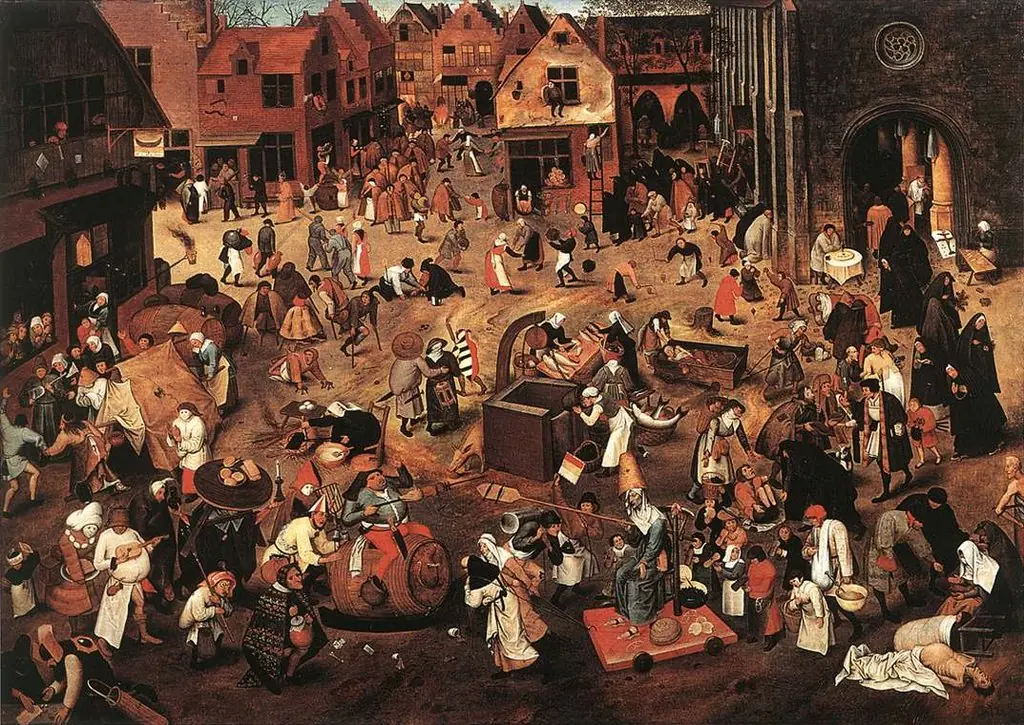
The composition is divided into two halves representing Carnival on the left and Lent on the right, with the boundary not sharply defined. The painting shows Carnival as a fat butcher seated on a beer barrel, armed with a rotisserie carrying a pig's head, while Lent is a thin woman seated on a three-legged chair, armed with a baker's spatula bearing two herring. Followers of Carnival include masked figures, musicians, and people consuming meat, eggs, and waffles, while followers of Lent include children with ash crosses, a monk, a nun, and people eating fish, pretzels, and fasting breads. The painting was part of the Habsburg imperial collection before entering the Kunsthistorisches Museum in 1748.
The painting is held in the Kunsthistorisches Museum in Vienna. Its inventory number is 2488. It has been part of the museum's collection since 1748.
The work was previously in Habsburg possession, likely acquired under Emperor Rudolf II. It was documented in the imperial collection, then transferred to the museum's Gemäldegalerie. The painting remains on display in Saal 10.
It was exhibited in the museum's 19th-century catalogues and has been part of the permanent collection since the mid-18th century. The work has been featured in exhibitions on Bruegel's oeuvre at the museum, including a 1983 retrospective on his genre scenes. A full-scale copy owned by Stanisław Ursyn Rusiecki was donated to the National Museum in Kraków in 1937 but was stolen during World War II and has since disappeared.
The painting has been reproduced in museum publications and catalogues raisonnés. It is listed in the museum's collection database with the accession number 2488. The work has been part of the museum's inventory since 1748. Its provenance traces back to Habsburg imperial holdings before its acquisition by the museum.
Context
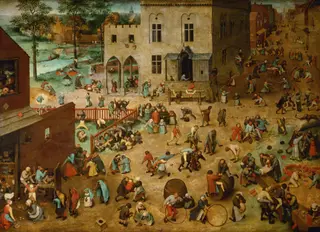
Scholars identify this work as a pivotal moment in Pieter Bruegel the Elder's career, marking his transition from a designer of prints to a painter of large-scale panels. Created in 1559 alongside Netherlandish Proverbs and shortly before Children's Games, the painting forms part of a triad of encyclopedic compositions that catalog folk customs. These works, often described as Wimmelbilder due to their teeming detail, share formal characteristics such as high horizon lines and allegorical figures surrounded by crowds engaged in related activities.
The composition draws heavily on a 1558 etching by Frans Hogenberg, published by Hieronymus Cock, yet expands the source material into a complex panorama of Southern Netherlandish life.
Art historical analysis frequently interprets the juxtaposition of Carnival and Lent through the lens of contemporary religious tensions between Protestantism and Catholicism, or as an reflection of Augustine's two cities. While rooted in medieval literary traditions like the Psychomachia, the painting avoids presenting one side as morally superior, instead depicting both as extreme facets of human experience. This balanced approach, combined with its nostalgic portrayal of rural traditions against rising urban professionalism, secures the work's status as a definitive example of Northern Renaissance genre art.
Legacy
The painting's legacy lies in its role as a seminal example of Bruegel's encyclopedic genre scenes that document 16th-century folk customs and religious contrasts. It pioneered the visual allegory of Carnival versus Lent, influencing later depictions of festive and religious tensions. The work's composition, with its high horizon line and bird's-eye perspective, became a model for later 'Wimmelbilder' (busy scenes) and inspired similar genre paintings like Children's Games.
Its symbolic representation of Carnival (fat butcher on a beer barrel) and Lent (thin woman on a chair with herring) established enduring visual tropes for the conflict between celebration and austerity. The painting's themes of societal transition and moral duality were widely interpreted in 19th- and 20th-century scholarship, including analyses linking it to confessional tensions in Reformation-era Europe. It remains a cornerstone in art history for its intricate detail, social commentary, and influence on subsequent genre painting.
Overview
Pieter Bruegel the Elder painted The Fight Between Carnival and Lent in 1559 using oil on a wooden panel. The work presents a bustling, wide‑angle view of daily life in the Southern Netherlands, populated by almost two hundred individual figures. Its composition centers on the seasonal shift from the revelry of Shrove Tuesday to the solemnity of the Lenten period.
Own this work as a print
Artist & collection

Artist
Pieter Bruegel (also Brueghel or Breughel) the Elder ( BROY-gəl, US also BROO-gəl; Dutch: ; c.

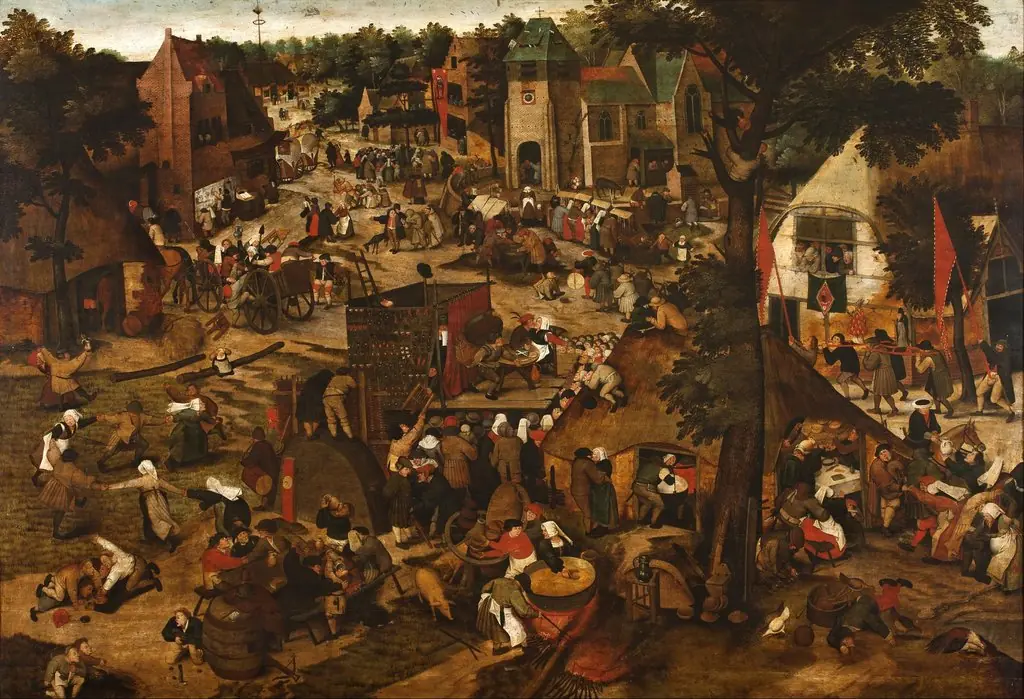 Fair with a Theatrical Presentation
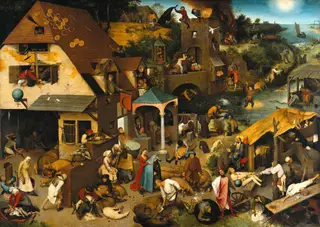 Netherlandish Proverbs
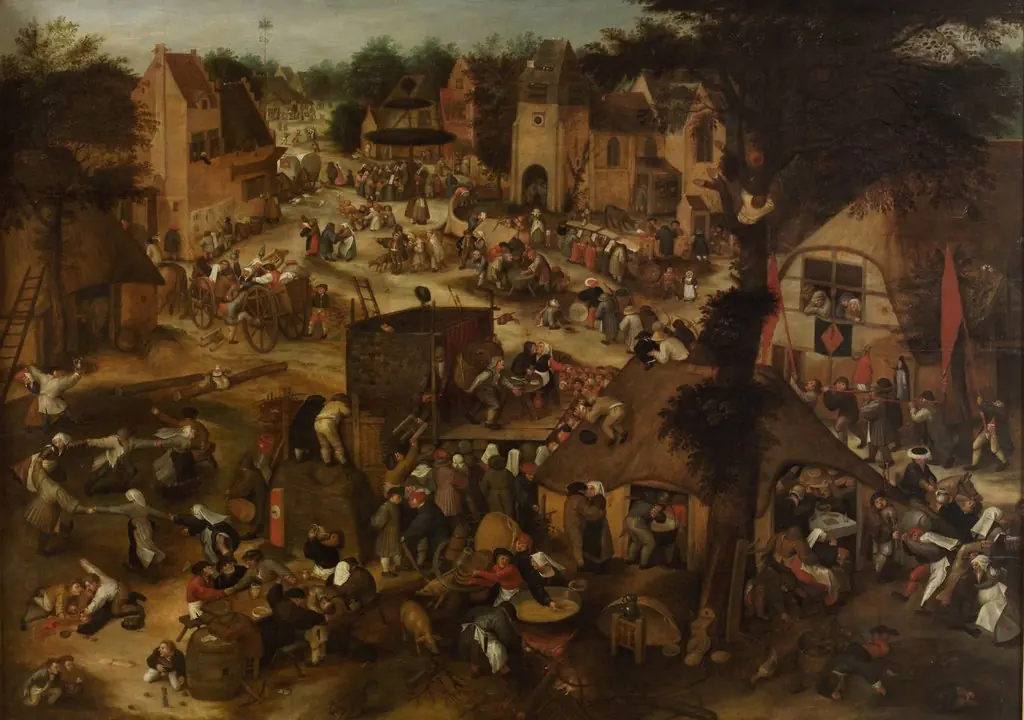 Performance of the farce 'Een Cluyte van Plaeyerwater' (A Clod from Plaeyerwater) at a Flemish Kermis
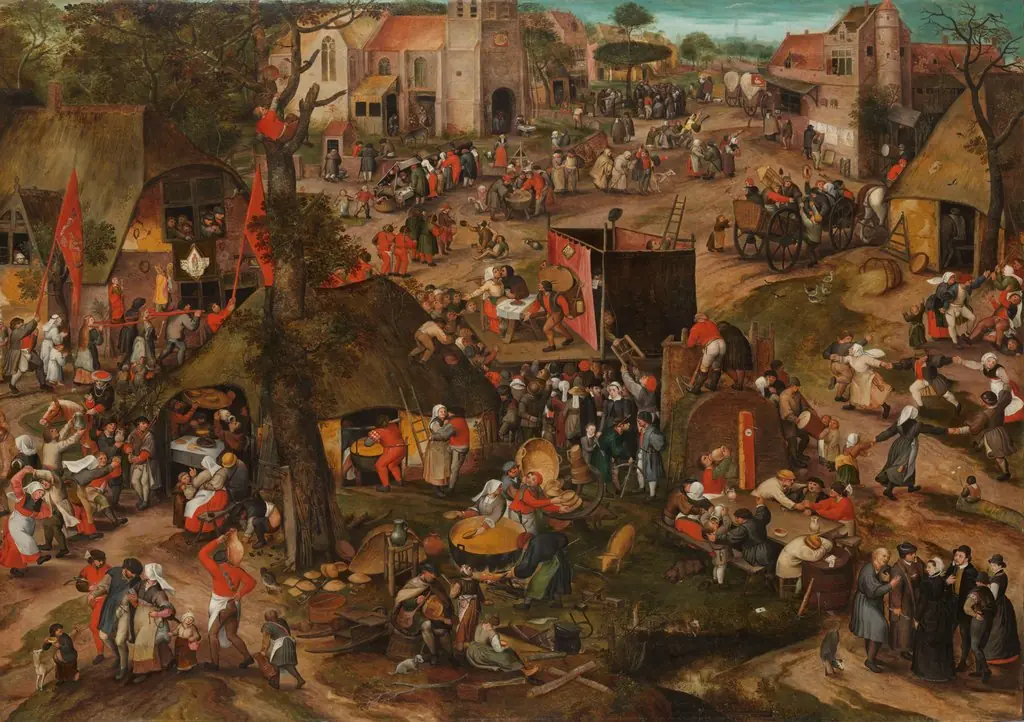 A Performance of the Farce 'Een Cluyte van Plaeyerwater' (A Clod from Plaeyerwater) at a Flemish Kermis
 A Flemish Kermis with a Performance of the Farce ‘Een cluyte van Plaeyerwater’
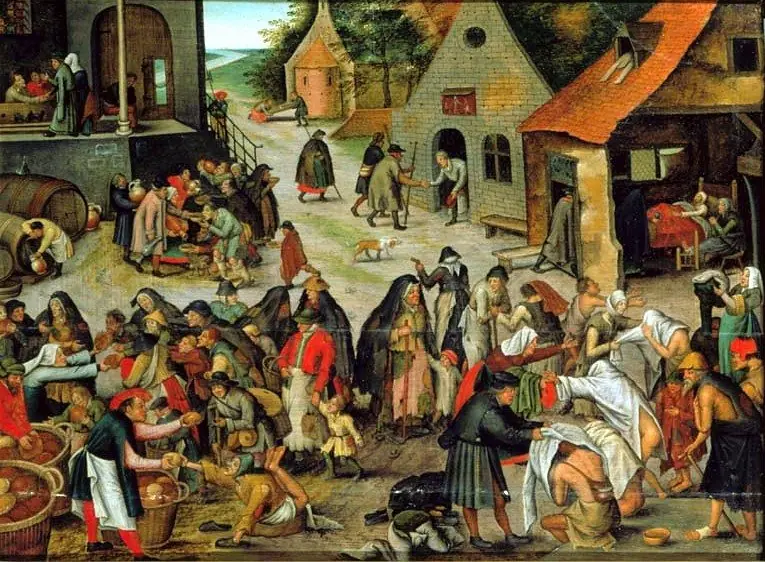 The Seven Acts of Mercy by Pieter Brueghel the Younger
 Kermis of Saint George
 Kermis
 Market Day in a Flemish Town
 Proverbs