Artwork
Atalanta and Meleager Hunting the Calydonian Boar
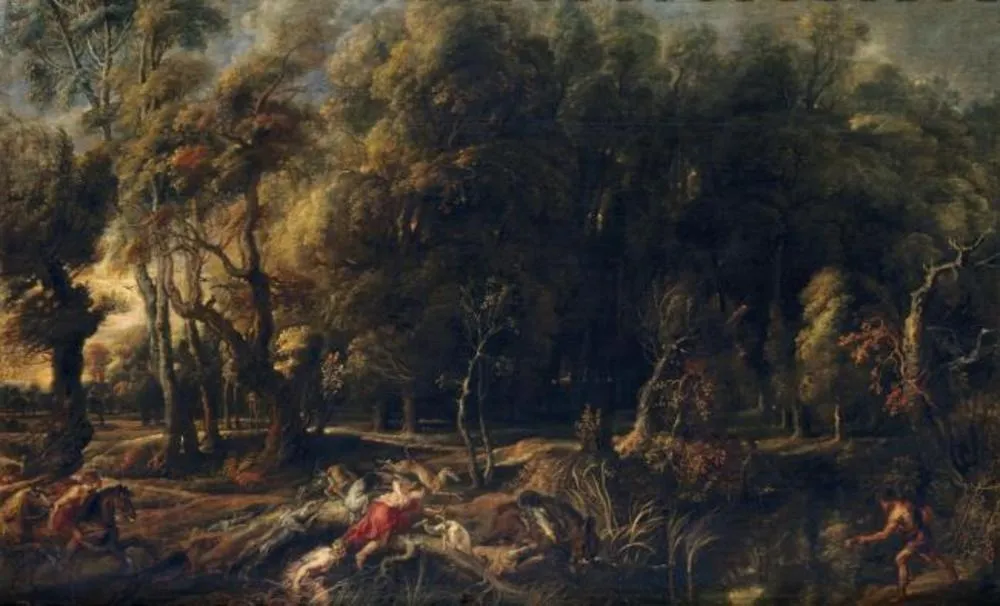
Atalanta and Meleager Hunting the Calydonian Boar is an oil painting by the Flemish Baroque painting artist Peter Paul Rubens. It dates from 1635 and is held in the collection of the Museo del Prado.
About this work
Subject & Meaning
The narrative follows Ovid's account in the Metamorphoses, featuring Meleager, the king's son, alongside his beloved Atalanta and the twins Castor and Pollux.
The painting depicts the mythological hunt of the Calydonian Boar, a monstrous beast sent by the goddess Diana to ravage the kingdom of Calydon. The narrative follows Ovid's account in the Metamorphoses, featuring Meleager, the king's son, alongside his beloved Atalanta and the twins Castor and Pollux. In this composition, the figures are arranged in the foreground to direct the viewer's attention to the moment Atalanta incites the dogs against the mortally wounded boar.
The scene is set within a lush, idyllic landscape that reflects Rubens's late style, favoring a poetic atmosphere over strict naturalism. The work draws inspiration from ancient sarcophagus reliefs and drawings by Giulio Romano, transforming the violent hunt into a harmonious, classical tableau.
Technique & Style
The work is executed in oil paint on canvas, measuring 162 cm in height by 264 cm in width [1][2]. It belongs to the landscape genre, while also depicting the mythological subject of the Calydonian hunt [1][2].
In keeping with the painter's late style, the composition is set within a lush, densely wooded landscape that departs from the more naturalistic settings of his earlier production, instead evoking an idyllic and poetic environment [3]. The figures are arranged across the foreground in the lower portion of the canvas, guiding the viewer's eye toward the moment when Atalanta urges the hounds against the boar she has mortally wounded, with her cousins positioned to the left and Meleager to the right [3]. Rubens drew inspiration from ancient sarcophagus reliefs and from drawings by Giulio Romano in shaping the scene [3].
History & Provenance
Peter Paul Rubens created Atalanta and Meleager Hunting the Calydonian Boar between 1635 and 1640, during the final phase of his career. The artist retained ownership of the painting until his death in 1640. Following Rubens's passing, the work was acquired for the collection of King Felipe IV of Spain.
It is currently held by the Museo del Prado in Madrid. The painting draws inspiration from ancient sarcophagus reliefs and drawings by Giulio Romano, depicting a mythological hunt described in Ovid's Metamorphoses.
The painting Atalanta and Meleager Hunting the Calydonian Boar, created in 1635 by Peter Paul Rubens, is held in the collection of the Museo del Prado in Madrid. It was acquired for the royal collection of Philip IV of Spain after Rubens' death in 1640 and remains on display in the museum's galleries. The work has been part of exhibitions focusing on Flemish and Baroque art at the Prado, including thematic displays on mythological subjects and Flemish masters.
The painting was also included in a 2019 exhibition titled 'Rubens and the Mythological Imagination' at the Museo del Prado, which highlighted Rubens' interpretations of classical myths.
The work has also been featured in traveling exhibitions on Flemish Baroque art in Europe, including stops in Vienna and Antwerp, where it was loaned from the Prado.
The Prado's online entry notes that the painting was part of the royal collection and has been exhibited in the museum's Baroque painting galleries since the 19th century.
Context
The painting’s critical fortunes are tied to its late-Rubens style and its place within the Prado’s mythological landscape holdings. In the 17th century, the work entered the Spanish royal collection under Philip IV after Rubens’s death in 1640, later passing to the Museo del Prado where it remains. Spanish scholarship highlights Rubens’s Ovidian fidelity and his shift toward an idyllic, poetic landscape in the late 1630s, departing from earlier naturalism and drawing on antique sarcophagus reliefs and Giulio Romano’s designs.
Comparative readings place the canvas within a broader European engagement with the Calydonian boar theme. Nicolas Poussin’s contemporaneous treatment (1634–1639, also in the Prado) and Jacob Jordaens’s earlier variants (1618, Antwerp; 1620–1623, Prado) frame Rubens’s composition within a transalpine dialogue on heroic myth and landscape. The Prado’s own commentary underscores these connections, situating the work within the museum’s curated display of Flemish and Northern schools.
Overview
Created in 1635 by the Flemish painter Peter Paul Rubens, this oil on canvas presents a dynamic mythological tableau set within a dense forest. The composition centers on the fierce encounter between a massive boar and a group of hunters, among them the legendary figures Atalanda and Meleager. The work belongs to Rubens’s landscape tradition, combining narrative drama with a richly rendered natural setting.
Artist & collection
Artist
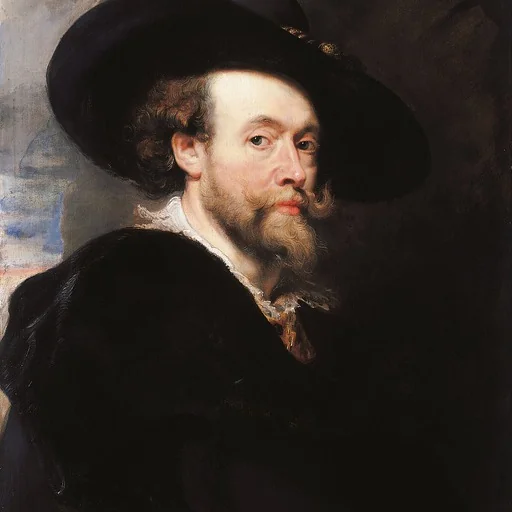
Sir Peter Paul Rubens ( ROO-bənz; Dutch:; 28 June 1577 – 30 May 1640) was a Flemish artist and diplomat.