Artwork
The Three Graces
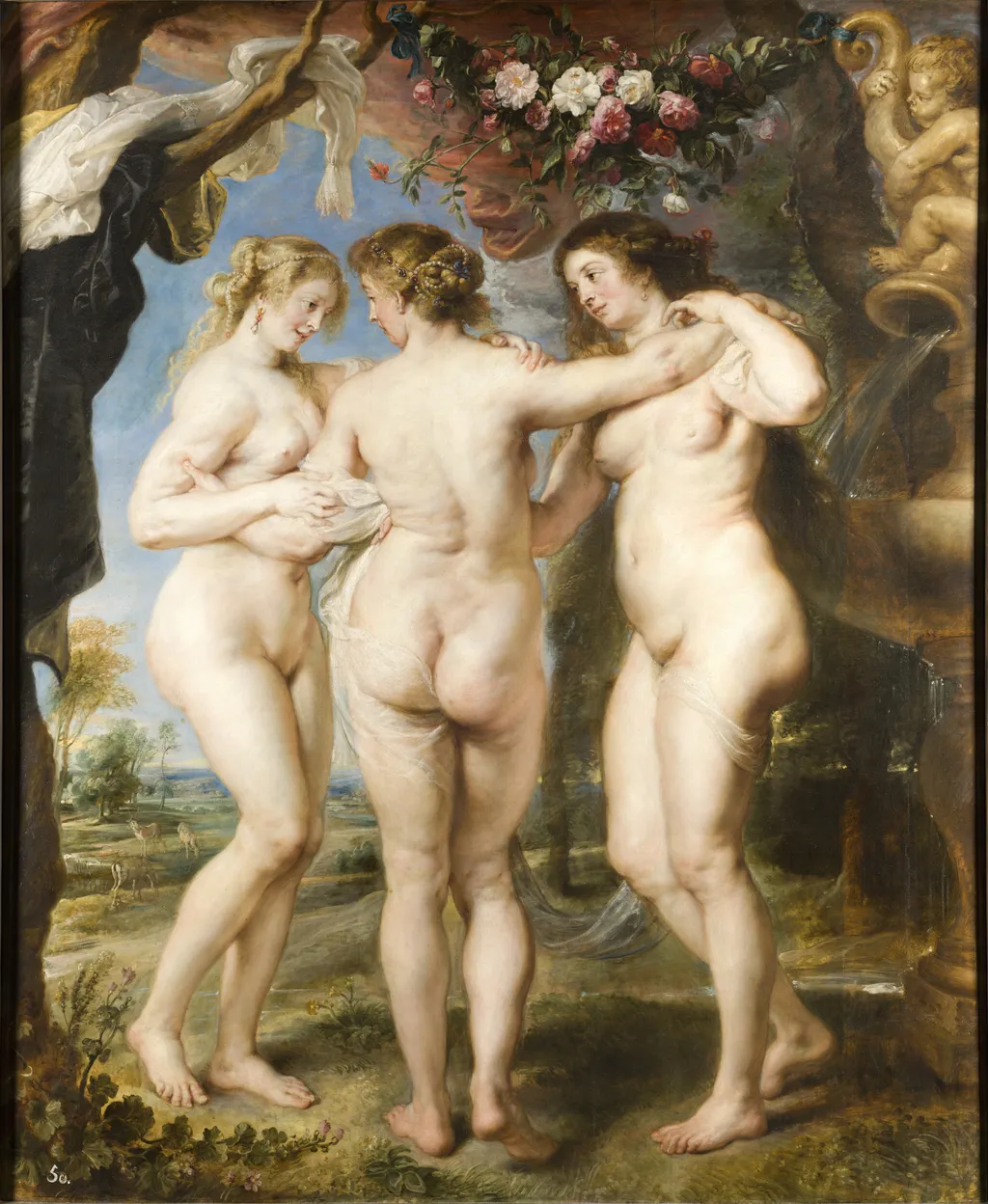
The Three Graces is an oil painting by the Flemish Baroque painting artist Peter Paul Rubens. It dates from 1630 and is held in the collection of the Museo del Prado.
About this work
Three women embrace in a sun-dappled field, their bare feet hinting at a gentle dance. Peter Paul Rubens painted the Graces around 1630 to 1635 in oil on oak, and the panel now hangs in Madrid's Museo del Prado. The figure at left resembles Helena Fourment, his sixteen-year-old second wife. The work stayed in Rubens's collection until his death, then passed to Philip IV of Spain.
Subject & Meaning
Rubens reinterprets the classical theme with a Baroque sensibility, presenting the nude figures in a sensual, opulent manner.
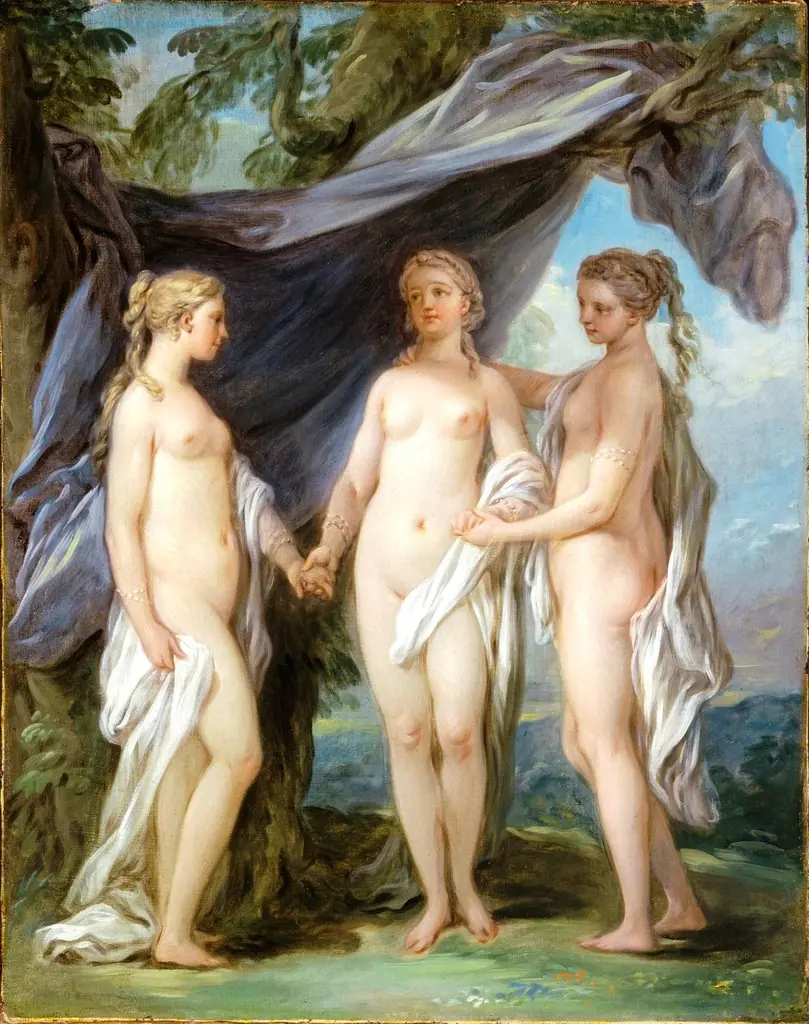
The painting depicts the Three Graces, Aglaia (Splendor), Euphrosyne (Joy), and Thalia (Prosperity), daughters of Zeus and the nereid Eurynome, who served Venus as personifications of beauty, charm, and creativity. Rubens reinterprets the classical theme with a Baroque sensibility, presenting the nude figures in a sensual, opulent manner. They stand in a triangular composition, linked by their arms, a transparent veil, and exchanged glances, while dancing beside a fountain and beneath a flower garland.
A golden cornucopia spouting water on the right symbolizes abundance. The warm, luminous color and fleshy, realistic bodies emphasize vitality and earthly beauty, moving away from the chaste idealism of earlier Renaissance depictions. The figures likely incorporate the features of Rubens' wives, Isabella Brant and Helena Fourment, rendering the mythological subject with personal and humanist intimacy.
Technique & Style
The medium is oil paint, applied on either panel or canvas according to conflicting source descriptions. Stylistically, the painting exemplifies Rubens's Baroque treatment of the classical theme: three nude women with opulent flesh, depicted in a triangular composition with one figure seen from behind, linked by a transparent veil and glances. A fountain, floral garland, and luminous landscape background frame the group.
The warm, rich color and chiaroscuro enhance the palpable sensuality of the flesh. The canvas underwent restoration in 1997–98 and is in good condition.
History & Provenance
Painted by Peter Paul Rubens circa 1638–1639; some records list 1630: the work was executed shortly after the artist’s marriage to Helena Fourment. It remained in Rubens’s personal collection until his death in 1640. That year, King Philip IV of Spain purchased the painting from the artist’s estate.
The painting was brought to Spain and installed in the Royal Alcazar of Madrid by 1666. In the 19th century, it was transferred to the Museo del Prado, where it was initially kept in a restricted-access room due to its nudity. The painting underwent a careful restoration in 1997–1998.
The painting is held at the Museo del Prado in Madrid. It was originally kept in Peter Paul Rubens's personal collection until his death in 1640, after which it was acquired by King Philip IV of Spain. In 1666 the work was placed in the Royal Alcazar of Madrid, and later in the 19th century it was installed in the Museo del Prado.
During its early decades at the Prado, the painting was confined to a reserved room due to its nudity. It underwent a careful restoration in 1997–98. No inventory or accession number is recorded in the provided sources.
Context
Painted in the late 1630s, Rubens's Three Graces marks a radical departure from earlier, chaste representations of the mythological trio, such as Raphael's version, by emphasizing sensual, opulent flesh and a dynamic, asymmetrical composition. The work reflects Rubens’s broader artistic theory, developed during his Italian sojourn, which advocated imitating classical sculpture while imbuing figures with lifelike warmth and color. Originally kept in the artist's personal collection, the painting was purchased after his death by Philip IV of Spain and later entered the Museo del Prado, where in the 19th century it was confined to a reserved room due to moral objections to its nudity.
This fluctuating reception, from private masterpiece to restricted public display, illustrates the work's challenging position within art history as a baroque reinterpretation of classical ideals. Rubens produced several variations on the theme.
Legacy
Upon entering the Museo del Prado in the 19th century, The Three Graces was initially confined to a restricted-access room due to public morality concerns over its nudity. The painting underwent a thorough restoration in 1997–98 and is preserved in excellent condition. It remains a celebrated work in the Prado’s collection, exemplifying Rubens’s opulent Baroque interpretation of the classical mythological theme.
Overview
Peter Paul Rubens's The Three Graces is an oil painting on an oak panel, executed between approximately 1630 and 1635. This large-scale work depicts three mythological figures in a natural setting, celebrating beauty and harmony. It remained in the artist's private collection during his lifetime and is now a prominent piece in the Museo del Prado in Madrid. The painting measures 221 cm by 181 cm.
Own this work as a print
Artist & collection
Artist
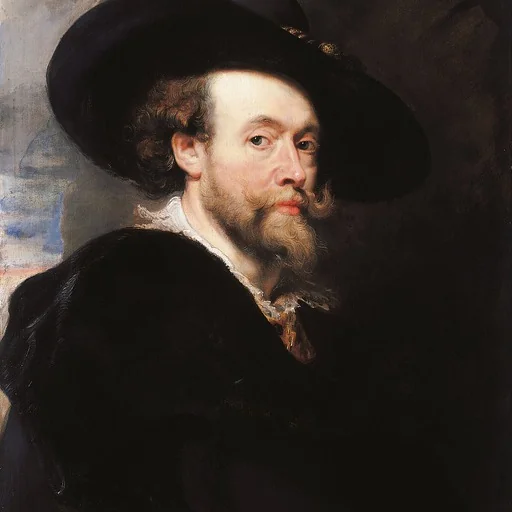
Sir Peter Paul Rubens ( ROO-bənz; Dutch:; 28 June 1577 – 30 May 1640) was a Flemish artist and diplomat.