Artwork
Agrippina and Germanicus
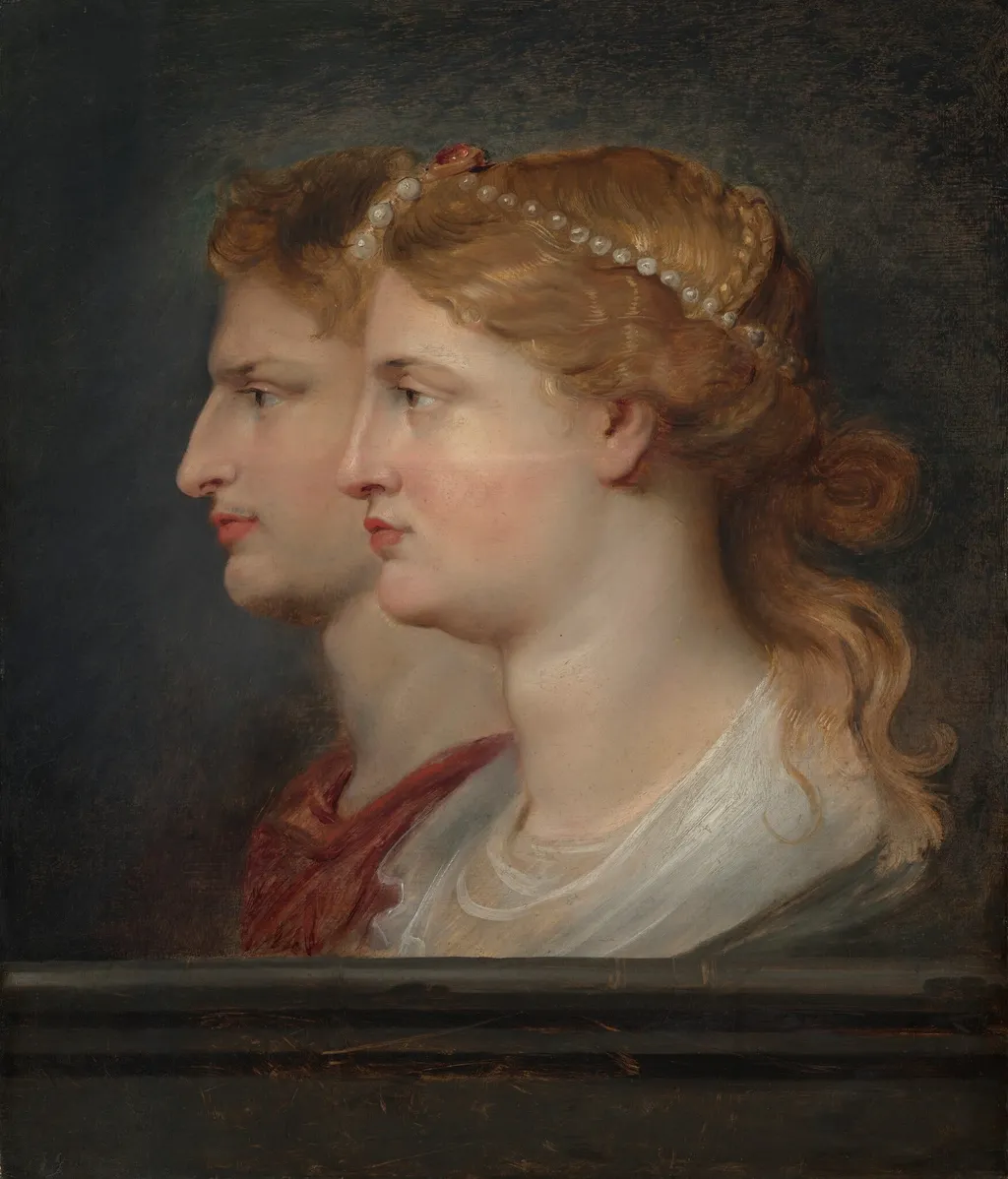
Agrippina and Germanicus is an oil painting by the Baroque artist Peter Paul Rubens. It dates from 1614 and is held in the collection of the National Gallery of Art.
- Inscription
- Inscribed:lower left, an inventory number: 19
About this work
Agrippina the Elder, granddaughter of Augustus, holds the foreground, her ivory skin and golden waves set against her husband's ruddier complexion.
Two profiles pressed together like a carved gemstone, Agrippina and Germanicus emerge from darkness in Peter Paul Rubens's panel of about 1614. Agrippina the Elder, granddaughter of Augustus, holds the foreground, her ivory skin and golden waves set against her husband's ruddier complexion. Study of the oak panel shows Rubens first painted her alone, then widened it to add the Roman general beside her.
Subject & Meaning
The painting depicts the ancient Roman couple Germanicus and Agrippina the Elder, identified by their attributes: a diadem, pearls, and a ruby signify their noble status and wealth. As a married couple, they are shown together in a portrait format that emphasizes their union. The inclusion of blond hair and the couple's regal bearing further reinforces their idealized representation as virtuous and distinguished figures from antiquity.
The work functions as a celebration of their marital bond and elevated social position, drawing on classical associations of fidelity and honor.
Technique & Style
The painting is executed in oil on an oak panel, a support Rubens frequently employed for his cabinet-sized portraits. Its dimensions are 66.4 × 57 cm. As a bust-length double portrait, it depicts the Roman couple Agrippina the Elder and Germanicus. Formal attributes identifying the sitters include Agrippina's diadem and pearl earrings, and the blond hair of both figures. No further details regarding handling, brushwork, or condition are recorded in the available sources.
History & Provenance
Peter Paul Rubens painted this work in 1614. Its earliest known owner was F. van Bredael (possibly Jean Pierre van Bredael of Antwerp). On 26 August 1710 Prince Johann Adam Andreas of Liechtenstein purchased it from van Bredael, and it then descended through the Liechtenstein princes to Prince Franz Josef II.
During World War II it was stored at Gaming monastery (1940–1944), later sent to a salt mine at Lauffen bei Ischl, and arrived in Vaduz in April 1945. On 25 October 1963 the National Gallery of Art, Washington, acquired the painting through Feilchenfeldt, Zurich, where it remains. The work was included in the exhibition "The touch of Pygmalion.
Rubens and sculpture in Rome" (dates and venue not specified in available sources). No inventory or accession number is provided in the consulted records.
Overview
Peter Paul Rubens's oil on panel, Agrippina and Germanicus, created around 1614, exemplifies his enduring interest in classical antiquity. This intimate portrait presents the Roman figures in a double-profile composition, reminiscent of an ancient cameo. The artist's meticulous rendering of their features and the subtle play of light reflect his deep engagement with historical sources and his mastery of the medium.
Own this work as a print
Artist & collection
Artist
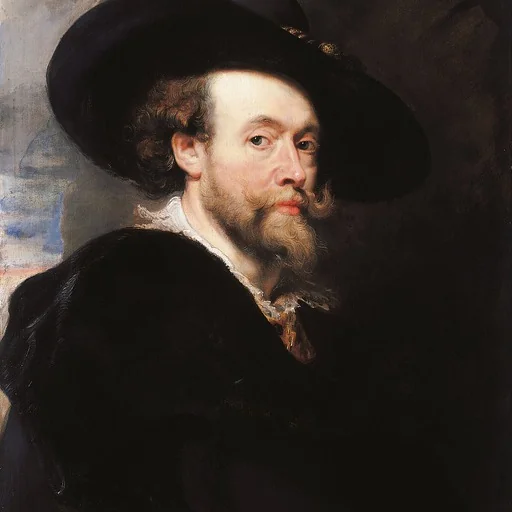
Sir Peter Paul Rubens ( ROO-bənz; Dutch:; 28 June 1577 – 30 May 1640) was a Flemish artist and diplomat.

- Paris
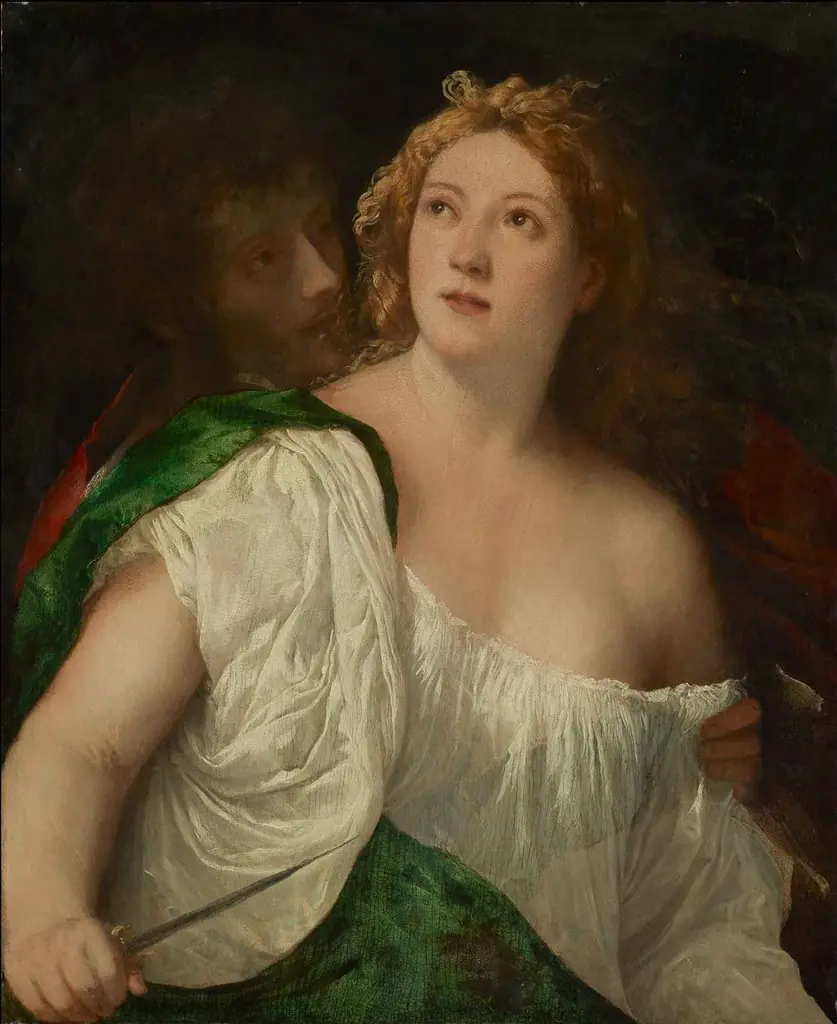 Lucretia and her Husband Lucius Tarquinius Collatinus
 Bust of a girl
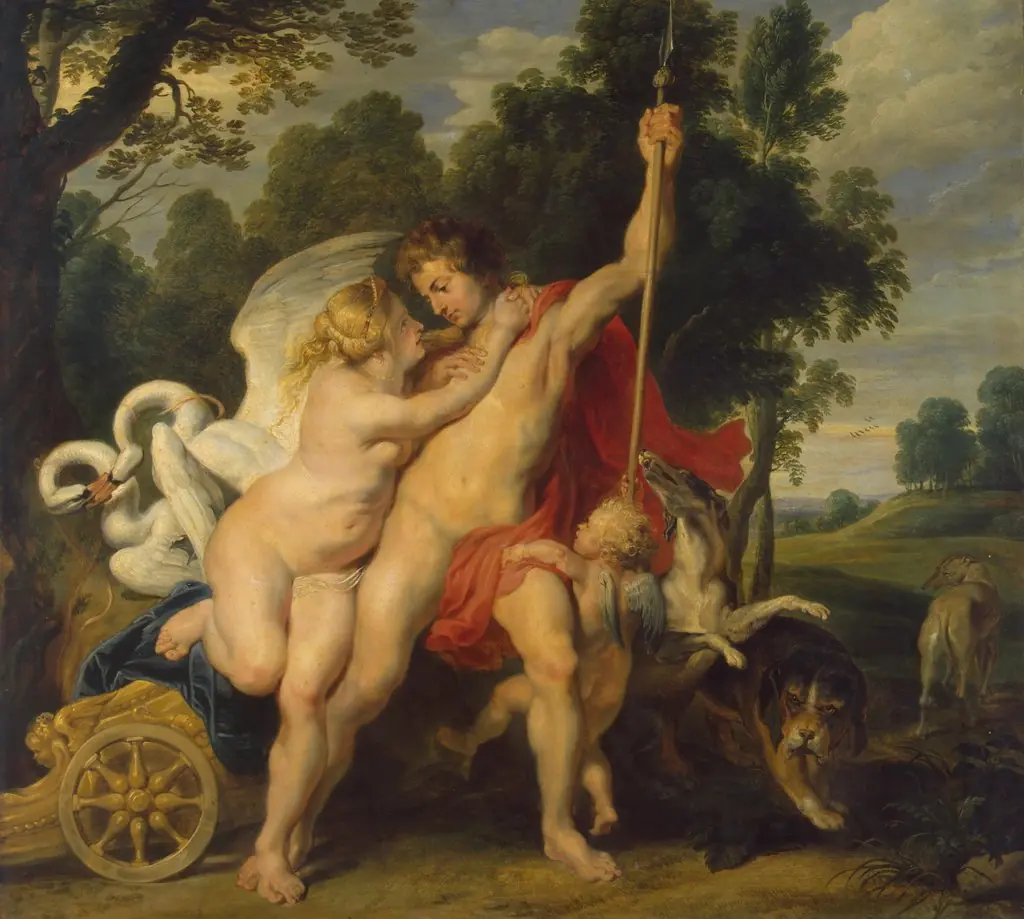
 Venus and Mars
 Nymph and Hunter
 Head of a Young Woman
 Self-Portrait (Allegory of painting)
 Helen
Helen Untitled
 Young Woman Holding a Mirror with Her Servant
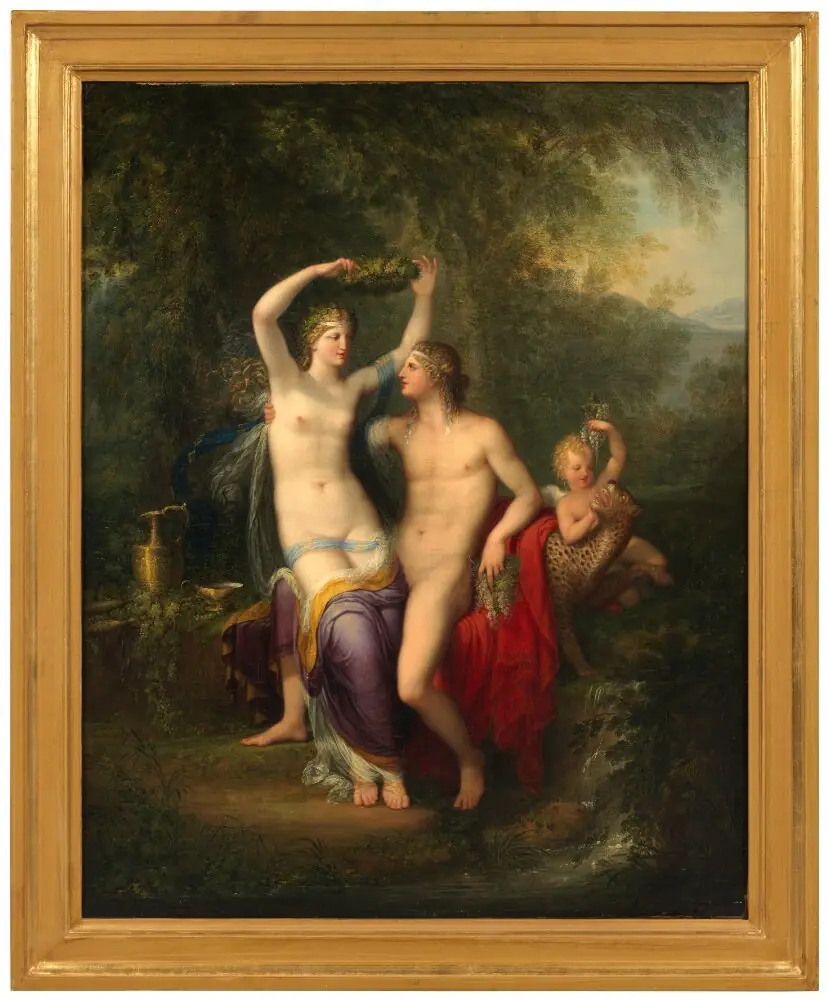 Dionysos (Bacchus) and Ariadne
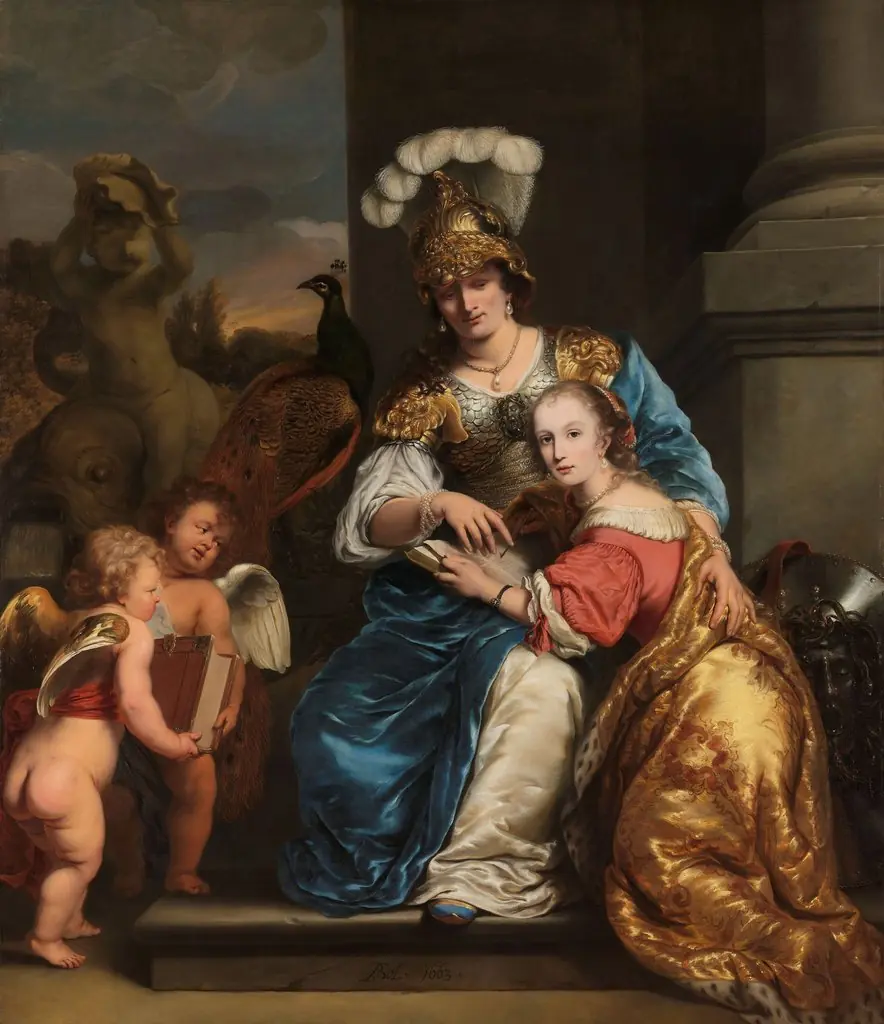 Margarita Trip as Minerva, Instructing her Sister Anna Maria Trip