Artwork
Mary with the Child, St. Barbara and a Carthusian Monk
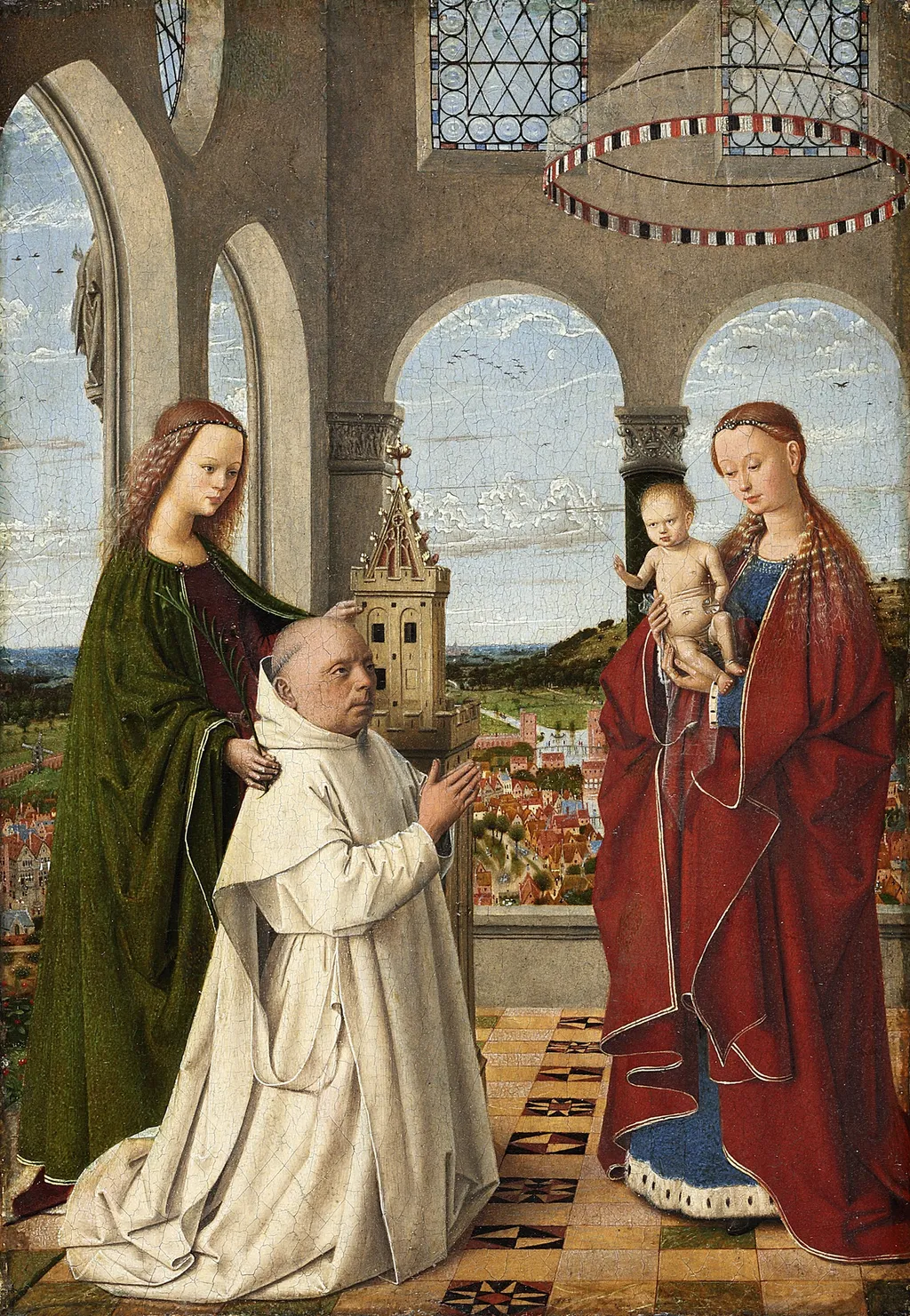
Mary with the Child, St. Barbara and a Carthusian Monk is an oil painting by the Northern Renaissance artist Petrus Christus. It dates from 1452 and is held in the collection of the Gemäldegalerie Berlin.
About this work
It shows Saint Barbara presenting a Carthusian monk, identified as Jan Vos, to the Virgin Mary holding the Christ Child.
Mary with the Child, St. Barbara and a Carthusian Monk is a small panel painted by Petrus Christus around 1450. The work is done in oil on wood and was likely meant for private devotion. It shows Saint Barbara presenting a Carthusian monk, identified as Jan Vos, to the Virgin Mary holding the Christ Child.
The intimate size of the piece suggests it was used in personal prayer. You might also enjoy looking up the museum where it lives, the Gemäldegalerie Berlin.
Subject & Meaning
The painting depicts Saint Barbara presenting the Carthusian monk Jan Vos to the Virgin Mary, who holds the Christ Child. This arrangement constitutes a sacra conversazione, where the viewer shares the monk's perspective, drawn into an intimate spiritual dialogue. Saint Barbara is identified by her attribute, a tower that visually echoes the Belfry of Bruges in the background cityscape.
A row of floor tiles within the loggia serves a specific symbolic function, separating the earthly realm of the donor from the heavenly presence of the holy figures. The work's diminutive size indicates it was designed as a portable piece for personal devotion, likely commissioned for Vos during his travels or upon his return to Bruges.
Technique & Style
The work is an oil-on-wood panel painting, a small devotional piece measuring 19.5 cm in height and 14 cm in width. The composition places Saint Barbara presenting the Carthusian monk Jan Vos to the Virgin Mary, who holds the Christ Child in her arms, within a loggia defined by a row of floor tiles that separate earthly from heavenly space. The figures are arranged asymmetrically in a diagonal composition, emphasizing a one-point perspective that draws the viewer into the sacred conversation.
Mary wears a red mantle over a blue dress trimmed with a narrow band of ermine fur, while Jan Vos kneels in prayer. The background cityscape, identified as Bruges in the 1450s, includes detailed architectural elements such as the Belfry of Bruges and canal scenes. The painting’s handling reflects Early Netherlandish techniques of precise detail and rich coloration, and its stylistic qualities combine intimate spatial placement with the formal rigor characteristic of Petrus Crispus’s mature output.
History & Provenance
The work titled Mary with the Child, St. Barbara and a Carthusian Monk, painted by Petrus Christus in 1452, was originally commissioned as a portable devotional piece for Jan Vos, a Carthusian monk who became prior of the Charterhouse of Val-de-Grace in 1441. It likely originated in the 1450s, possibly during Vos's return to Bruges, and may have been influenced by Jan van Eyck's lost Madonna of Jan Vos or Nicolas van Maelbeke, though Christus reinterprets these sources rather than copying them directly. The painting remained in the collection of William Cecil, 5th Marquess of Exeter, before being sold in the 17th century and acquired by the Kaiser-Friedrich-Museum in 1888, where it is now housed in the Gemäldegalerie Berlin.
Its provenance reflects a continuous ownership chain from its probable original patron to the Exeter family and eventually to the Berlin museum.
The painting is held in the Gemäldegalerie Berlin under inventory number 264. It was acquired by the Kaiser-Friedrich-Museum in 1888 from the 5th Marquess of Exeter and remains in that collection today. The work has been exhibited in Berlin since its acquisition and was included in a 2018 Frick Collection exhibition titled The Charterhouse of Bruges: Jan Van Eyck, Petrus Christus, and Jan Vos.
Context
The work is recognized as an early Netherlandish religious panel that exemplifies Petrus Christus's synthesis of van Eyckian compositional strategies with his own asymmetrical spatial logic. Art historians note its influence on later devotional portraiture, citing its role in shaping the portable diptych format and its impact on the development of sacra conversazione in the mid‑15th century. The painting's stylistic innovations are linked to the broader trajectory of Early Netherlandish art, particularly the transmission of devotional motifs from van Eyck to later masters such as Christus and his contemporaries.
Overview
Created around 1450 by the Early Netherlandish painter Petrus Christus, this oil‑on‑wood panel measures only a few centimeters across, indicating it was intended for intimate, personal use. The composition brings together the Virgin Mary with the infant Christ, Saint Barbara, and a Carthusian monk identified as Jan Vos, forming a compact devotional grouping.
Own this work as a print
Artist & collection
Artist
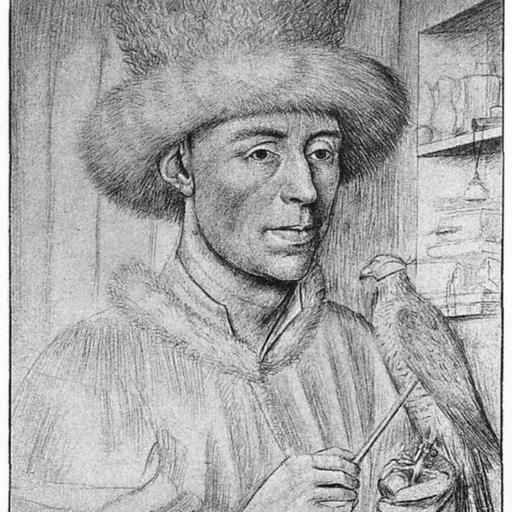
Petrus Christus (Dutch:; c. 1410/1420 – c. 1475/1476) was an Early Netherlandish painter active in Bruges from 1444, where, along with Hans Memling, he became the leading painter after the death of Jan van Eyck. He was…

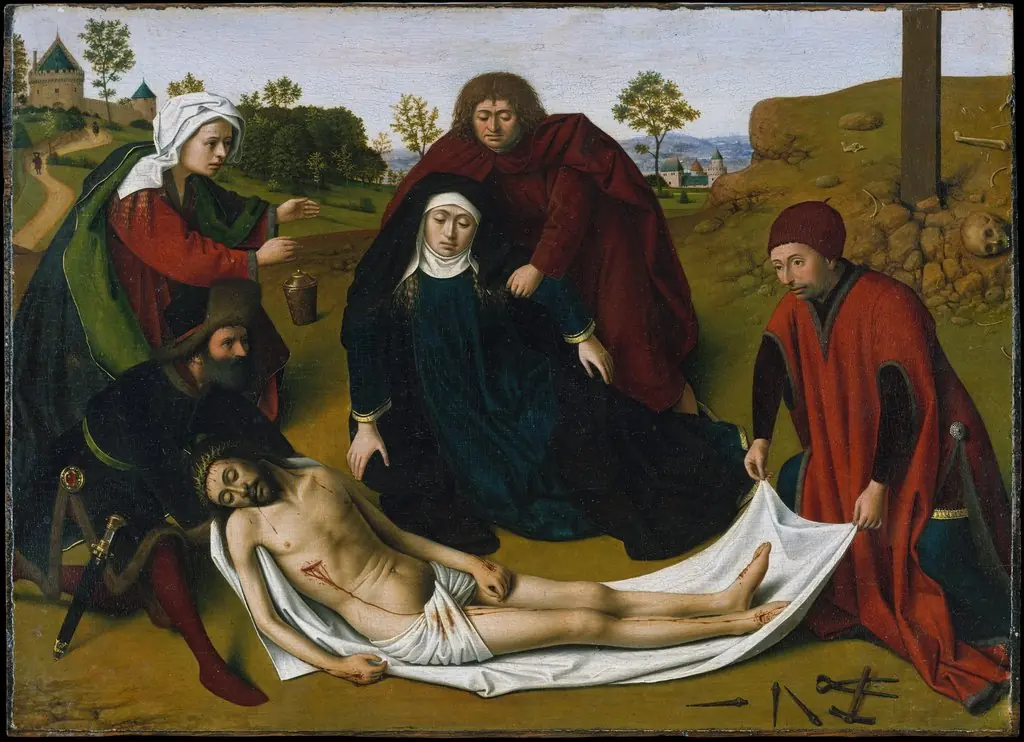
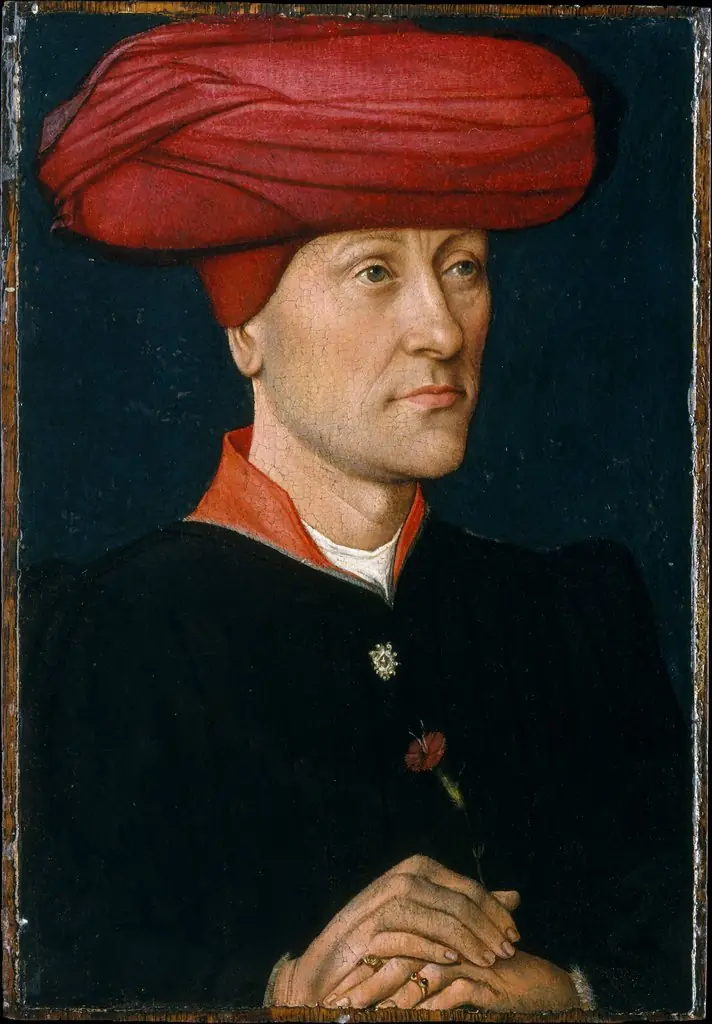
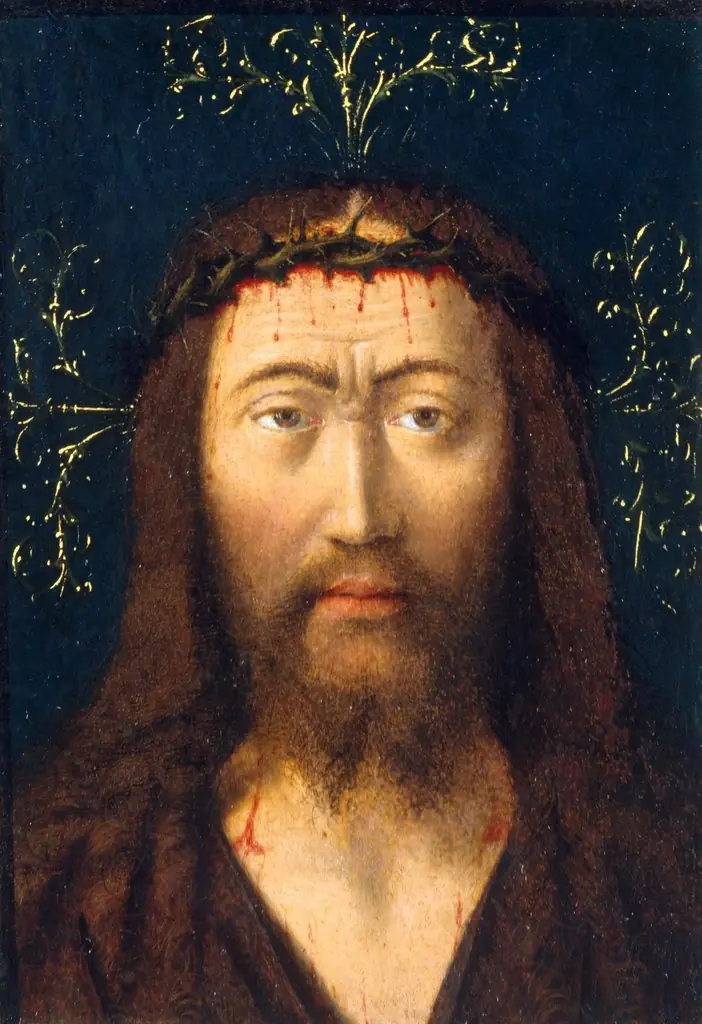
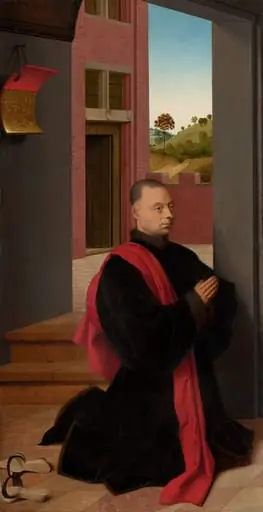
- Virgin and Child with St Anthony the Abbot and a Donor
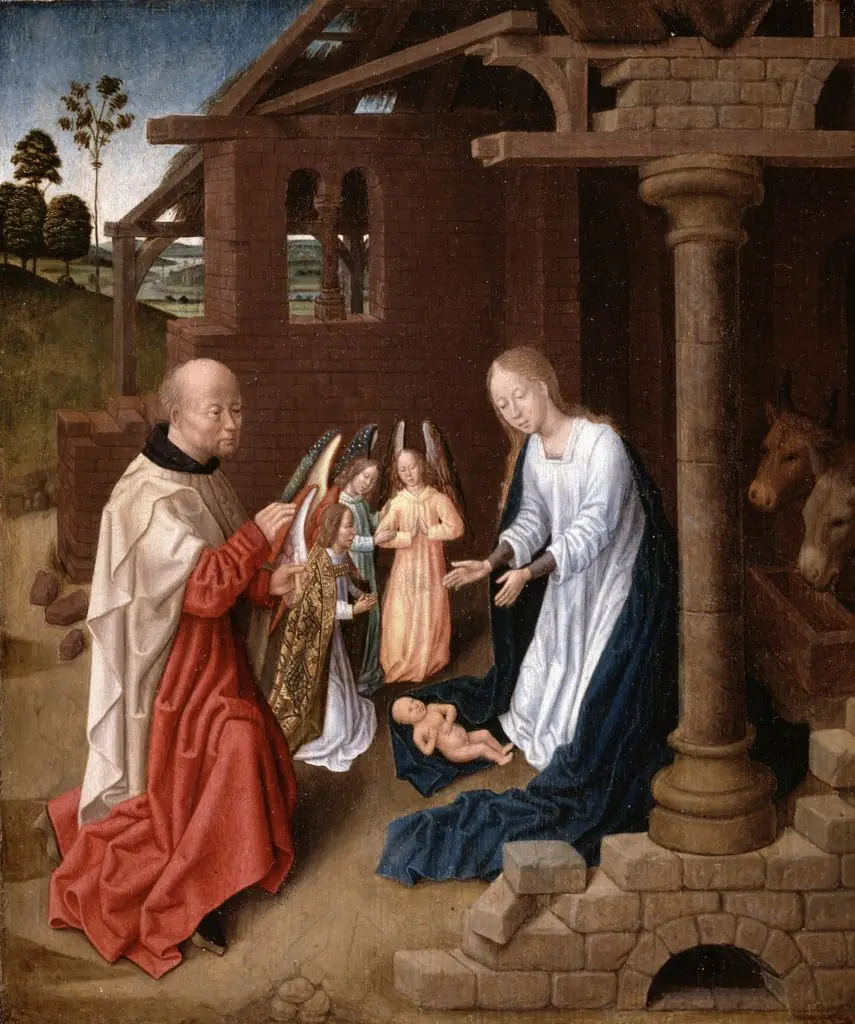 Adoration of the Christ Child
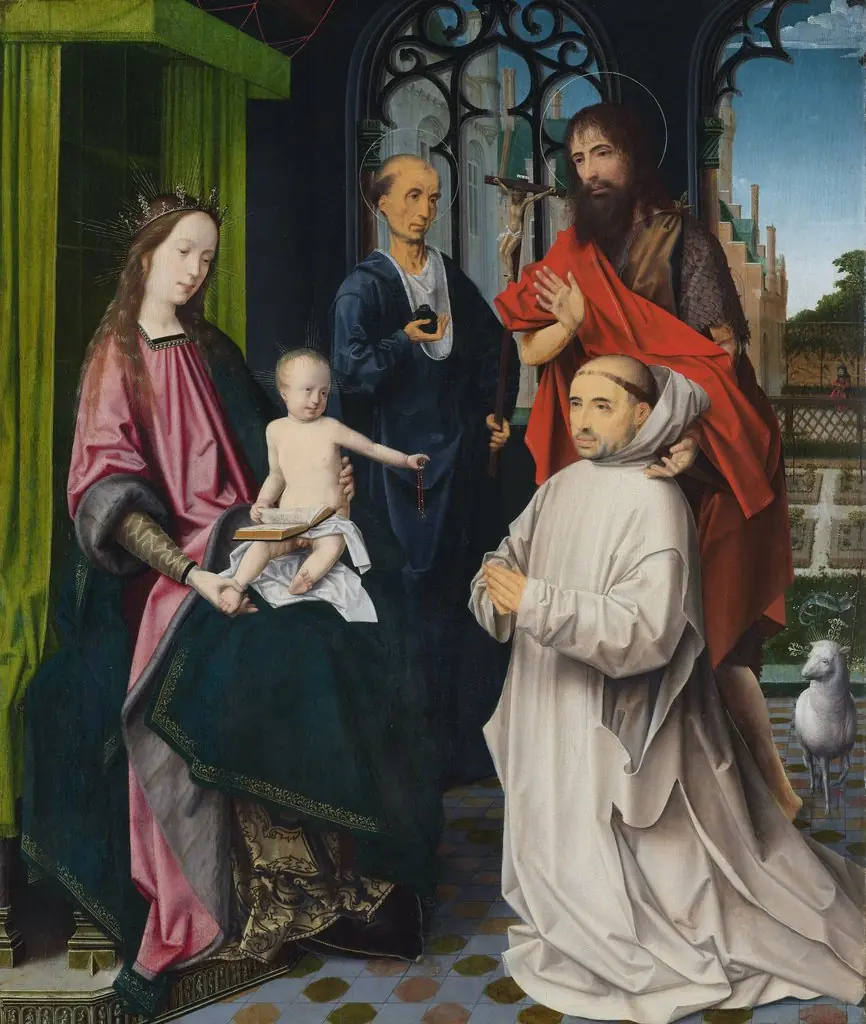 Virgin and Child Enthroned, with Saints Jerome and John the Baptist and a Carthusian Monk
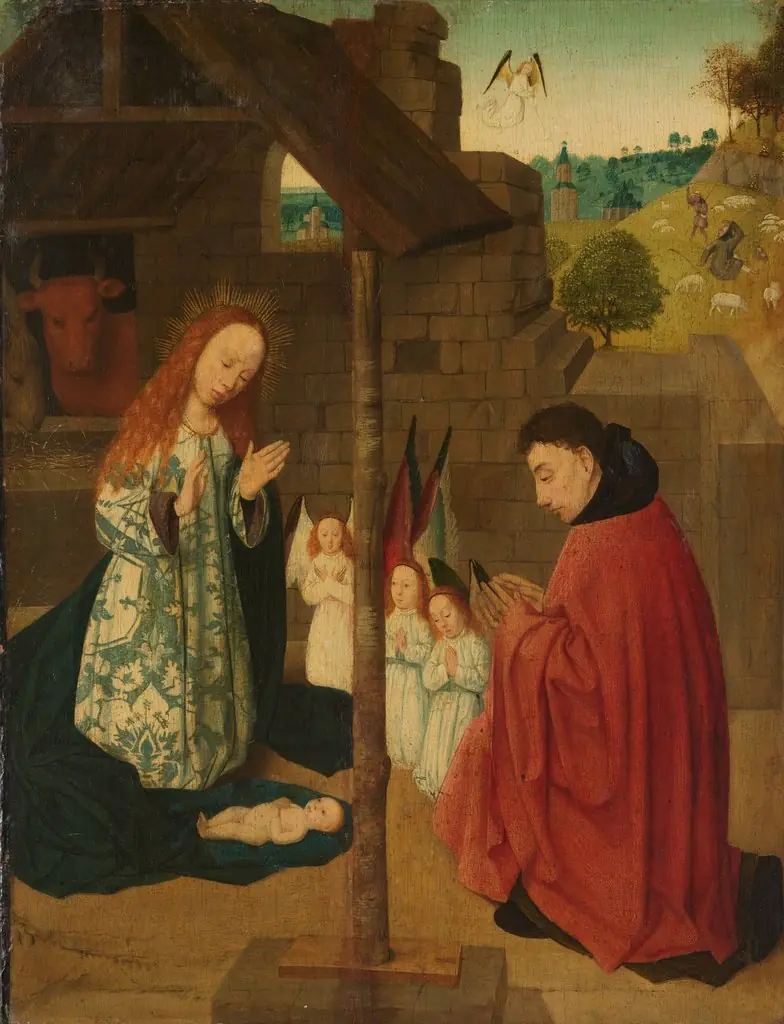 The nativity
 Tronende Maria en Christus, met Sint-Hiëronymus, Johannes de Doper en een kartuizer monnik
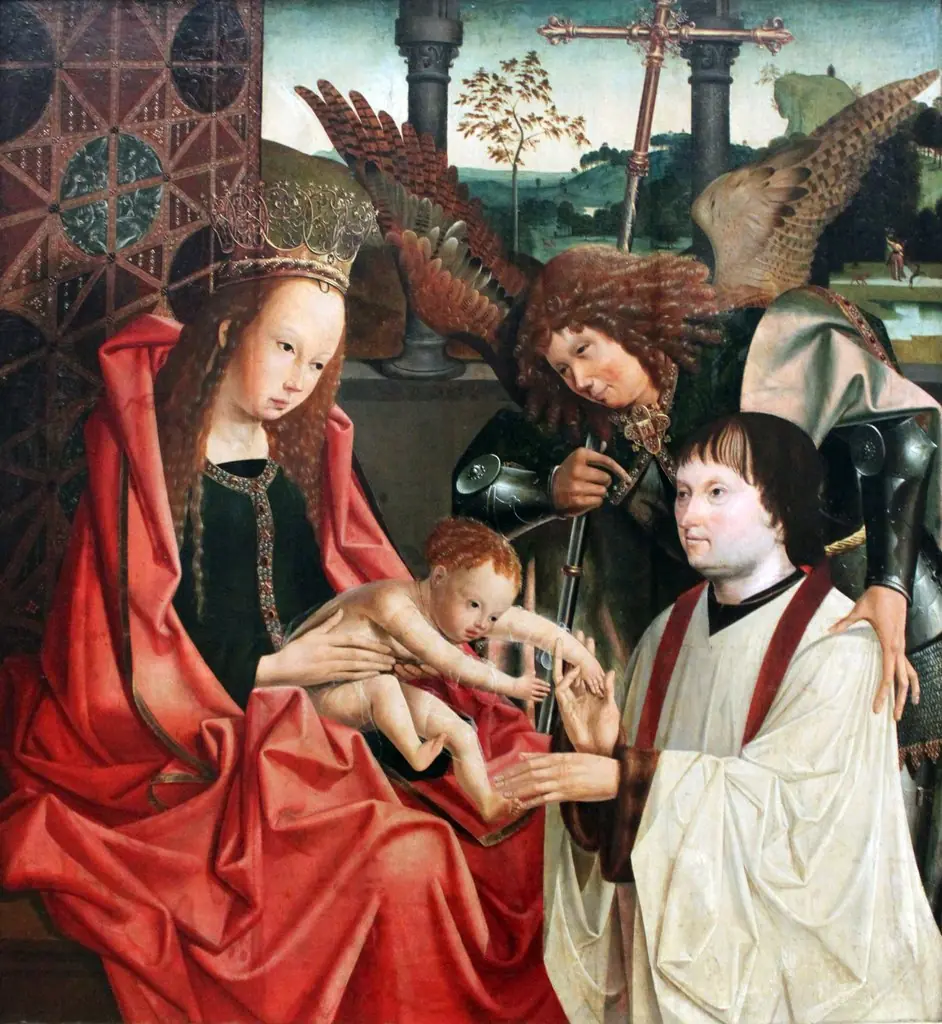 Maria with the child, the Archangel Michael and a donor
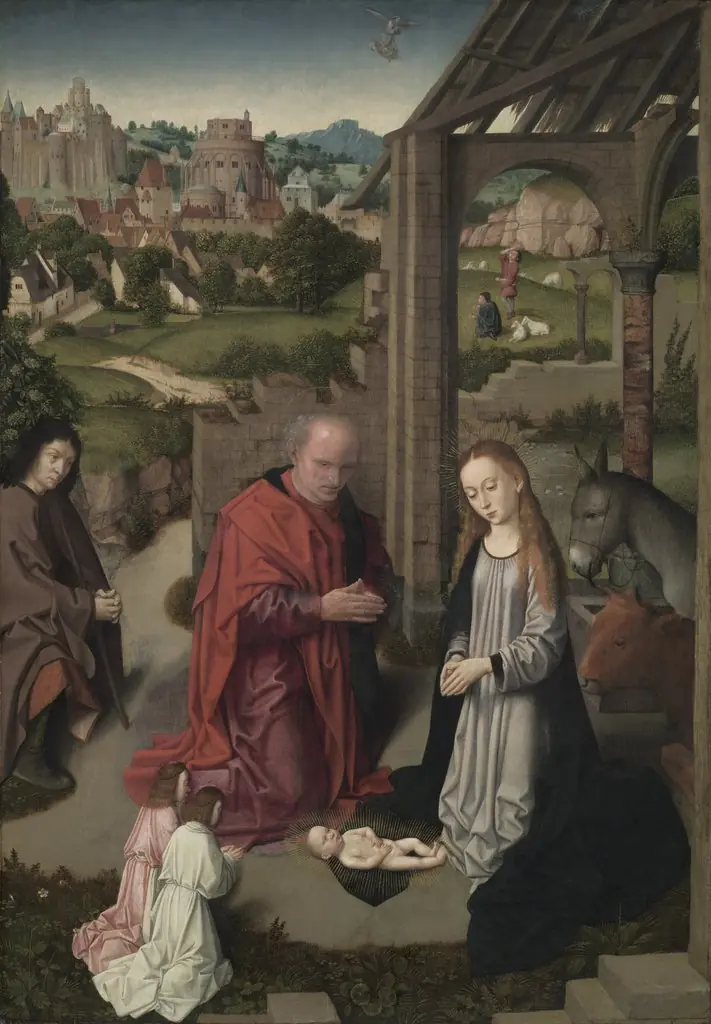 The Nativity
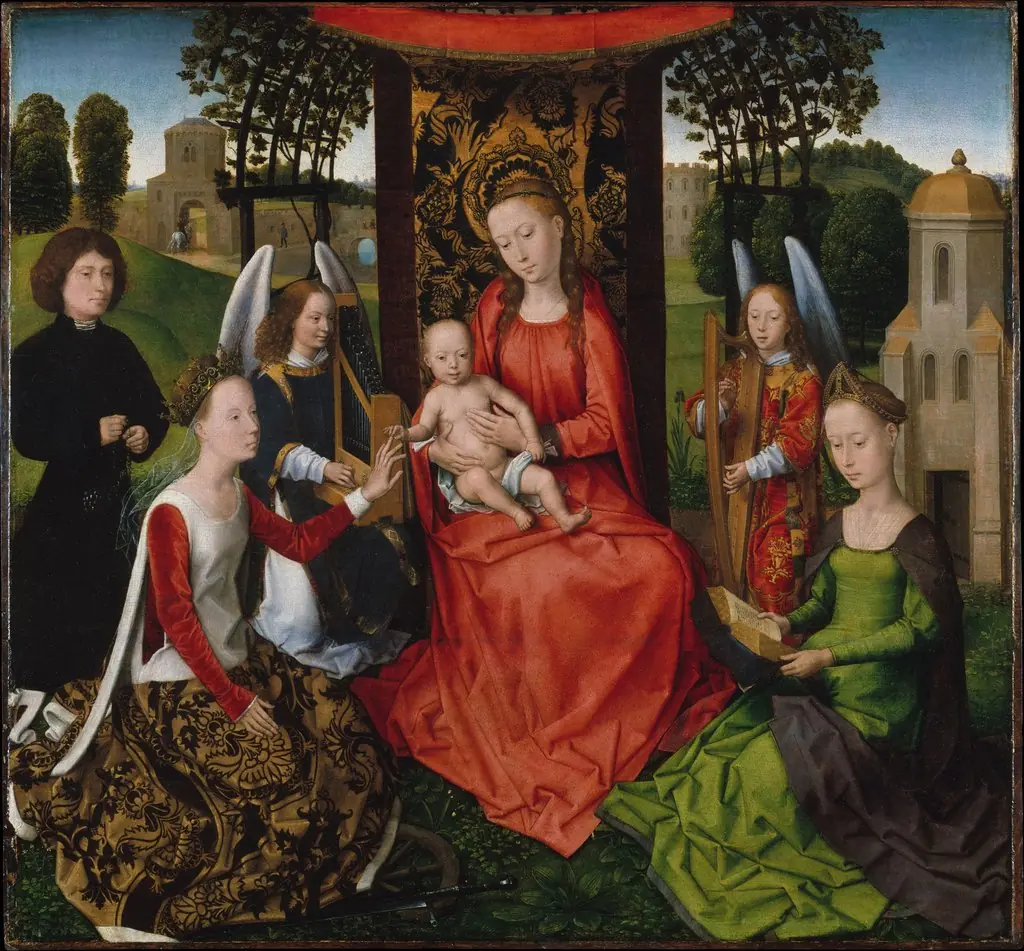 Virgin and Child with Saints Catherine of Alexandria and Barbara
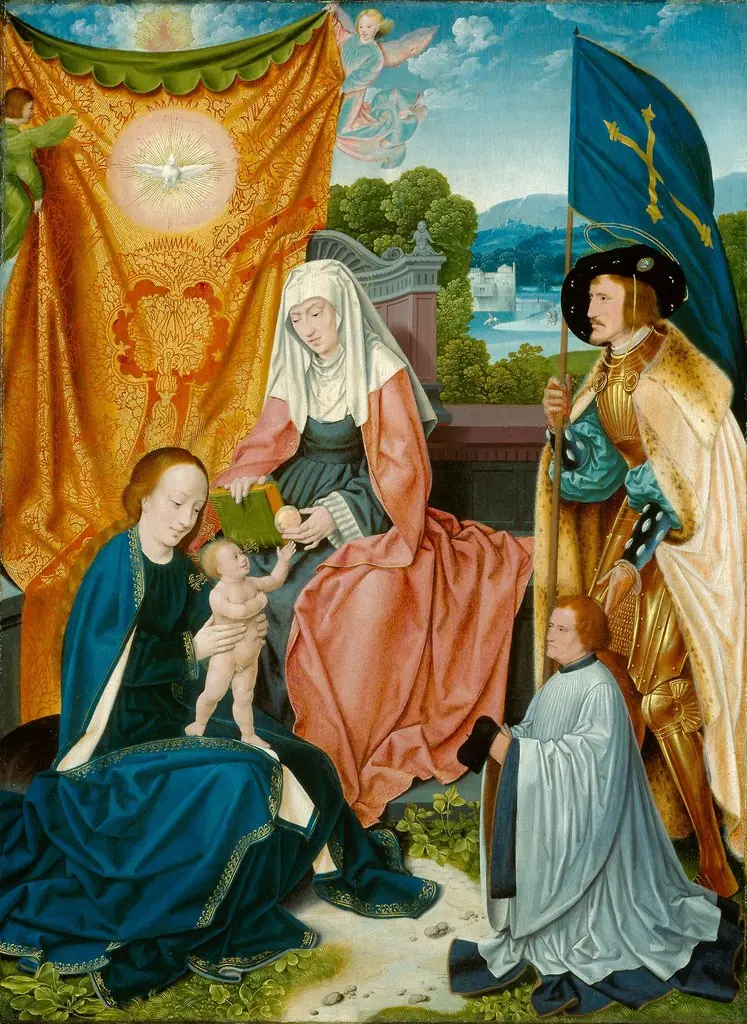 Virgin and Child with Saint Anne, Saint Gereon, and a Donor
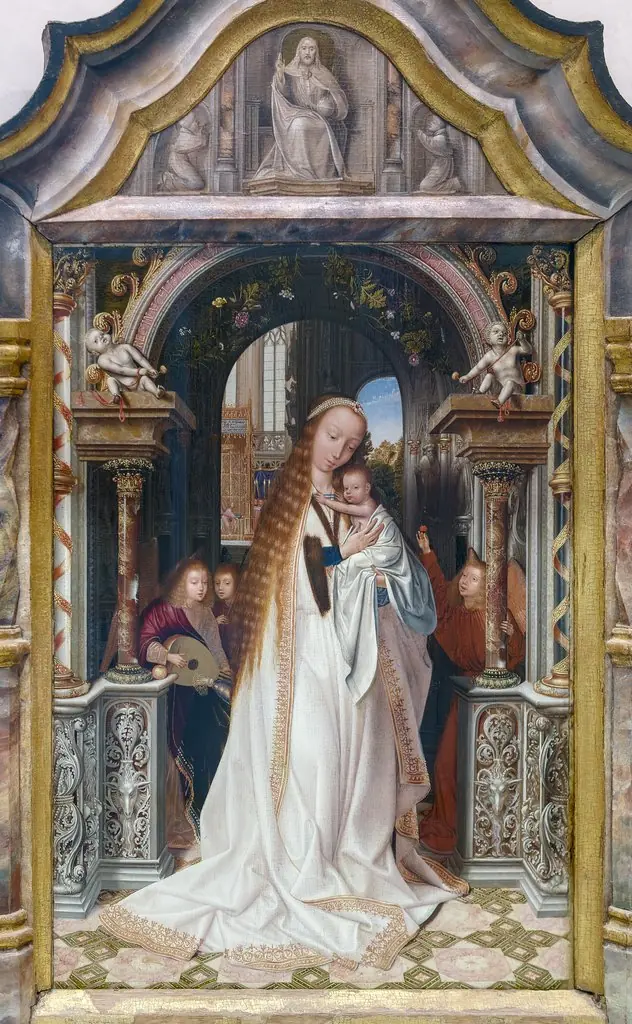 Madonna and Child with Angels
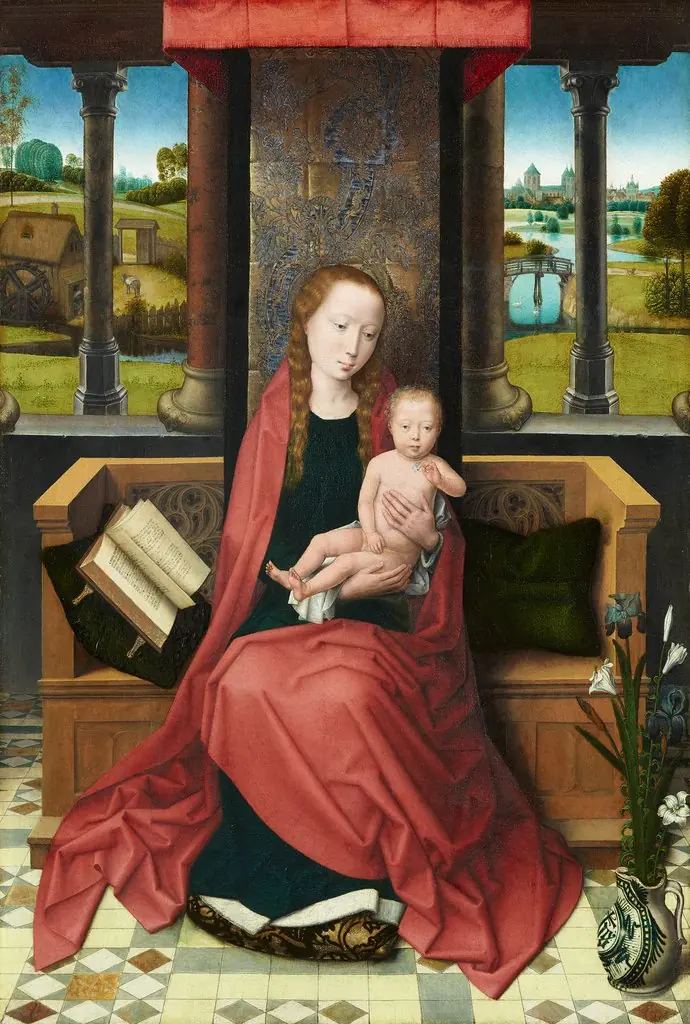 The Virgin and Child Enthroned
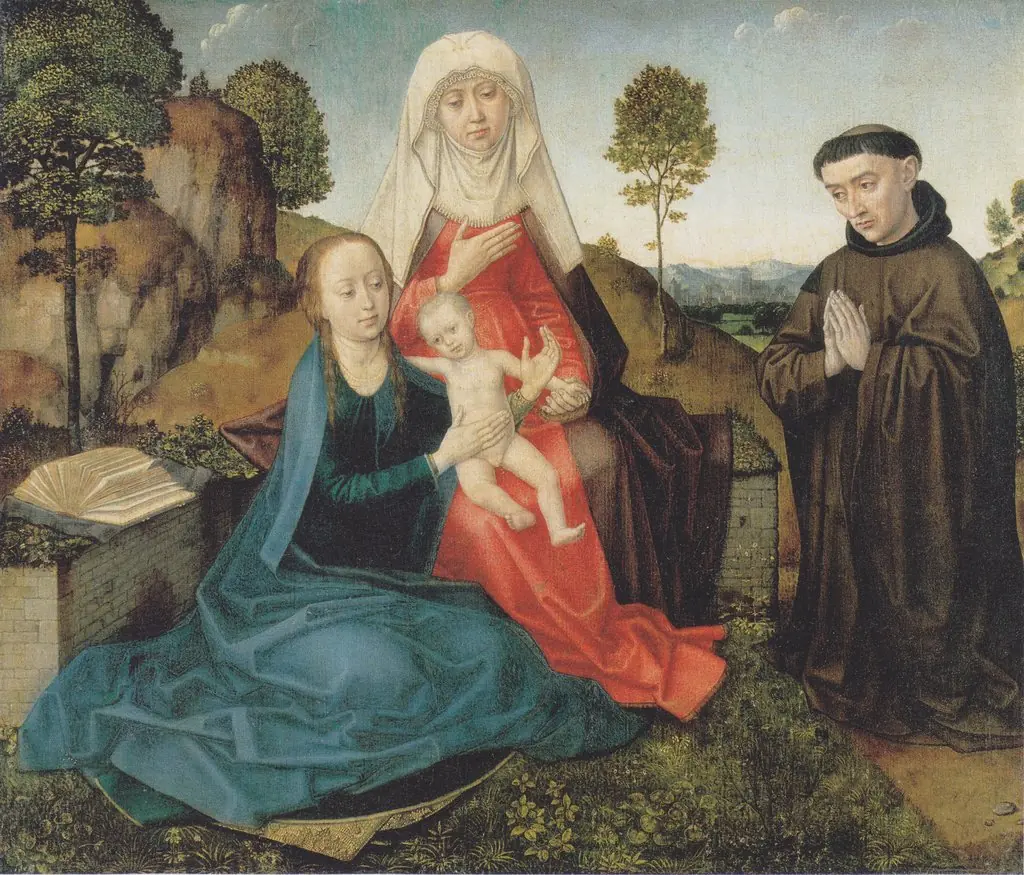 The Virgin and Child with a Franciscan Founder