Artwork
Diptych of Federico da Montefeltro and Battista Sforza
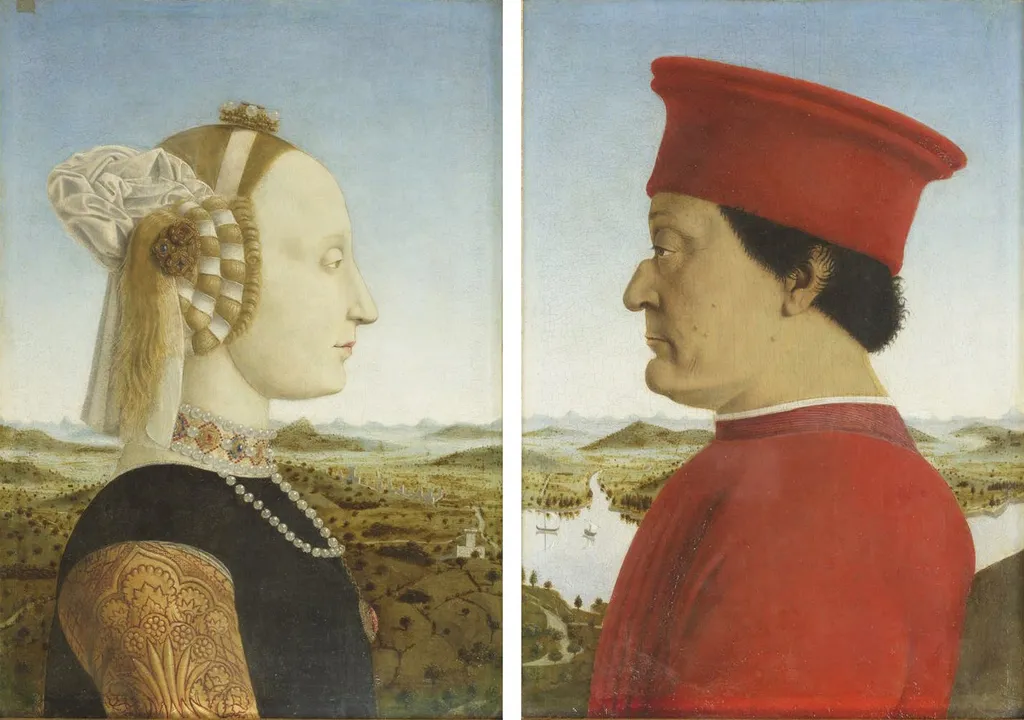
Diptych of Federico da Montefeltro and Battista Sforza is an oil painting by the Early Renaissance artist Piero della Francesca. It is held in the collection of the Uffizi Gallery.
About this work
Subject & Meaning
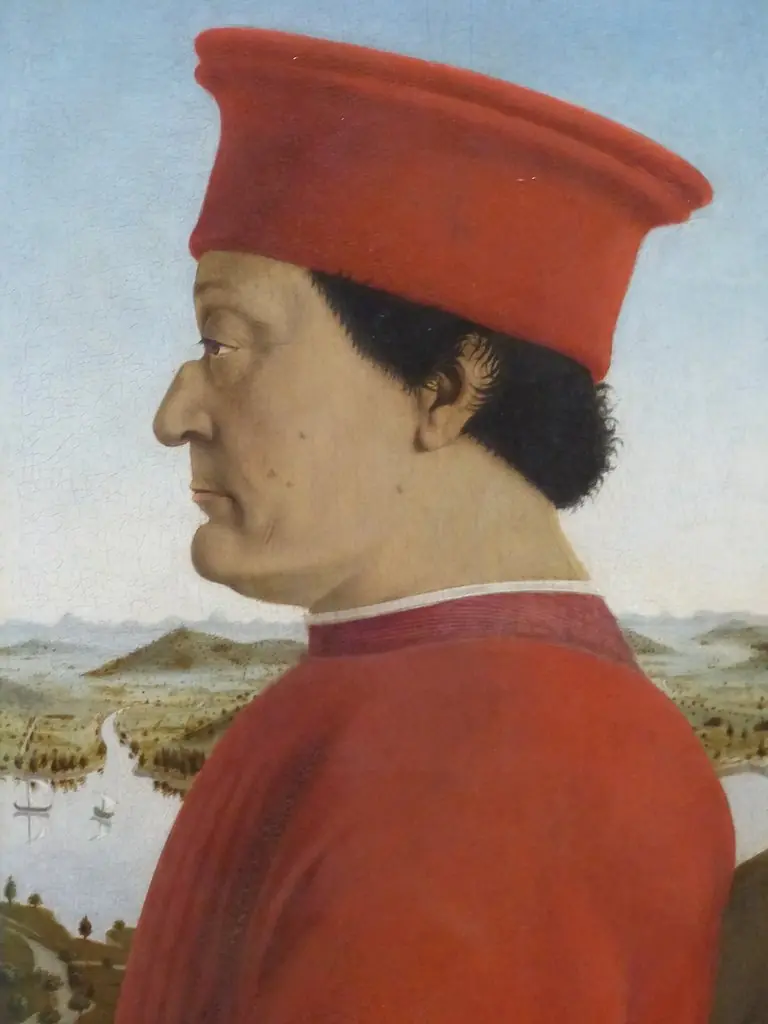
The diptych portrays Duke Federico da Montefeltro and his wife Battista Sforza in profile, a format inspired by ancient coins that emphasizes likeness and detachment from emotion. Their opposing poses and shared landscape of the Marches underscore their joint rule, while the stark contrast in skin tones reflects Renaissance aesthetic norms and hints at Battista's early death. The reverse sides depict allegorical triumphs: Federico's chariot drawn by white horses symbolizes military victory and is accompanied by virtues of prudence, justice, fortitude, and temperance, while Battista's unicorn-drawn chariot represents chastity and carries the theological virtues of faith, hope, and charity. Latin inscriptions on the triumphal arches celebrate their moral and political ideals, linking personal loss to public legacy and reinforcing the couple's roles as landowners and cultural patrons.
Technique & Style
The work is a double-sided diptych executed in tempera on wood panels, originally hinged within a walnut frame to allow folding.
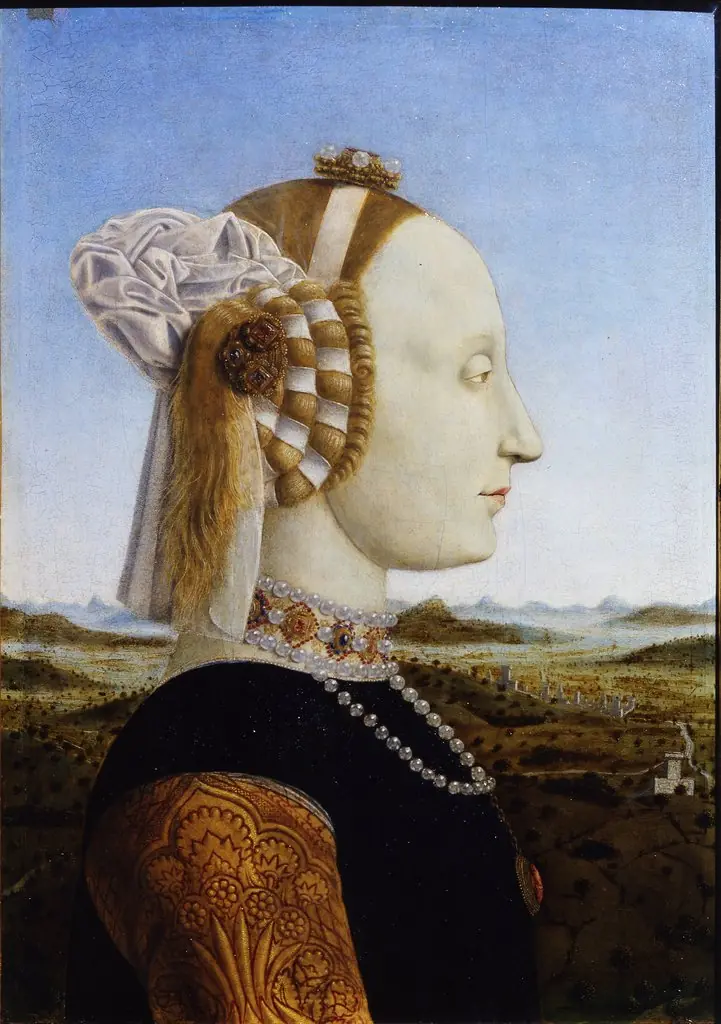
The work is a double-sided diptych executed in tempera on wood panels, originally hinged within a walnut frame to allow folding. The portraits are rendered in strict profile, a format inspired by ancient coins and medals that conceals Federico's missing eye while faithfully recording his broken nose and the signs of aging on his skin. In contrast, Battista is depicted with an idealized, pale complexion and elaborate jewelry, her features possibly derived from a death mask following her untimely passing.
Stylistically, the piece merges Italian compositional rigor with Flemish influences, particularly in the elevated viewpoint and the continuous, panoramic landscape that unites the two figures despite the physical separation of the panels. The reverse sides feature allegorical triumphs on simulated architectural bases, though these exterior surfaces are less well-preserved than the interior portraits, likely due to the protective nature of the original folding mechanism.
History & Provenance
Commissioned by Federico da Montefeltro, this diptych was likely executed shortly after the death of his wife, Battista Sforza, in March 1472. While some sources suggest a creation window between 1465 and 1472, scholarly consensus often places the work around 1472 or 1473, potentially utilizing a death mask for Battista's likeness. The panels were originally hinged within a walnut frame, designed to fold like a devotional object, with the portraits on the interior and allegorical triumphs on the exterior.
Originally housed in the Ducal Palace of Urbino, the artwork remained with the Montefeltro family until their line expired. It subsequently passed to the Della Rovere family before entering the Medici collections in Florence in 1631, initially residing at the Villa Medici Poggio Imperiale. The specific identities of the sitters were forgotten over time and were not correctly identified until 1834. Since 1773, the diptych has been displayed in the Uffizi Gallery.
The work is held in the Uffizi Gallery in Florence (source 2, 4). Its inventory is not explicitly stated in the sources, so no accession number can be provided. Exhibition history is limited to its display in the Uffizi since at least 1773, when it was moved from the Villa Medici Poggio Imperiale to the Uffizi collection (source 4). The work was created circa 1470, following the death of Battista Sforza in 1472, and has been part of the Uffizi's permanent display in Room A9 (source 2, 4).
Context
Piero della Francesca’s diptych is celebrated as one of the most representative works of the Italian Renaissance, merging the strict perspective of his Florentine education with the meticulous, lenticular representation characteristic of Flemish painting. By placing the sitters in profile before a continuous rolling landscape, Piero broke with Italian precedent, innovatively adopting a compositional format inspired by Netherlandish art and ancient coins. This elevated the couple to the status of landowners and rulers, akin to antique emperors.
Scholarship has primarily focused on the work's commission and date. While traditionally assumed to be commissioned by Federico da Montefeltro soon after Battista Sforza's 1472 death, Michelle Marder Kamhi has argued that the inscriptions' emphasis on Federico's deeds contradicts his profound grief, proposing instead that a patron like Lorenzo de' Medici gifted it to honor his military victory and console him. Additionally, the sitters' identities fell into obscurity over the centuries, only being correctly re-identified in 1834.
Legacy
The Diptych of Federico da Montefeltro and Battista Sforza is widely regarded as one of the most celebrated portraits of the Italian Renaissance, exemplifying the fusion of Florentine perspective and Flemish landscape traditions. For centuries, the specific identities of the sitters were lost to history until they were correctly re-identified in 1834. Following the extinction of the Montefeltro line, the work passed to the della Rovere family before entering the Medici collection in Florence in 1631. It was initially displayed at the Villa Medici Poggio Imperiale and transferred to the Uffizi Gallery in 1773, where it remains a centerpiece of the Renaissance collection. The portraits are noted for establishing Federico da Montefeltro as the most frequently depicted figure of his era, serving as a lasting model of humanist princely propaganda and artistic innovation.
Artist & collection


 Portrait of a Woman with a Man at a Casement
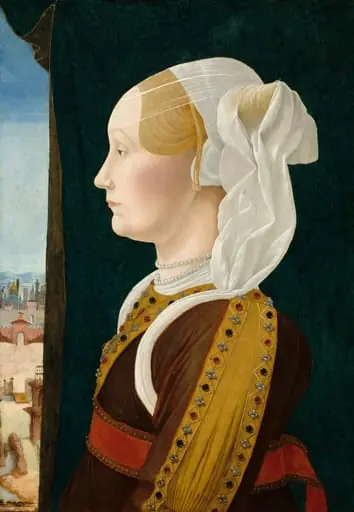 Ginevra Bentivoglio
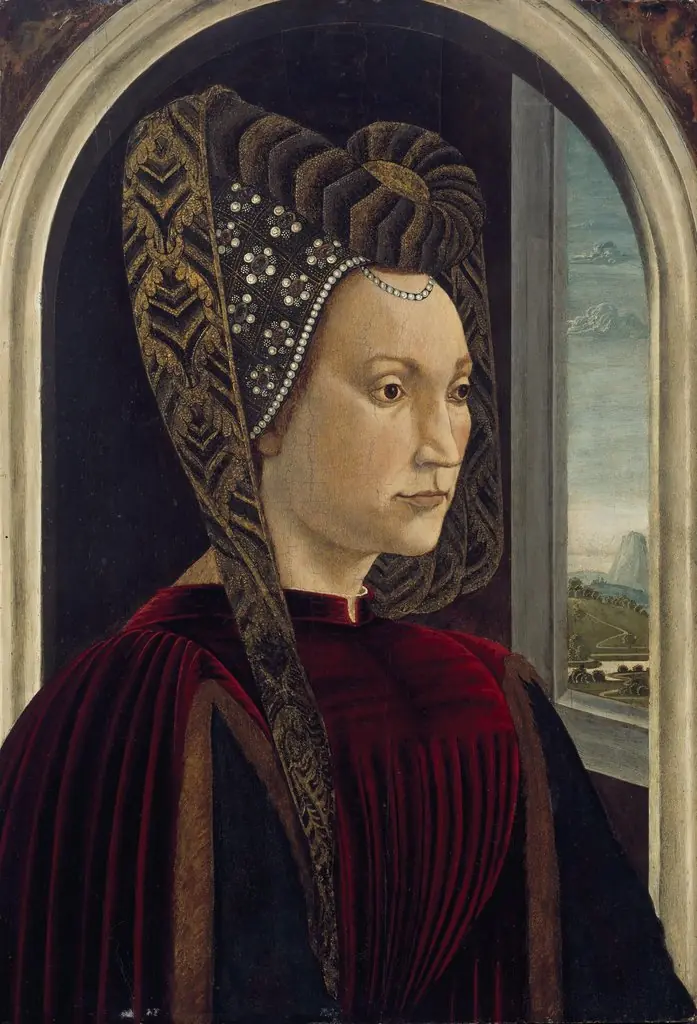 Presumed Portrait of Clarice Orsini, Wife of Lorenzo the Magnificent
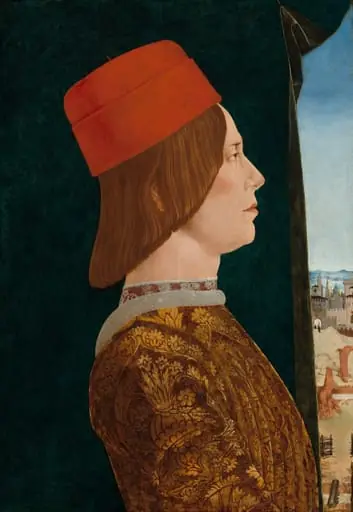 Giovanni II Bentivoglio
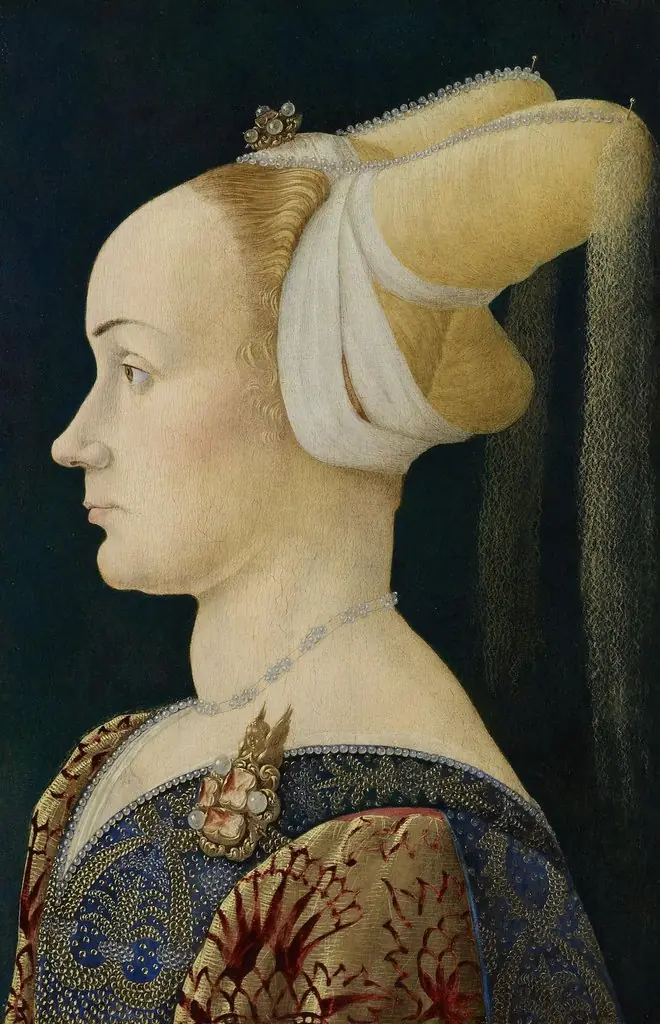 Suselen
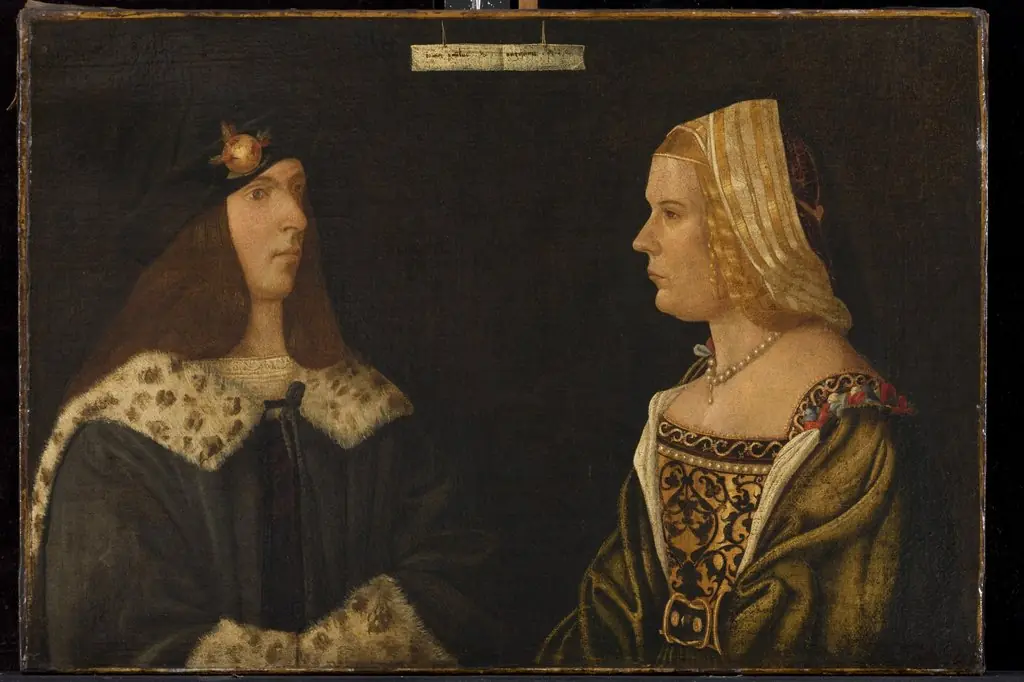 Double Portrait of a Young Man and Young Woman
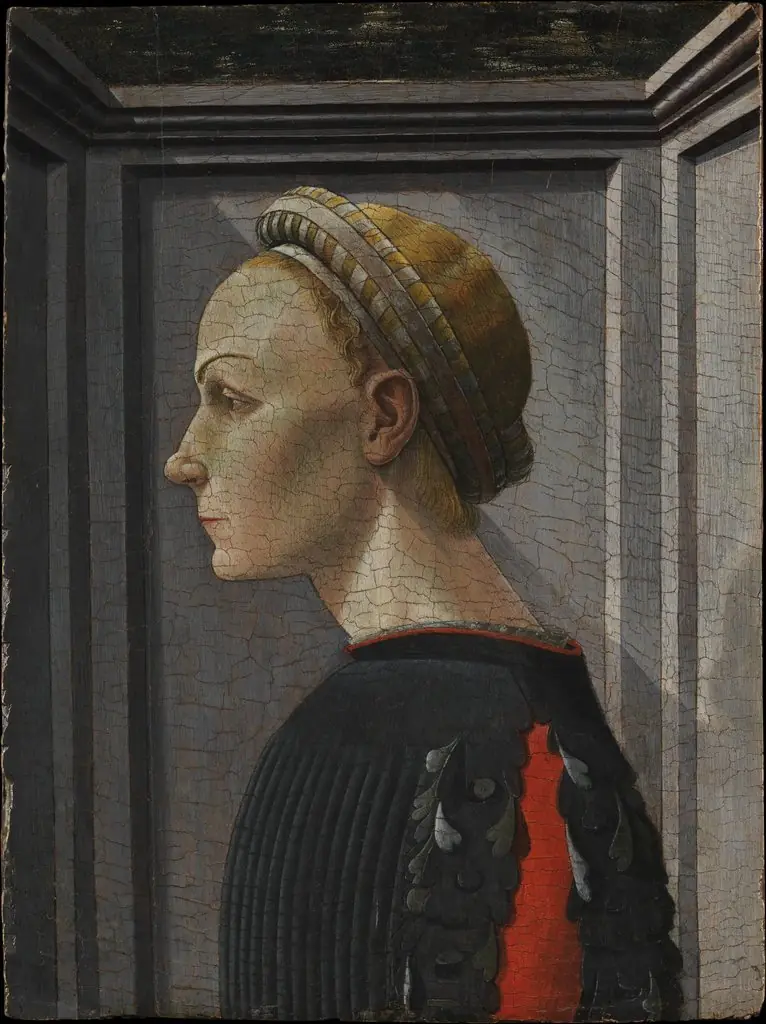 Portrait of a Woman
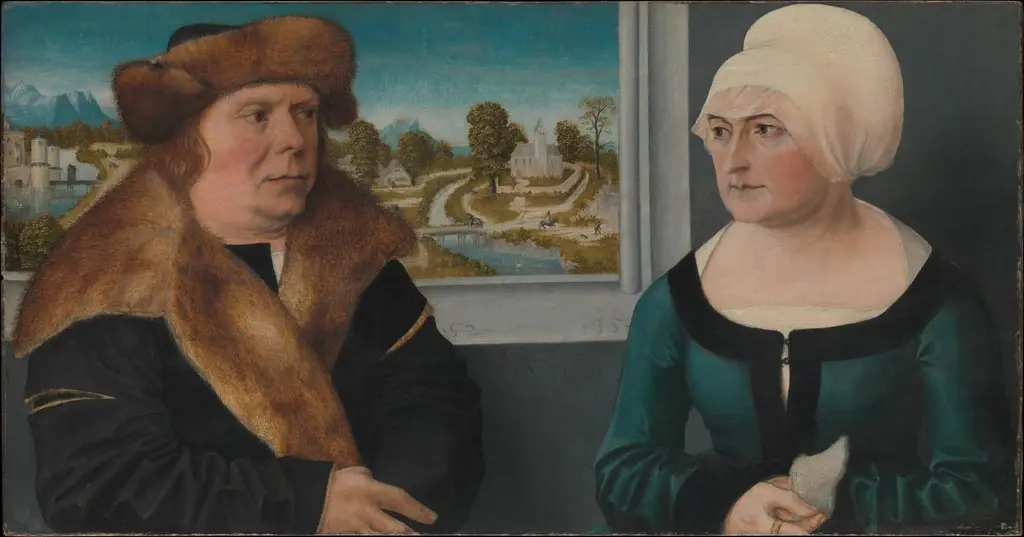 Portrait of a Married Couple (Lorenz Kraffter and Honesta Merz?)
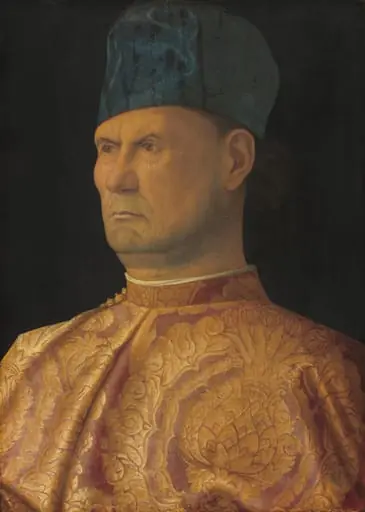 Giovanni Emo
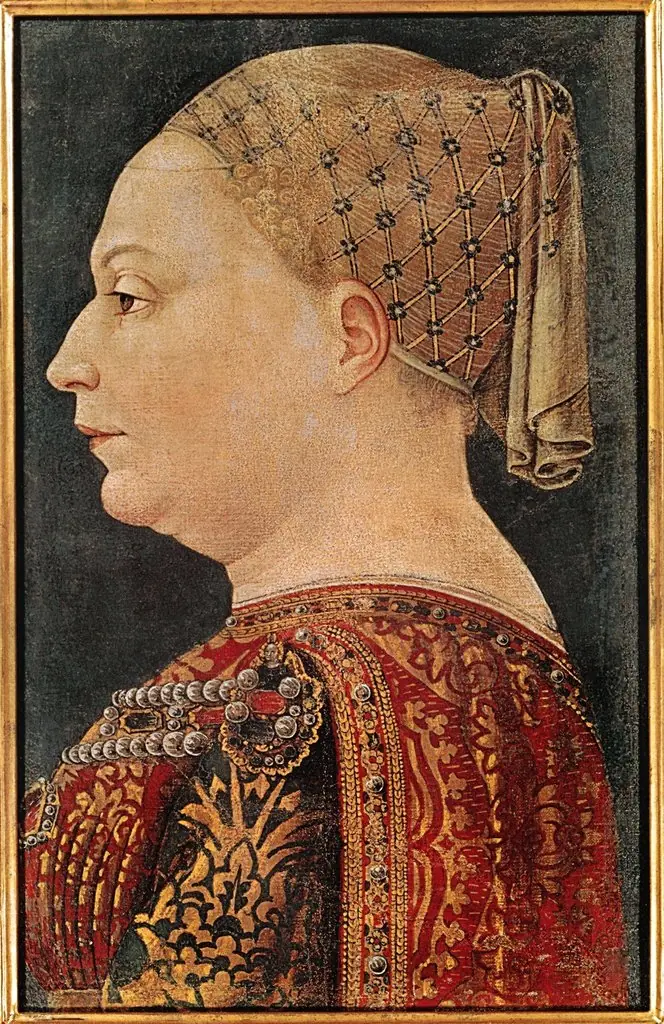 Portrait of Bianca Maria Sforza (1425-1468)