Artwork
Giovanni II Bentivoglio
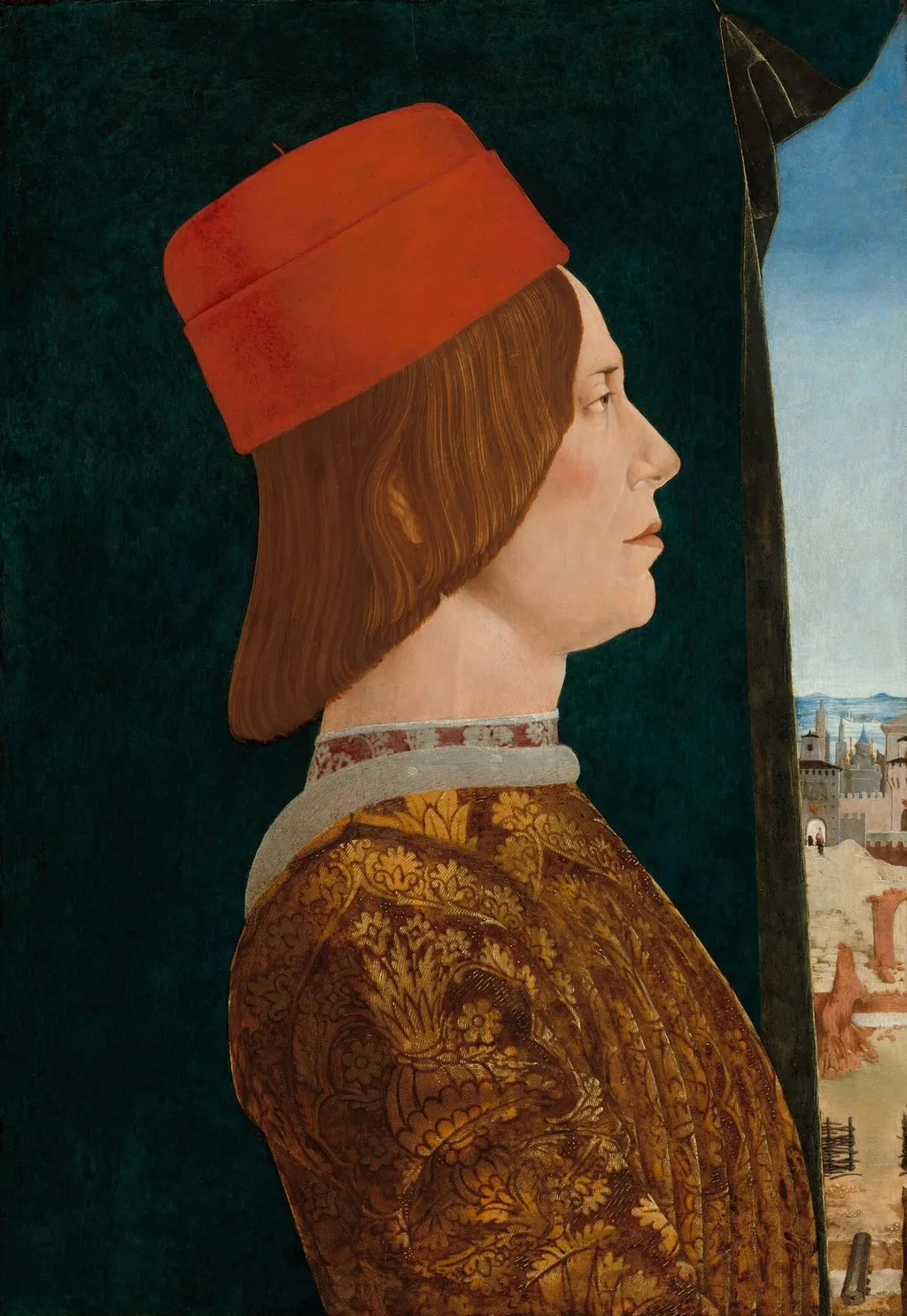
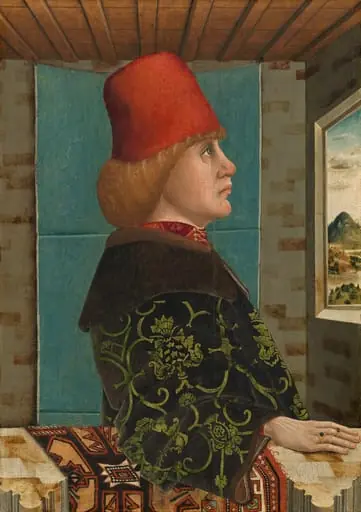
Giovanni II Bentivoglio is an oil painting by the Early Renaissance artist Ercole de'Roberti. It dates from 1476 and is held in the collection of the National Gallery of Art.
About this work
Subject & Meaning
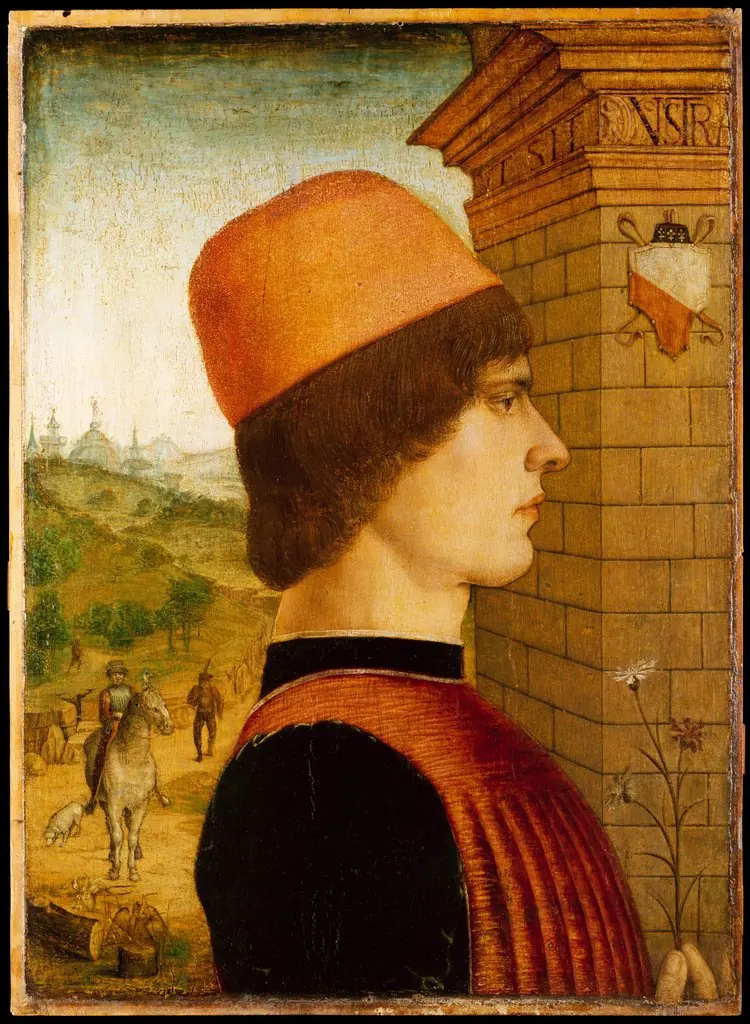
As a formal likeness, the painting serves to document the physical appearance of the subject, presenting him as the central figure of the composition.
The work is a portrait depicting Giovanni II Bentivoglio, the ruler of Bologna, painted by Ercole de' Roberti around 1480. As a formal likeness, the painting serves to document the physical appearance of the subject, presenting him as the central figure of the composition. The image functions as a representation of Bentivoglio's status and identity, capturing his visage in a manner typical of late fifteenth-century Italian portraiture.
While the painting is identified as a portrait of the specific historical figure, the provided sources do not elaborate on additional symbolic attributes, allegorical elements, or complex iconographic programs beyond the direct depiction of the sitter himself.
Technique & Style
Executed in 1480, this portrait utilizes tempera applied to a poplar panel support. While some databases broadly categorize the materials as oil paint on panel, specific curatorial records identify the medium as tempera on poplar. The work functions as a formal portrait depicting Giovanni II Bentivoglio.
Physically, the panel measures 54 centimeters in height and 38.1 centimeters in width. The painting is currently held within the Samuel H. Kress Collection at the National Gallery of Art in Washington, D.C. No specific details regarding the current condition of the surface, specific handling techniques, or detailed stylistic analysis of the brushwork are provided in the available sources beyond the fundamental material composition and dimensions.
History & Provenance
The portrait of Giovanni II Bentivoglio was painted by Ercole de' Roberti in 1480 as a likeness of the Ferrara ruler. It was created as a tempera work on a poplar panel and is also recorded as an oil painting on panel. The earliest documented ownership places the piece in the collection of Louis‑Charles Timbal in Paris before 1871; Timbal sold it on 29 November 1872 to Gustave Dreyfus, whose heirs later transferred it in 1930 to Duveen Brothers, Inc.
The painting entered the Samuel H. Kress Foundation in May 1936 and was gifted to the National Gallery of Art in 1939.
The painting is housed in the National Gallery of Art in Washington, D.C., where it is catalogued under accession number 1939.1.220 and is part of the Samuel H. Kress Collection, having been gifted to the museum in 1939 by the Samuel H. Kress Foundation. Its provenance traces from Louis‑Charles Timbal, who acquired it in Italy before 1871, through sale to Gustave Dreyfus in 1872, inheritance by Dreyfus’s heirs, and subsequent sale to Duveen Brothers in 1930 before its purchase by the Kress Foundation. The work, a tempera on poplar panel attributed to Ercole de' Roberti and dated to 1480, depicts Giovanni II Bentivoglio and is listed in the National Gallery of Art’s collection records.
Overview
Ercole de' Roberti's painting, Giovanni II Bentivoglio, completed around 1476, is a portrait rendered in tempera on a poplar panel. It depicts the powerful Italian figure Giovanni II Bentivoglio, who governed Bologna during a significant period. This work serves as a direct representation of a key individual from the Quattrocento, captured through the detailed brushwork characteristic of the era.
Own this work as a print
Artist & collection
Artist
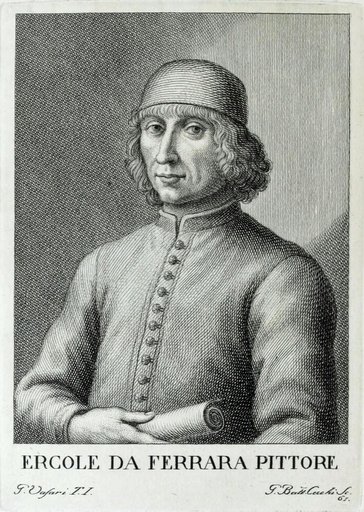
Ercole de' Roberti, also known as Ercole Ferrarese or Ercole da Ferrara, was an Italian artist of the Early Renaissance and the School of Ferrara. He was profiled in Vasari's Le Vite delle più eccellenti pittori, scultori, ed architettori.