Artwork
Ginevra Bentivoglio
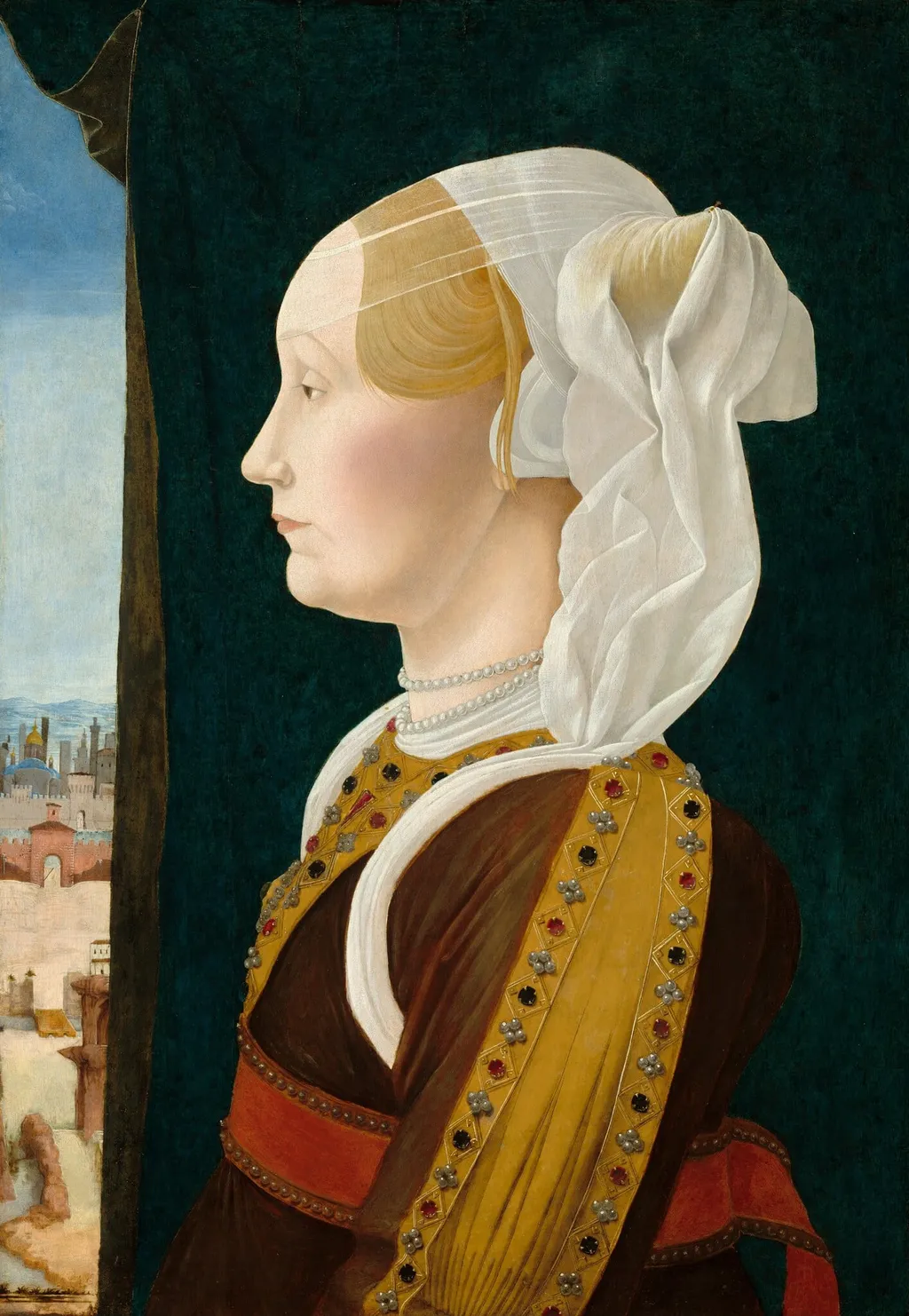
Ginevra Bentivoglio is an oil painting by the Early Renaissance artist Ercole de'Roberti. It dates from 1476 and is held in the collection of the National Gallery of Art.
About this work
Technique & Style
A Wikidata entry records the medium as oil paint on panel, but the NGA's curatorial documentation specifies tempera on poplar as the medium and support.
Ginevra Bentivoglio is executed in tempera on a poplar panel, a support and medium typical of Quattrocento Italian portraiture. The work measures 53.7 by 38.7 centimetres and is a portrait-format panel by Ercole de' Roberti, dated 1476, forming part of a pendant pair with Giovanni II Bentivoglio in the National Gallery of Art's Kress Collection. The handling reflects the Ferrarese workshop's precise linear definition and enamel-like surface, consistent with the artist's documented practice in tempera on panel.
A Wikidata entry records the medium as oil paint on panel, but the NGA's curatorial documentation specifies tempera on poplar as the medium and support.
History & Provenance
The portrait of Ginevra Bentivoglio is attributed to Ercole de' Roberti and dated to 1476.
The earliest suggested ownership traces to the University in Bologna, though this provenance remains unsubstantiated in surviving records. The painting later entered the collection of Louis Charles Timbal in Paris before 1871, where it was initially attributed to Piero della Francesca. Timbal sold the work on 29 November 1872 to Gustave Dreyfus, whose estate disposed of it in 1930.
The painting was then acquired by Duveen Brothers and sold in May 1936 to the Samuel H. Kress Foundation. It was subsequently gifted to the National Gallery of Art, Washington, D.C., in 1939 as part of the Kress Collection (accession 1939.1.220).
No exhibition history is documented in the provided sources.
Overview
Ercole de' Roberti painted this portrait, titled Ginevra Bentivoglio, around 1476. Executed in tempera on a poplar panel, the work exemplifies Renaissance portraiture. It captures a specific individual, likely a member of a prominent family, reflecting the period's interest in depicting distinct personalities and social status through art.
Subject & Meaning
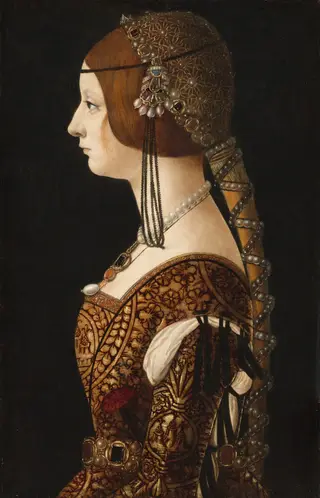
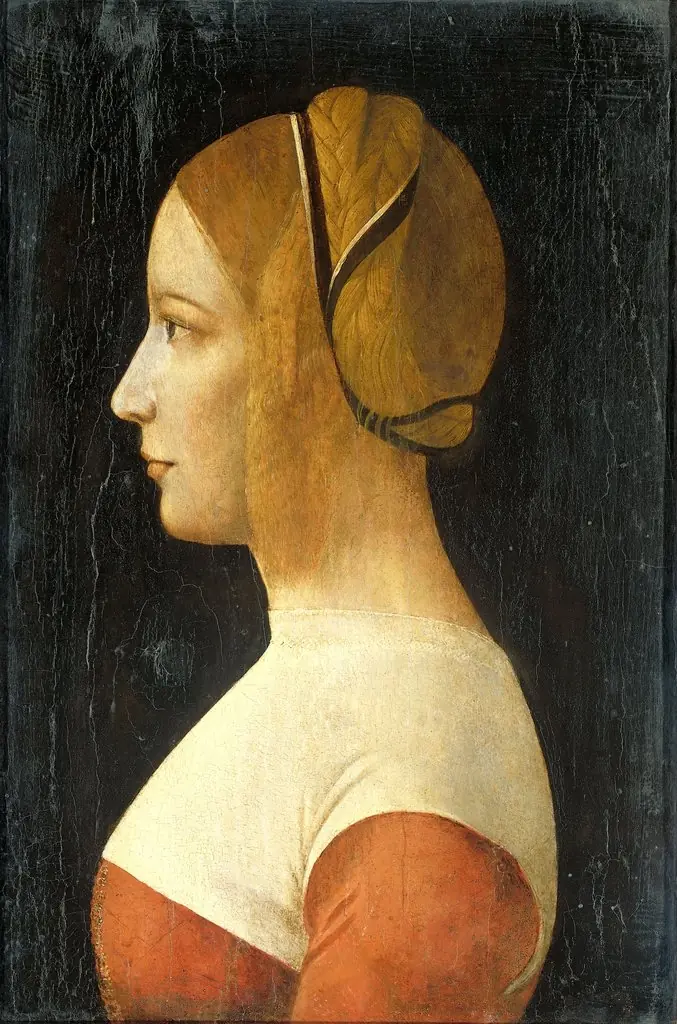
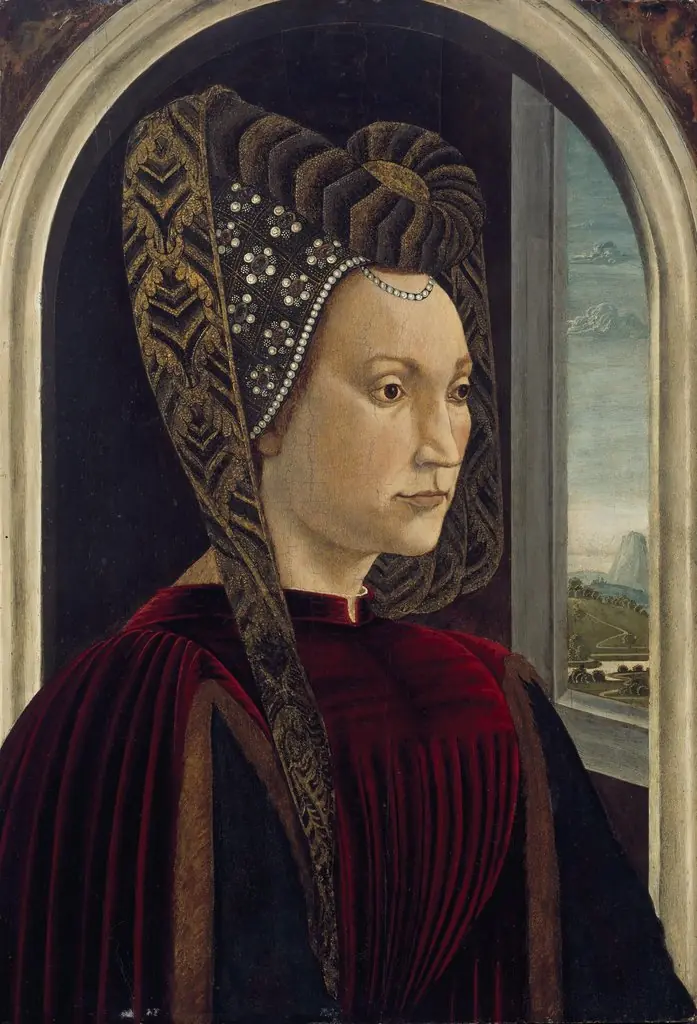
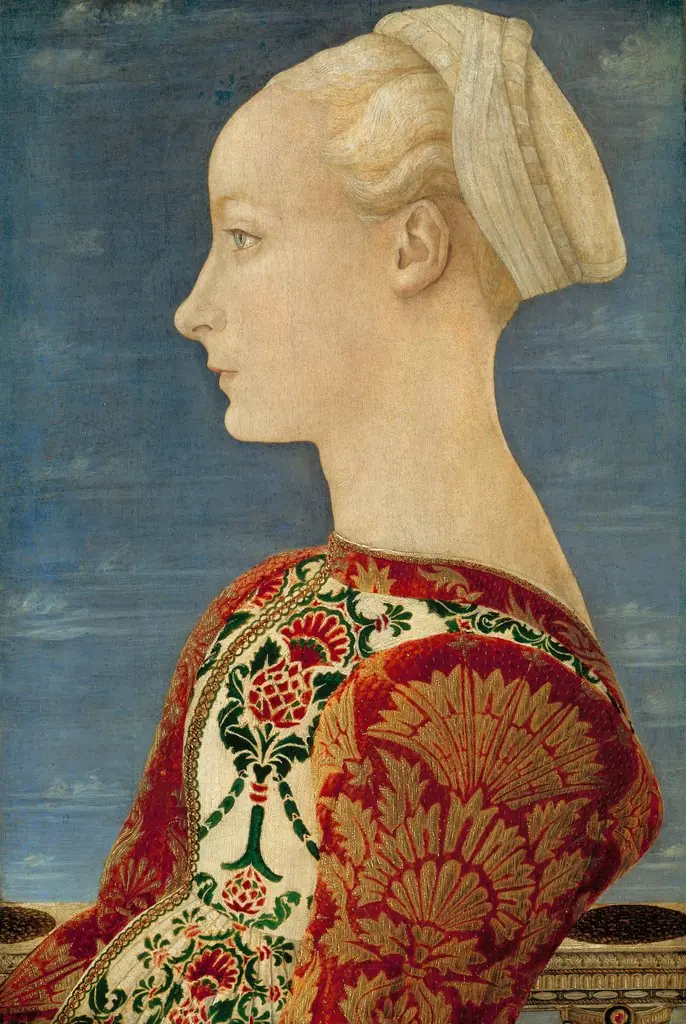
The painting presents a woman in a strict profile orientation, looking towards the left. Her attire, featuring a white veil, a dark gown, a red belt, and a jeweled yellow vest, signifies the fashion and social standing of the Italian Renaissance. A dark background frames the figure, subtly revealing a distant cityscape on one side, which further situates the portrait within its historical context.
![Ginevra de' Benci [obverse]](https://artifactworldgallery.com/img/leonardo-da-vinci--ginevra-de-benci-obverse--afb6ec3a3e65f392-w320.webp)
Own this work as a print
Artist & collection
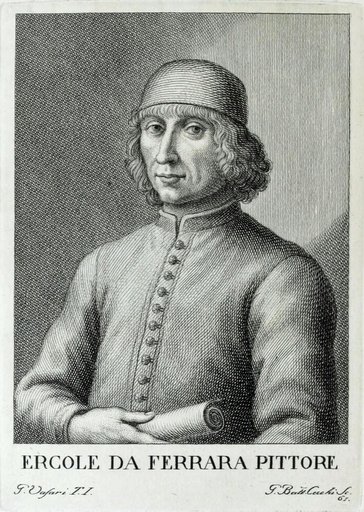
Artist
Ercole de' Roberti, also known as Ercole Ferrarese or Ercole da Ferrara, was an Italian artist of the Early Renaissance and the School of Ferrara. He was profiled in Vasari's Le Vite delle più eccellenti pittori, scultori, ed architettori.