Artwork
A Road in Louveciennes
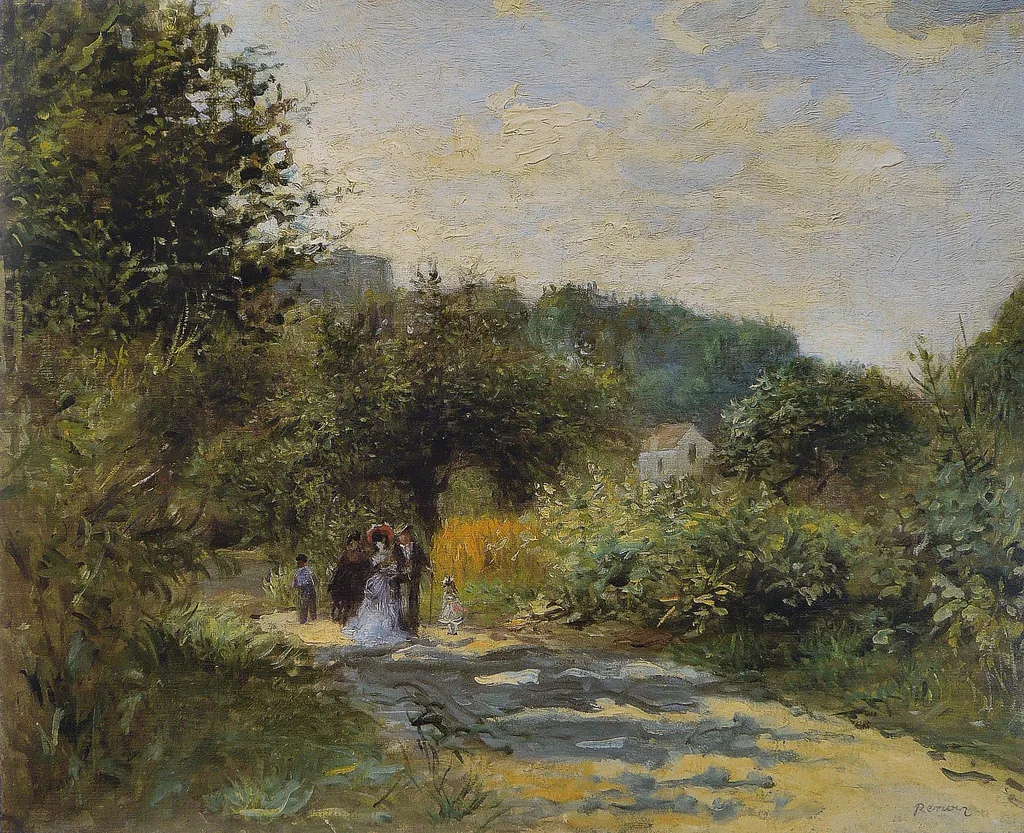
A Road in Louveciennes is an oil painting by the Plein Air artist Pierre-Auguste Renoir. It dates from 1870 and is held in the collection of the Metropolitan Museum of Art.
About this work
Subject & Meaning
A Road in Louveciennes depicts a rural landscape scene centered on a tree-lined road, with human figures included among the natural elements.
A Road in Louveciennes depicts a rural landscape scene centered on a tree-lined road, with human figures included among the natural elements. The composition combines the genre conventions of landscape painting with small-scale staffage, situating people within an outdoor setting dominated by trees and the receding path. Painted in 1870, the work belongs to the landscape tradition, using the road as both a compositional device drawing the eye into the scene and a marker of everyday rural life on the outskirts of Louveciennes.
The inclusion of figures within the wooded environment suggests an interest in the harmony between human presence and the surrounding countryside rather than a narrative or symbolic program.
Technique & Style
The work is an oil painting executed on canvas, measuring 38.1 cm in height by 46.4 cm in width. It belongs to the landscape genre and portrays a road flanked by a tree and a human figure within a natural setting. The painting's material consists of oil paint applied to a canvas support, a medium noted for the artist.
Its formal composition emphasizes the spatial arrangement of road, tree, and figure, creating a balanced landscape structure typical of Renoir's approach. The piece is part of the Metropolitan Museum of Art collection.
History & Provenance
Created in 1870 by Pierre-Auguste Renoir, A Road in Louveciennes is an oil painting on canvas depicting a landscape with a road, trees, and a human figure. The work measures 38.1 cm in height and 46.4 cm in width. While the specific circumstances of its commission and the detailed chain of ownership prior to its current location are not detailed in the available records, the painting is presently held in the collection of the Metropolitan Museum of Art in New York.
The inception date is firmly established as 1870, placing its creation during the artist's early period of landscape production.
Overview
Pierre-Auguste Renoir's A Road in Louveciennes, painted in 1870, captures a sun-drenched path winding through the verdant outskirts of the Parisian suburb. Executed in oil on canvas, the work exemplifies the artist's early engagement with plein air painting, a practice central to the nascent Impressionist movement. The composition features a dirt track receding into the distance, flanked by dense foliage and mature trees that frame the scene with a sense of enclosure.
Renoir employs loose, visible brushstrokes to render the interplay of light and shadow across the leaves and the road surface, avoiding rigid outlines in favor of atmospheric texture. Small, indistinct figures traverse the path, integrating human presence without dominating the natural setting. Created just prior to the Franco-Prussian War, this landscape reflects Renoir's shift away from academic conventions toward a more immediate observation of modern life and nature.
The work stands as a significant example of his development during the early 1870s, demonstrating his mastery in capturing the fleeting effects of sunlight and the vibrant color palette that would come to define his mature style.
Own this work as a print
Artist & collection
Artist
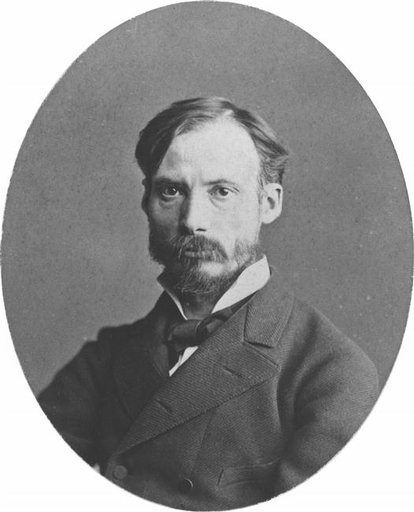
Pierre-Auguste Renoir was a French artist who was a leading painter in the development of the Impressionist style.




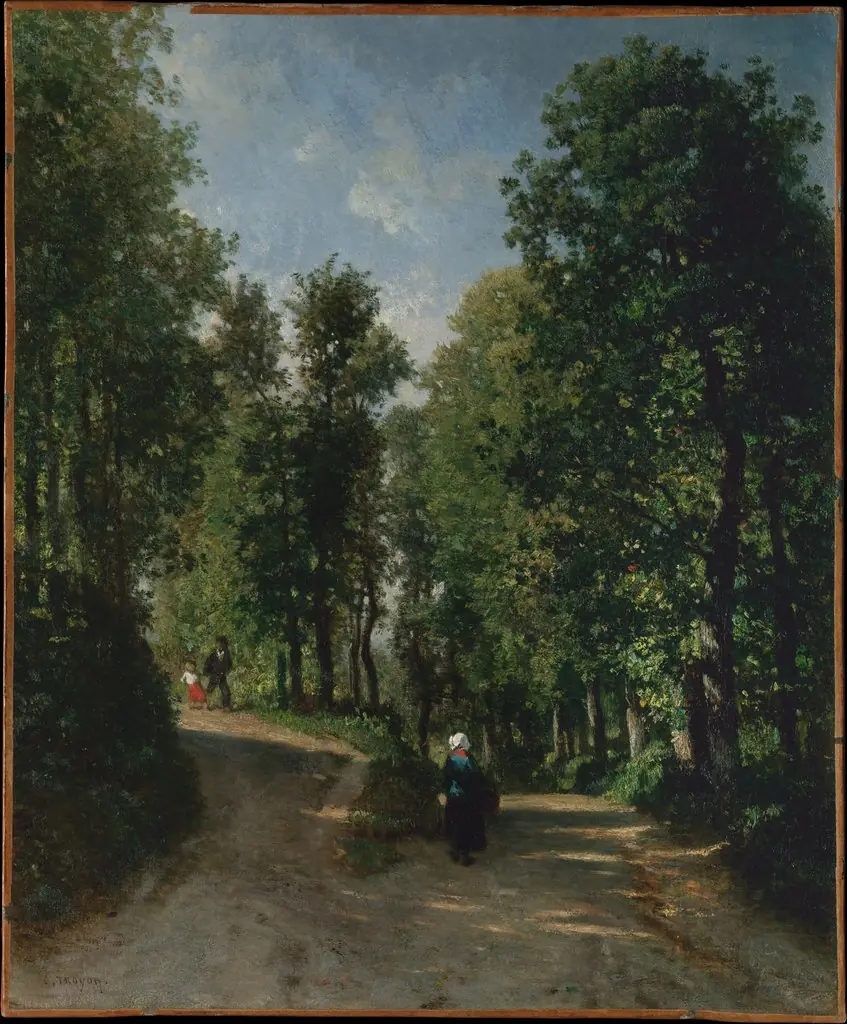 Road in the Woods
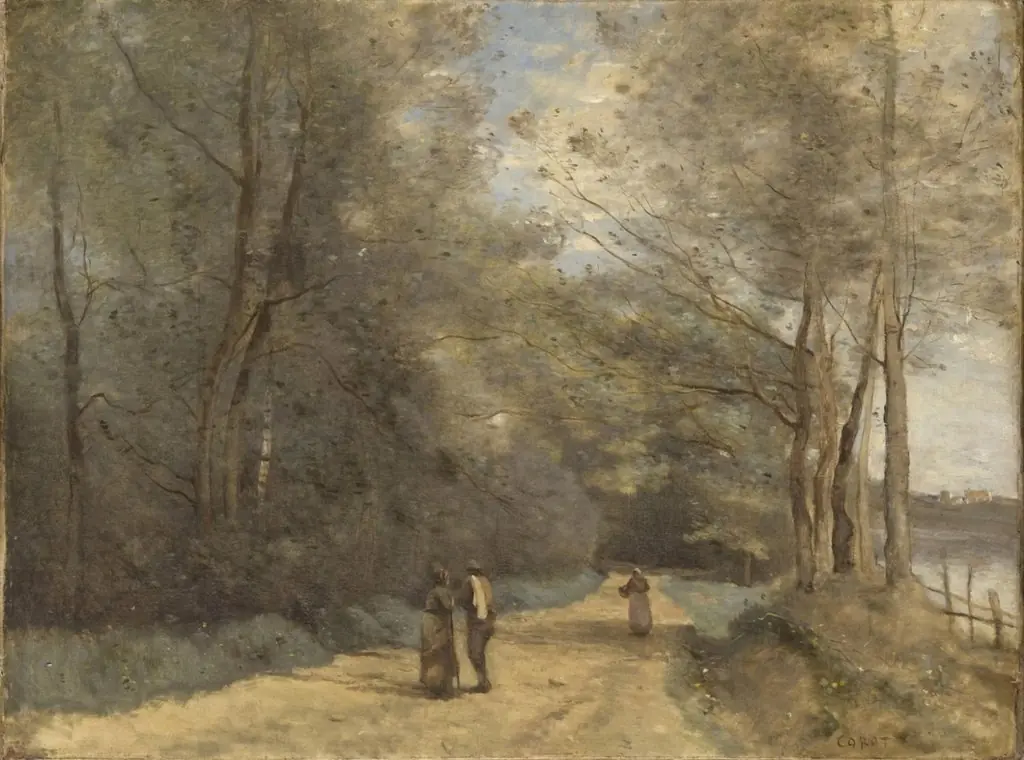 Wooded Path near Ville d'Avray
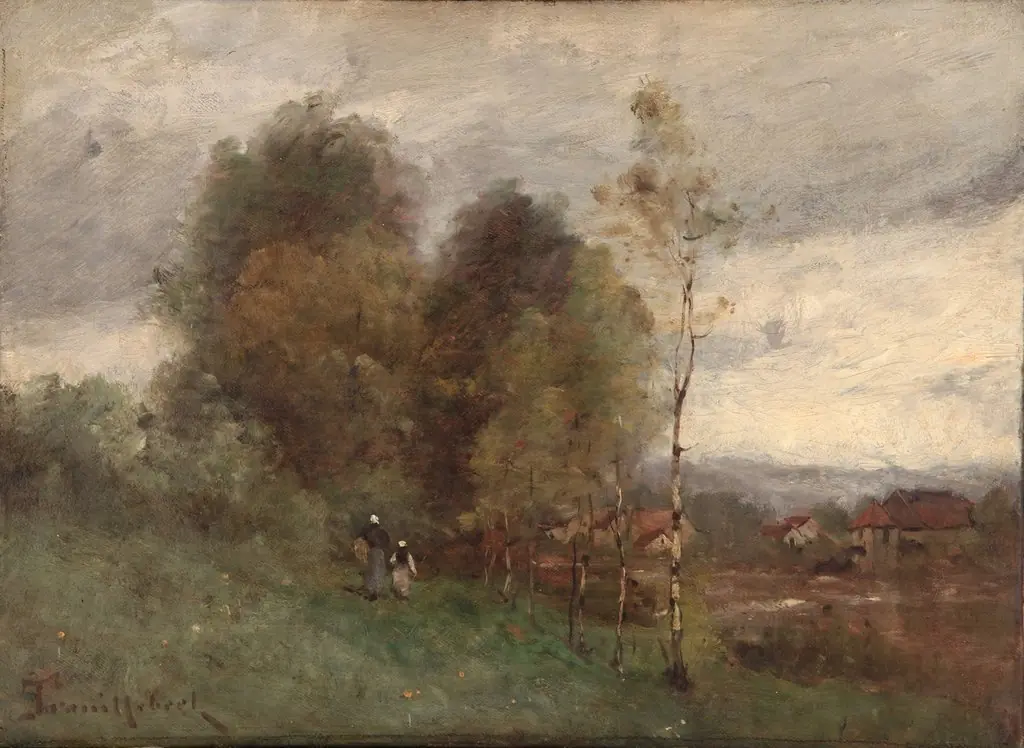 Landscape
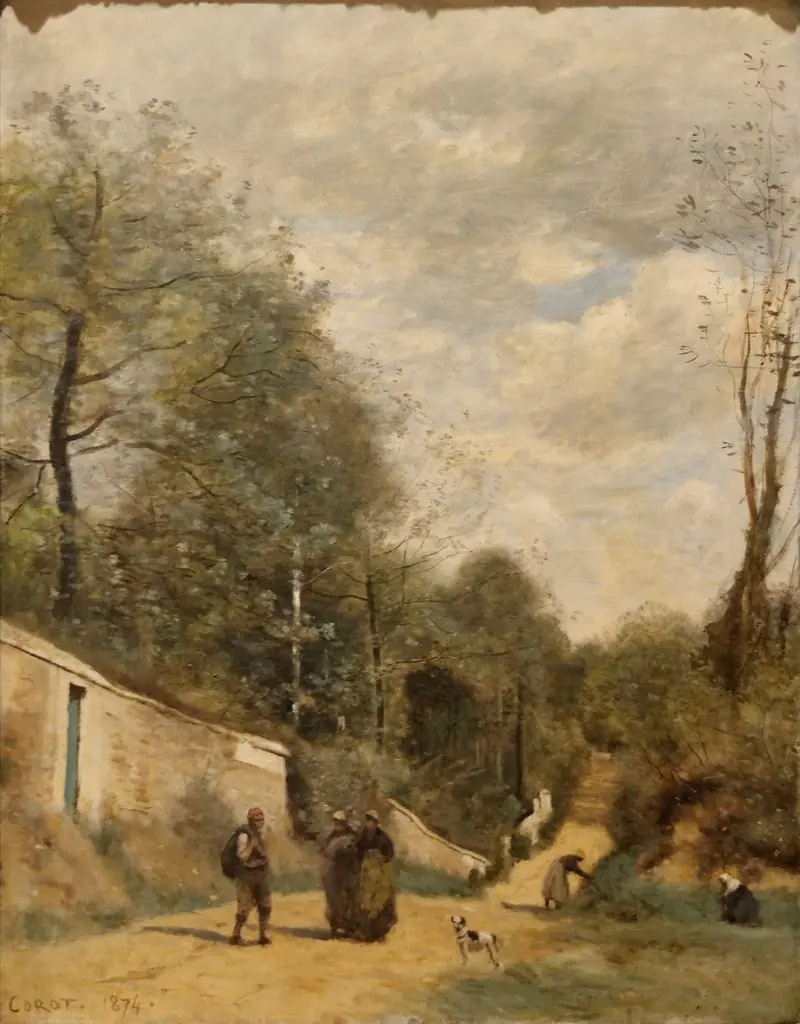 Ville-d'Avray. - Le chemin de la gare
 Ville d'Avray: Pathway at the Pond
 Arleux-Palluel, The Bridge of Trysts
 Mortefontaine: The Path to the Little Fence
 Arleux-Palluel, The Bridge of Trysts
 A Clearing in the Forest
 A Garden in Montmartre
 Edge of the Woods Near L'Hermitage, Pontoise
- Landscape at Louveciennes