Artwork
Tamaris
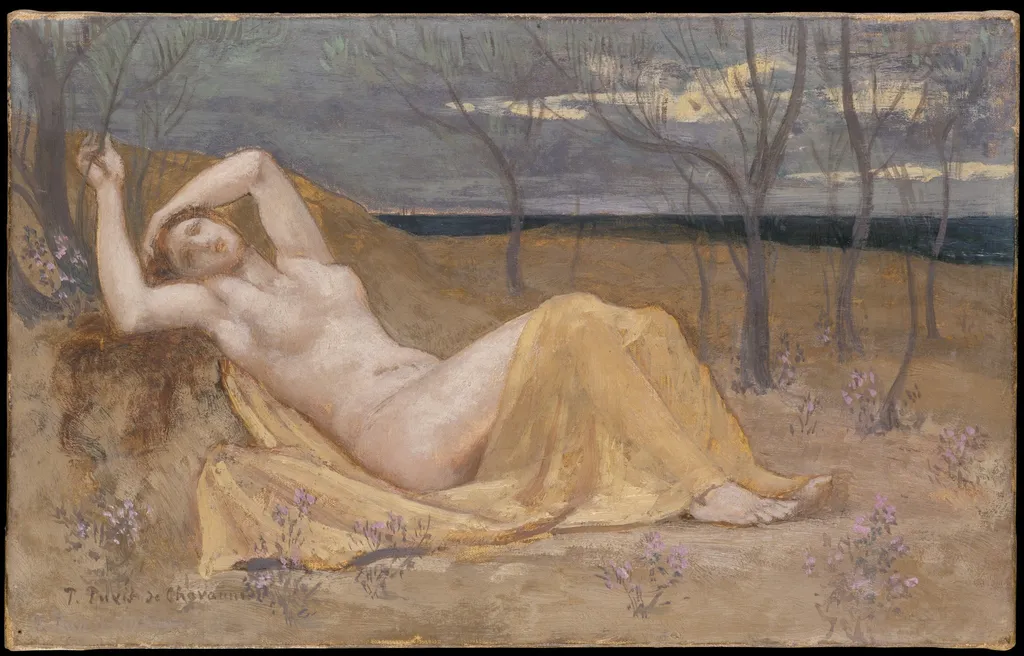
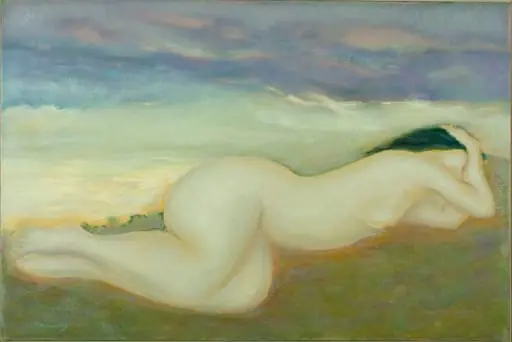
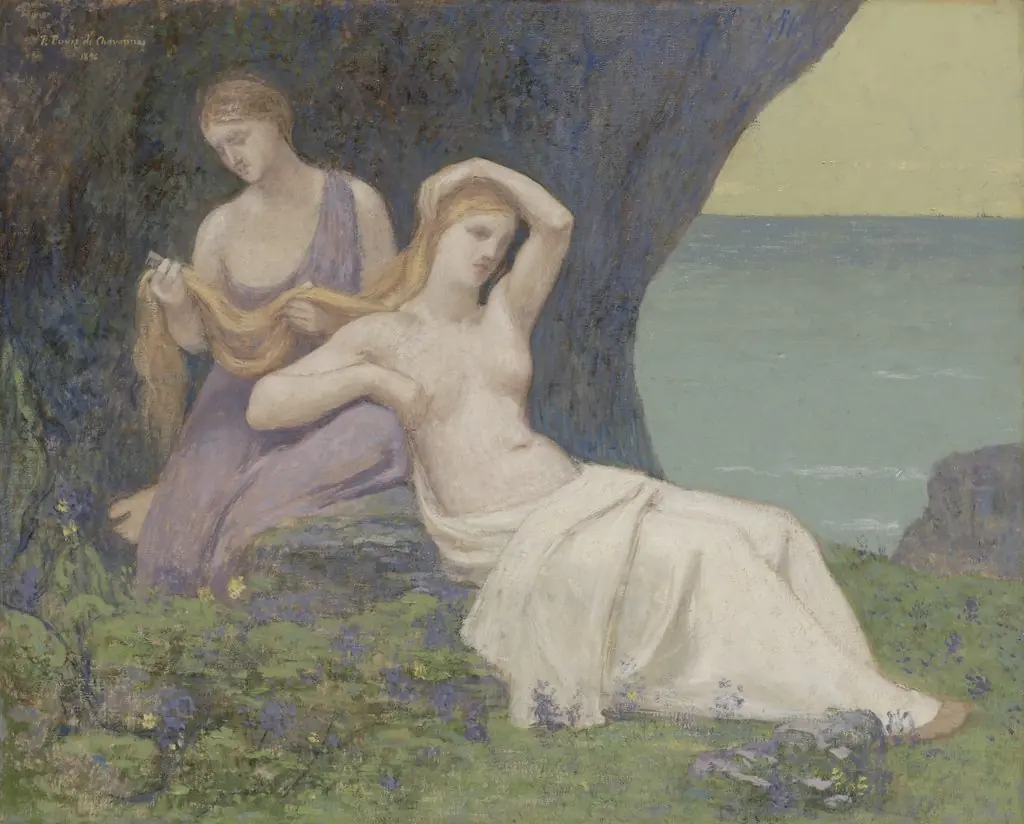
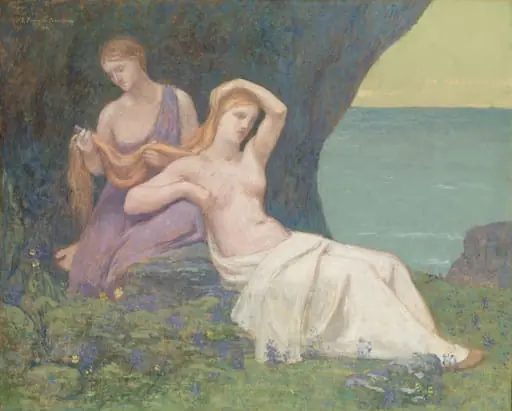
Tamaris is an oil painting by the Symbolist artist Pierre Puvis de Chavannes. It dates from 1894 and is held in the collection of the Metropolitan Museum of Art.
About this work
Technique & Style
The composition is characterized by a restrained palette and a simplified, flattened figuration that emphasizes the rhythmic contours of the seated figure.
The painting employs oil on canvas, laid out in a horizontal format measuring 25.4 cm in height and 39.4 cm in width. The composition is characterized by a restrained palette and a simplified, flattened figuration that emphasizes the rhythmic contours of the seated figure. Forms are modeled with subtle gradations of tone rather than detailed anatomical description, aligning with Puvis de Chavannes’s allegorical and decorative approach.
Handling is smooth, with delicate transitions between light and shadow to articulate volume without sharp contrasts. There is no indication of abrasion or significant losses in the cited materials, suggesting the work has been maintained in stable condition.
History & Provenance
Pierre Puvis de Chavannes created Tamaris in 1886 using oil paint on canvas, a work now held by the Metropolitan Museum of Art. The painting entered the museum's collection through a documented acquisition, reflecting its recognized significance within the artist's oeuvre. Tamaris depicts a nude figure and measures 25.4 cm in height by 39.4 cm in width, consistent with the dimensions recorded at the time of its creation.
Pierre Puvis de Chavannes's painting Tamaris, created in 1886, is held in the collection of the Metropolitan Museum of Art. The work is executed in oil paint on canvas and measures 25.4 cm in height by 39.4 cm in width. While the source confirms the museum's possession of the piece, no specific inventory or accession number is provided in the available records. Additionally, the provided documentation does not list any exhibition history for this specific work.
Overview
Created in 1894, Tamaris is an oil painting by Pierre Puvis de Chavannes, a prominent French muralist of the early Third Republic. The work belongs to the Symbolist vein of his oeuvre and is part of the collection of the Metropolitan Museum of Art in New York.
Subject & Meaning
The composition presents a nude woman reclining on a stone beside a river, her posture relaxed with one arm raised behind her head. Sparse, leaf‑less trees frame a pale sky, while delicate pink blossoms punctuate the surrounding grass, suggesting a quiet, contemplative moment within a natural setting.
Context
Puvis de Chavannes is best known for large‑scale allegorical murals, yet his easel works such as Tamaris reflect the same serene, idealized vision of the human figure within nature. The piece illustrates his influence on younger artists, including Robert Genin, and exemplifies the Symbolist interest in mood and poetic atmosphere over literal narrative.
Own this work as a print
Artist & collection
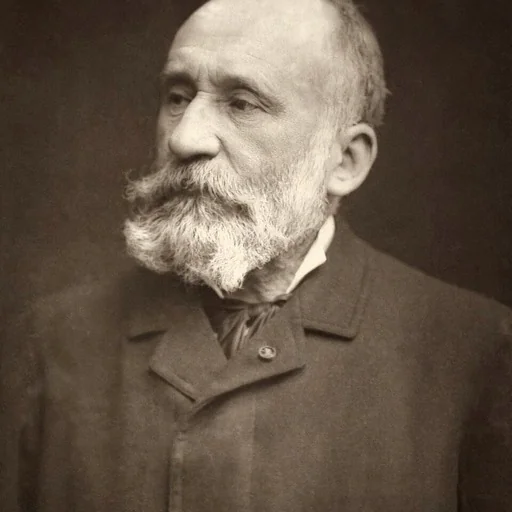
Artist
Pierre Puvis de Chavannes (French pronunciation:; 14 December 1824 – 24 October 1898) was a French painter known for his mural painting, who came to be known as "the painter for France".