Artwork
The River
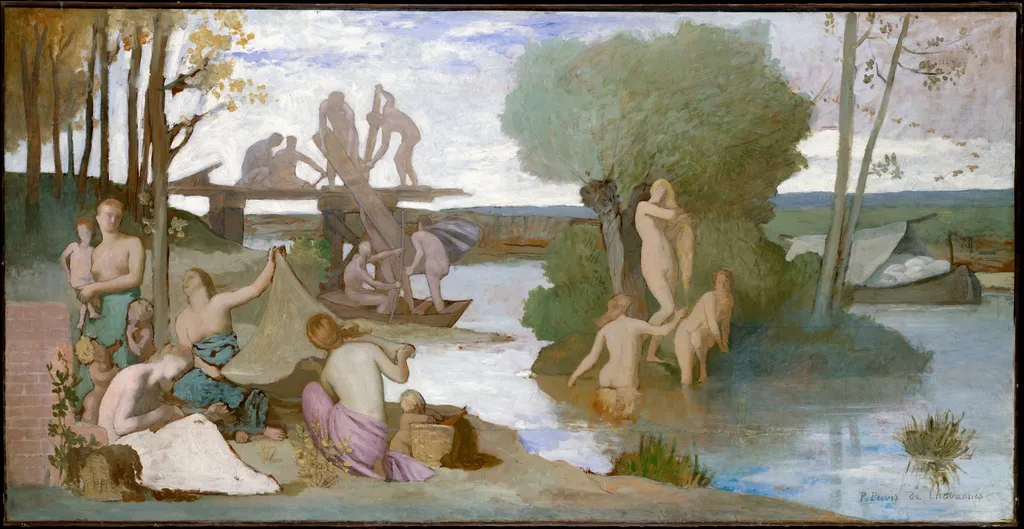
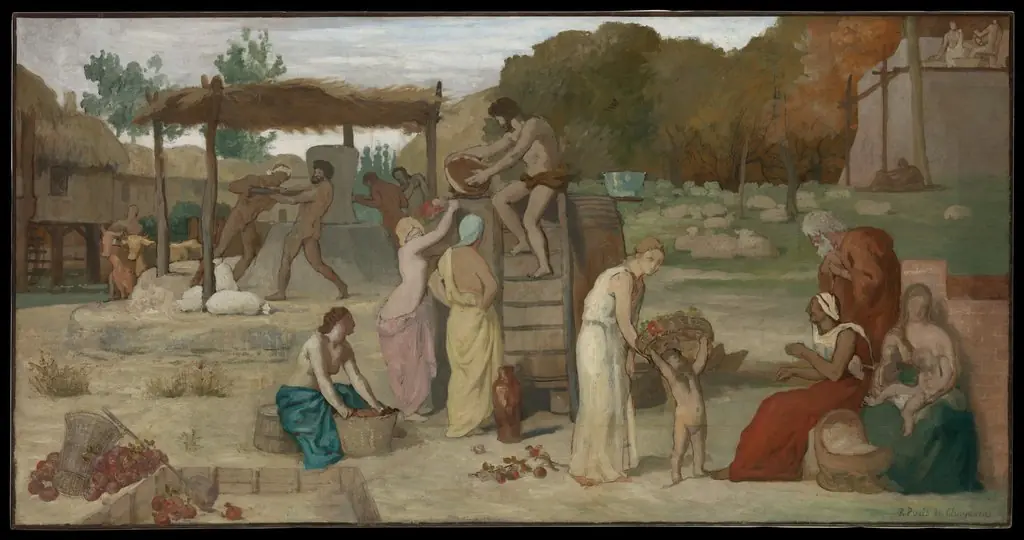
The River is an unspecified painting by the Realist artist Pierre Puvis de Chavannes. It dates from 1864 and is held in the collection of the Metropolitan Museum of Art.
About this work
Subject & Meaning
The work's iconography centers on the interaction between the human form and the natural environment, specifically depicting individuals within a river setting.
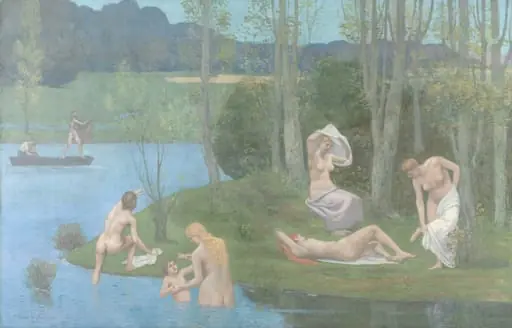
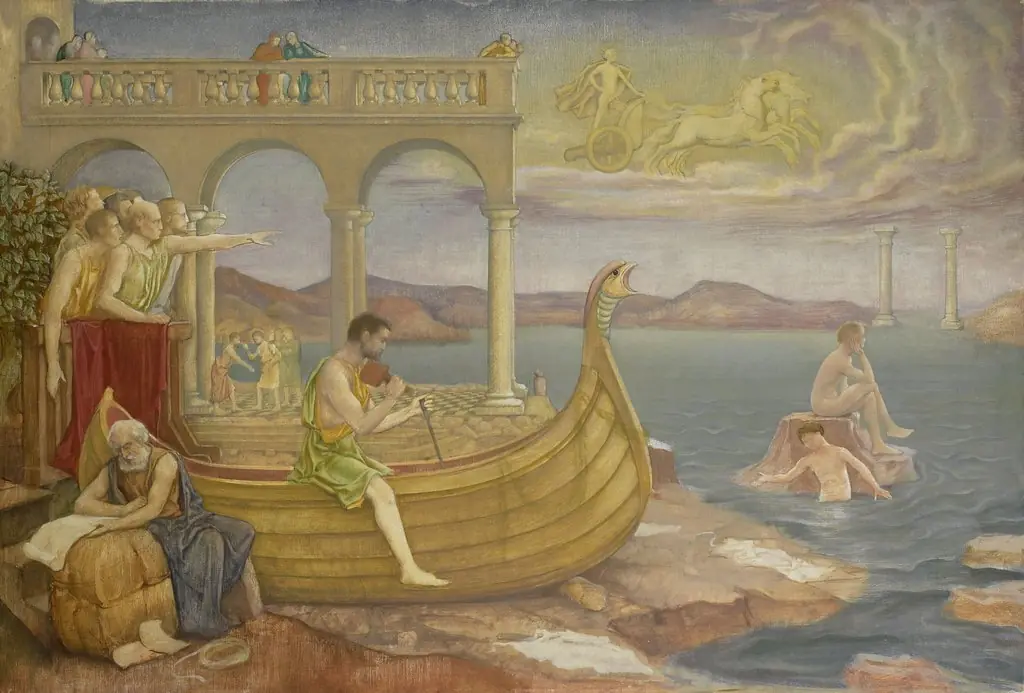
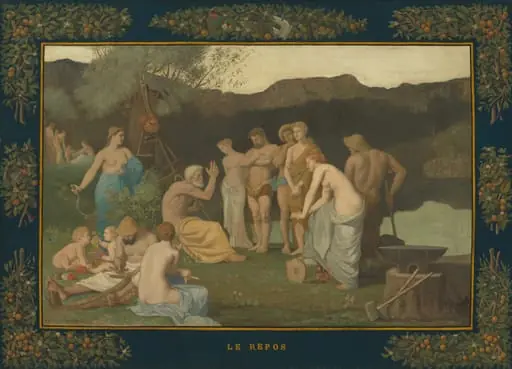
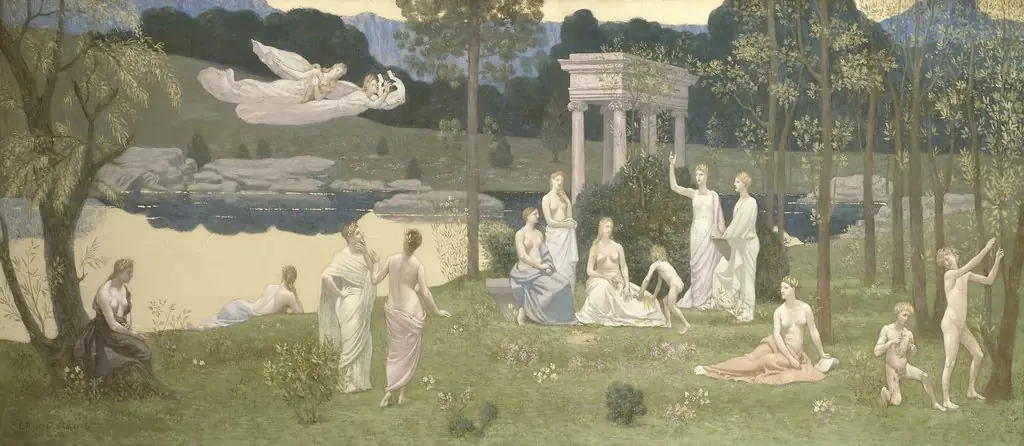
Created in 1864 by Pierre Puvis de Chavannes, this landscape painting presents a riverine scene populated by nude figures engaged in bathing. The work's iconography centers on the interaction between the human form and the natural environment, specifically depicting individuals within a river setting. As a genre piece, the composition emphasizes the serene integration of bathers into the broader landscape, utilizing the nude figure to explore themes of nature and leisure.
The depiction avoids complex narrative allegory in favor of a direct representation of figures immersed in the water, establishing the river not merely as a backdrop but as the central element facilitating the act of bathing.
Technique & Style
The River is classified as a painting by Pierre Puvis de Chavannes, executed in 1864. The work measures 129.5 cm in height and 252.1 cm in width and is executed in the landscape genre, depicting nude figures bathing in a river within a natural setting. As a painting in the Metropolitan Museum of Art, it is on a canvas support typical of mid‑nineteenth‑century French academic practice.
The composition combines soft modeling of the figures with a muted, atmospheric rendering of water and foliage, reflecting the artist's characteristic linear style and emphasis on idealized form.
History & Provenance
Pierre Puvis de Chavannes executed the landscape painting The River in 1864. The work, which depicts a river scene with nude figures bathing, measures 129.5 by 252.1 centimeters. Historical records indicate that the painting was once owned by John Quinn before entering the collection of the Metropolitan Museum of Art, where it is held as part of the permanent holdings.
No specific details regarding the original commission or the intermediate steps of its ownership chain between Quinn and the museum are provided in the available documentation, and no inventory number or exhibition history is recorded.
Context
Pierre Puvis de Chavannes painted The River in 1864, a large oil on canvas measuring 129.5 × 252.1 cm that belongs to the landscape genre and was initially owned by collector John Quinn before entering the Metropolitan Museum of Art. The work portrays nude figures bathing in a riverine setting, a motif that aligns with the artist's symbolic approach to nature and his influence on later Symbolist painters. Its inclusion in the Met's collection and documented provenance illustrate the painting's significance within 19th‑century French academic art and its reception among contemporary collectors, reflecting broader scholarly interest in Puvis de Chavannes's role bridging academic tradition and modernist experimentation.
Overview
Pierre Puvis de Chavannes created The River in 1864, a painting that captures a tranquil scene of figures by a waterway. This work reflects the artist's early engagement with realist principles, depicting individuals in a natural setting. It is currently part of the collection at The Metropolitan Museum of Art, representing a significant example of French painting from the mid-19th century.
Legacy
Puvis de Chavannes's distinctive style and thematic choices had a notable impact on subsequent generations of artists. His approach to figure painting and his creation of contemplative, often allegorical, landscapes provided a significant point of reference for Symbolist painters and and others seeking alternatives to academic traditions. The River, though an early work, foreshadows the serene monumentality that would influence many modernists.
Artist & collection
Artist
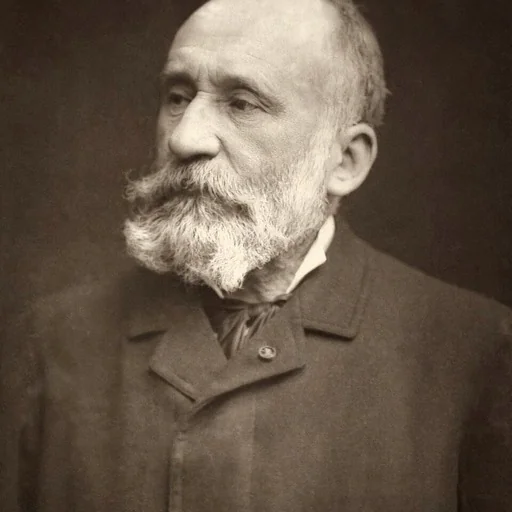
Pierre Puvis de Chavannes (French pronunciation:; 14 December 1824 – 24 October 1898) was a French painter known for his mural painting, who came to be known as "the painter for France".