Artwork
Sleep
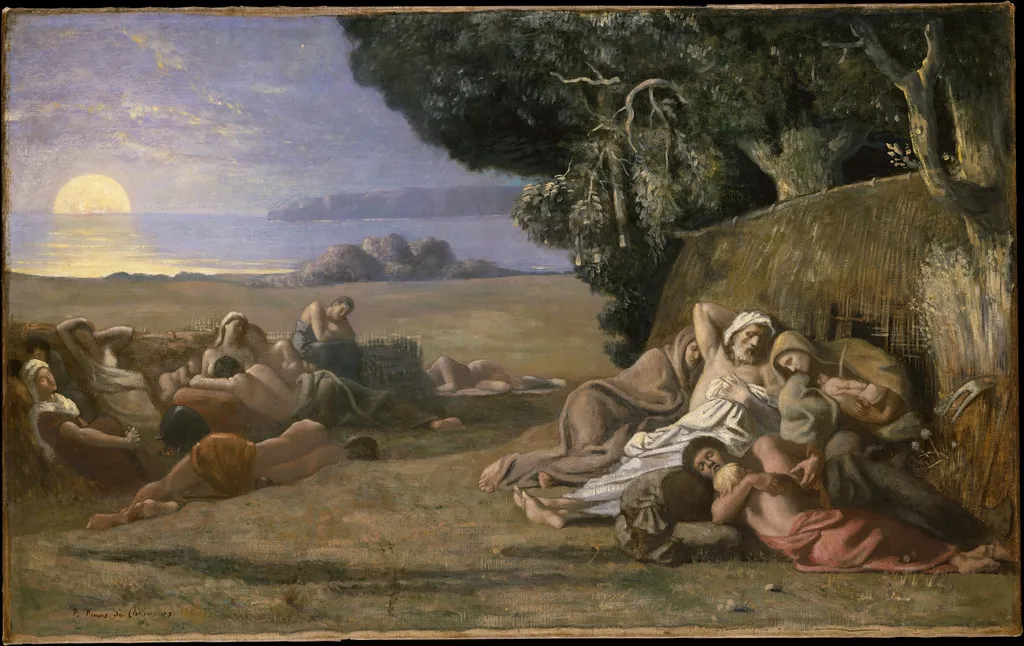
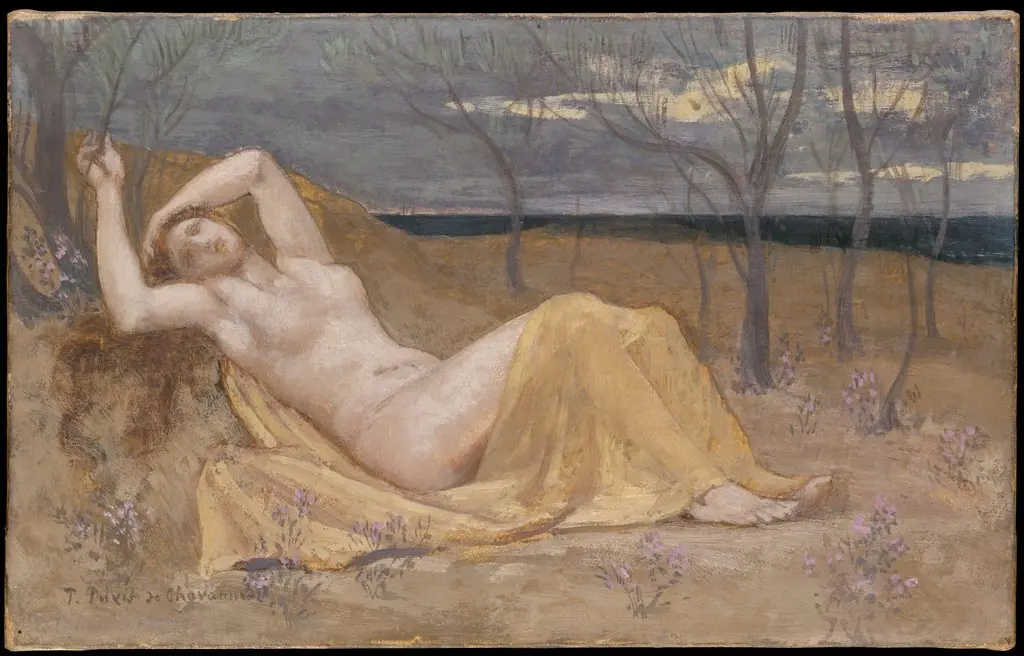
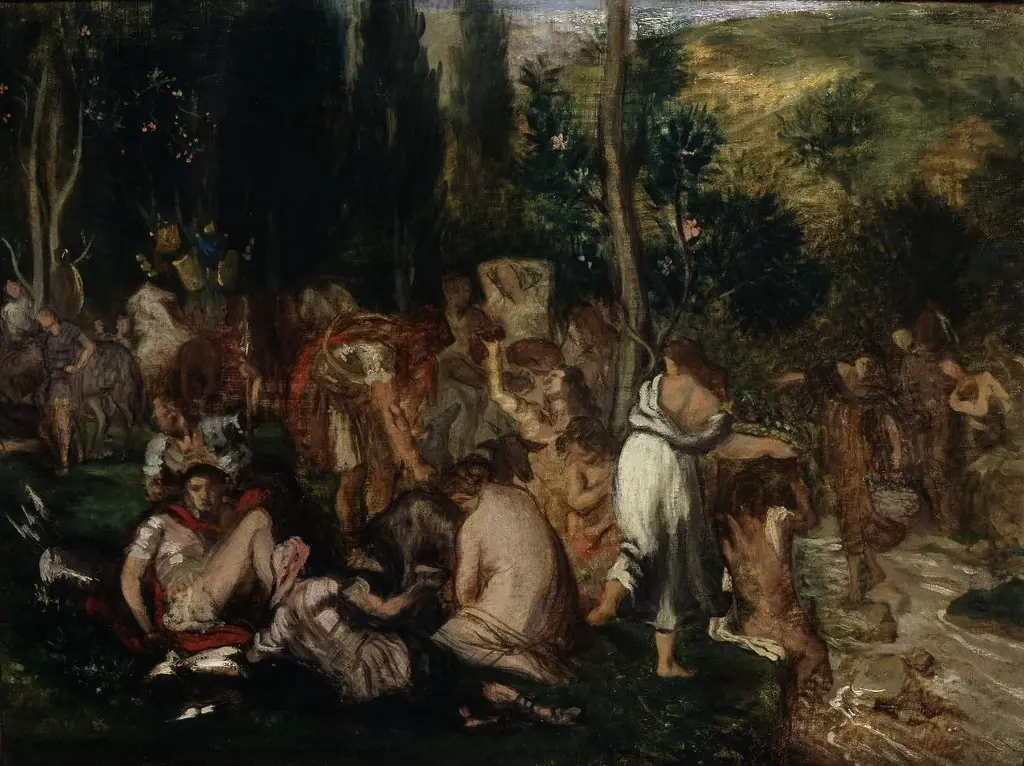
Sleep is an oil painting by the Symbolist artist Pierre Puvis de Chavannes. It dates from 1867 and is held in the collection of the Metropolitan Museum of Art.
About this work
Subject & Meaning
Puvis de Chavannes renders the scene in oil on canvas (1867), using subdued lighting and balanced poses that emphasize a contemplative stillness.
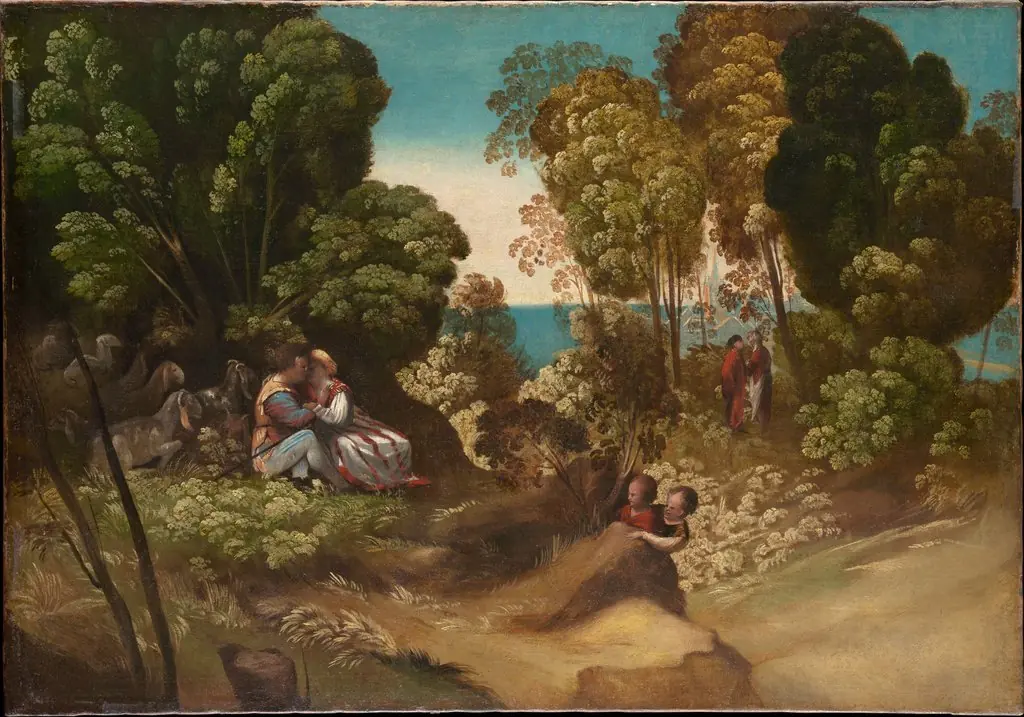
The painting presents a woman and a man in a quiet interior, the figures positioned to embody the act of sleep itself. Puvis de Chavannes renders the scene in oil on canvas (1867), using subdued lighting and balanced poses that emphasize a contemplative stillness. The composition’s simplicity and the inclusion of everyday furnishings suggest a domestic setting where sleep becomes a symbolic pause, evoking both physical rest and a transition into the realm of dreams.
The work is part of the Metropolitan Museum of Art’s collection, preserving its 19th‑century exploration of intimate, allegorical moments.
Technique & Style
The work Sleep (1867) is an oil painting executed on canvas, measuring approximately 66.4 cm in height by 106 cm in width. It belongs to the collection of the Metropolitan Museum of Art, where it is displayed. Puvis de Chavannes depicts a tranquil scene of a woman and a man in a reclining, sleeping posture, employing a restrained palette and soft modeling typical of his academic style.
The composition balances the figures within a shallow spatial setting, emphasizing linear contours and a muted tonal harmony that underscores the theme of repose.
History & Provenance
Created in 1867, the oil painting Sleep was executed by Pierre Puvis de Chavannes on canvas. The work measures 66.4 centimeters in height and 106 centimeters in width. Current records indicate the piece is held within the collection of the Metropolitan Museum of Art.
The painting depicts figures of a man and a woman in a state of sleep. While the specific commission details and the full chain of ownership prior to its museum acquisition are not detailed in the available records, the work's inception is firmly dated to 1867.
The work is held by the Metropolitan Museum of Art, New York, where it is inventoried as accession number 67.216.1. It was first shown at the Salon of 1867 in Paris, marking its debut in a public exhibition. The painting has not been recorded in major traveling exhibitions since its acquisition by the museum in 1967.
Overview
Pierre Puvis de Chavannes completed Sleep, an oil painting, in 1867. This work, now housed at The Metropolitan Museum of Art, exemplifies the Symbolist movement. It presents a tranquil landscape where numerous figures are depicted in various states of repose.
The artist, a prominent French muralist of his era, often explored themes of introspection and serene contemplation in his compositions, a characteristic evident in this piece.
Context
Active during the early Third Republic, Pierre Puvis de Chavannes was recognized as a leading French muralist, earning the moniker "the painter for France." His significant role in the art world extended to co-founding the Société Nationale des Beaux-Arts, an influential institution. Sleep reflects the broader artistic currents of the Symbolist movement, which sought to express ideas and emotions through symbolic imagery rather than direct representation.
Legacy
Puvis de Chavannes's distinctive style and thematic concerns left a lasting impact on numerous artists. His approach to creating evocative, contemplative landscapes resonated with many, including figures such as Robert Genin. Through his innovative compositions and his role in shaping artistic institutions, Puvis contributed significantly to the development of modern art, influencing the trajectory of Symbolism and beyond.
Own this work as a print
Artist & collection
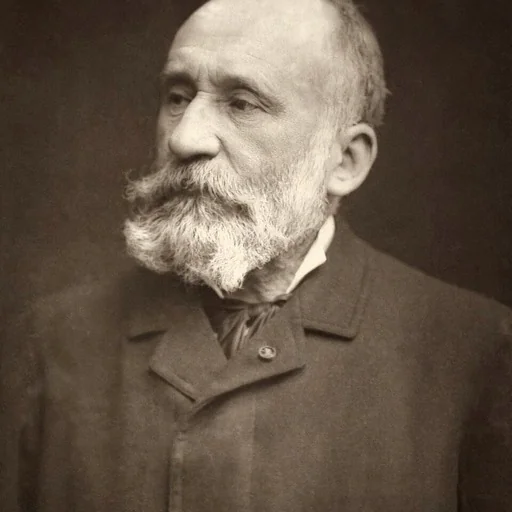
Artist
Pierre Puvis de Chavannes (French pronunciation:; 14 December 1824 – 24 October 1898) was a French painter known for his mural painting, who came to be known as "the painter for France".