Artwork
Work
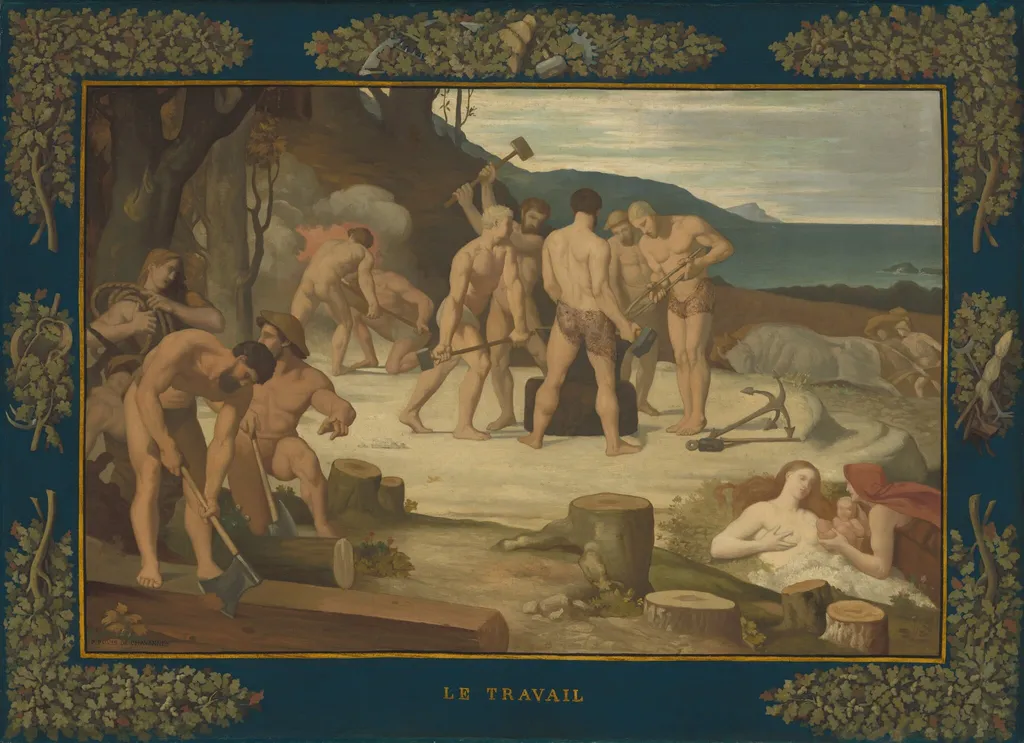
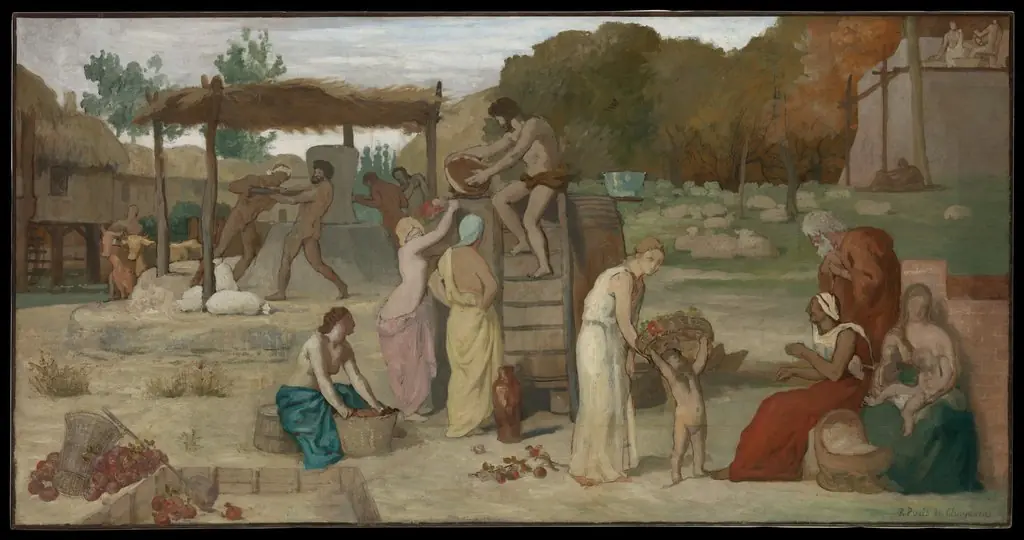
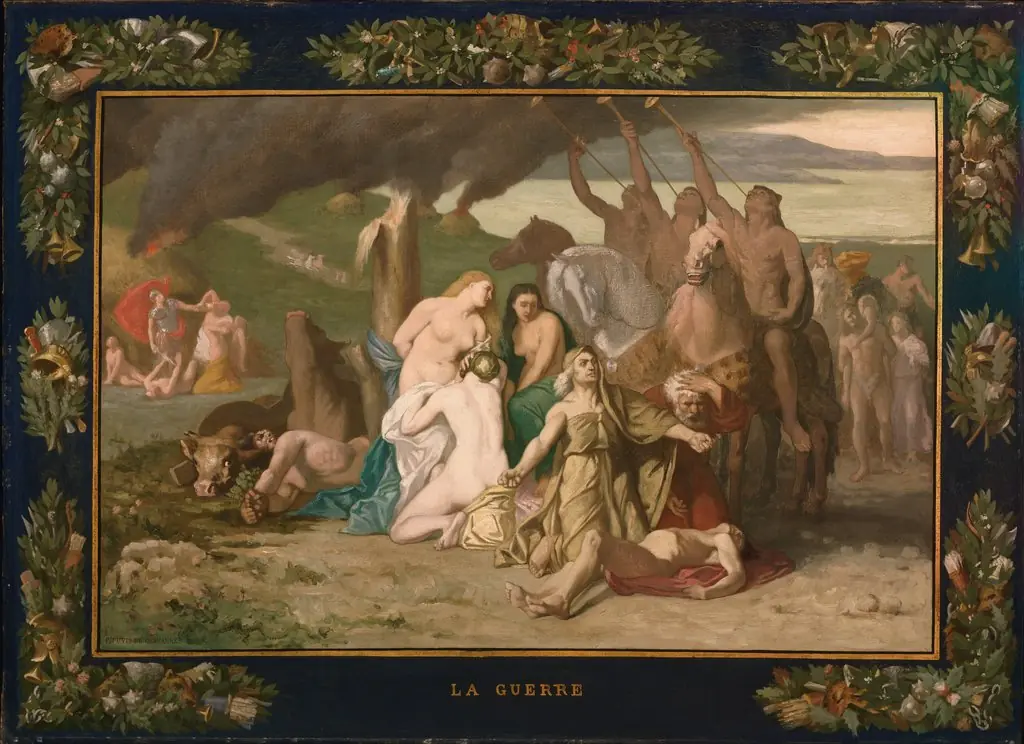
Work is an oil painting by the Impressionist artist Pierre Puvis de Chavannes. It dates from 1863 and is held in the collection of the National Gallery of Art.
- Inscription
- Inscribed:lower left: P.PUVIS DE CHAVANNES; lower center in border of oakbranches and laborer's tools: LE TRAVAIL
About this work
Technique & Style
The physical dimensions and medium define its presence as a substantial horizontal composition within the artist's oeuvre from the early 1860s.
Executed in 1863, this genre scene is an oil painting on canvas. The work measures 108.5 centimeters in height and 148 centimeters in width. Created by Pierre Puvis de Chavannes, the piece utilizes traditional materials of oil paint applied to a woven canvas support.
While specific details regarding its current condition or unique handling techniques are not explicitly detailed in the available records, the formal classification remains consistent as a painted genre scene. The physical dimensions and medium define its presence as a substantial horizontal composition within the artist's oeuvre from the early 1860s.
History & Provenance
Pierre Puvis de Chavannes painted Work in 1863, executing the piece in oil on canvas. The work remained in the artist’s studio until circa 1872, when it was sold to the dealer Durand‑Ruel, who maintained branches in New York and Paris. By 1887 the painting entered the Hiltbrunner Collection, and the following year it was acquired by John G. Johnson of Philadelphia.
Johnson later disposed of the work in 1899, selling it to Peter A. B. Widener; the painting then passed through Widener’s estate to his son Joseph E. Widener, who gifted it to the National Gallery of Art in 1942. The painting has been part of the National Gallery of Art’s collection in Washington, D.C., since that time.
Legacy
The painting’s later reputation is evident in its passage through prominent dealers and collectors after its creation. Acquired by Durand‑Ruel around 1872, it entered the Hiltbrunner collection by 1887 and later passed through the hands of Philadelphia collector John G. Johnson before being sold in 1899 to Peter A. B. Widener. Following the Widener inheritance, the work was gifted to the National Gallery of Art in 1942, where it remains part of the museum’s permanent collection, underscoring its enduring legacy in American institutional holdings.
Overview
Pierre Puvis de Chavannes created Work, an oil on canvas painting, around 1863. This piece exemplifies a genre scene within the Realism movement, depicting figures engaged in physical labor. Puvis de Chavannes was a prominent French artist during the early Third Republic, recognized for his significant contributions to mural painting and his influential position in the art world.
Subject & Meaning
The painting portrays a group of nude men diligently engaged in manual labor, utilizing tools such as axes and hammers. Their strenuous efforts are central to the composition, set against a backdrop featuring a tree and a body of water. A lone woman is positioned on the right side of the scene.
Titled Work, the painting directly addresses themes of human effort and daily life, characteristic of Realist genre scenes.
Context
As a leading figure in French art during the early Third Republic, Pierre Puvis de Chavannes held considerable influence. He was particularly renowned for his large-scale mural projects and his leadership within the Société Nationale des Beaux-Arts. His contemporaries often referred to him as "the painter for France," acknowledging his significant role in shaping national artistic expression and public art.
Own this work as a print
Artist & collection
Artist
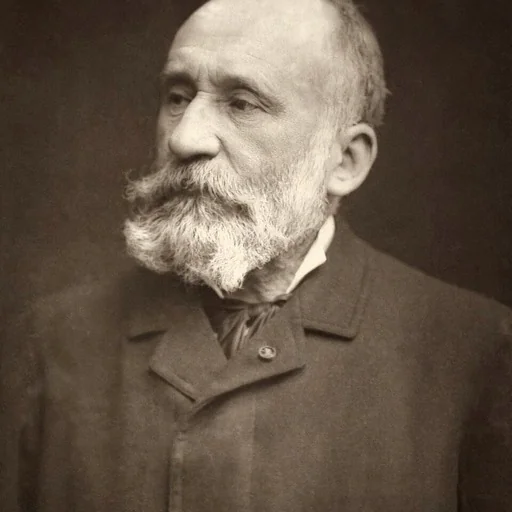
Pierre Puvis de Chavannes (French pronunciation:; 14 December 1824 – 24 October 1898) was a French painter known for his mural painting, who came to be known as "the painter for France".