Artwork
Mary Magdalene in the Desert
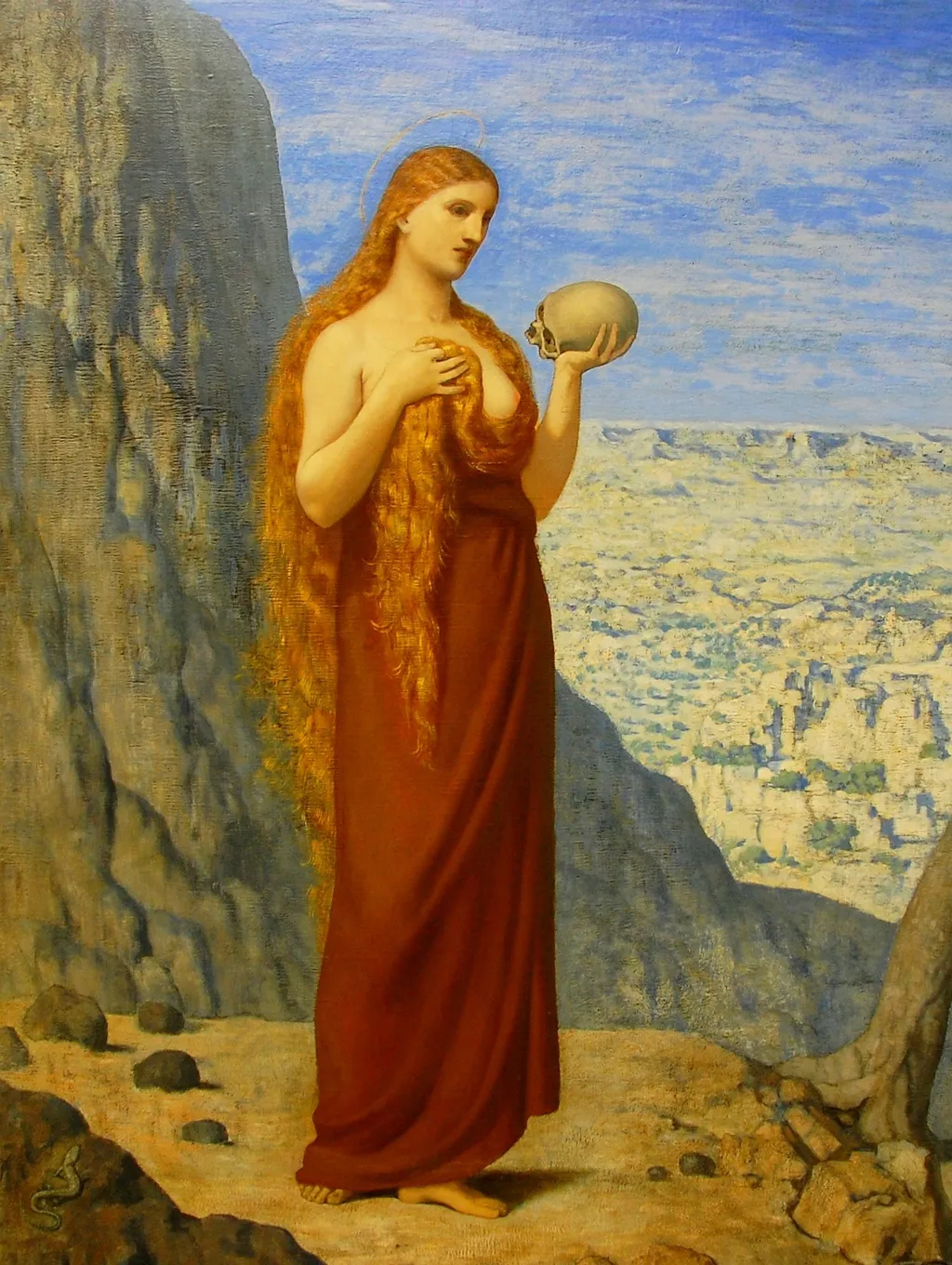
Mary Magdalene in the Desert is an oil painting by the Symbolist artist Pierre Puvis de Chavannes. It dates from 1870 and is held in the collection of the Städel Museum.
About this work
Subject & Meaning
The work’s meaning centers on Magdalene’s transformation from sinner to saint, using the desert setting to visualize inner spiritual struggle.
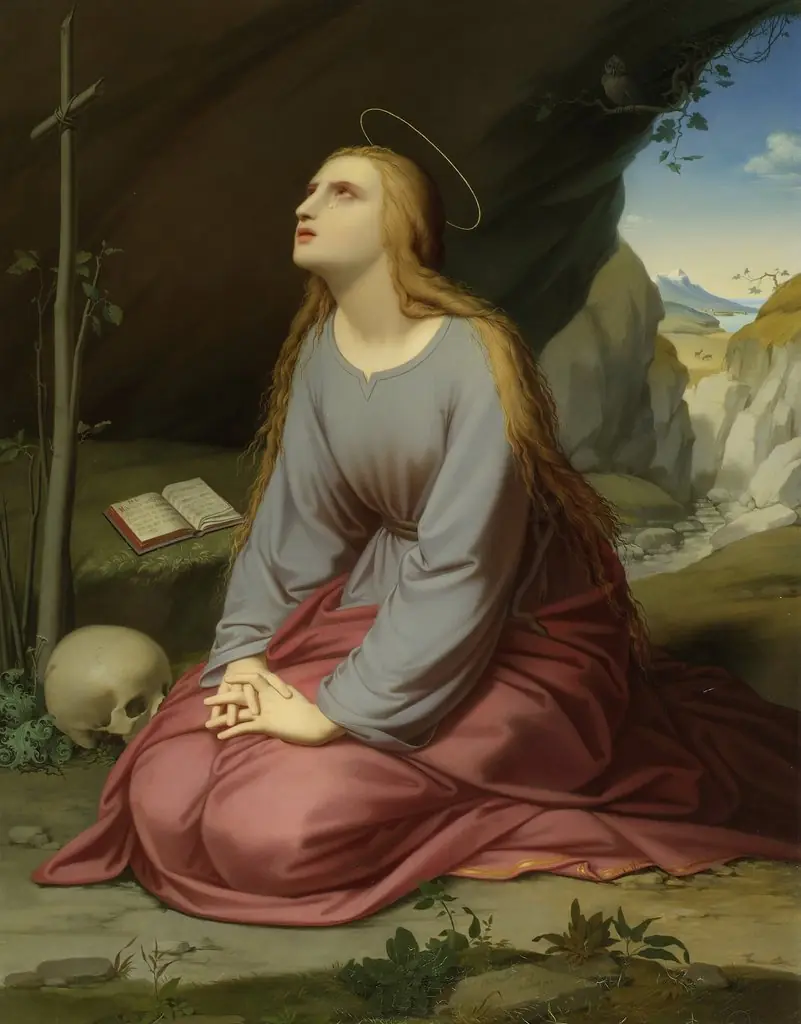
The painting depicts Mary Magdalene as a penitent figure in the desert, embodying themes of repentance and spiritual austerity through symbolic elements like a human skull and crucifix. Her barefoot stance, flowing drapery, and red hair underscore the tension between physical mortification and divine grace, reflecting Symbolist interests in mystical contemplation. The aureole and modest dress highlight her sanctified status amid wilderness, merging religious narrative with psychological depth characteristic of late 19th-century Symbolist art.
The work’s meaning centers on Magdalene’s transformation from sinner to saint, using the desert setting to visualize inner spiritual struggle. The skull and crucifix serve as memento mori symbols, reinforcing her penitential devotion while the expansive sky and clouds suggest transcendence beyond earthly concerns.
Puvis de Chavannes’ composition blends classical poise with Symbolist mysticism, framing Magdalene’s solitude as both physical and metaphysical pilgrimage toward redemption.
Technique & Style
Executed in 1870, this work is an oil painting on canvas by Pierre Puvis de Chavannes. The composition depicts Mary Magdalene as a waist-length figure standing barefoot in a desert landscape, characterized by her red hair and draped clothing. Formal elements include the inclusion of a human skull and an aureola, signaling themes of mortification and sanctity within the Symbolist movement.
The figure is portrayed with specific anatomical details such as visible shoulders and hips, set against a background featuring sky and clouds.
History & Provenance
Pierre Puvis de Chavannes painted Mary Magdalene in the Desert in 1870. The work is executed in oil on canvas and measures 156.5 × 105.5 cm. The painting depicts the Penitent Magdalene, a subject drawn from the traditional iconography of Mary Magdalene as a hermit in the wilderness. The Städel Museum in Frankfurt, Germany, holds the work in its collection.
Overview
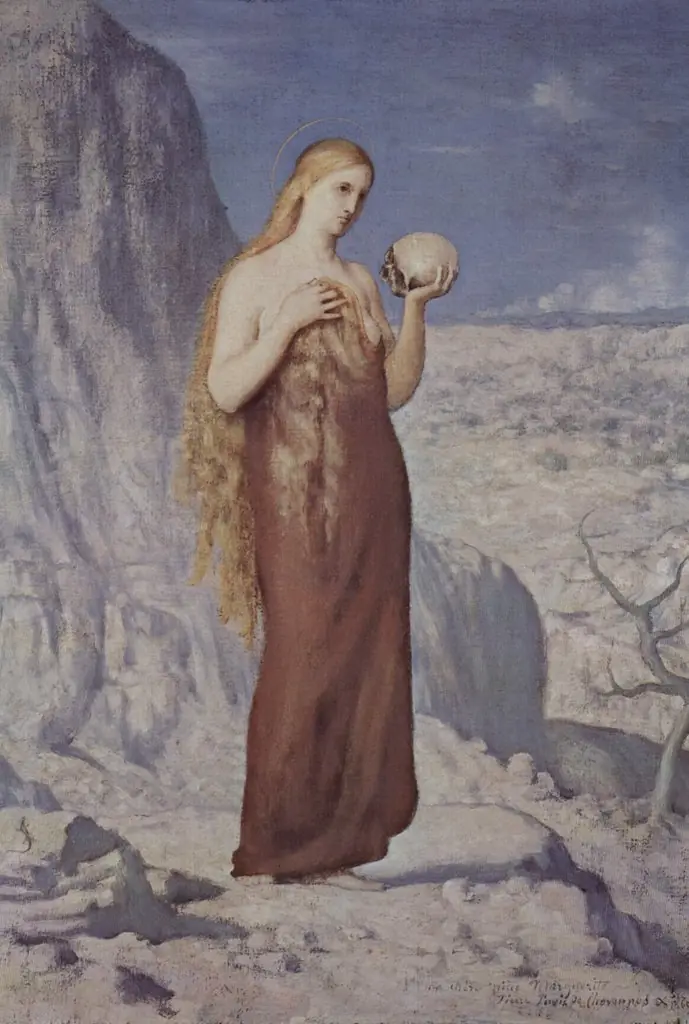
Created in 1870 by Pierre Puvis de Chavannes, this oil painting depicts Mary Magdalene in a solitary desert landscape. The figure stands on a craggy outcrop, her red robe spilling to the ground, while a faint halo hovers above her head. The composition is restrained, employing muted tones and a calm atmosphere that reflects the artist’s preference for symbolic, contemplative subjects.
Own this work as a print
Artist & collection
Artist
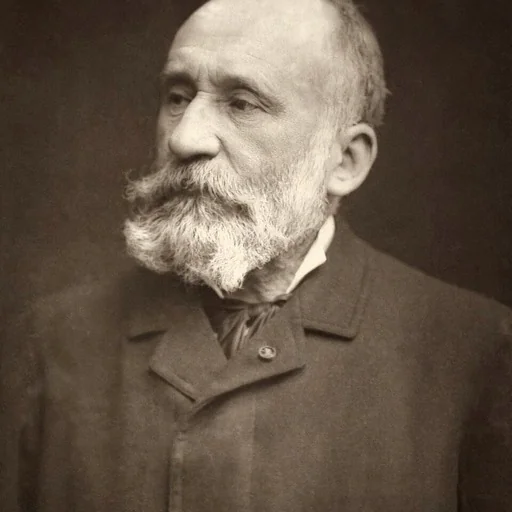
Pierre Puvis de Chavannes (French pronunciation:; 14 December 1824 – 24 October 1898) was a French painter known for his mural painting, who came to be known as "the painter for France".