Artwork
Cider
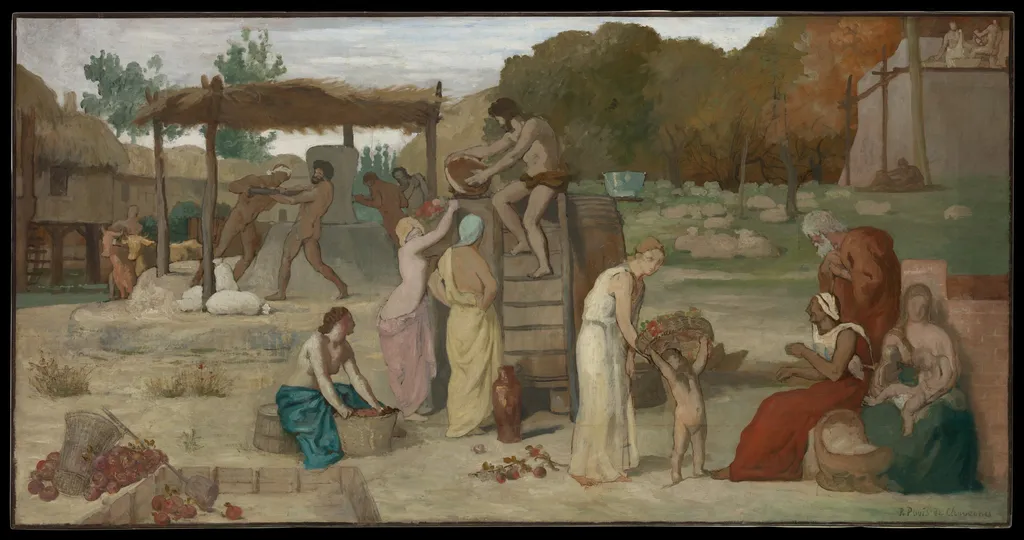
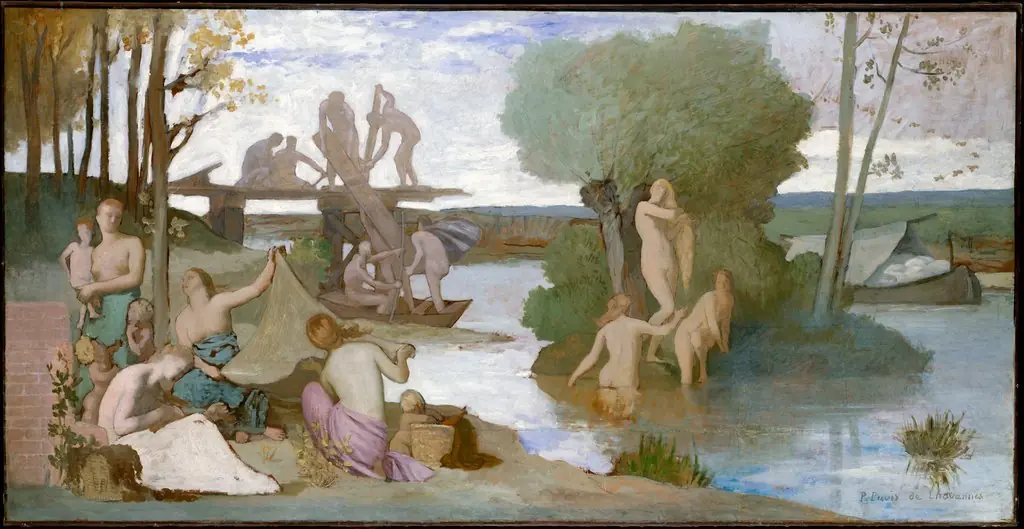
Cider is an unspecified painting by the Realist artist Pierre Puvis de Chavannes. It dates from 1864 and is held in the collection of the Metropolitan Museum of Art.
About this work
Subject & Meaning
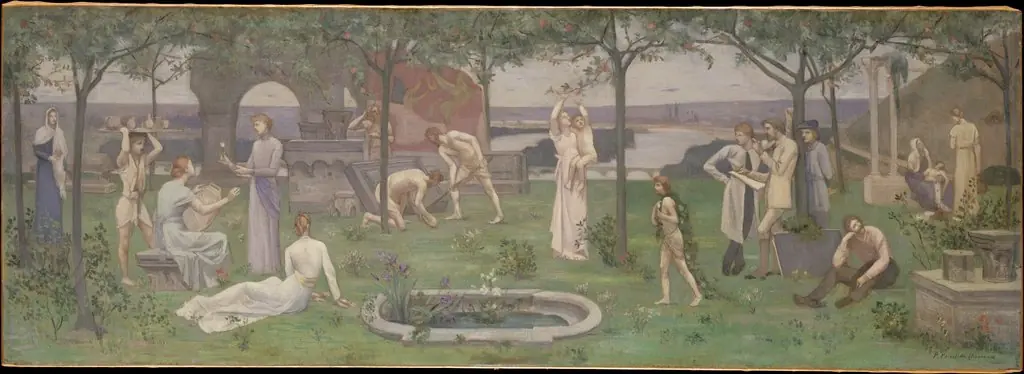
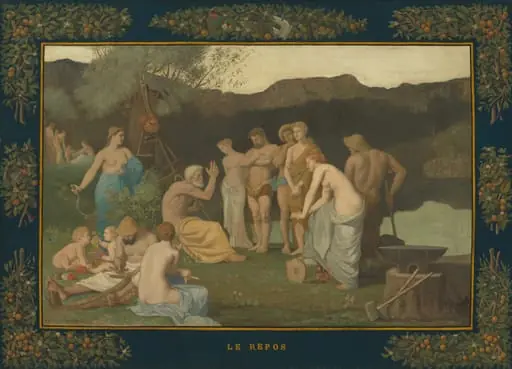
The painting Cider (1864) by Pierre Puvis de Chavannes depicts a woman, a man, an apple, a child, a nude figure, and a scene of work, as recorded in the work's description. These components constitute the core subject matter; the provided sources do not specify any particular iconographic tradition or symbolic meaning attached to these elements.
Technique & Style
The physical dimensions confirm its status as a large-scale painting intended for display, and it is currently held in a major institutional collection.
Cider is an oil painting created in 1864 by Pierre Puvis de Chavannes. The work is executed on a canvas support, measuring 129.5 centimeters in height and 252.1 centimeters in width. As a painting within the artist's oeuvre, the medium involves traditional oil pigments applied to canvas.
The composition depicts a scene containing figures including a woman, a man, a child, and a nude, alongside an apple. These elements suggest a focus on the rustic, allegorical subject matter typical of the artist's decorative compositions during this period. The physical dimensions confirm its status as a large-scale painting intended for display, and it is currently held in a major institutional collection.
History & Provenance
The painting Cider by Pierre Puvis de Chavannes is dated to 1864, an early work by an artist who would become known for large-scale allegorical and decorative compositions. The picture presents an allegorical scene of rural life, featuring a woman, a man, a child, and a nude figure with an apple. The specific commission is not documented in the available sources.
The work is held in the collection of the Metropolitan Museum of Art in New York; the records confirm its location but do not specify an accession number, earlier provenance, or a detailed exhibition history.
Overview
Pierre Puvis de Chavannes's 'Cider' (1864) depicts a rural harvest scene centered on the communal production of apple cider. The composition arranges figures across a shallow, frieze-like landscape, a hallmark of the artist's mature style. In the foreground, workers engage in the pressing of apples within a large wooden trough, while others transport baskets of fruit or rest nearby.
The figures are rendered with simplified, monumental forms and muted, earthy tones of green, brown, and soft blue, punctuated by subtle accents of red and white in their clothing. This approach emphasizes the timeless, rhythmic quality of labor over transient naturalism. Painted in 1864, the work predates Puvis de Chavannes's most famous large-scale public murals but demonstrates his early commitment to a synthetic, decorative aesthetic that would come to define French Symbolism.
The painting reflects the artist's interest in idealized peasant life and his rejection of academic realism in favor of a flattened, mural-like space. 'Cider' stands as a significant example of his transition toward the serene, allegorical tone that influenced a generation of modernists, including Seurat and Matisse.
Context
This painting is attributed to Pierre Puvis de Chavannes, an artist known for his distinctive approach to figuration and landscape. His work often explored themes of timelessness and harmony, frequently depicting allegorical or pastoral subjects with a simplified, monumental style. Cider reflects some of these characteristic elements, aligning with his broader artistic output.
Artist & collection
Artist
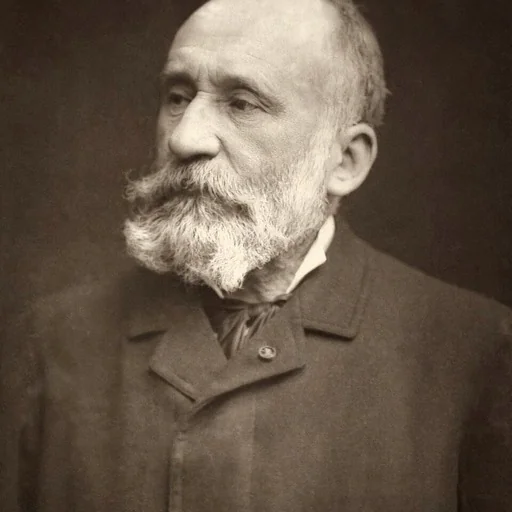
Pierre Puvis de Chavannes (French pronunciation:; 14 December 1824 – 24 October 1898) was a French painter known for his mural painting, who came to be known as "the painter for France".