Artwork
Compositie met raster 6: ruit, compositie met kleuren
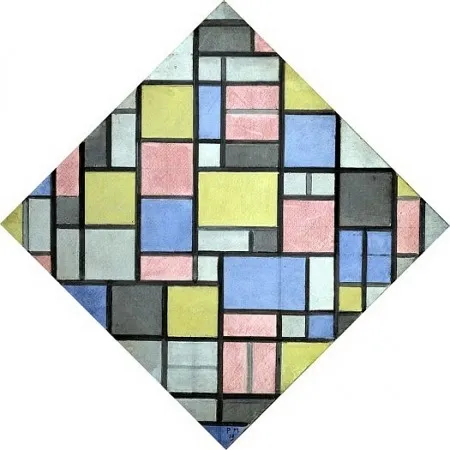
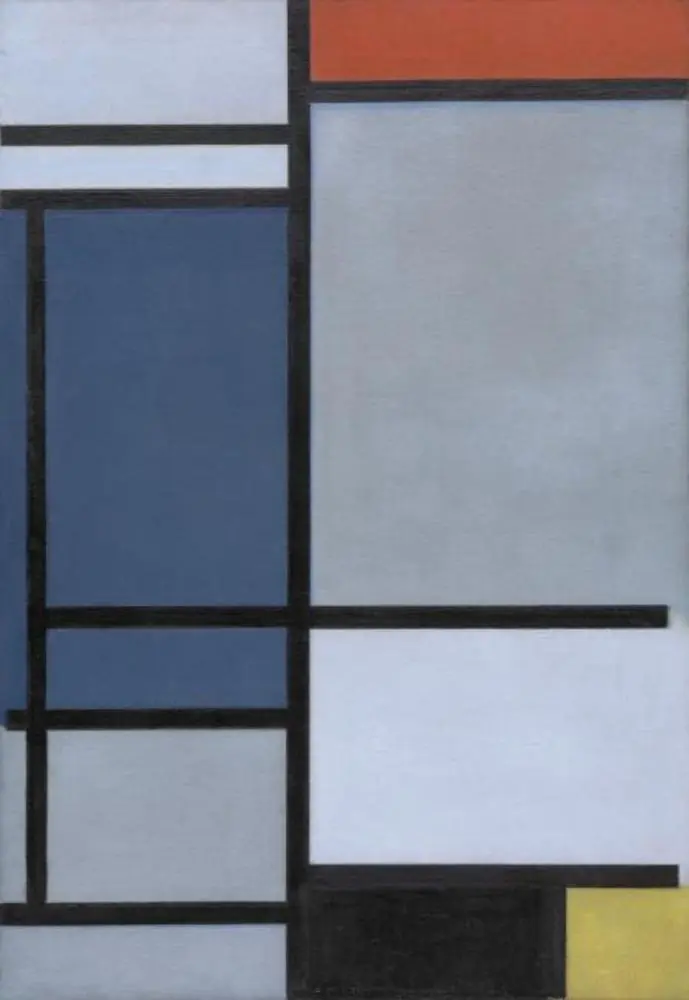
Compositie met raster 6: ruit, compositie met kleuren is an oil painting by the De Stijl artist Piet Mondrian. It dates from 1919 and is held in the collection of the Kröller-Müller Museum.
About this work
Overview
Piet Mondrian completed this oil painting in 1919, marking a key moment in his shift toward pure abstraction. It belongs to the De Stijl movement, which sought to express harmony through reduced visual elements. The work is part of the Kröller-Müller Museum’s collection and reflects Mondrian’s ongoing exploration of form, color, and spatial balance as pathways to universal order.
Subject & Meaning
The painting avoids representation entirely, focusing instead on the relationships between colored rectangles and black lines.
The painting avoids representation entirely, focusing instead on the relationships between colored rectangles and black lines. Mondrian aimed to convey equilibrium through asymmetry, using color and form to suggest rhythm without narrative. The arrangement resists predictability, yet maintains internal cohesion, reflecting his belief that art could reveal underlying structures of reality beyond the visible world.
Technique & Style
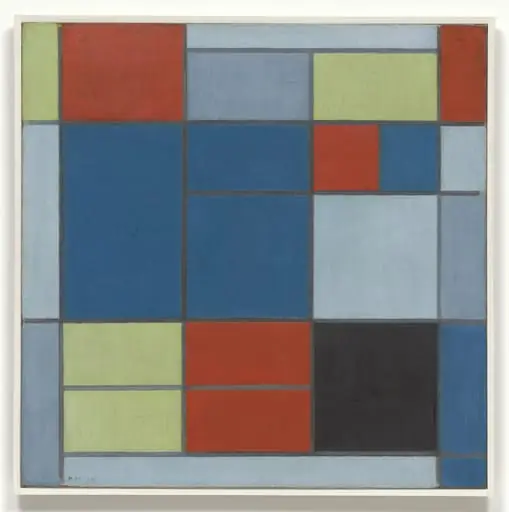
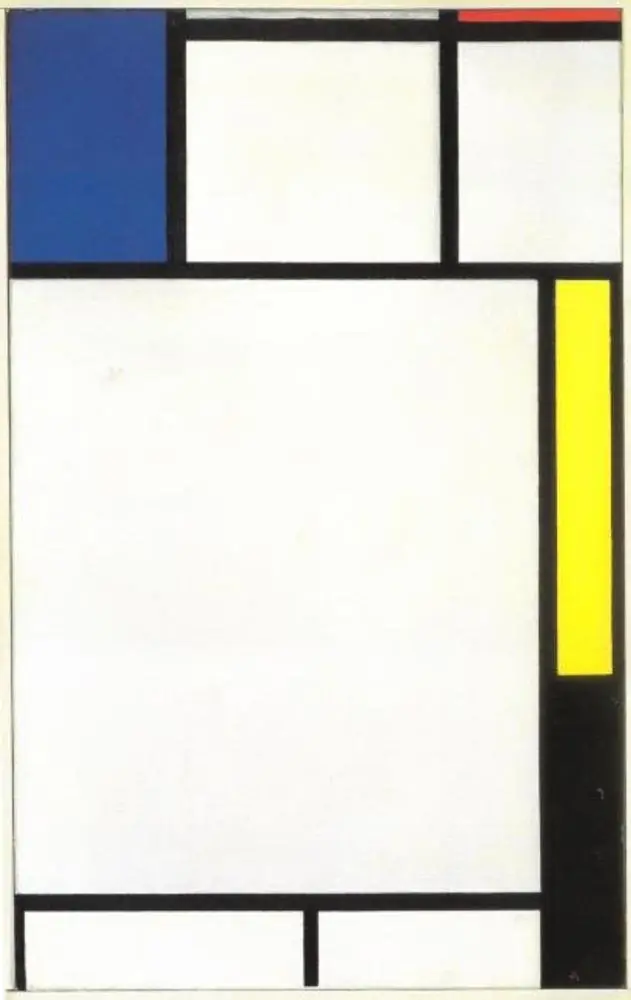
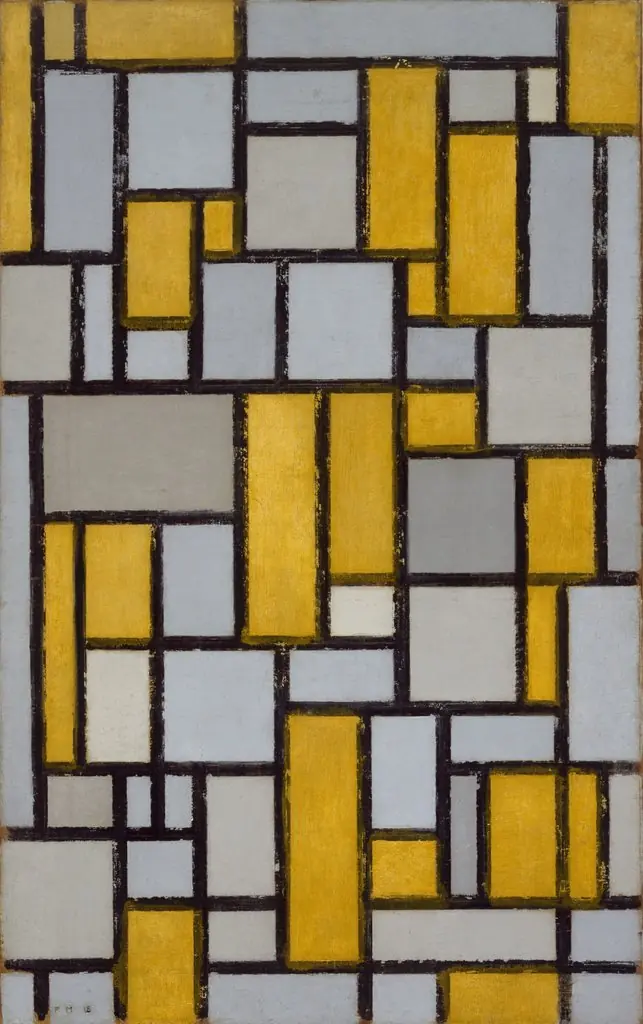
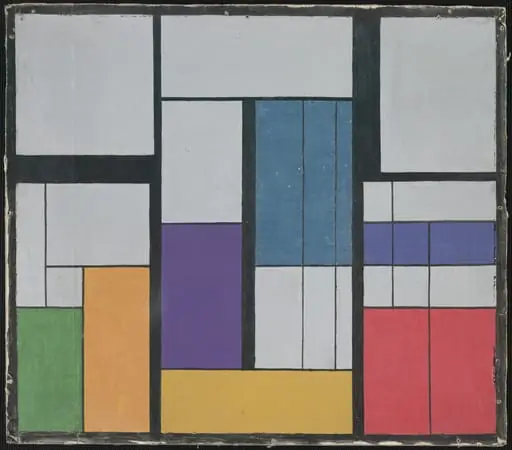
Oil paint was applied with precision to create flat, unmodulated planes of color, pink, yellow, blue, and gray, each bounded by thin black lines. The grid structure is deliberate but not rigidly symmetrical; rectangles vary in size and placement, introducing subtle tension. The technique emphasizes flatness and clarity, rejecting illusionism in favor of a constructed visual language grounded in geometry.
History & Provenance
Created during Mondrian’s early years in Paris after leaving the Netherlands, this work emerged from his engagement with De Stijl and his collaboration with artists like Theo van Doesburg. It entered the Kröller-Müller Museum’s collection through the museum’s early acquisitions of modernist works, securing its place in a major European archive of avant-garde art.
Context
In post-war Europe, artists sought new foundations for culture. Mondrian’s abstraction responded to a desire for clarity and order amid social upheaval. De Stijl rejected ornament and naturalism, advocating instead for a universal visual language.
This painting aligns with broader efforts in architecture and design to integrate art into everyday life through simplified, rational forms.
Legacy
The painting exemplifies Mondrian’s influence on 20th-century design, architecture, and minimalism. Its disciplined use of color and geometry became a reference point for later movements, from Bauhaus to Color Field painting. While stripped of personal expression, its formal rigor continues to inform how structure and balance are understood in modern visual culture.
Artist & collection

Artist
Pieter Cornelis Mondriaan (Dutch:; 7 March 1872 – 1 February 1944), known after 1911 as Piet Mondrian (, US also; Dutch: ), was a Dutch painter and art theoretician, who is regarded as one of the greatest artists of the 20th century.

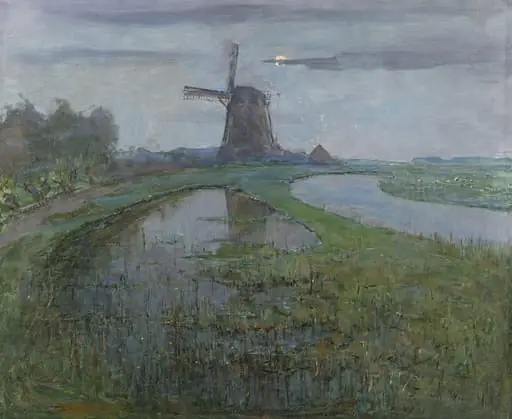
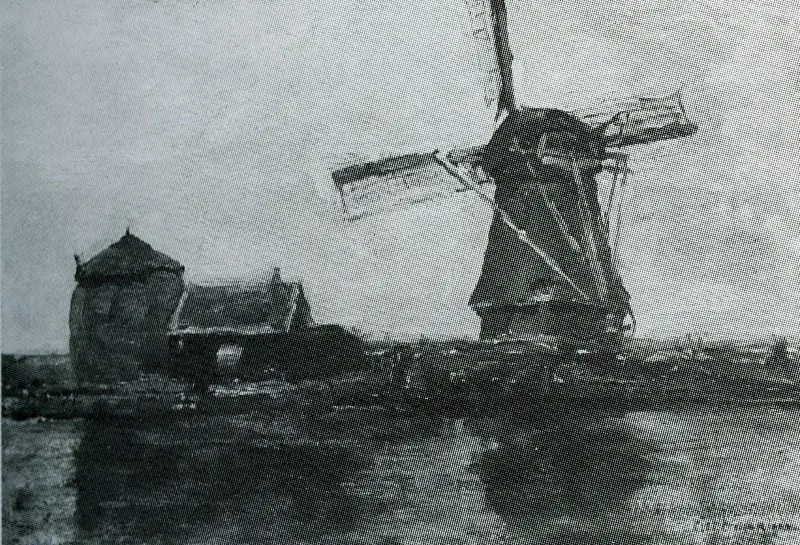
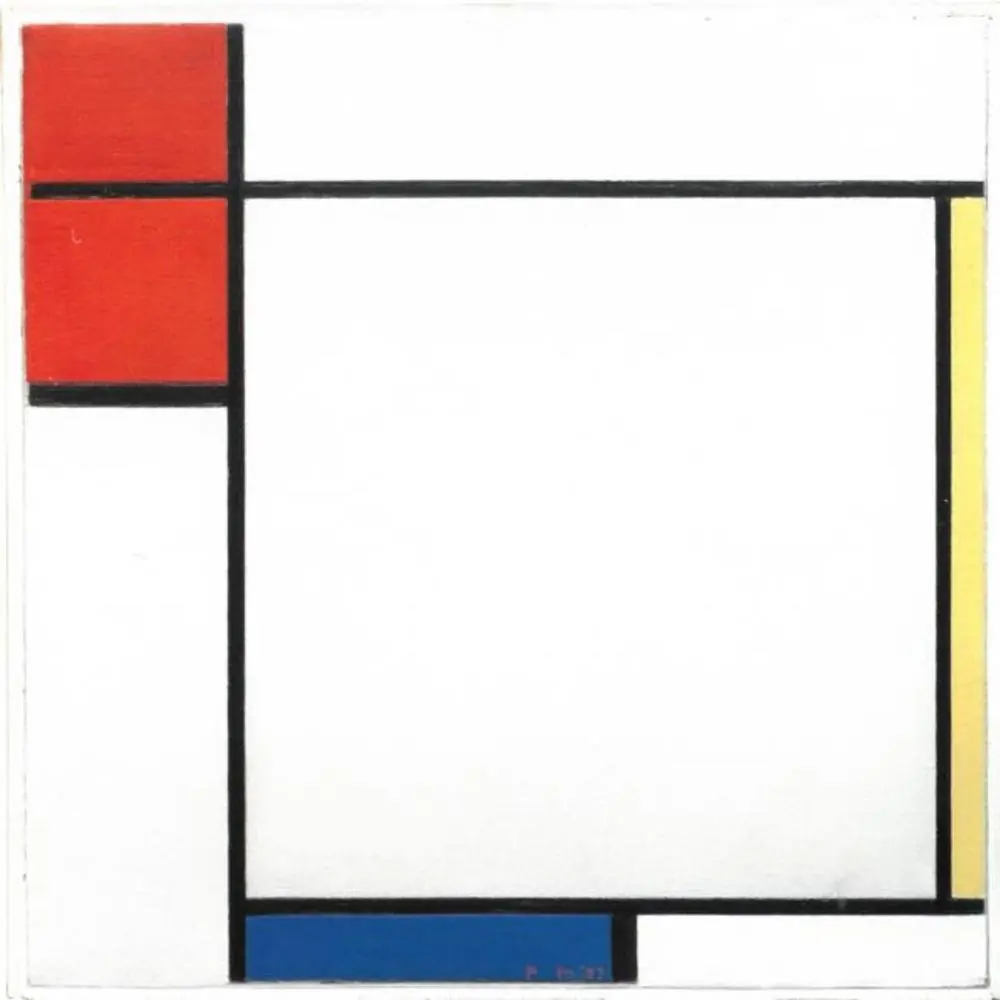
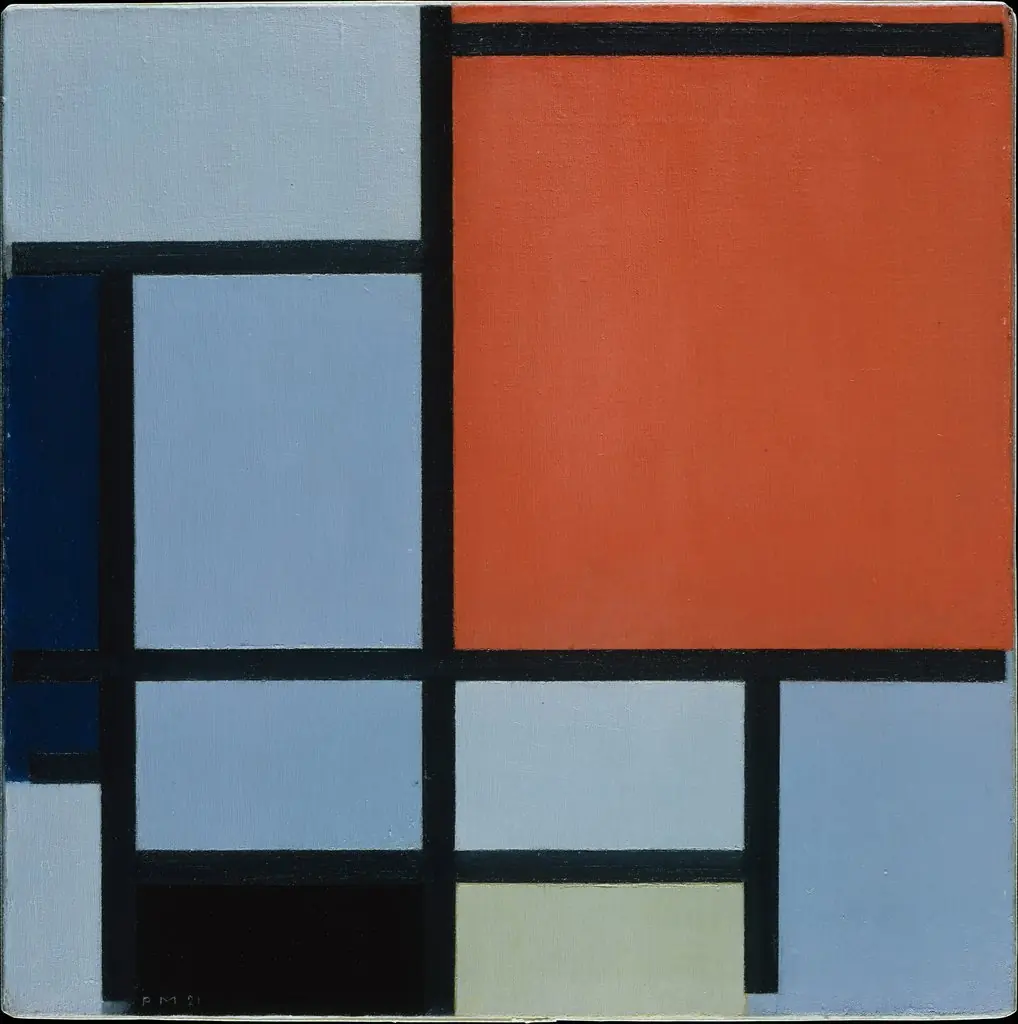
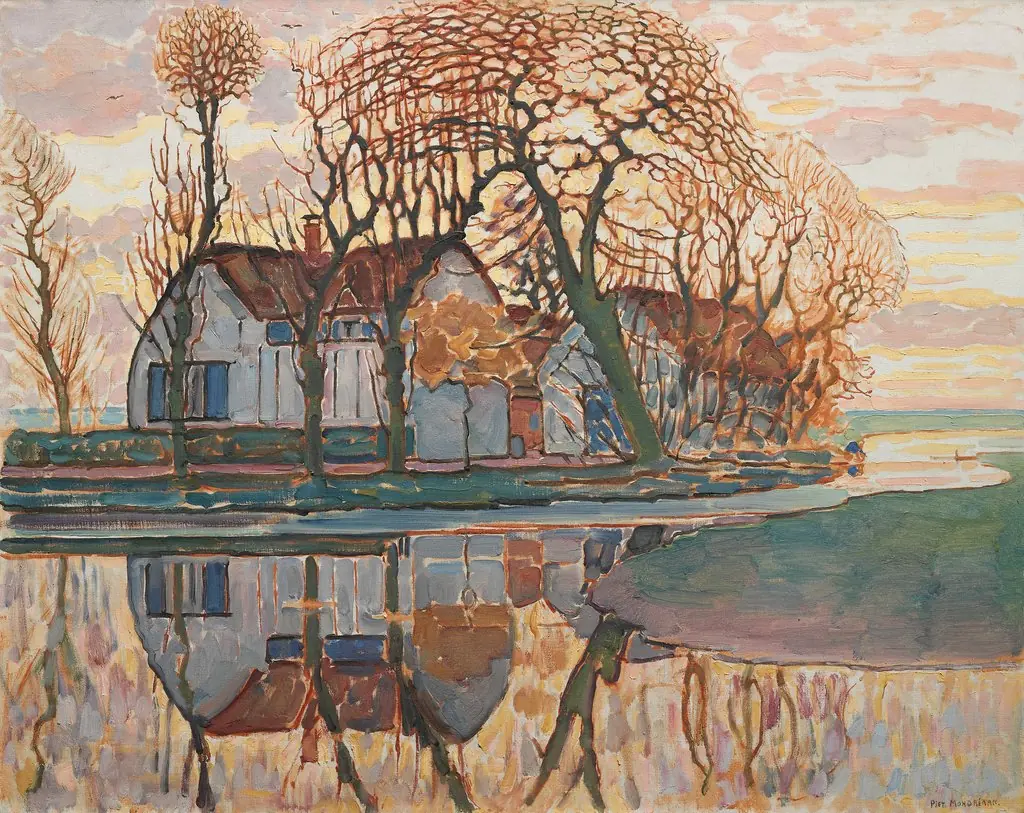
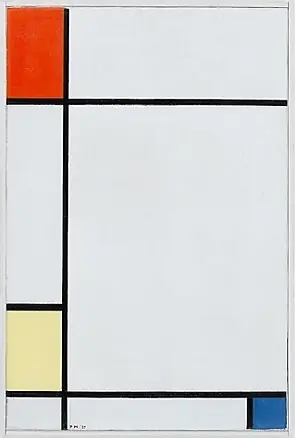
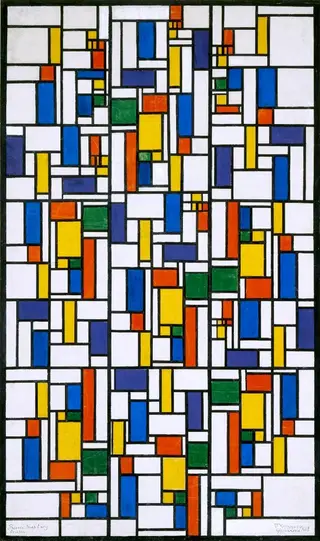
- Komposition V.. Farbentwurf für Glasfenster
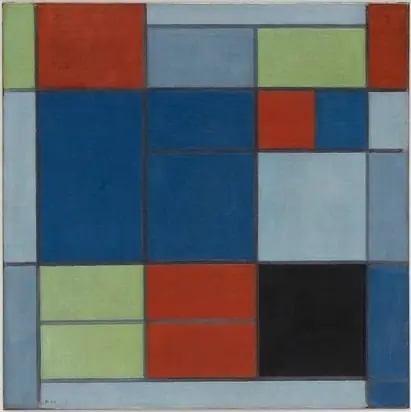 Composition C
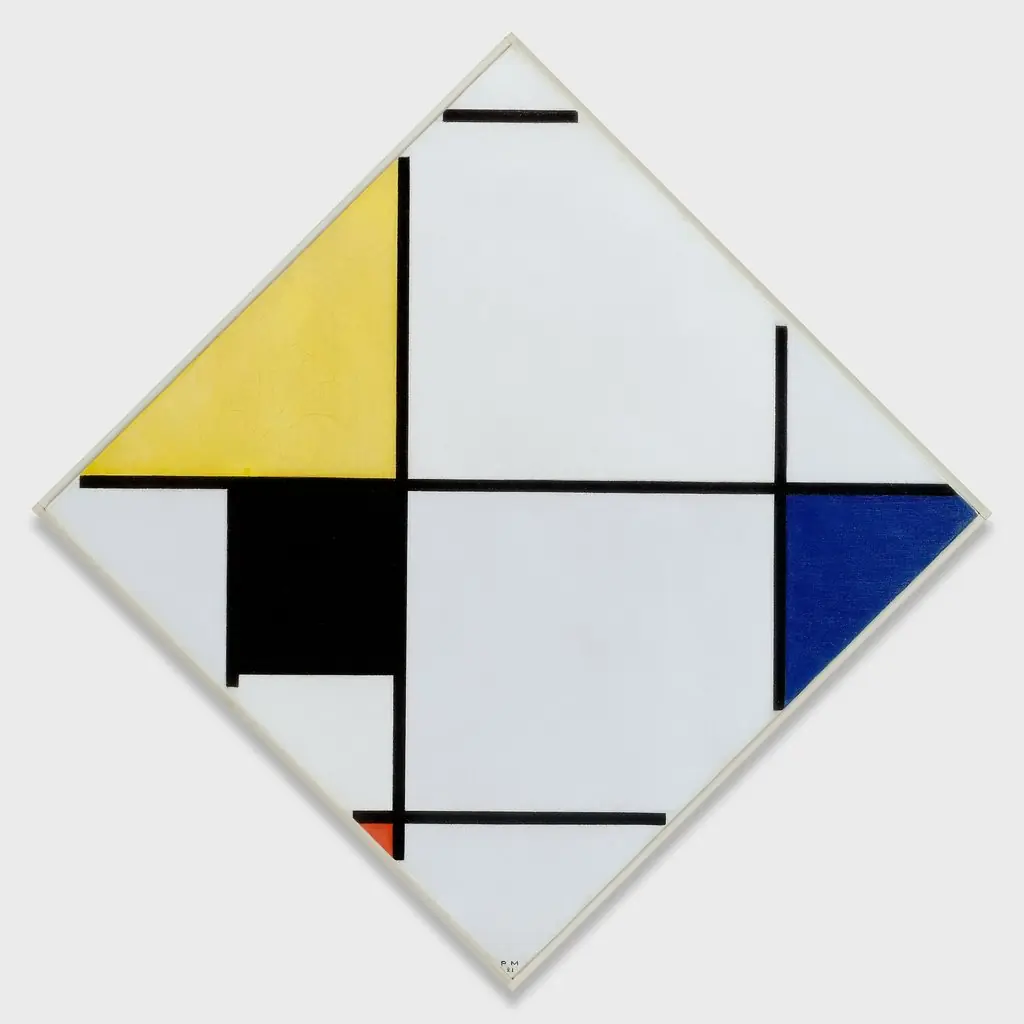 Lozenge Composition with Yellow, Black, Blue, Red, and Gray
 Untitled
 Composition with blue, red, yellow, and black
 Composition with Grid 1
 Untitled
 Composition with Red Blue Black Yellow and Gray
 Composition: Light Color Planes with Grey Lines
 Untitled