Artwork
Self Portrait with a Magic Scene
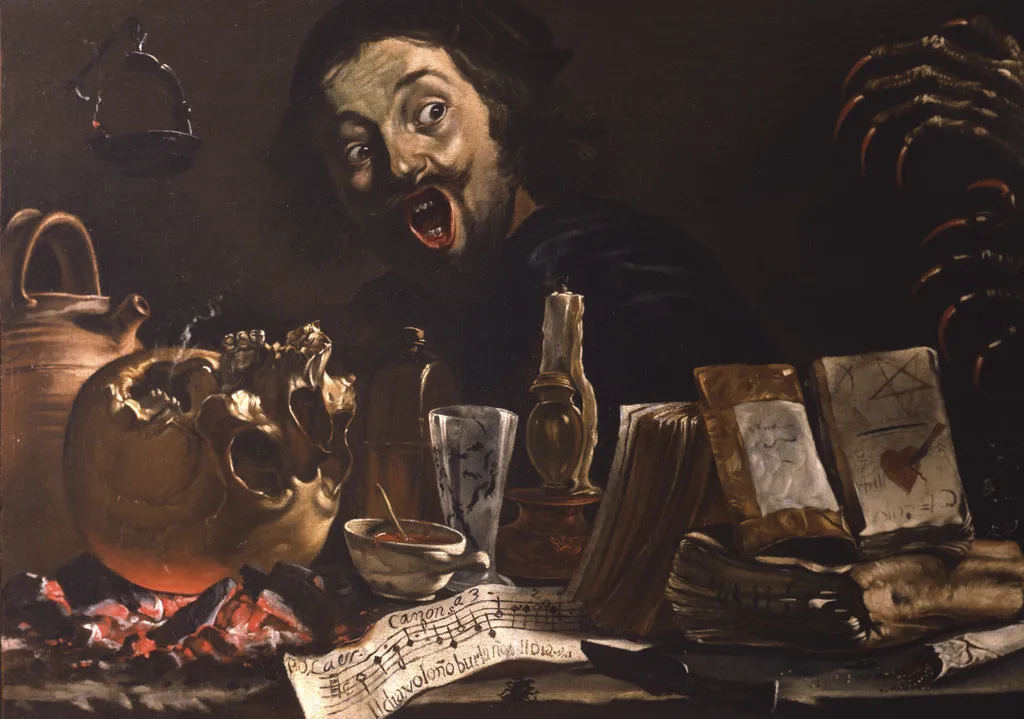
Self Portrait with a Magic Scene is an oil painting by the Dutch Golden Age artist Pieter van Laer. It dates from 1636 and is held in the collection of the Metropolitan Museum of Art.
About this work
Subject & Meaning
This imagery evokes the final scene of Christopher Marlowe's Doctor Faustus, where the protagonist is claimed by the devil after trading his soul for knowledge.
The painting depicts the artist Pieter van Laer seated at a table laden with objects for a necromantic ritual, including a skull on embers, a ritual knife, a jar of black insects, and a book displaying esoteric symbols like a pierced heart and a pentacle. Central to the composition is a pentagram bearing the artist's signature and a musical score titled "Il diavolo nó burla" (The Devil does not joke), which utilizes the tritone interval historically known as the "devil in music." Beneath the score lies a large spider, an insect associated with demonic forces.
The scene culminates with the skeletal claws of a demon entering from the right to seize the terrified artist.
This imagery evokes the final scene of Christopher Marlowe's Doctor Faustus, where the protagonist is claimed by the devil after trading his soul for knowledge. However, given van Laer's reputation for goliardic behavior within the Bentvueghels society in Rome, the work is likely a grotesque parody of serious necromantic scenes painted by Angelo Caroselli and his circle, rather than a literal depiction of occult practice.
Technique & Style
Executed in 1636, Self Portrait with a Magic Scene is an oil painting on canvas measuring 80 cm in height and 114.9 cm in width. The work is signed by Pieter van Laer on a pentagram located on the central table, where the inscription reads "P. V. Laer" alongside musical notation and the phrase "Il diavolo nó burla." Stylistically, the composition features a dense arrangement of ritual objects, including a skull over burning embers, a vessel with red liquid, an athame, and a book displaying esoteric symbols like a pierced heart and a pentacle.
A large spider, likely a tarantula, rests beneath the pentagram, while the skeletal claws of a demon enter the frame from the right. The artist depicts himself in a state of terror, screaming as he confronts the summoned entity. The musical score on the table forms a tritone, historically known as diabolus in musica, reinforcing the painting's macabre and potentially parodic tone.
History & Provenance
Self Portrait with a Magic Scene, painted by Pieter van Laer in 1636, was owned by the De Torres-Dragonetti family of L'Aquila until 1972. The work was subsequently sold to antique dealers and acquired in 2005 by Thomas and Daphne Kaplan, who added it to The Leiden Collection in New York. It was probably created for the artist's personal interest rather than on commission, and its magical iconography draws on alchemical motifs found in the works of Angelo Caroselli and his circle.
The 1636 date is documented in contemporary records, and the work bears the artist's signature on a pentagram at the centre of the table. No separate accession number is published, and the piece has featured in exhibitions devoted to The Leiden Collection and to the Bentvueghels, the society of Northern artists in Rome.
Context
Scholars identify this work as part of a Roman tradition depicting alchemical and witchcraft scenes, heavily influenced by Angelo Caroselli and his circle, including Pietro Paolini. Specific motifs such as the skull on embers and the demon's claws entering the frame directly reference Caroselli's necromantic compositions. The painting is also linked thematically to Christopher Marlowe's Doctor Faustus, particularly the final scene where the devil claims the protagonist's soul.
However, critical interpretation often views the piece as a grotesque parody rather than a serious occult depiction. This reading aligns with Pieter van Laer's reputation within the Bentvueghels, a society of Northern artists in Rome known for rowdy behavior and goliardic takes on esoteric themes. Parallels in works by van Laer's brother, Roeland, featuring similar tavern imagery and symbols, support the theory that the artist intended a humorous, self-deprecating portrayal of an incompetent sorcerer.
Legacy
Later scholarship has positioned the painting as a prototype for Northern alchemical self-portraits in 17th-century Rome. Researchers note its borrowing of motifs from Angelo Caroselli and his circle, especially the flaming skull and the demon's claws, and link the work to the Bentvueghels, where van Laer, known as Bamboccio, mixed alchemy with tavern revelry. The canvas entered The Leiden Collection in 2005, becoming a feature of exhibitions on Dutch Golden Age curiosities.
Contemporary analyses treat the piece as a satirical blend of pseudo-scientific illustration and theatrical horror, underscoring its place in the representation of occult themes in art.
Overview
Created in 1636 by the Dutch artist Pieter van Laer, Self Portrait with a Magic Scene is an oil painting from the Dutch Golden Age. This work presents a compelling self-depiction of the artist, captured in a moment of intense expression. It exemplifies van Laer's engagement with dynamic compositions and dramatic lighting, characteristics that defined his contributions to art during his active period in Rome. The painting is now part of the collection at The Metropolitan Museum of Art.
Own this work as a print
Artist & collection
Artist
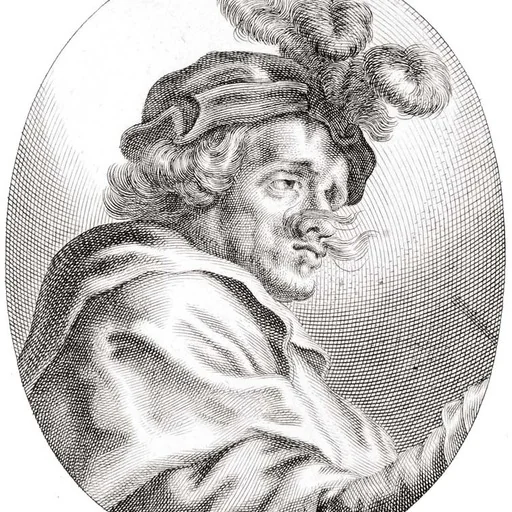
Pieter Bodding van Laer (christened 14 December 1599, in Haarlem – 1641 or later) was a Dutch painter and printmaker.

- Vanitas, Still Life with Books and Manuscripts and a Skull
 Parable of the unjust steward
 The Consultation
 Vanitas still life
 Still Life
 Soldiers beside a Fireplace
 Schreiender Mann
 The Fluteplayer
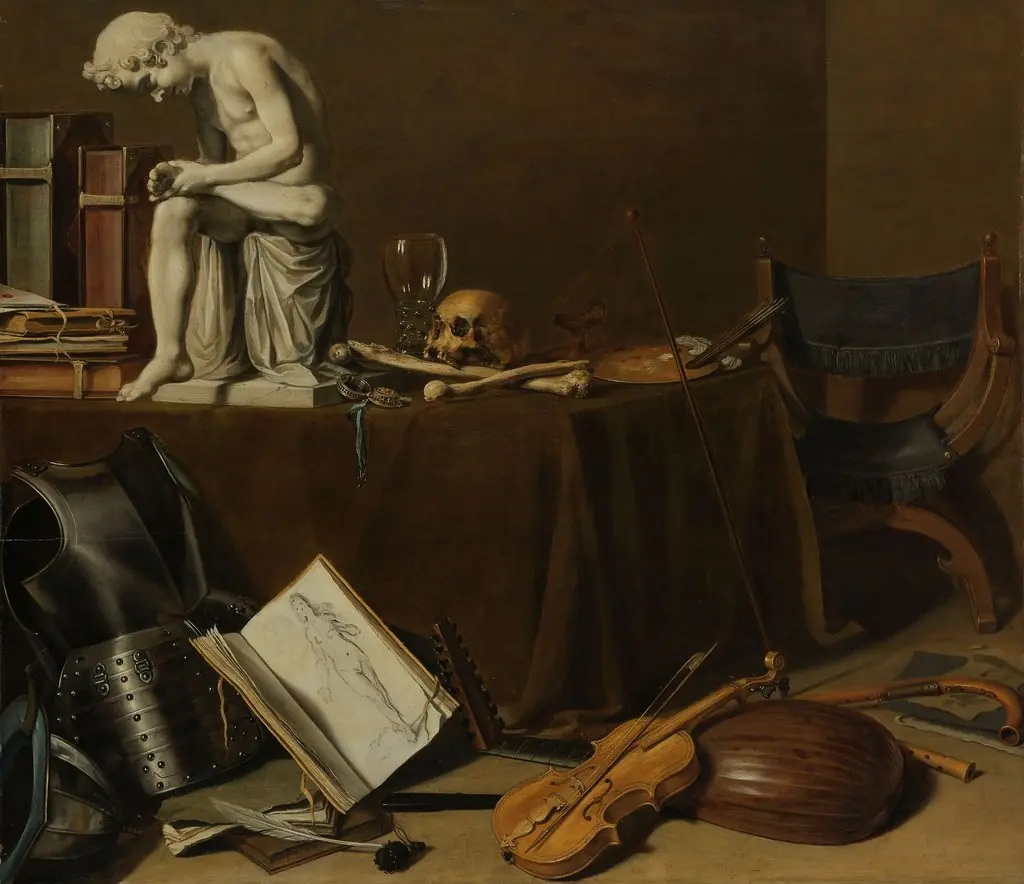 Vanitas Still Life with the Spinario
 Stilleben mit Musikinstrumenten, Notenblättern, Himmelsglobus und Muschel
 Kitchen Interior
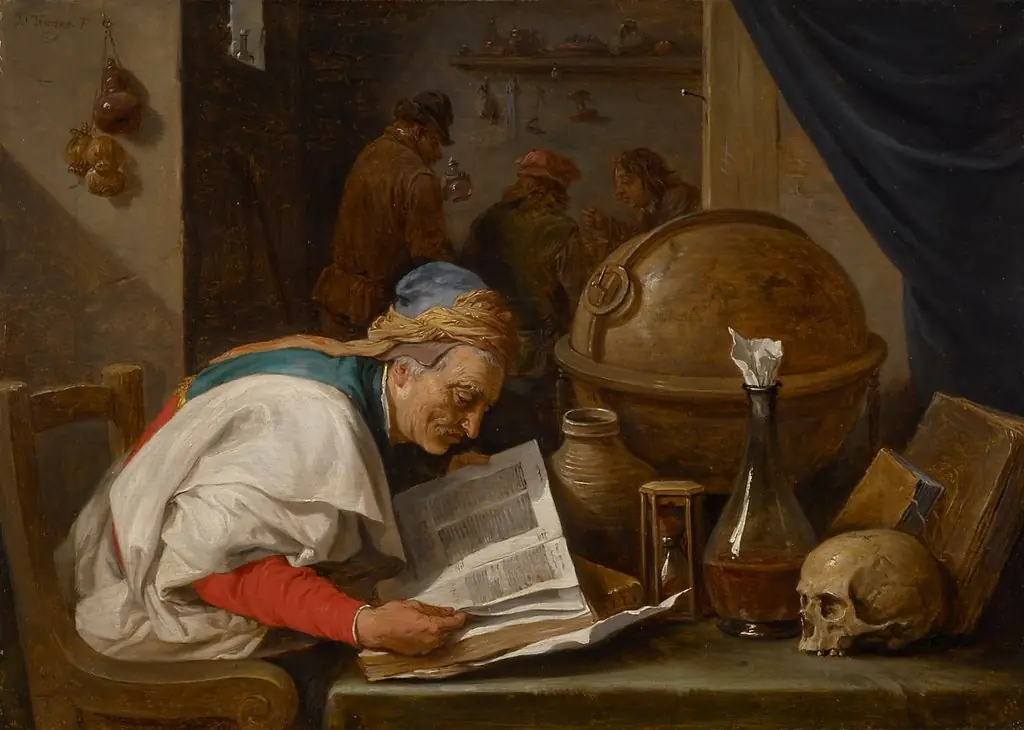 The Alchemist