Artwork
View of Pontoise (Vue de Pontoise)
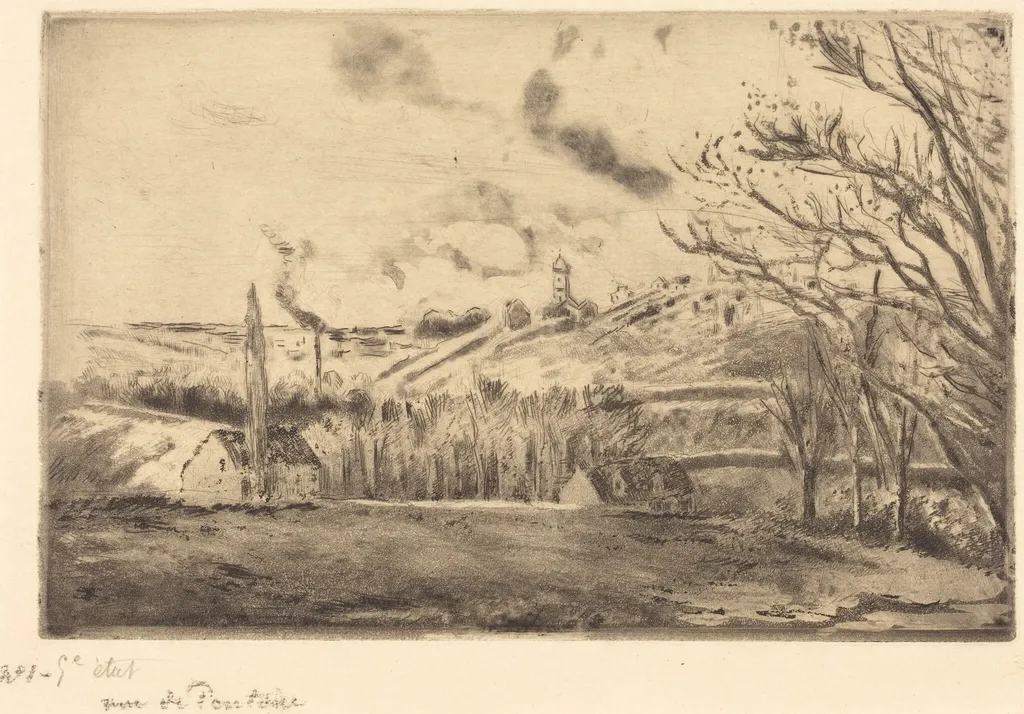
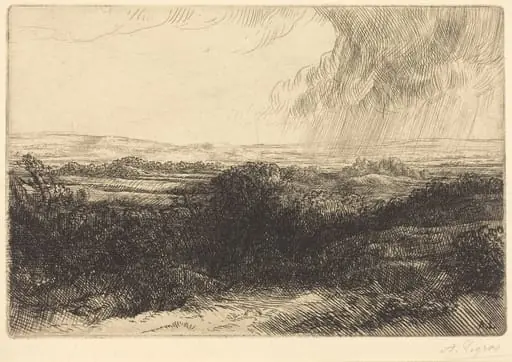
View of Pontoise (Vue de Pontoise) is an ink print by the Impressionist artist Camille Pissarro. It dates from 1885 and is held in the collection of the National Gallery of Art.
About this work
Overview
Unlike his painted works, this piece relies on tonal gradations rather than color, offering a restrained, intimate portrayal of everyday landscape.
Created in 1885, View of Pontoise is a monochrome print by Camille Pissarro, combining etching and aquatint techniques to capture the quiet atmosphere of a French riverside town. Unlike his painted works, this piece relies on tonal gradations rather than color, offering a restrained, intimate portrayal of everyday landscape. It was produced as a working study, not a finished exhibition piece, reflecting Pissarro’s interest in observational drawing.
Subject & Meaning
The scene depicts Pontoise, a town northwest of Paris, with a church steeple rising above clustered dwellings, trees lining the riverbank, and a modest bridge crossing the water. The composition emphasizes stillness and order, avoiding dramatic action. The absence of figures and the muted tones suggest a contemplative mood, aligning with Pissarro’s broader focus on unidealized rural life and the quiet rhythms of the French countryside.
Technique & Style
Pissarro employed etching for fine linear detail and aquatint to achieve soft, atmospheric washes of gray. The interplay of delicate lines and subtle shading models light across rooftops, hills, and water without sharp contrasts. The technique allows for a sense of depth and texture while maintaining a sketchlike immediacy. The work’s restrained palette and loose handling reflect his commitment to capturing transient effects through printmaking.
History & Provenance
Made during Pissarro’s time in Pontoise, where he lived intermittently from the 1860s to the 1880s, this print was likely produced for personal or experimental use. Few impressions were made, and it remained largely outside the public eye during his lifetime. Its survival as a rare example of his graphic work offers insight into his private artistic process, separate from his more widely exhibited paintings.
Context
In the mid-1880s, Pissarro was exploring new methods of representation, including pointillism and printmaking, as alternatives to traditional oil painting. This etching reflects his engagement with the emerging interest in print culture among Impressionists, who sought accessible, reproducible formats. Unlike the bustling urban scenes of contemporaries like Degas, Pissarro’s focus remained on the subdued topography of provincial France.
Legacy
View of Pontoise stands as a quiet testament to Pissarro’s dedication to landscape as a subject worthy of sustained study. Though not widely known, the print influenced later generations of printmakers interested in tonal subtlety and everyday subject matter. Its existence underscores his role in expanding the possibilities of print as a medium for artistic observation rather than mere reproduction.
Own this work as a print
Artist & collection


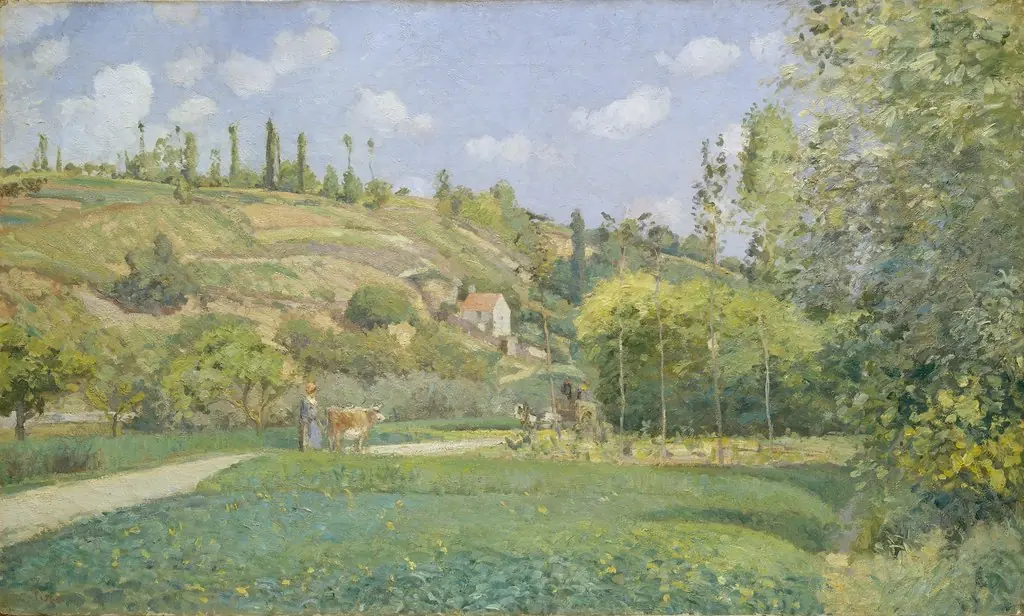
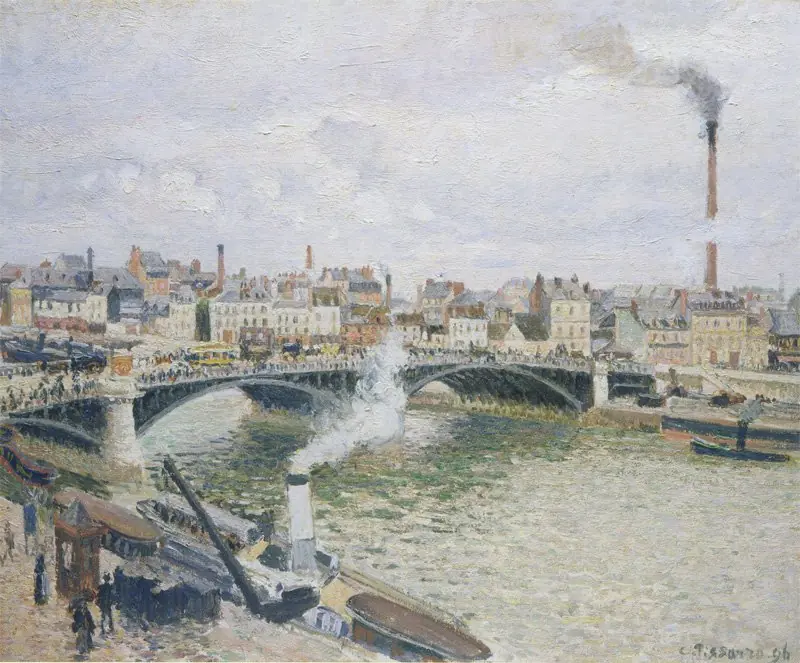
- Village of Wimille, near Boulogne (Village de Wimille, pres Boulogne)
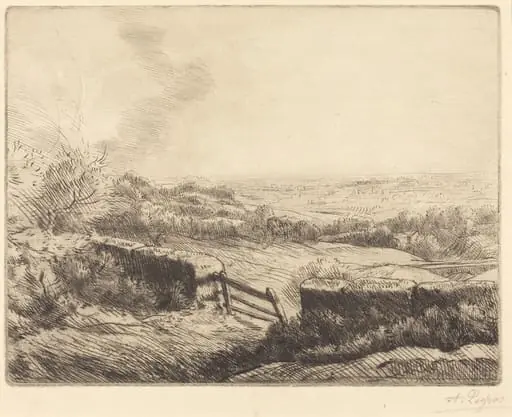 The Gate (L'entree du champ)
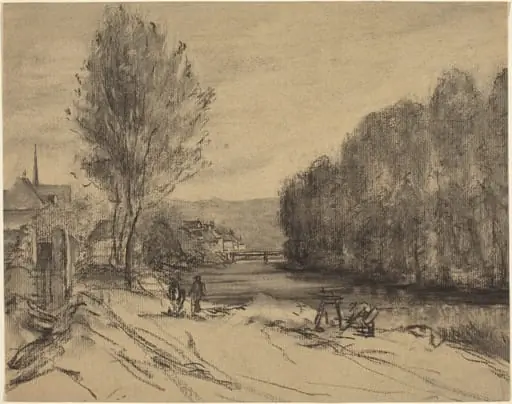 A Landscape with a River
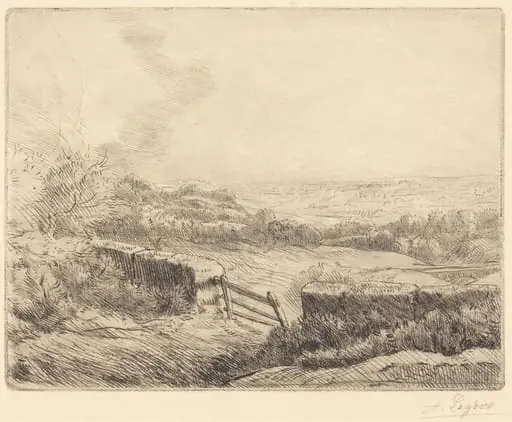 The Gate (L'entree du champ)
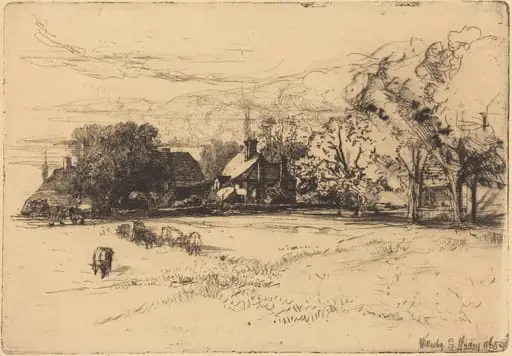 Old Willesley House
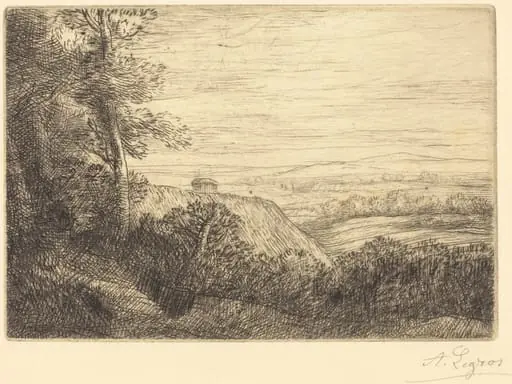 Last Rays (Les derniers rayons)
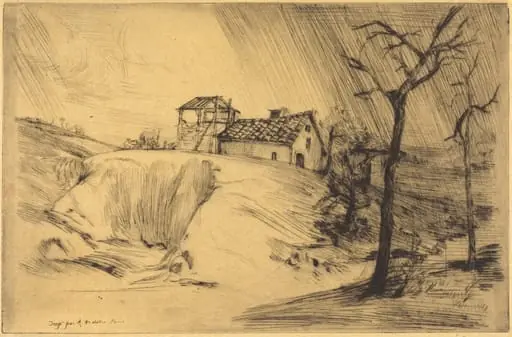 Brick-works (La Briqueterie)
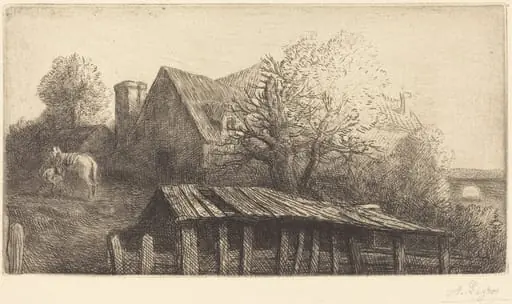 Old Inn (Une ancienne auberge)
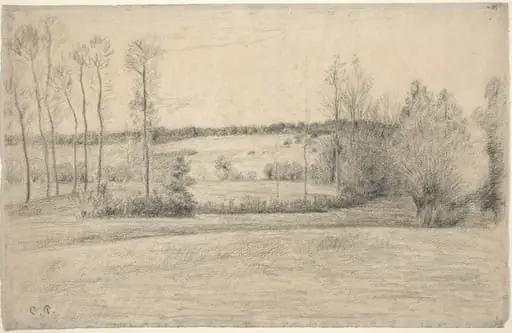 Trees and Meadows at Eragny
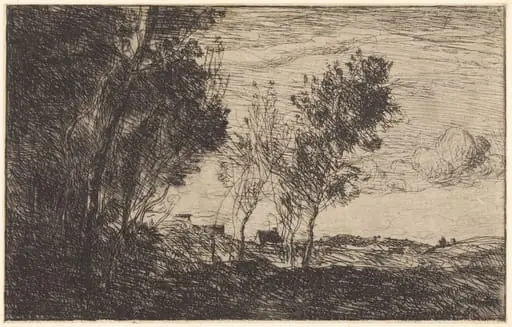 In the Dunes: Souvenir of The Hague (Dans les dunes: Souvenir du bois de La Haye)
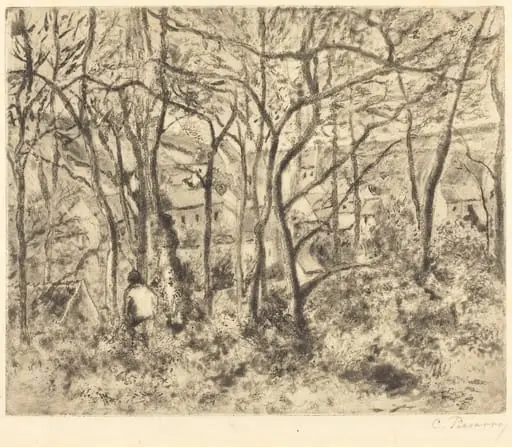 Wooded Landscape at L'Hermitage, Pontoise (Paysage sous bois, a L'Hermitage, Pontoise)
 Prospect (Le point de vue)