Artwork
Bishop's Palace at Würzburg
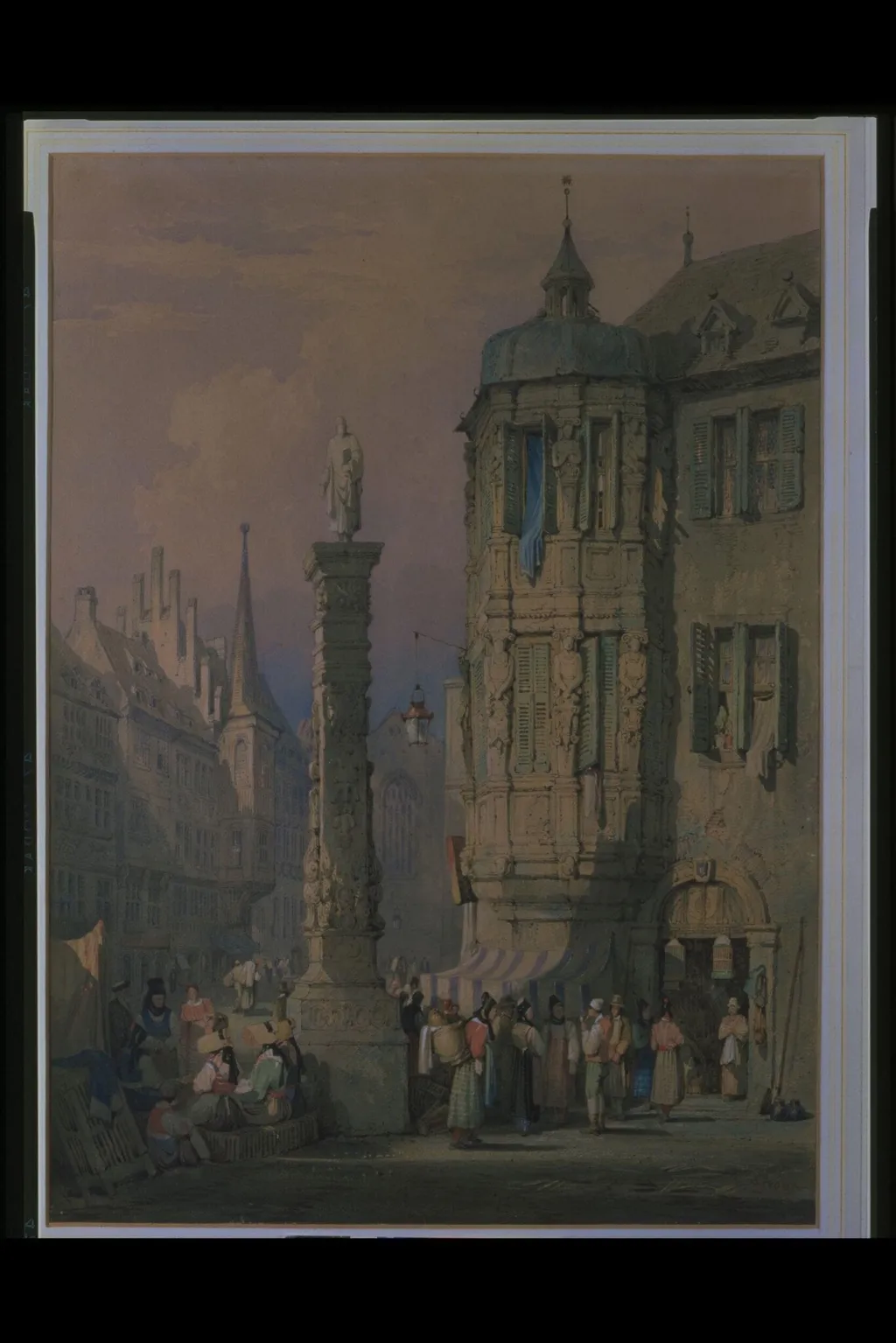
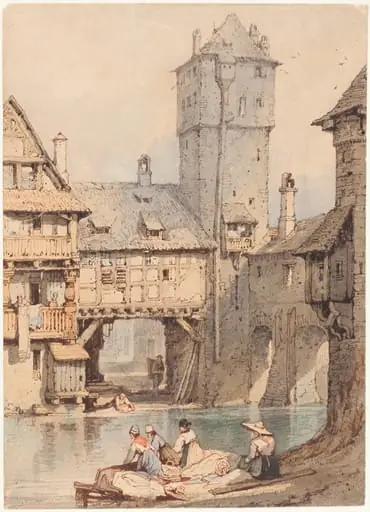
Bishop's Palace at Würzburg is a watercolor work on paper by the Romanticist artist Samuel Prout. It dates from 1820 and is held in the collection of the Victoria and Albert Museum.
About this work
Overview
The composition omits certain structural elements from the actual site, suggesting deliberate artistic selection to balance the visual rhythm of the scene.
Samuel Prout created a watercolor depiction of the Bishop's Palace in Würzburg around 1820, capturing the architectural grandeur of the scene with careful attention to detail. Though often associated with lithography, this work is executed in watercolor, emphasizing soft tonal transitions and atmospheric light. The composition omits certain structural elements from the actual site, suggesting deliberate artistic selection to balance the visual rhythm of the scene.
Subject & Meaning
The scene portrays a bustling public square before the palace, populated by figures in period dress engaged in daily activities. The architecture, characterized by ornate carvings, steep roofs, and a green-domed clock tower, reflects the civic and religious authority of the Bishopric. The inclusion of ordinary life within such a monumental setting underscores a quiet humanism, aligning with Romantic-era interests in the dignity of everyday moments amid historic surroundings.
Technique & Style
Prout employed translucent watercolor washes to achieve a luminous, warm glow, allowing light to define form rather than heavy outline. His brushwork is precise yet fluid, rendering intricate facades and shifting shadows with economy. The delicate handling of atmosphere and texture reflects his training in observing architectural detail under natural light, a hallmark of his mature style developed through years of travel across Europe.
History & Provenance
This watercolor was produced during Prout’s period of active exhibition and publication, likely intended for inclusion in illustrated volumes such as The Beauties of England and Wales. Though not as widely reproduced as his lithographs, such works circulated among collectors and students. Prout’s residence near John Ruskin in later life facilitated intellectual exchange, and his architectural studies were cited as foundational by emerging critics of the time.
Context
Prout’s work emerged amid a broader European revival of interest in medieval and early modern architecture, fueled by Romanticism’s fascination with history and place. His depictions of continental buildings, including those in Germany, contributed to a British audience’s growing appreciation for continental heritage. Unlike topographical surveys, his images prioritized mood and character, bridging documentation and emotional resonance.
Legacy
Prout’s approach to architectural watercolor influenced a generation of British artists who sought to capture the spirit of historic buildings rather than their exact dimensions. His technical manuals and teaching helped standardize methods for rendering stone, shadow, and light in watercolor. Though less celebrated today, his disciplined observation and sensitivity to atmosphere left a lasting imprint on the genre of architectural landscape painting.
Own this work as a print
Artist & collection
Artist
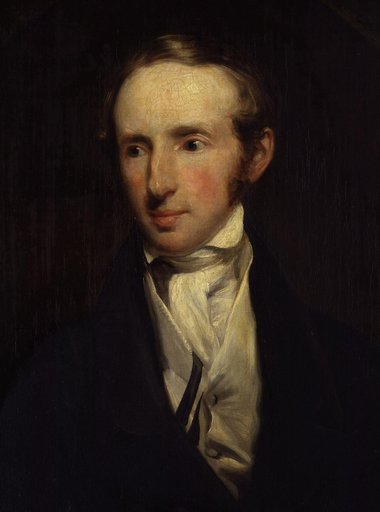
Samuel Prout was a British watercolourist, and one of the masters of watercolour architectural painting, who largely invented the genre of the grand steet scene in British watercolour painting, mostly with picturesque scenes from…

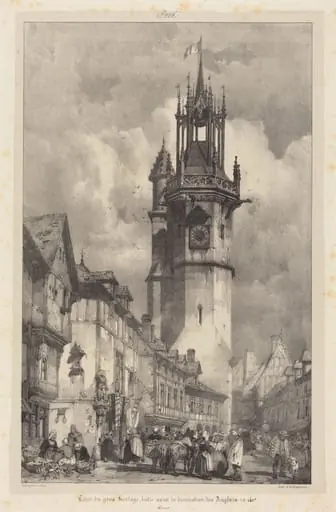
- Tour du gros-horloge, Evreux
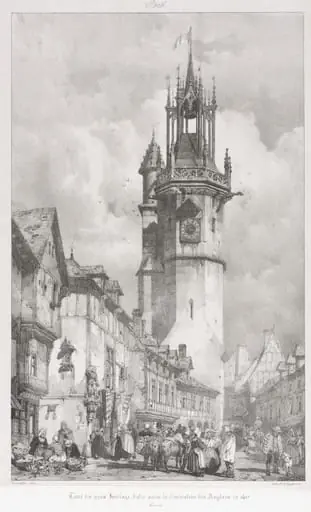 Voyages Pittoresques et Romantique dans l'Ancienne France, Normandie: Tour du Gros-Horlage, Évreux
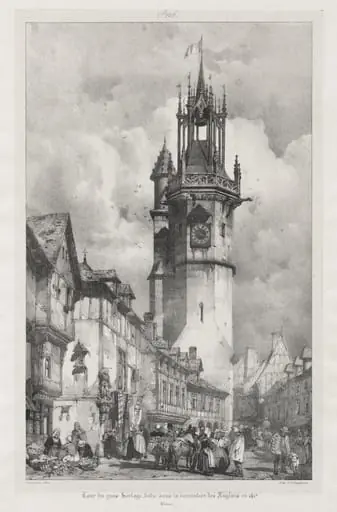 Voyages pittoresques et romantiques dans l'ancienne France, Normandie: Tour du Gros-Horloge, Evreux
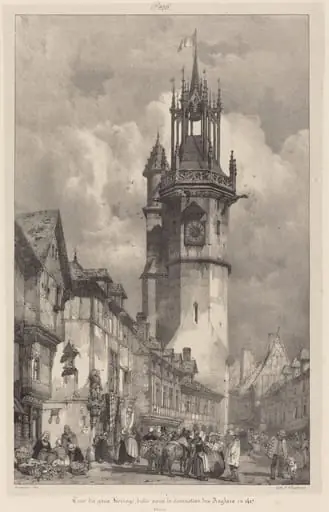 Tour du gros-horloge, Evreux
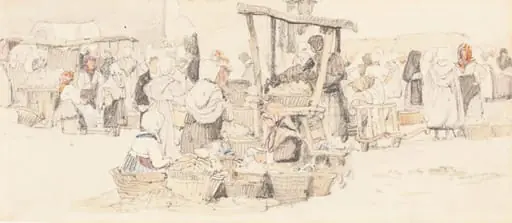
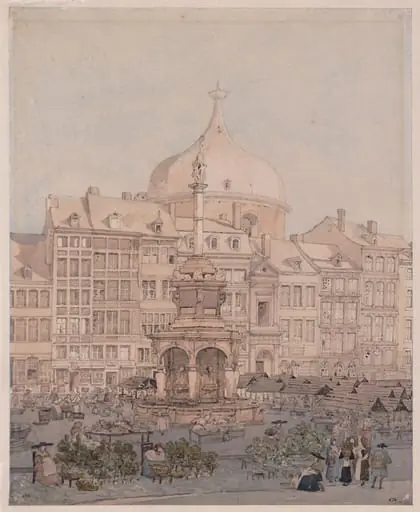 The Market Place, Liège
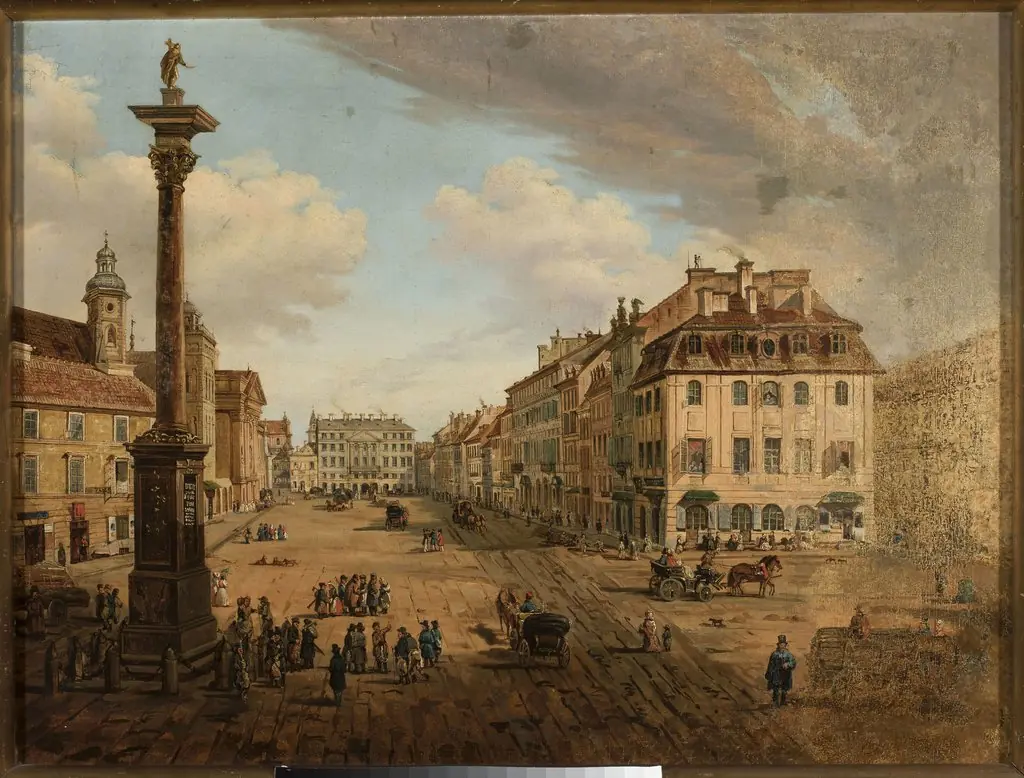 View from the Castle Square towards Krakowskie Przedmieście
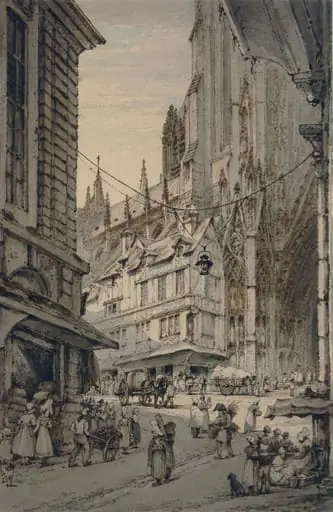 Rouen
Rouen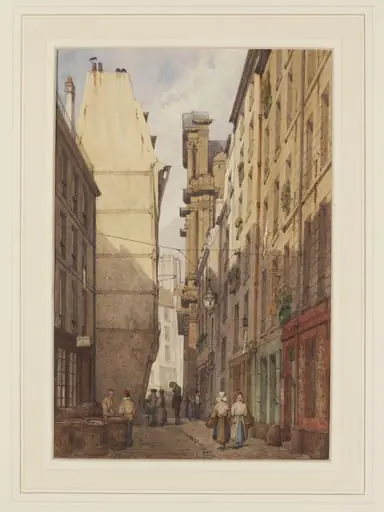 The Church of St Gervais, Paris
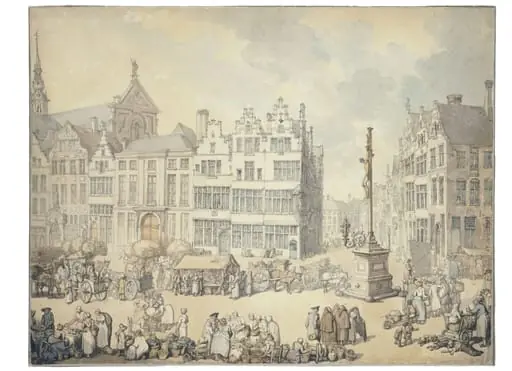 La Place de Meir, Antwerp
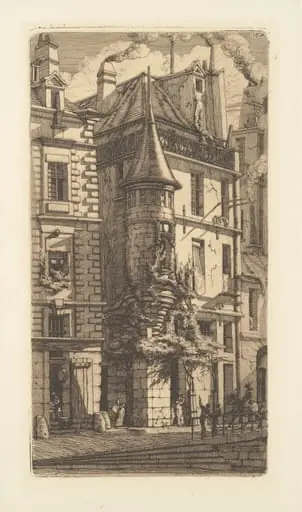 Tourelle, Rue de la Tixeranderie
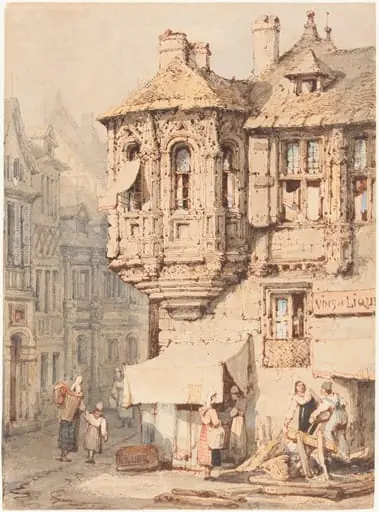
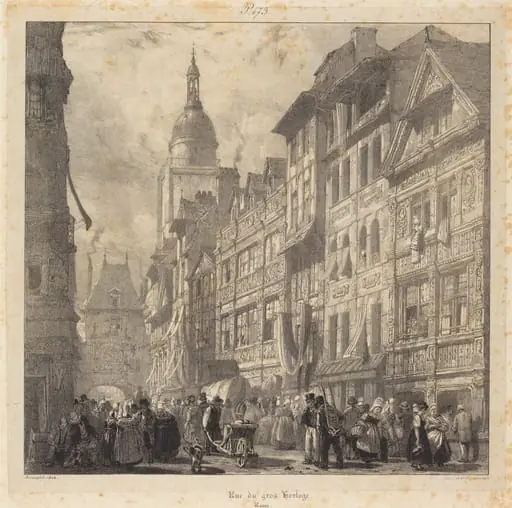 Rue du gros-horloge, Rouen
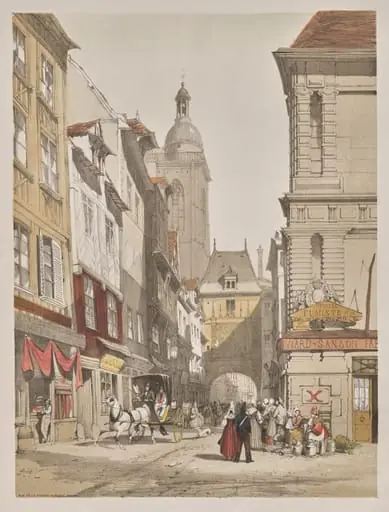 Picturesque Architecture in Paris, Ghent, Antwerp, Rouen: Rue de la Crosse Horlogue, Rouen, France