Artwork
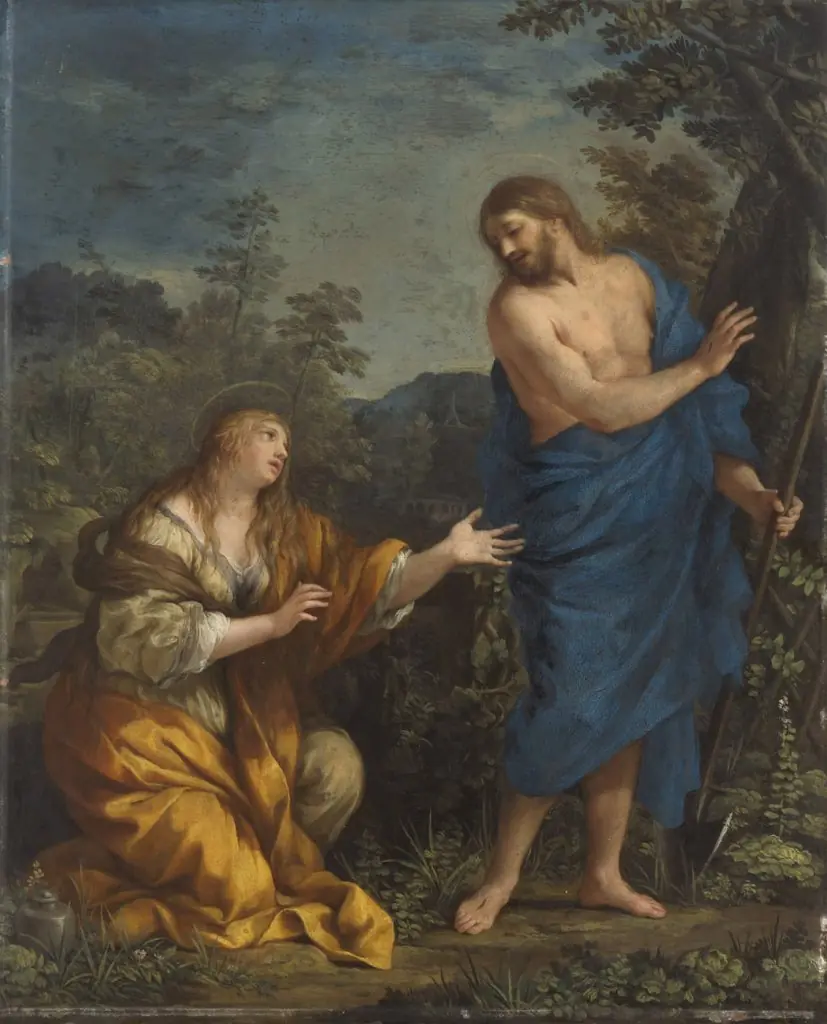
Noli me tangere
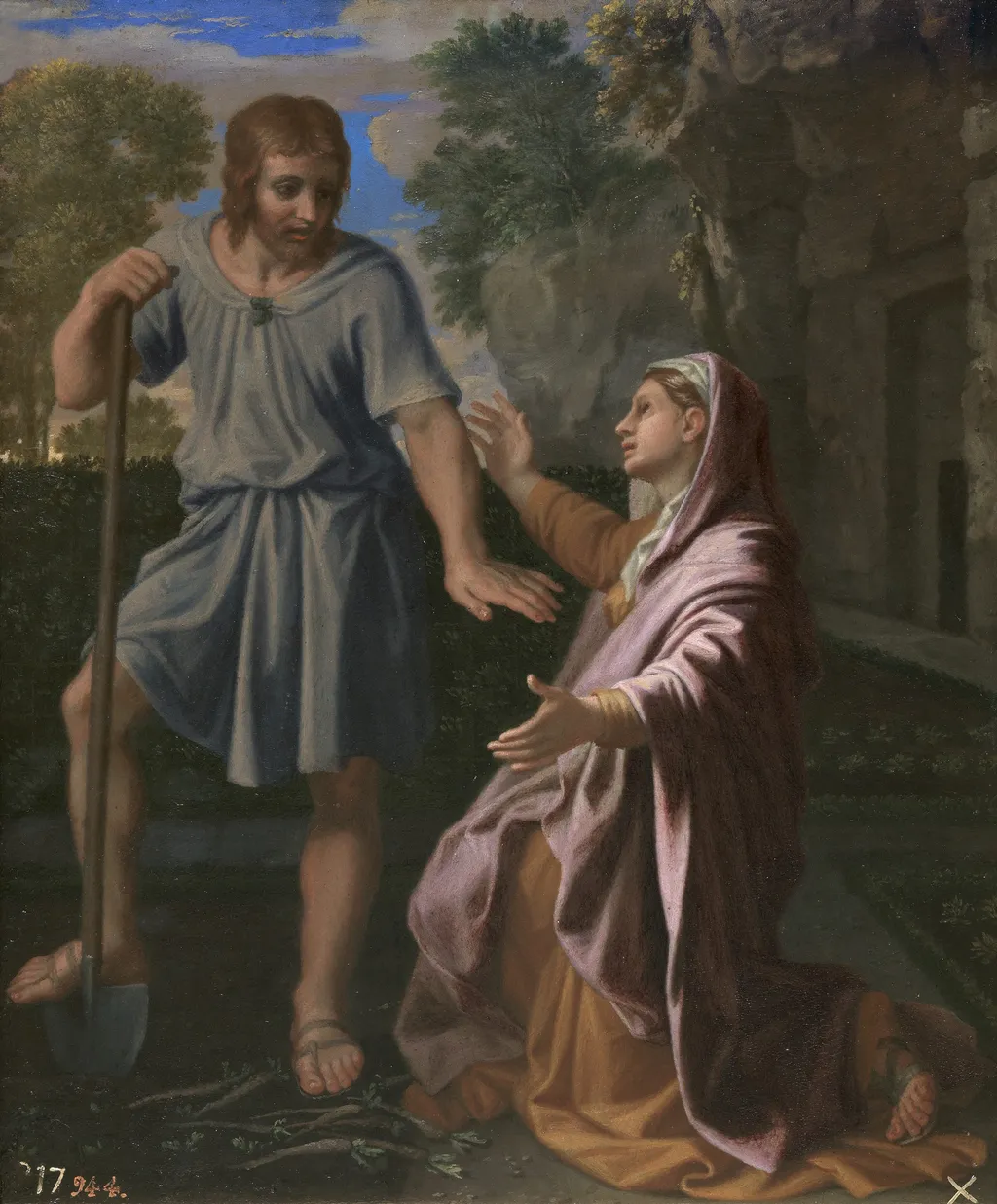
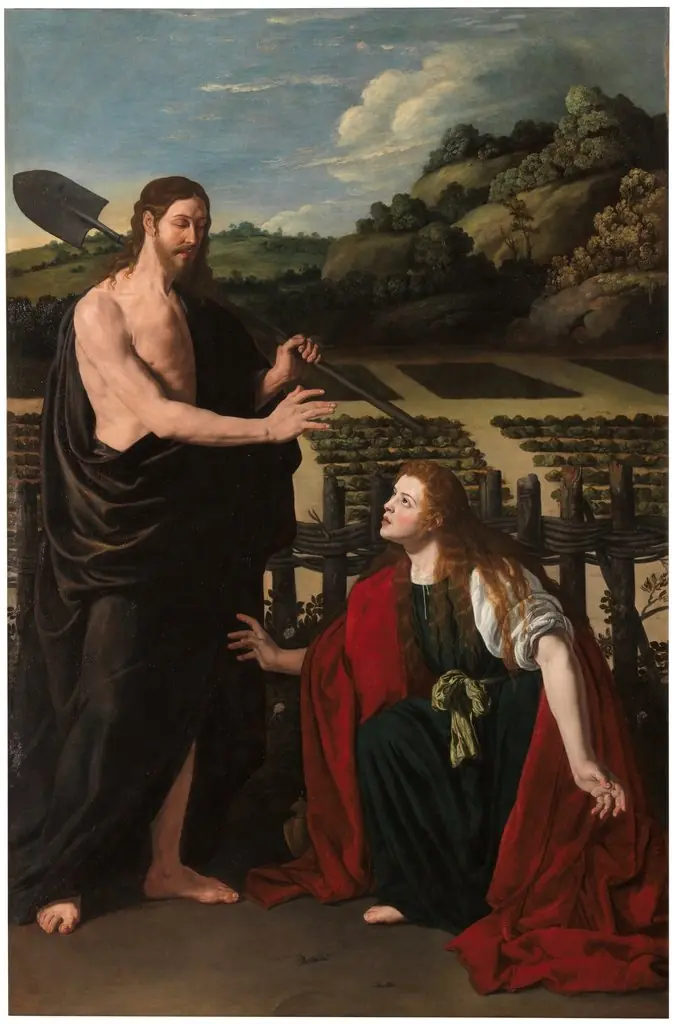
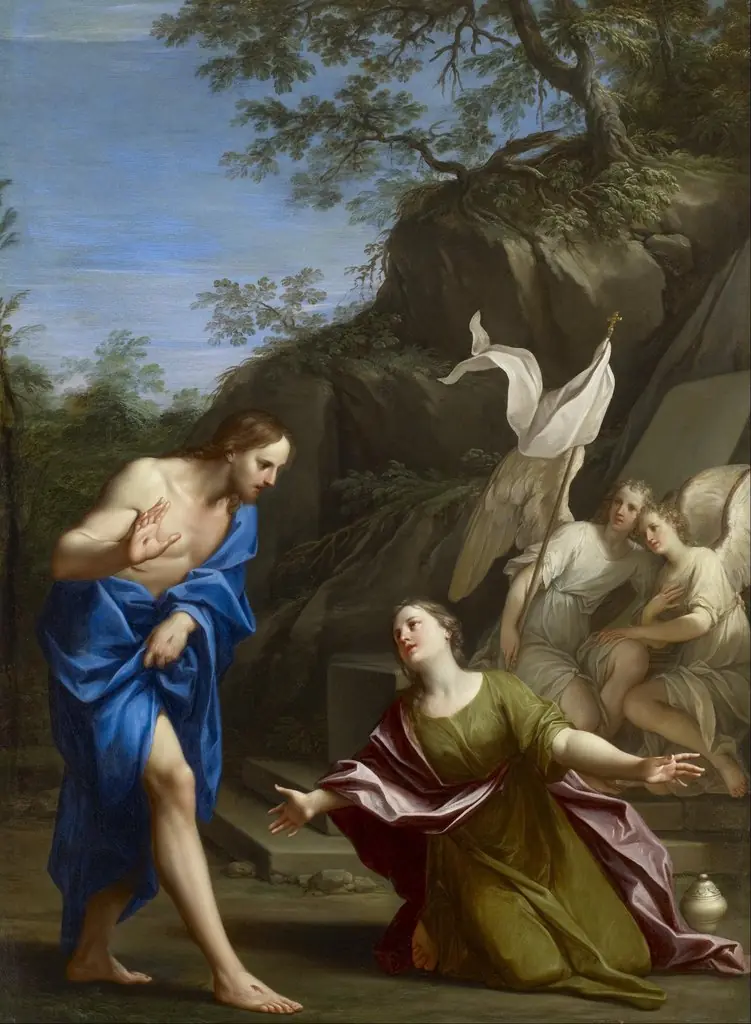
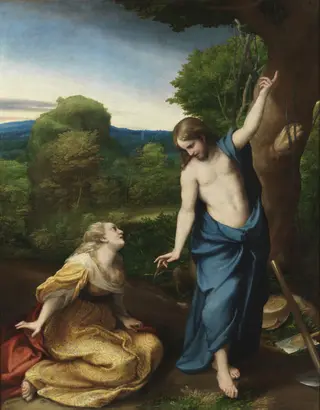
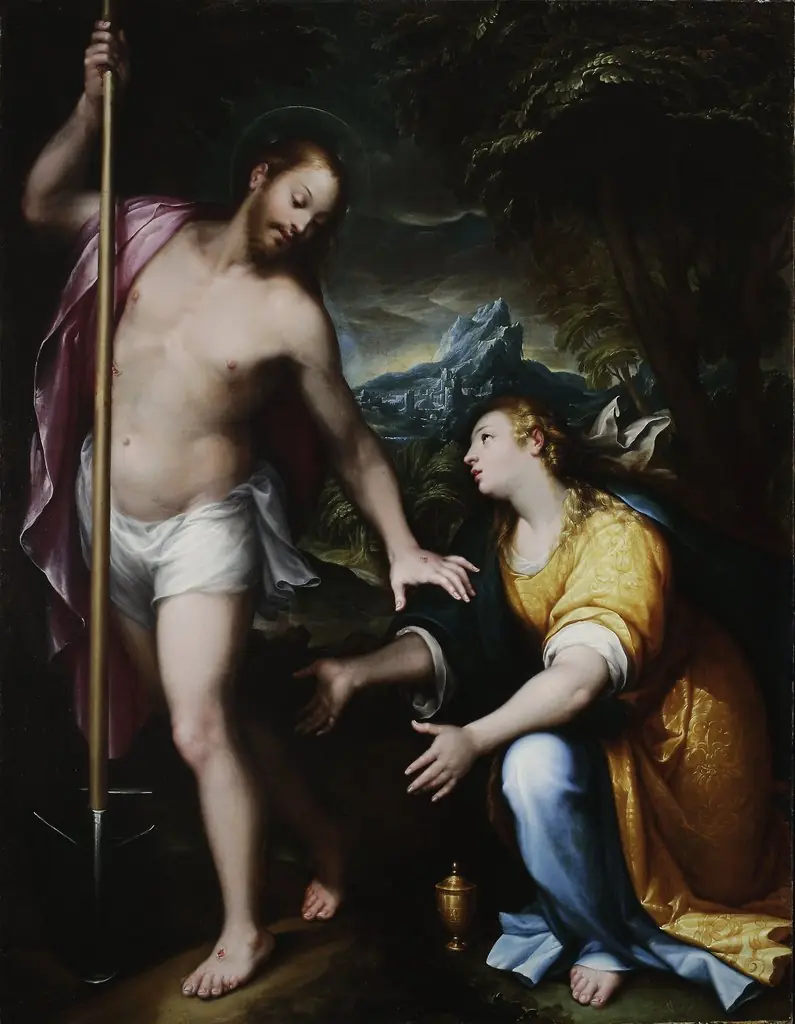
Noli me tangere is an oil painting by the Mughal Painting artist Nicolas Poussin. It dates from 1653 and is held in the collection of the Museo del Prado.
About this work
Subject & Meaning
Nicolas Poussin's 1653 oil painting depicts the biblical scene known as Noli me tangere, illustrating the moment of first encounter between the resurrected Christ and Mary Magdalene. As a work of religious art, the composition centers on this specific narrative event, capturing the theological significance of the encounter where Christ instructs Mary not to touch him. The painting serves as an iconographic representation of this pivotal resurrection moment, emphasizing the spiritual transition and the specific instruction given by the risen figure to his follower.
Technique & Style
Executed in oil paint on canvas, this work measures 47 cm in height and 39 cm in width. Created by Nicolas Poussin, the painting depicts the religious subject of Mary Magdalene encountering the resurrected Christ, illustrating the biblical Noli me tangere scene. The piece is classified as a religious genre painting, consistent with Poussin's output during the mid-17th century.
History & Provenance
The painting entered the Spanish royal collection, passing through the ownership of Philip V of Spain, Charles III of Spain, and Ferdinand VII of Spain.
Nicolas Poussin's Noli me tangere was created in 1653, executed in oil paint on canvas. The painting entered the Spanish royal collection, passing through the ownership of Philip V of Spain, Charles III of Spain, and Ferdinand VII of Spain. It is now held in the Museo del Prado.
The Wikidata entry lists inception dates of 1653 and 1657, suggesting some uncertainty around the precise moment of completion, though the painting is generally dated to 1653.
The painting Noli me tangere by Nicolas Poussin is part of the Museo del Prado's collection under inventory number P00968. It was previously owned by Spanish monarchs Charles III, Philip V, and Ferdinand VII. The work has been exhibited at the Museo del Prado, though specific exhibition dates are not detailed in the available records.
Overview
Noli me tangere is a 1653 oil painting by Nicolas Poussin, housed at the Museo del Prado. The work captures a poignant outdoor encounter between two figures near a serene lake setting.
Context
As a 17th-century work, Noli me tangere reflects the Baroque period's emphasis on emotional intensity and lighting effects. Poussin's interpretation of this frequently depicted scene offers a nuanced, contemplative take on a pivotal Christian narrative.
Legacy
While specific influences or notable exhibitions of this particular work are not detailed, Poussin's overall contribution to Baroque painting and his nuanced religious themes continue to be studied within the broader context of European art history.
Own this work as a print
Artist & collection
Artist
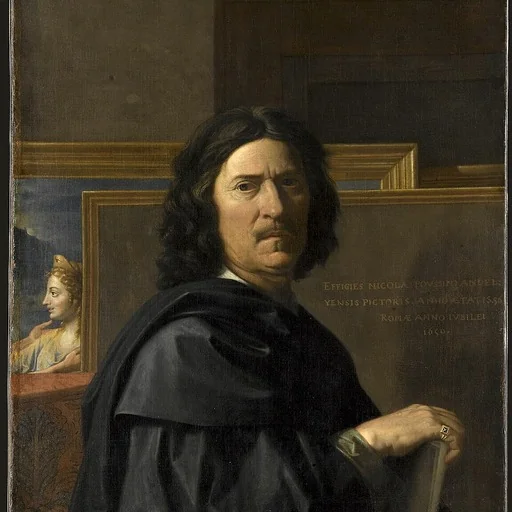
Nicolas Poussin (UK: US: French:; June 1594 – 19 November 1665) was a leading painter of the classical French Baroque style, although he spent most of his working life in Rome.